

Why does the world feel so much louder, and your mind so much faster, at exactly 3:00 AM? It is a heavy silence that many women in the UK know all too well. You are staring at the ceiling, feeling an uncharacteristically sharp edge of anxiety while your body refuses to settle into the rest it deserves. This sense of being “wired but tired” is often a signal that your levels of progesterone, the body’s natural sedative, have begun to shift away from their ideal rhythm.
We understand that you value a life of composure and grace, yet it is difficult to maintain that calm when your hormones feel like they are working against you. Recent data suggests that nearly 50% of women experience significant sleep disruptions linked to their hormonal cycle. In this guide, you will discover how this vital hormone acts as your internal soothing agent. We will explore gentle, practical ways to support your hormonal rhythm for better sleep and a more stable mood. We are looking at the simple, intentional shifts you can make to anchor your well-being and return to a state of lasting balance.
Key Takeaways
- Understand how your body’s natural soothing agent works to balance energy and create a deeper sense of internal quiet.
- Learn why progesterone levels shift during your monthly cycle and why this hormone is often the first to decline during perimenopause.
- Discover the connection between stress and your hormones, including how a busy lifestyle can lead to an unexpected “hormonal crash.”
- Find gentle, practical ways to support your rhythm through nourishing daily habits and the simple, restorative power of downtime.
- Explore how to navigate your next steps, from understanding your personal numbers to choosing the right support for your long-term wellbeing.
What is Progesterone? Meeting Your Body’s Natural Soothing Agent
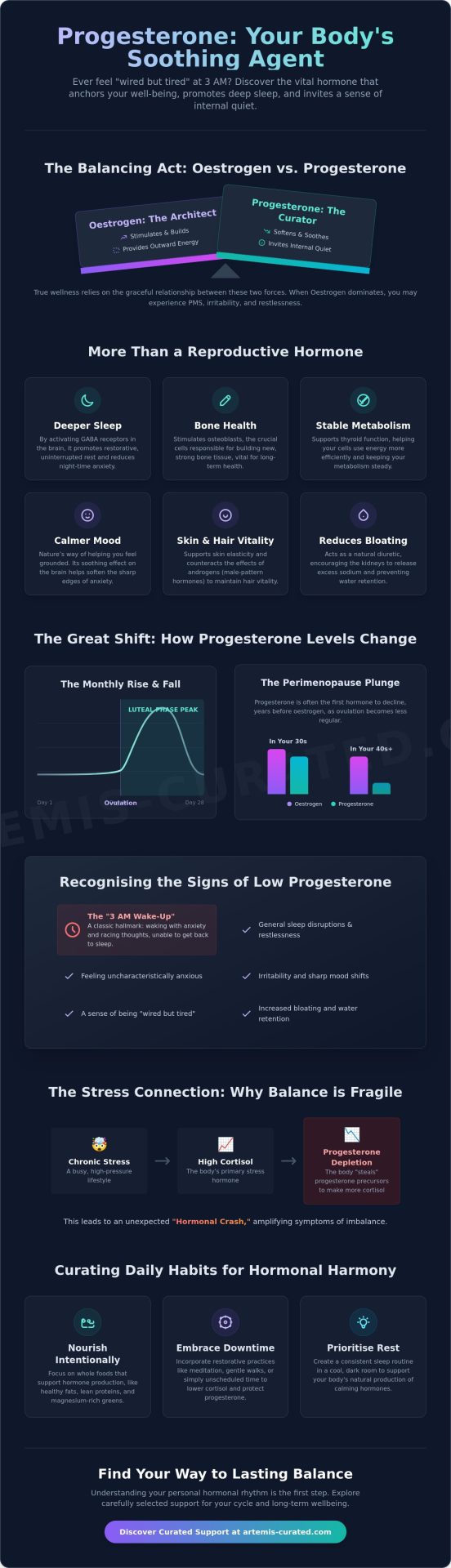
Progesterone acts as your body’s quiet anchor. While its name literally translates to “for gestation,” suggesting its primary role is pregnancy, this hormone does far more than support a growing life. You can think of it as the cooling, soothing partner to oestrogen’s bright energy. While oestrogen stimulates and builds, Progesterone steps in to soften the edges and invite a sense of stillness. It is the biological equivalent of a deep, restorative exhale.
Your body creates the vast majority of its progesterone during the two weeks following ovulation, known as the luteal phase. Once an egg is released, the temporary gland left behind, called the corpus luteum, begins its work. This process is a vital part of the monthly cycle for women across the UK, yet many don’t realise how deeply it affects their mental state. In the brain, progesterone converts into a neurosteroid called allopregnanolone. This substance interacts with GABA receptors, the same pathways that help us feel relaxed and steady. It’s nature’s way of helping you feel grounded when life feels frantic.
The Balancing Act: Progesterone vs. Oestrogen
These two hormones work like a seesaw, and their relationship defines how you feel throughout the month. Oestrogen is the architect, building the uterine lining and providing a boost of outward energy. Progesterone is the curator, maintaining the peace and ensuring the environment doesn’t become overstimulated. Health issues often arise not from a specific “low” number, but from an imbalance where oestrogen dominates the scale. When these two aren’t in harmony, you might experience the irritability and restlessness often associated with PMS. True wellness relies on the graceful relationship between these two forces rather than just the absolute level of one hormone.
Beyond Reproduction: Why Every Woman Needs Progesterone
The influence of this hormone extends well beyond the reproductive system, touching almost every aspect of your long term health. It plays a significant role in keeping your metabolism steady by supporting thyroid function, helping your cells use energy more efficiently. It also helps preserve bone density, which becomes increasingly vital as we age. For those who struggle with monthly swelling, progesterone acts as a natural diuretic. It encourages the kidneys to release excess sodium, preventing that heavy, bloated feeling that can make clothes feel restrictive.
- Skin and Hair: It supports skin elasticity and helps maintain hair vitality by counteracting the effects of male-pattern hormones.
- Sleep Quality: By activating GABA receptors, it helps you fall into a deeper, more restorative sleep.
- Bone Health: It stimulates osteoblasts, the cells responsible for building new bone tissue.
You can find carefully selected support for your cycle and general wellbeing in our online shop, where we focus on quality and the narrative of total health.
The Great Shift: Why Progesterone Levels Change Over Time
Throughout our lives, the body moves through distinct biological seasons. In a typical 28-day cycle, progesterone remains relatively quiet during the first two weeks. Once ovulation occurs, the corpus luteum begins its vital work, and progesterone levels climb to prepare the womb. It’s a grounding force that peaks mid-cycle. If an egg isn’t fertilised, these levels fall sharply, which eventually triggers your period. This monthly rise and fall is the heartbeat of reproductive health.
As we enter our 40s, this predictable rhythm often begins to flicker. This era is frequently defined by the “Perimenopause Plunge.” Progesterone is usually the first hormone to decline, sometimes dropping significantly years before oestrogen starts its own descent. When you stop ovulating regularly, you lose the primary source of this calming hormone. Without that monthly peak, you’re left with a new, lower baseline that can feel unsettling to both the body and the mind.
Recognising the Signs of Low Progesterone
The “3 AM Wake-up” is a classic hallmark of declining levels. Progesterone helps the brain produce GABA, a neurotransmitter that encourages deep, restorative rest. Without it, you might find yourself staring at the ceiling in the early hours, unable to quiet your thoughts. It’s a specific type of restlessness that feels physical as much as mental.
- Emotional markers: You might notice a “shorter fuse” or a sudden sense of overwhelm during tasks that used to feel simple. Irritability often replaces your usual patience.
- Physical clues: Periods often become heavier or more erratic. You might notice mid-cycle spotting or a distinct tenderness in the breasts that lingers longer than usual.
The Concept of Oestrogen Dominance
Think of your hormones as a seesaw that requires constant adjustment. Even if your oestrogen levels are within a normal range, you can feel quite unwell if there isn’t enough progesterone to balance the scale. When the anchor of progesterone is missing, the stimulating effects of oestrogen can feel amplified and chaotic. It’s a shift that affects everything from your mood to how your body holds onto water.
Oestrogen dominance is a relative imbalance rather than a fixed high number.
It’s about the delicate relationship between these two partners. When one partner retreats, the other dominates the conversation. If you’re looking to support your body through these natural shifts, you can explore our thoughtfully selected range of wellness essentials designed for the modern home sanctuary. Taking a moment to understand these internal changes allows you to meet them with grace and intentionality.
The Progesterone-Cortisol Connection: Why Stress is the Enemy of Balance
Our bodies operate on a strict biological hierarchy where survival always takes precedence over reproduction. If your brain perceives a threat, whether it’s a looming deadline or a genuine emergency, it prioritises the production of cortisol. This creates a physiological bottleneck often called the “progesterone steal.” Since both hormones share a common precursor called pregnenolone, your body will divert resources away from your reproductive health to fuel your stress response. It’s a survival mechanism that hasn’t quite caught up with the pressures of modern life in the UK, where high-pressure careers and constant connectivity keep our systems on high alert.
When you live in a state of perpetual “doing,” your progesterone stores are the first to suffer. This isn’t just about feeling tired; it’s a fundamental shift in your internal chemistry. Chronic stress leads to a hormonal crash that leaves many women feeling anxious and depleted. By understanding that your body views cortisol as a necessity and progesterone as a luxury, you can begin to curate a lifestyle that protects your natural rhythm. Managing your daily tempo isn’t an indulgence; it’s a biological requirement for maintaining equilibrium.
How Stress Disrupts Your Monthly Rhythm
A high-pressure month does more than just exhaust you; it can actually stall the ovulation process. When cortisol levels remain elevated, the delicate communication between your brain and your ovaries becomes muffled. This often results in a late period or a cycle where progesterone levels never reach their peak. Statistics show that roughly 80% of women experience some form of PMS, and these symptoms often intensify during particularly frantic months. You might notice your mood feels unusually fragile or your sleep becomes shallow. To understand how to soothe this internal dialogue, explore our guide on Cortisol: Curating the Rhythm of Inner Harmony and Vitality.
Magnesium: The Silent Partner in Hormonal Calm
Magnesium acts as a gentle anchor for the nervous system. It helps regulate the pituitary gland, which in turn encourages the healthy production of hormones. During times of transition or high stress, our bodies burn through magnesium stores at an accelerated rate. Research suggests that up to 15% of the population may have a clinical magnesium deficiency, which only exacerbates the feeling of being “wired but tired.” This mineral is essential for calming the nervous system and supporting the body’s ability to rest. To learn more about this foundational element, read about Magnesium: The Master Mineral for Female Hormonal Harmony and Vitality.
Curating Your Daily Habits for Better Hormonal Harmony
Living well isn’t a race. It’s a collection of small, quiet moments that tell your body it’s safe. When your nervous system feels secure, your production of progesterone can flourish. High-intensity lifestyles often trigger a cortisol surge that leaves little room for hormonal balance. This is why “Vitamin Joy” matters. Finding 15 minutes for a slow tea ritual or a walk through a local park isn’t a luxury. It’s a biological necessity. When we lower our stress response, we stop the “cortisol steal” that often depletes our natural hormone reserves.
Your choice of movement also plays a significant role. During perimenopause, the body’s response to physical stress changes. Research from 2021 suggests that high-intensity interval training can sometimes spike cortisol levels too high for women in this transition, leading to fatigue rather than fitness. Choosing gentle movement like Pilates, Yin yoga, or a brisk walk supports your rhythm without overtaxing your system. It’s about listening to the narrative of your body and moving with intention rather than force.
Foods that Support Your Progesterone Rhythm
Your body needs specific materials to build its internal chemistry. Vitamin B6 and Zinc act as the quiet workers in this manufacturing process. You’ll find B6 in humble ingredients like chickpeas and bananas, while pumpkin seeds offer a rich source of Zinc. The NHS suggests an intake of 7mg of Zinc daily for adult women to support general health and enzyme function. Healthy fats are just as vital. Think of Omega-3s from walnuts or oily fish as the essential foundation for your endocrine health. Swap processed vegetable oils for extra virgin olive oil or grass-fed butter to give your kitchen a hormone-friendly update. These simple swaps provide the tactile building blocks your body craves.
The Evening Wind-Down: A Ritual for Better Rest
Sleep is the time when your body restores its natural balance and enters “rest and digest” mode. Modern life often disrupts this with the harsh glow of screens and late-night scrolling. A study published by Harvard Health in 2020 found that blue light exposure can shift circadian rhythms by up to three hours, suppressing the very signals your body needs to feel tired. Creating a “digital sunset” at 8:00 pm or 9:00 pm allows your brain to transition. This shift encourages natural melatonin production, which works in tandem with your progesterone to ensure a deep, restorative sleep. Consistency is your greatest ally. Aiming for the same lights-out time every night helps anchor your internal clock and creates a sense of permanence in your routine.
Ready to bring more intention to your daily rituals? Explore our curated collection of wellness essentials designed for a balanced life.
Finding Your Way: Targeted Support and Next Steps
Understanding your hormone profile starts with a clear conversation. If you’re still cycling, a GP might suggest a blood test on day 21 to measure your progesterone levels. For many women in the UK, especially those over 45, the NICE guidelines suggest that symptoms are often the most accurate guide. It’s helpful to track your sleep patterns and mood for a few weeks before your appointment. This gives your doctor a narrative to work with, rather than just a snapshot in time.
There’s a distinct difference between medical HRT and supplemental support. Medical options often involve body-identical hormones to replace what’s lost. Natural support focuses on providing the building blocks your system needs to find its own level of comfort. You can choose to use these approaches individually or together, depending on your personal health journey and the advice of your medical professional.
- Prepare a symptom diary to show patterns over time.
- Ask about the benefits of body-identical progesterone if considering HRT.
- Consider how lifestyle changes like stress reduction can support hormone health.
The Art of Harmony: Supporting Your Menopause Journey
We created The Art of Harmony – menopause support to act as a gentle companion during these transitions. This bundle isn’t about a quick fix; it’s about a thoughtful synergy of ingredients that acknowledge the physical and emotional shifts of perimenopause. By targeting both mood stability and physical ease, it helps you maintain a sense of steady ground when your internal progesterone levels begin to fluctuate. It’s a curated way to honour your body’s changing needs with intention.
The Art of Sleep: Reclaiming Your Nights
When rest feels elusive, it’s often because the brain’s natural braking system is struggling. We designed The Art of Sleep – deep sleep support with ingredients that help quiet the mind, much like the calming effect the body experiences during a healthy cycle. For those dealing with perimenopausal anxiety, a targeted approach to rest can be life-changing. By focusing on deep, restorative sleep, you allow your nervous system the space it needs to reset and recover from the day’s demands.
Embrace Your Natural Rhythm
Finding balance doesn’t have to be a complicated journey. We’ve looked at how progesterone acts as your body’s natural anchor, helping you stay calm when life feels heavy. Since the Mental Health Foundation reports that 74% of UK adults have felt overwhelmed by stress in the last year, managing the link between your hormones and cortisol is more important than ever. You can start by choosing habits that protect your peace and using targeted support designed for your specific needs.
Founders Milly and Sarah have thoughtfully selected every item in our range to ensure you receive the highest quality botanical ingredients. Each piece is designed to support the modern woman through every stage of her life. It’s about moving away from quick fixes and toward a more meaningful way of caring for yourself. You’re capable of finding that steady sense of harmony again.
Discover your perfect balance in The Full Curated Collection.
Take things one step at a time; your body will thank you for the extra care.
Frequently Asked Questions
Is progesterone the same as the “mini-pill” or progestogen?
Progesterone is not the same as the mini-pill or progestogen. Progestogens are synthetic versions of the hormone found in the mini-pill, while progesterone refers to the hormone your body creates naturally. The NHS confirms that the mini-pill uses progestogens like desogestrel to prevent pregnancy. Using body-identical progesterone ensures you’re matching your own biological rhythm with a molecule your system recognises immediately.
Can low progesterone cause weight gain around the middle?
Low progesterone can lead to weight gain around your midsection by allowing oestrogen to become too dominant. This imbalance often signals the body to store more visceral fat. Research in the Journal of Obesity suggests that women with these hormonal shifts can see a 15% increase in abdominal fat storage. Keeping your progesterone levels healthy helps maintain a steady metabolic rate and prevents this specific type of weight gain.
What is the best time of the month to test my progesterone levels?
The best time to test your progesterone levels is exactly seven days before your period begins. For a standard 28 day cycle, this falls on day 21. This specific window is called the mid-luteal phase, and it’s when your levels should be at their absolute peak. Testing during this time provides the most accurate data regarding your ovulation health and your body’s ability to maintain a calm, balanced state.
Does progesterone make you feel sleepy or just calm?
Progesterone can make you feel both calm and sleepy because it converts into a substance called allopregnanolone in the brain. This compound acts on GABA receptors to soothe your nervous system and reduce anxiety. A study in the journal Psychoneuroendocrinology found that progesterone support helped 60% of participants fall asleep faster. Taking it in the evening allows you to benefit from its natural, sedative like qualities for a restful night.
Can I increase my progesterone levels naturally through my diet?
You can’t get progesterone directly from food, but you can eat specific nutrients to support your body’s own production. Vitamin B6 and Zinc are essential building blocks for this process. A study in the Journal of Alimentary Pharmacology suggests that 200mg of Vitamin B6 can help increase progesterone production by up to 15%. Including foods like pumpkin seeds and leafy greens helps your ovaries function with greater efficiency and ease.
What is the difference between micronised progesterone and synthetic versions?
Micronised progesterone is a body-identical hormone, while synthetic versions, known as progestins, have a slightly different chemical structure. The British Menopause Society recommends micronised options because they carry a lower risk of side effects like blood clots. These body-identical versions are refined into tiny particles for better absorption. They offer a more soulful approach to health by working in harmony with your natural chemistry rather than overriding it.
Can high stress really “steal” my progesterone?
High stress can definitely “steal” your progesterone through a biological process called the pregnenolone steal. When you’re under pressure, your body prioritises making cortisol, the stress hormone, over sex hormones. Chronic stress can reduce your progesterone output by 20% or more during high cortisol events. Protecting your personal sanctuary and finding time for quiet contemplation is essential for keeping your hormonal reserves intact and your mind clear.
How long does it take to feel the effects of progesterone support?
It usually takes between one and three full menstrual cycles to feel the consistent effects of progesterone support. While some people notice improved sleep within a few days, deeper changes like mood stability or cycle regulation require more time. Clinical guidelines suggest a three month trial period to fully observe how your body responds. Patience allows your system to gently return to its natural state of balance and quiet authority.