


Did you know that by the time we reach age 50, nearly 40% of women in the UK experience visible hair thinning? This biological shift often makes searching for effective supplements for hair thinning in women over 50 feel like an exhausting journey through a sea of marketing claims. It’s deeply personal to watch your reflection change, and it’s natural to feel a sense of loss when your hair no longer holds the volume it once did. You’re not alone in wanting to ignore the hype and find a solution that actually respects your body’s evolving needs.
I believe that midlife should be a time of refinement, not a struggle against your own biology. You can support your hair’s natural strength and vitality by choosing a thoughtful, nutrient-led approach to these hormonal changes. This guide provides a curated look at the specific vitamins and minerals that science supports for lasting hair health. We’ll strip away the confusion to reveal a simple daily ritual that helps you feel like yourself again, ensuring your hair remains as vibrant as your spirit.
Key Takeaways
- Learn how the natural shift in hormones during your 50s changes the way your hair grows and what you can do to support its vitality.
- Discover the specific, high-impact nutrients that make supplements for hair thinning in women over 50 more effective than a standard multivitamin.
- Find out why building a strong nutritional foundation from the inside is the secret to making your topical serums and treatments work better.
- Understand how simple lifestyle rituals, such as managing stress and improving scalp health, create the ideal environment for thicker hair.
- Explore a curated, all-in-one approach designed to simplify your routine while addressing the unique hair and skin needs of the menopause transition.
Understanding Why Hair Changes After 50: The Hormonal Shift
Entering your 50s brings a certain grace and a collection of stories, but it also marks a significant biological transition. For many women, this era is defined by a noticeable change in hair texture and volume. It isn’t just about “losing” hair; it’s about an internal shift where the hormones that once protected your follicles begin to retreat. This process, often called menopausal hair thinning, is a manageable evolution rather than a permanent loss of your vibrant self. Understanding the science behind this change is the first step toward reclaiming the health of your scalp.
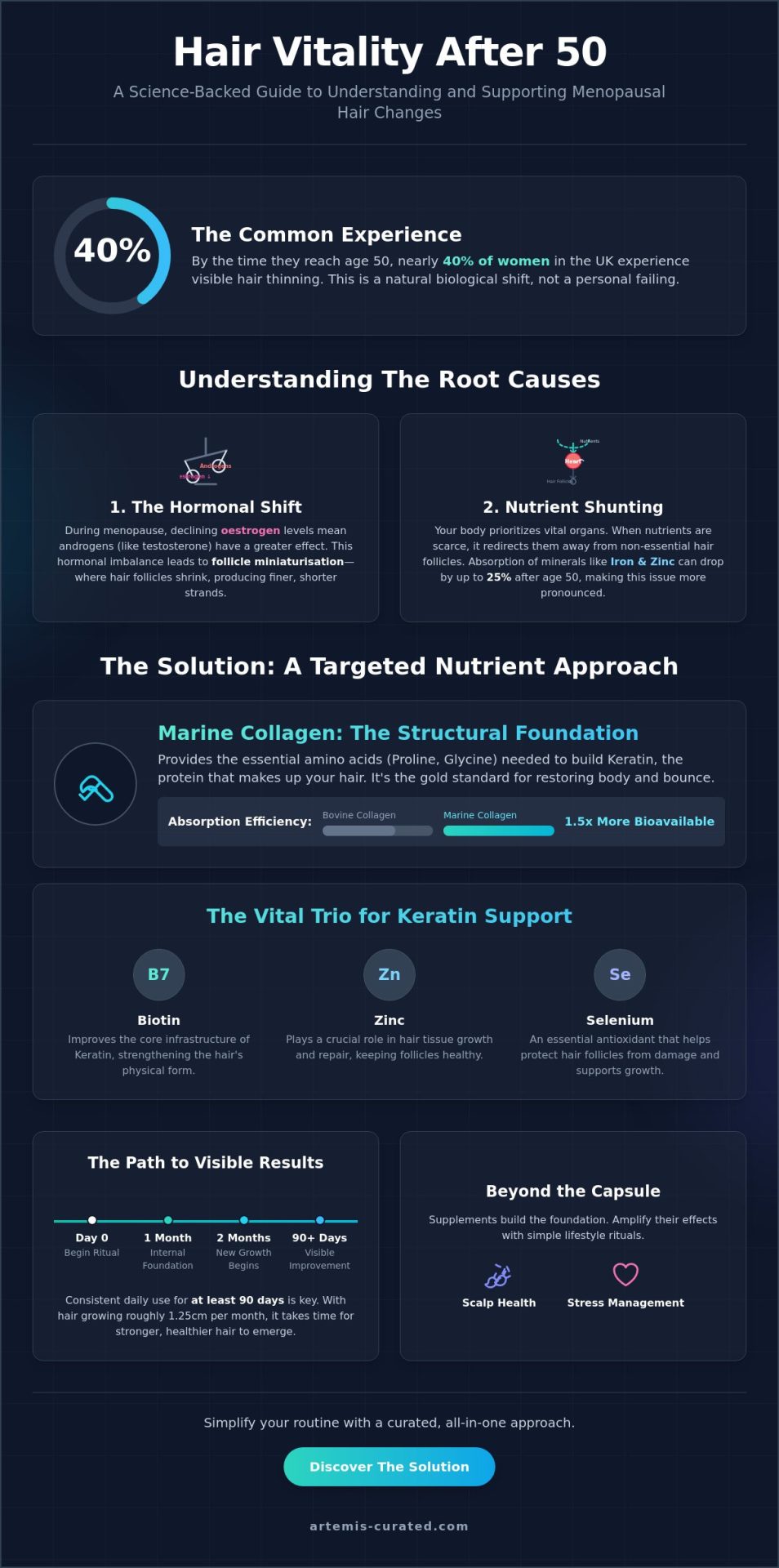
As oestrogen and progesterone levels decline during the menopause journey, the balance of power within your body changes. Androgens, such as testosterone, become more dominant in comparison. While these hormones are naturally present, their new prominence can lead to follicle miniaturisation. This means the hair follicles physically shrink, producing strands that are shorter, finer, and less pigmented. In the medical community, this is frequently discussed as Pattern hair loss, a condition that affects approximately 40% of women by the time they reach age 50. The emotional impact of this transition is real and valid, often feeling like a quiet fading of one’s personal narrative, but it’s important to remember that this is a physiological response we can support with intention.
The Oestrogen Connection
Oestrogen serves as a dedicated guardian for your hair, keeping it in the “growth phase,” known as anagen, for extended periods. When this hormonal protection wanes, the growth cycle accelerates and the resting phase arrives sooner. You might notice that your hair doesn’t seem to grow as long as it once did, or the individual strands feel fragile. This shift is a central part of the broader Art of Harmony, where we learn to balance our internal environment as our external world evolves.
Nutritional Gaps in the Mature Years
The body is a master of prioritisation and always protects its core. When vitamins or minerals are in short supply, your system sends them to vital organs like the heart and lungs first. Hair follicles, being non-essential for survival, are often the first to lose out. This is why selecting the right supplements for hair thinning in women over 50 is a vital part of a daily ritual. Absorption rates for essential minerals like iron and zinc can drop by as much as 25% after age 50, making it harder for your body to maintain its previous lustre. Nutrient shunting is the biological process where your body redirects limited vitamins and minerals away from your hair to sustain your vital organ functions.
The Essential Nutrients for Mature Hair Health
Most of us have a bottle of generic multivitamins tucked away in a kitchen cupboard. While these are fine for general wellbeing, they often lack the concentrated power needed to address thinning strands. Targeted supplements for hair thinning in women over 50 work differently. They focus on the specific biological pathways that slow down as we age. It’s about giving your body the exact tools it needs to maintain its natural strength and volume.
Nutrients don’t work in isolation; they rely on synergy. For example, certain minerals need specific vitamins to be absorbed by the gut effectively. Research from UCLA Health on female hair loss highlights that hormonal shifts and nutritional gaps are primary drivers of hair changes in later life. Addressing these gaps requires a steady, daily commitment. You won’t see a transformation overnight. It generally takes about 90 days of consistent use to notice a difference. This timeline exists because hair only grows roughly 1.25 cm each month, so new, stronger growth takes time to surface.
Marine Collagen: The Structural Foundation
Marine collagen is widely considered the gold standard for hair health. It’s absorbed up to 1.5 times more efficiently than bovine sources because the particles are smaller and easier for the body to process. This high bioavailability ensures that essential amino acids, like proline and glycine, reach your follicles quickly. These acids are the primary building blocks for keratin production. You can explore the deeper science of this structural support in our Collagen Guide. It’s a foundational step for anyone looking to restore the body and bounce of their hair.
Biotin, Zinc, and Selenium: The Vital Trio
Biotin is a household name for a reason. It improves the infrastructure of keratin, which is the protein that gives your hair its physical form. If you’ve noticed your hair feels brittle or snaps easily, biotin helps reinforce those weak points. Zinc is another essential player. It acts as a co-factor for hair tissue growth and repair, ensuring the oil glands around the follicles are functioning as they should. Finally, selenium provides an antioxidant shield. It protects your scalp from oxidative stress, which can age the hair follicle prematurely. These three elements work together to create a healthy environment for growth.
Finding the right balance for your daily routine is a personal journey. If you’re looking for expertly selected options to support your goals, you can find our hand-picked collection in the Artemis Curated shop.
Choosing the Right Support: Supplements vs. Topical Solutions
Think of your hair as a reflection of your internal landscape. While serums and scalp treatments offer a tactile, sensory ritual, they often act as a temporary veil rather than a permanent solution. For many, the frustration of “outside-in” treatments stems from a weak nutritional foundation. If the body lacks the essential building blocks to create new cells, even the most expensive caffeine shampoo will struggle to produce visible results. This is particularly true for those looking into supplements for hair thinning in women over 50, where the goal is to nourish the follicle at its source.
Topical solutions like minoxidil or stimulating shampoos focus on blood flow or blocking surface hormones. They can be helpful, but they don’t address the systemic shifts occurring within the body. Research from the Cleveland Clinic on hair loss in women suggests that roughly 30 million women in the US alone experience hereditary thinning, often exacerbated by iron deficiencies or hormonal changes. Relying solely on a topical fix is like painting a house with a crumbling foundation; the surface looks better for a moment, but the structure remains fragile.
For those experiencing significant thinning, a combined approach is often the most effective framework. You might use a gentle, scalp-stimulating serum to encourage immediate circulation while simultaneously taking supplements for hair thinning in women over 50 to provide the long-term, structural support your body craves. This dual method ensures you’re protecting the hair you have while encouraging the growth of what’s to come.
Why Internal Support Wins for Women Over 50
After 50, hair thinning is rarely an isolated event. It’s part of a larger systemic narrative driven by a decrease in oestrogen and progesterone. Supplements address this by providing a steady stream of micronutrients that support the whole self. Unlike a targeted serum, a high-quality supplement doesn’t just stop at the scalp. It flows through the entire system, often resulting in stronger nails and more resilient skin. It’s a holistic way to honour your body’s changing needs without relying on harsh chemicals that can cause scalp irritation or dryness.
What to Look for on a Supplement Label
Quality is paramount when selecting a formula. Many high-street options are cluttered with synthetic binders and “filler” ingredients like magnesium stearate or titanium dioxide, which offer no nutritional value. Instead, focus on bioavailability. This refers to how easily your body can absorb and use the nutrients. Look for chelated minerals and natural forms of vitamins. For a deeper look at quality benchmarks and curated choices, you can check the Best Supplements for Women 2026. Choosing a clean, intentional formula ensures you aren’t just swallowing a pill, but truly nourishing your future growth.
Beyond the Capsule: Lifestyle Rituals for Thicker Hair
Even the most potent supplements for hair thinning in women over 50 can’t work in a vacuum. It’s a common misunderstanding that a daily capsule can override the physiological toll of a high-stress lifestyle. Your body is a finely tuned system; it prioritizes your heart and lungs over your hair follicles when resources are low. Creating a flourishing hair growth environment requires you to look at your scalp as a living landscape that needs more than just internal nutrients. It needs blood flow, calm, and intentionality.
The Cortisol and Sleep Connection
When stress levels climb, your body produces cortisol. This hormone is a survival tool, but chronic elevation is a thief of beauty. High cortisol levels trigger telogen effluvium, a condition where hair follicles are forced into a resting phase prematurely. According to a 2023 study published in the Journal of Cosmetic Dermatology, significant emotional stress can lead to a 30% increase in hair shedding within three months of the initial trigger. Deep, restorative rest is your primary tool for cellular repair. You can explore practical ways to find your calm in this Cortisol and Vitality guide.
Scalp Care as a Ritual
We often treat our hair like a fabric to be styled, rather than a living extension of our skin. A mature scalp is more delicate and requires a gentler touch. Transforming your evening routine into a period of quiet reflection can yield tangible results for your hair density. Focus on these simple, daily shifts:
- Commit to a four-minute scalp massage each evening to stimulate microcirculation and encourage blood flow to the roots.
- Eliminate products containing harsh sulfates or synthetic fragrances that cause inflammation on mature skin.
- Use lukewarm water instead of hot to protect the scalp’s natural moisture barrier and prevent irritation.
This isn’t just about maintenance; it’s about a slow, deliberate philosophy of self-care. By the time you reach your 50s, your scalp’s blood flow can decrease by nearly 40% compared to your 20s. Manual stimulation and better sleep aren’t optional extras. They’re the foundation that allows your supplements for hair thinning in women over 50 to actually do their job. When you pair high-quality nutrients with a serene environment, you give your hair the best possible chance to thrive.
Discover our curated collection of wellness essentials to support your journey toward thicker, healthier hair.
Curating Your Radiance: The Artemis Approach
True beauty isn’t a chase. It’s a slow, steady unfolding. We created “The Art of Radiance” to support this specific journey. It isn’t just another bottle on a shelf; it’s a targeted response to the biological shifts that occur during the menopause transition. During this time, oestrogen levels decline significantly. This shift often leads to hair becoming finer, losing its natural lustre, or shedding more frequently than before. We’ve selected high-purity marine collagen and essential minerals with artisanal care to meet these changes head-on.
This approach isn’t about fixing a perceived flaw. Instead, we invite you to view your supplement routine as an intentional act of self-respect. You’re providing your body with the high-quality raw materials it needs to flourish from within. By choosing supplements with a clear provenance and high bioavailability, you ensure that every capsule serves a purpose in your personal narrative of wellness.
The Art of Radiance: A Targeted Edit
Our formula focuses on a precise blend of biotin and marine collagen. Scientific data suggests that marine collagen peptides are absorbed up to 1.5 times more efficiently by the body compared to bovine sources. This efficiency is vital when you want to see tangible improvements in hair density and skin elasticity. Biotin works alongside these proteins to support the keratin infrastructure of your hair, helping to reduce breakage and promote a fuller appearance.
This blend works in harmony with your body’s natural rhythms rather than trying to override them. It’s a gentle yet effective way to manage the needs of supplements for hair thinning in women over 50. We believe in transparency and quality, ensuring every ingredient has a reason for being there. You can explore the full range of our formulations at the Artemis Shop to find the right addition to your morning ritual.
A Holistic Transformation
Results in the world of wellness require a measure of patience. The hair growth cycle is a deliberate process that cannot be rushed. Most women report a visible difference in the thickness and shine of their hair after 3 to 6 months of consistent daily use. This timeframe allows the nutrients to build up within your system and support the follicles during their active growth phase. It’s a commitment to your future self that pays dividends in confidence.
For those seeking total hormonal harmony, we suggest the Full Curated Collection. This broader approach treats the body as a complete, interconnected system rather than a set of isolated symptoms. Your mature years carry a unique kind of elegance and authority. Embracing this stage of life means choosing quality over quantity and substance over fleeting trends. Your supplement routine is a quiet, daily promise that your radiance is worth the time and the investment. Embrace this chapter with the confidence that you’re supported by science and soul.
Step Into Your Most Vibrant Self
Caring for your hair after 50 isn’t just about finding a quick fix; it’s about understanding how your body evolves. We’ve explored how hormonal shifts impact your strands and why specific nutrients like high-purity Marine Collagen are so vital for maintaining strength. Since the NHS reports that female pattern hair loss affects about 50% of women over 65, starting a supportive routine early is a smart way to stay ahead. It’s all about consistency and choosing the right supplements for hair thinning in women over 50 that actually respect your stage of life.
Wellness specialists Sarah and Milly have spent years perfecting a collection designed specifically for the needs of mature women. They’ve focused on purity and efficacy, ensuring every ingredient serves a purpose for your hair’s health. You don’t need a complicated shelf full of products when you have a few intentional, high-quality rituals in place. It’s time to feel confident in your own hair again. You’ve got this.
Discover The Art of Radiance and begin your journey to fuller, more vibrant hair today
You deserve to feel as luminous and confident as you truly are.
Frequently Asked Questions
Will my hair grow back after menopause if I take supplements?
Regrowth is possible for many women, though it often appears as improved density rather than a return to your original thickness. Supplements support the follicles that are still active and help prolong the growth phase of the hair cycle. A 2018 study in the Journal of Clinical and Aesthetic Dermatology found that 40% of women experience visible thinning by age 50. While you can’t revive dormant follicles, you can certainly strengthen existing ones to create a fuller, more radiant look.
How long does it take to see results from hair thinning supplements?
You should expect to wait between three and six months to see a visible change in your hair’s volume or texture. Hair typically grows at a rate of about 1.25 centimetres per month, so it takes time for the nurtured strands to reach the surface. Consistency is vital during this period. If you stop taking your supplements too early, you might interrupt the cycle before the nutrients have a chance to tell their new story of growth.
Can I take hair supplements if I am already on HRT?
Most women can safely combine hair supplements with Hormone Replacement Therapy, but you should always speak with your GP first. HRT works to balance the drop in oestrogen, while supplements provide the physical building blocks your hair needs to thrive. A 2022 report by the British Menopause Society suggests that a holistic approach often yields the best results. Just make sure your chosen vitamins don’t contain high doses of ingredients that might clash with your specific prescription.
Is biotin or collagen better for hair thinning in women over 50?
Collagen is often more beneficial for women over 50 because it provides the amino acids needed to build hair proteins and supports the scalp’s structure. Biotin is helpful if you have a specific deficiency, which a 2016 study found affects about 38% of women experiencing hair loss. When selecting supplements for hair thinning in women over 50, a curated blend of both often works best to address both the strength of the strand and the health of the follicle.
What is the best vitamin for hair loss during menopause?
Vitamin D3 is frequently considered the most critical nutrient for menopausal hair health. NHS data indicates that 1 in 5 people in the UK have low vitamin D levels, which can significantly disrupt the natural hair growth cycle. Supplementing with Vitamin D helps maintain the health of hair follicles and supports the immune system. It’s a foundational element in any intentional wellness routine, ensuring your body has the support it needs during this season of change.
Are there any side effects to taking hair supplements after 50?
Most women don’t experience side effects, though some might notice mild digestive upset or skin breakouts if they take very high doses. The Medicines and Healthcare products Regulatory Agency (MHRA) recommends sticking to the daily allowance to avoid any issues. High doses of biotin can also interfere with certain blood tests, including those for thyroid function and heart health. It’s always best to choose high-quality formulations that focus on purity and clear labelling.
Do I need a blood test before starting hair supplements?
Getting a blood test is highly recommended to identify specific deficiencies like iron or ferritin before you start a new regime. A 2013 study found that iron stores below 70ng/mL are closely linked to increased hair shedding in women. Knowing your specific numbers allows you to choose supplements for hair thinning in women over 50 with real purpose. It transforms your approach from guesswork into a tailored strategy for your unique biological narrative.
How do I know if my hair thinning is hormonal or nutritional?
Hormonal thinning usually appears as a widening part or a slightly receding hairline, while nutritional thinning often looks like general shedding across the entire head. You can perform a simple pull test at home; if more than six hairs come out when you gently tug a small section, it might be a sign of a nutritional gap. A trichologist or your GP can provide a definitive diagnosis by looking at your scalp and reviewing your recent health history.