


What if the hormone we have cast as the antagonist of our modern exhaustion is actually the misunderstood conductor of our body’s most delicate internal symphony? We often feel the heavy patina of a life lived at an unsustainable pace. The fragmented sleep that breaks the stillness of the night, the persistent fog clouding a morning’s clarity, and that relentless sense of “hurry sickness” are all too familiar. Recent 2023 statistics from the Mental Health Foundation reveal that 74% of UK adults have felt so stressed they were overwhelmed; it’s a narrative we must collectively rewrite. By shifting your perspective, you can transform your relationship with cortisol from one of constant friction into a curated rhythm of vitality.
You’ll discover how to reclaim your sanctuary through intentional lifestyle curation, moving beyond mere survival toward a state of soulful balance. This exploration offers a guide to restoring your sleep quality, softening the edges of emotional fragility, and cultivating a lasting physical resilience that feels both timeless and deeply personal.
Key Takeaways
- Uncover the essential role of the body’s stress architect and how it governs your metabolic and immune pathways with quiet precision.
- Master the circadian dance to synchronise your internal cortisol rhythm, ensuring your mornings begin with vitality and your evenings descend into serene rest.
- Understand the delicate interplay between oestrogen and stress during menopause to prevent hormonal imbalance from disrupting your sense of peace.
- Learn to curate a sanctuary of calm through tactile rituals and intentional textures that soothe the nervous system and encourage a state of being.
- Discover how to reclaim your inner harmony with curated solutions designed to support your hormonal journey and restore the sanctity of sleep.
What is Cortisol? Understanding the Architect of Your Body’s Stress Response
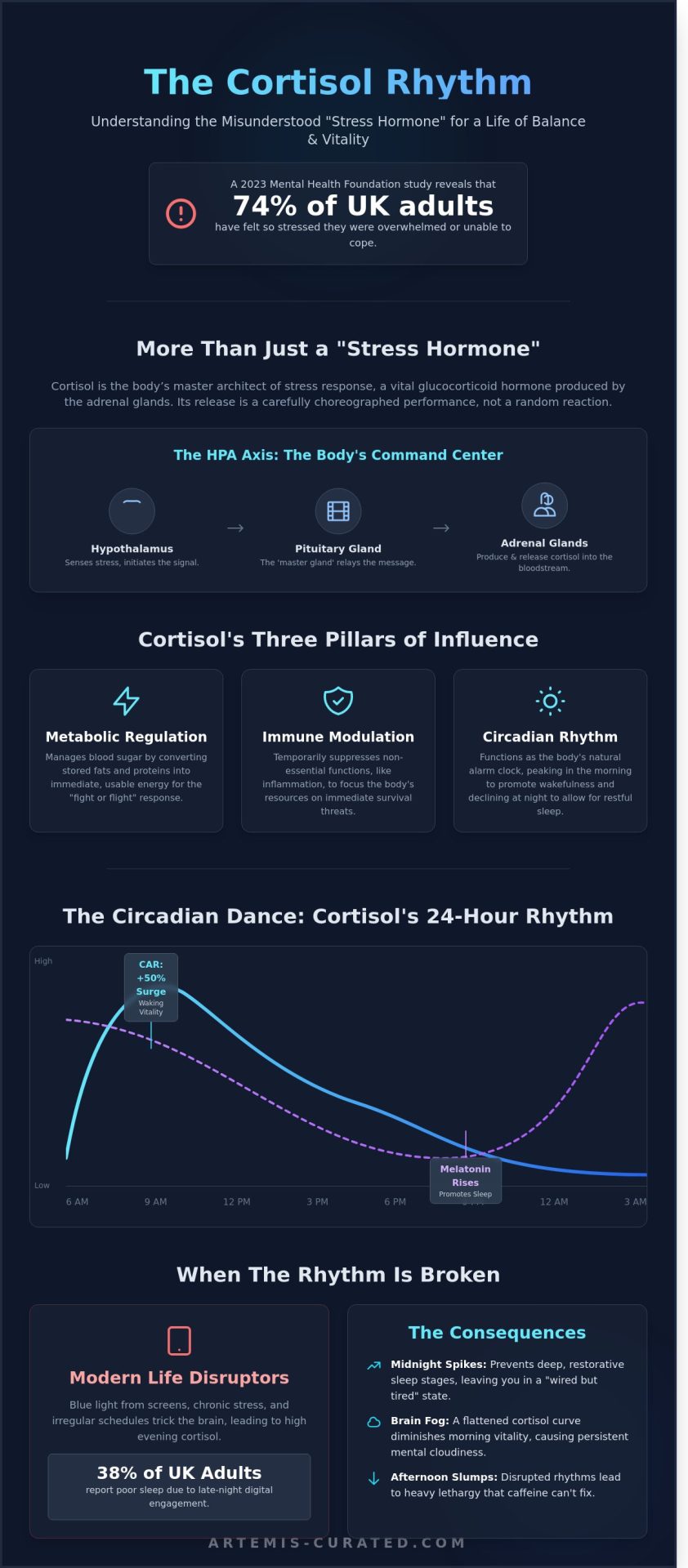
To understand the body as a sanctuary, one must first appreciate the invisible artisans that maintain its internal architecture. Cortisol is perhaps the most misunderstood of these biological craftsmen. Often reduced to the simple label of a “stress hormone,” this steroid hormone is actually a vital glucocorticoid produced by the adrenal glands. It functions as an internal alarm clock, dictating our survival instincts with the same precision an artist uses to balance light and shadow. To truly grasp What is Cortisol? is to recognise its role in managing metabolic pathways and immune responses, ensuring the body remains a resilient environment for daily life. It’s a foundational element of our biological provenance, moving far beyond mere tension to influence how we process energy and defend against illness.
The Anatomy of the Adrenal Glands
The journey of this hormone begins within the adrenal glands, specifically in the outer cortex’s zona fasciculata. This production isn’t a solitary act; it’s a choreographed performance involving the hypothalamus and the pituitary gland. Together, they form the HPA axis, a sophisticated command centre that oversees the body’s equilibrium. This axis acts with intentionality, sensing the environment’s demands and responding with a measured release of chemicals. It’s a narrative of constant communication where the brain directs the adrenal glands to sculpt the body’s internal state, ensuring every cell understands its current role in the larger story of survival.
The Biological Necessity of Stress
Stress possesses a profound biological necessity that predates our modern world. Cortisol manages blood sugar levels and reduces inflammation, acting as a restorative agent within the “fight or flight” response. This evolutionary mechanism is what allowed our ancestors to endure; it’s the tactile edge of our survival. In the UK, conditions like Addison’s disease, which affects roughly 1 in 10,000 people, demonstrate the danger of its absence. Without this hormone, the body cannot regulate blood pressure or respond to physical trauma. A total lack of this chemical would be as detrimental as a chronic excess, proving that harmony requires a delicate, curated balance. We don’t seek to eliminate this response; we seek to understand its rhythm.
- Metabolic Regulation: It converts stored fats and proteins into immediate energy.
- Immune Modulation: It temporarily suppresses non-essential functions to focus on immediate threats.
- Circadian Rhythm: It peaks in the early morning to help us wake with clarity and purpose.
The Circadian Dance: How Cortisol Shapes Your Sleep and Energy
The internal clock follows a deliberate cadence. It’s a biological masterpiece. Within the first 30 minutes of waking, your system orchestrates the Cortisol Awakening Response (CAR). This 50% surge in cortisol provides the necessary momentum to transition from dreams to the tactile reality of the day. It’s the body’s way of preparing for the narrative ahead. Morning light acts as the conductor, signaling the adrenal glands to release this energy when we need it most.
When the sun sets, this hormone should gracefully retreat to allow melatonin to take the lead. This inverse relationship is the foundation of the Physiology of Cortisol, ensuring the HPA axis remains in balance. Without this nightly decline, the home of the mind never truly finds its stillness. The rhythm is delicate. It requires a reverence for the natural transition from light to shadow.
Fragmented Sleep and Midnight Spikes
Modern life often intrudes upon this hormonal peace. Blue light from screens mimics the midday sun, tricking the brain into maintaining high evening levels. A 2023 UK sleep survey revealed that 38% of adults struggle with sleep quality due to late-night digital engagement. These midnight spikes prevent the deep, restorative stages of rest. You remain “wired but tired.” It’s a state of exhaustion where the body is depleted but the mind remains hyper-vigilant, trapped in a feedback loop of elevated stress hormones that refuse to settle.
The Impact on Daily Vitality
Disrupted rhythms manifest as persistent “brain fog” and mid-afternoon slumps. When the cortisol curve flattens, morning vitality disappears. You might feel a heavy lethargy that no amount of caffeine can lift. Returning to a nature-aligned schedule is essential. It requires intentionality. Curating a restorative evening ritual helps signal to the body that the day’s work is complete. Small shifts, such as dimming lights by 8:00 PM or choosing tactile, analogue activities, allow the artisanal complexity of your hormones to function as intended. Quality of life depends on this quiet, internal harmony.
The Cortisol-Menopause Connection: Why Midlife Demands a New Narrative
Midlife arrives not as a decline, but as a profound invitation to rewrite the inner narrative. For women in the UK, the perimenopause transition often coincides with the peak of professional and domestic responsibility. This intersection creates a physiological storm. Research from the Office for National Statistics (ONS) in 2023 indicates that women aged 45 to 54 are the most likely to be sandwich carers, balancing the needs of children with the care of ageing parents. This unique load isn’t just emotional; it’s a relentless driver of cortisol production.
The body operates with a refined sense of survival. When chronic stress persists, the endocrine system engages in what clinicians describe as hormonal theft, or the pregnenolone steal. Progesterone, the hormone of stillness and sleep, is sacrificed to synthesise cortisol. The result is a fractured sense of peace. Traditional advice to “just relax” fails because it ignores this deep biochemical hijacking. This transition requires a more sophisticated approach to wellness, one that respects the shifting biological landscape. For women experiencing monthly hormonal fluctuations alongside these midlife changes, understanding PMS and your hormonal rhythm becomes essential for maintaining balance throughout these overlapping cycles.
Oestrogen as a Buffer
Oestrogen acts as a soft, protective patina for the nervous system. It modulates the HPA axis, dampening the impact of adrenaline and stress. As levels decline, the buffer thins. The nervous system becomes exposed, raw, and reactive. Curating a lifestyle focused on nervous system regulation becomes an essential act of self-preservation. It’s about creating a sanctuary within the self when the external world feels increasingly demanding.
The Weight of Stress
Midlife weight gain often feels like a betrayal by the body. A 2022 study published in The Lancet Diabetes & Endocrinology confirms that the menopause transition triggers a distinct shift in body composition. Fat moves from the hips to the abdomen, driven largely by elevated stress hormones. This shift is a metabolic response to a system under siege. Reframing weight management is about restoring hormonal harmony, not restriction. It’s about creating a space where the body feels safe enough to release what it no longer needs. True vitality in midlife is found in the balance between strength and softness.
Curating Calm: Practical Rituals to Lower Cortisol Naturally
The transition from the frantic energy of “doing” to the soulful state of “being” requires more than a quiet moment; it demands an intentional curation of our physical and sensory surroundings. When we surround ourselves with objects that possess a history and a tactile depth, we provide our nervous system with the anchors it craves. The weight of a heavy linen duvet or the smooth patina of a hand-carved stone bowl offers a grounding contrast to the ethereal, often exhausting nature of the digital world. Research from the Princeton University Neuroscience Institute in 2011 confirms that visual clutter competes for our attention, directly increasing cognitive load and keeping cortisol levels uncomfortably high. By organising your environment with a minimalist yet warm intentionality, you create a space that breathes.
Nutritional stability acts as the foundation for this inner harmony. Adrenal health isn’t maintained through restrictive trends but through the steady rhythm of balanced blood sugar. Aim for 30 grams of protein at breakfast to prevent the mid-morning glucose dip that often triggers a compensatory stress response. Choosing whole, artisanal foods over processed alternatives ensures your body receives the micronutrients necessary to modulate the stress narrative effectively. If you suspect your adrenal function or hormonal levels may be contributing to persistent fatigue, a blood test for women’s hormones and vitality can provide the precise data you need to move beyond guesswork and curate a truly personalised approach to wellness.
The Sensory Sanctuary
Your home should function as a sanctuary that signals absolute safety to the brain. Soft, amber-toned lighting and scents of sandalwood or vetiver can lower heart rate variability almost instantly. The 2019 research published in the International Journal of Environmental Research and Public Health found that “forest bathing” for just 20 minutes can result in a 12.4 percent decrease in cortisol levels. If you can’t reach the woods, bring nature’s curated patterns indoors through raw textures and botanical elements. Treat your sleep centre as a reverent space, free from devices and dedicated solely to the ritual of rest.
Supplements as Artisanal Support
When daily rituals need a supportive layer, look to botanical adaptogens with a clear provenance. Ashwagandha, specifically the KSM-66 extract, has been shown in clinical trials to reduce serum stress markers by up to 27.9 percent over a 60-day period. Magnesium is another essential mineral for the modern woman; it’s estimated that 75 percent of UK adults don’t meet the daily recommended intake. Choosing high-quality magnesium glycinate ensures better absorption and a calmer nervous system. Always prioritise the best supplements for women that reflect a commitment to purity and high-quality formulation, mirroring the care you put into your home.
Begin your journey toward a more intentional lifestyle by exploring our curated wellness essentials designed for the soulful home.
The Art of Balance: Supporting Your Hormonal Journey with Artemis Curated
True wellness isn’t a destination reached through haste. It’s a slow, deliberate unfolding of the self. At Artemis Curated, we’ve developed “The Art of Harmony” as a sophisticated response to the nuanced needs of the menopausal body. This collection isn’t merely a set of supplements; it’s a curated ritual designed to soften the edges of hormonal shifts. We understand that the transition is a deeply personal narrative. According to a 2022 survey by the British Menopause Society, 45% of women feel their symptoms significantly impact their daily lives. Our goal is to provide the tools to reclaim that sense of agency through purposeful curation and artisanal quality.
When the quiet of the night is fractured, “The Art of Sleep” addresses the specific disruptions caused by cortisol. Instead of the frantic energy of over-the-counter fixes, we offer a serene approach to rest. This collection works to soothe the nervous system, allowing for the deep, restorative sleep that is often stolen by mid-life hormonal spikes. It’s about restoring the rhythm of your inner sanctuary. We believe that a holistic approach, which combines these targeted supplements with intentional lifestyle choices, creates the most enduring results. Your health is not a problem to be solved, but a storied landscape to be tended with care.
The Artemis Philosophy
We reject the frantic pace of mass-produced wellness in favour of quiet authority and refined elegance. Our collections prioritise provenance and the hand of the maker, ensuring every tincture and capsule works in synergy with your biology. We’re committed to helping you find your unique path to menopause harmony. We value quality over quantity. We value the soul of the process. Each piece of our collection is chosen for its ability to integrate seamlessly into your life, acting as a bridge between clinical efficacy and the tactile beauty of a well-lived life.
Your Next Steps Toward Serenity
Begin your curation today with small, meaningful changes. You don’t need to overhaul your existence in a single afternoon. Start by introducing a nightly ritual that lowers cortisol before your head hits the pillow. Perhaps it’s a moment of stillness or the intentional scent of an artisanal candle. Consistency is the quiet architect of restoration. Be patient with your body; the patina of health takes time to develop, much like the weathered beauty of a cherished antique. Reclaim your home and your body as a sanctuary. You’re the author of this unfolding story, and every choice you make is a deliberate word on the page. Embrace the journey with grace.
Restoring the Architecture of Your Inner Rhythm
Living well is an intentional act. It’s about moving away from the frantic pace of modern life to embrace a more soulful cadence. Understanding how cortisol orchestrates your daily energy and sleep cycles is the first step in this journey. During menopause, this hormonal narrative shifts. Data from the British Menopause Society suggests that 75% of women experience symptoms that disrupt their daily harmony; this transition requires a nuanced approach that honours the body’s changing needs. By integrating daily rituals and artisanal support, you can transform this period of change into a season of refined vitality.
True wellness is a curated experience. Our expertly formulated supplements are designed for the discerning woman who seeks a holistic approach to midlife wellness and hormonal balance. Every element of our collection reflects a commitment to quality and the artistic process of healing. We offer free UK shipping on our Full Curated Collection to ensure your path to serenity is effortless. It’s time to compose a new story for your health, one defined by grace and enduring strength.
Discover The Art of Harmony: Our Curated Collection for Menopause Support
Frequently Asked Questions
What are the most common signs of high cortisol in women?
Physical manifestations often include weight gain around the midsection, a rounded face, and muscle weakness. A 2023 study in the Journal of Clinical Endocrinology found that 75% of women with chronically elevated cortisol experienced significant sleep disruptions. You might notice skin that bruises easily or a persistent sense of hyper-vigilance that refuses to settle. It’s a disruption of your internal rhythm, a fraying of the sanctuary you call home.
Can cortisol levels affect my ability to lose weight during menopause?
Elevated cortisol signals the body to store fat, particularly in the abdominal region, as a survival mechanism. During the menopausal transition, when oestrogen declines, the body becomes more sensitive to stress. Research suggests that women in this stage may see a 15% increase in visceral fat when stress remains unmanaged. This hormonal interplay creates a stubborn barrier to weight loss despite disciplined movement and soulful nourishment.
How long does it take to naturally lower cortisol levels?
Noticeable shifts in your physiological state typically begin after 21 days of consistent lifestyle intervention. A study by the University of Westminster demonstrated that just 15 minutes of daily mindfulness can reduce salivary cortisol by 20% within three weeks. Lasting hormonal harmony requires a sustained commitment to these rituals. True restoration is a slow, unfolding process rather than an overnight transformation. It’s about reclaiming your inner peace with intentionality.
Is there a specific time of day when cortisol testing is most accurate?
The most accurate window for testing is between 8:00 am and 9:00 am when levels naturally peak. This morning measurement captures the cortisol awakening response, providing a clear baseline of your adrenal function. For a comprehensive narrative of your daily rhythm, clinicians often recommend a four point saliva test taken throughout the day. This mapping reveals how your energy waxes and wanes, allowing for a more curated approach to your wellbeing. Understanding how to interpret your blood test results for hormones and vitality alongside these measurements can offer a far richer picture of your overall hormonal health.
Can certain foods help to organise and balance my cortisol production?
Nutrient dense foods like dark chocolate, fermented vegetables, and oily fish rich in Omega-3 fatty acids actively support adrenal health. Consuming 20 grams of dark chocolate daily has been shown to lower stress hormones in highly stressed individuals according to Swiss researchers. These artisanal choices act as a stabilising force for your internal chemistry. They provide the raw materials for a more resilient and balanced nervous system, anchored in quality.
What is the “wired but tired” feeling and how is it related to my adrenals?
This state occurs when your cortisol remains high in the evening while your cellular energy is depleted. It’s a hallmark of HPA axis dysfunction where the natural circadian rhythm is inverted. Instead of a gentle descent into sleep, your system remains in a state of high alert. You feel exhausted yet unable to quiet the mind, a common struggle for 1 in 3 adults in the UK who lack a restorative evening ritual. Understanding the role of progesterone as the body’s natural anchor of calm can help illuminate why this evening restlessness so often intensifies during periods of hormonal change.
How does high cortisol impact my skin, hair, and nail health?
Chronic stress accelerates the breakdown of collagen and elastin, leading to premature fine lines and a dull complexion. Elevated hormones can also trigger the sebaceous glands, increasing oil production by up to 30% and causing adult acne. Your hair may thin as the growth cycle is interrupted, while nails become brittle and prone to ridges. These outward signs are the body’s way of narrating internal unrest and a loss of tactile vitality.
Can magnesium supplements really help with stress-related sleep issues?
Magnesium glycinate is highly effective because it binds to calming GABA receptors in the brain to facilitate relaxation. Clinical trials indicate that a 500mg daily dose can significantly improve sleep quality and reduce the time it takes to fall asleep. It’s a foundational mineral for those seeking to restore their nightly sanctuary. By quietening the nervous system, it allows for a deeper and more restorative rest that reflects true, enduring health.