


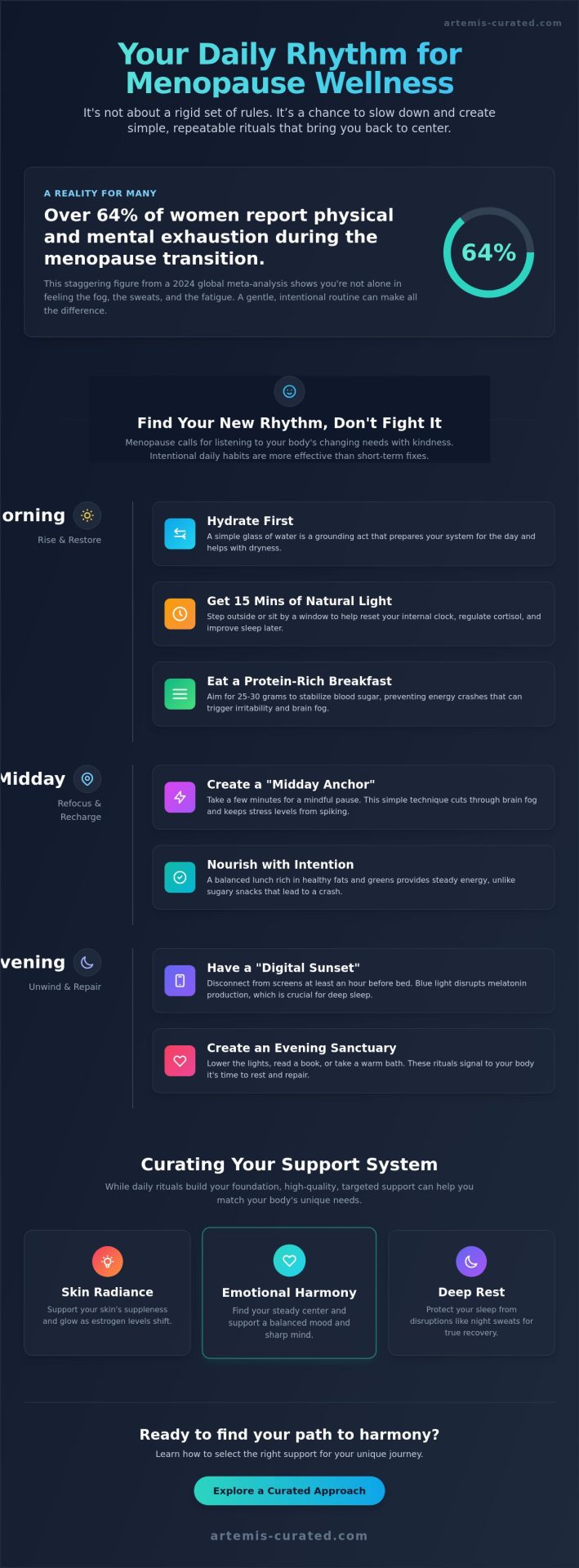
Did you know that a 2024 global meta-analysis found that over 64% of women report physical and mental exhaustion during the menopause transition? It’s a staggering figure that reflects a deeply personal reality. You might find yourself staring at a screen through a thick layer of brain fog or waking up at 3 a.m. drenched in a night sweat that feels like an unwelcome guest. Creating a wellness routine for menopause shouldn’t feel like another exhausting project on your list. It’s actually a chance to slow down and select the rituals that bring you back to center.
We know you’re looking for a way to feel like yourself again, where your skin feels supple and your mind stays sharp. You want a simple, repeatable rhythm that feels less like a chore and more like a moment of peace. This guide will show you how to build a sustainable routine that restores balance to your body and mind. We’ll explore how to select the right support for your sleep, radiance, and emotional harmony, ensuring your daily transition into this new chapter is one of grace and quiet strength.
Key Takeaways
- Learn how the decline of estrogen affects your daily rhythm and why a holistic approach is the best way to find your balance again.
- Discover how simple morning habits, like natural light and specific nutrients, can reset your internal clock and boost your energy for the day.
- Master the “Midday Anchor” technique for creating a wellness routine for menopause that cuts through brain fog and keeps stress levels low.
- Find out how to set up an evening sanctuary and use a “digital sunset” to protect your sleep from disruptions and night sweats.
- Learn how to select high-quality, targeted support that matches your unique symptoms, from skin radiance to emotional harmony.
Understanding the Shift: Why Your Body Needs a New Rhythm
Menopause isn’t just a list of symptoms to be checked off. It’s a profound shift in how your body communicates with you. When we talk about creating a wellness routine for menopause, we aren’t suggesting a rigid set of rules that you’ll eventually feel guilty for breaking. Instead, think of it as a holistic system of habits. It’s a way to coordinate your daily life with your body’s changing biology, ensuring you feel supported rather than strained by the transition.
At the heart of this change is the decline of estrogen. This isn’t a small event; it has a ripple effect that touches everything from your bone health to how your brain processes information. If you’re looking for a comprehensive overview of menopause, you’ll see that these changes are natural, yet they require a new approach to daily care. Estrogen is the architect of female vitality. As its levels shift, your body’s internal blueprint changes too, requiring a different kind of structural support.
One of the most important things to manage during this time is cortisol, your body’s primary stress hormone. During menopause, your system becomes more sensitive to stress. High cortisol can worsen hot flashes and make deep sleep feel almost impossible to achieve. A good routine acts as a buffer. It’s a way to support your body’s natural wisdom and help it find a steady pace in a world that often feels too fast and demanding.
The Role of Hormones in Your Daily Harmony
Hormones don’t just exist; they flow. While we often talk about “balance,” it’s more helpful to think about “rhythm.” Estrogen affects your mood and bone density, acting as a steady pulse for your health. When that pulse changes, you might feel out of sync with your own life. Creating a wellness routine for menopause helps you find a new beat. It’s about learning to work with your body’s new levels rather than fighting to get back to where you were a decade ago. This shift is an invitation to listen more closely to what your body is asking for right now.
Why Intentionality Matters More Than Intensity
It’s easy to get caught up in the search for quick fixes. We’re often told to just “work harder” or “try this one thing,” but menopause calls for something deeper. It’s about listening to your body’s changing needs with kindness and patience. Sustainable, curated lifestyle changes are always more effective than intense, short-term bursts of effort that leave you feeling depleted. By choosing rituals that truly serve you, you’re building a foundation for long-term health. For a deeper look at this approach, you can explore our menopause pillar to see how intentionality leads to true harmony.
Morning Rituals: Nourishing Your Body and Boosting Energy
The first few hours of your day are a canvas. Instead of rushing into a list of chores, think of your morning as a time for intentional selection. When creating a wellness routine for menopause, how you wake up matters just as much as what you do. Start with a simple glass of water. Hydration is the first step in addressing the dryness and thirst that often accompany hormonal shifts. It’s a quiet, grounding act that prepares your system for the day ahead.
Natural light is another essential tool for your morning. Stepping outside or sitting by a bright window for 15 minutes helps reset your circadian rhythm. This simple habit signals to your brain that it’s time to be awake, which helps regulate cortisol levels and improves your chances of better sleep later. This practice is a core part of A Holistic Approach to Menopause Wellness, focusing on your body’s internal clock rather than just chasing symptoms.
Nutrition for Hormonal Support
Your first meal should feel like a steady foundation. Aim for a protein-rich breakfast, perhaps 25 to 30 grams, to help stabilize your blood sugar. This prevents the energy crashes that can trigger irritability and brain fog. A Mediterranean-style approach, rich in healthy fats and leafy greens, provides the antioxidants your body craves right now. Don’t forget calcium-rich foods like Greek yogurt or almonds; they are vital for maintaining bone density as your biology changes. For those looking to refine this balance, the art of harmony can be a beautiful addition to your morning ritual.
Movement That Honours Your Joints
Movement during menopause shouldn’t be about punishment or extreme intensity. Instead, focus on strength and flexibility. Weight-bearing exercises, like walking with light weights or gentle resistance training, are non-negotiable for protecting your bones. Yoga and stretching help maintain the elasticity of your joints, which can often feel stiff as oestrogen levels fluctuate. The goal is to feel energized and strong, not exhausted and depleted.
Finally, take five minutes to set a mental intention. Morning anxiety can often feel like a physical weight, but deciding on a single focus for the day can help clear the air. It’s about choosing how you want to feel, whether that is calm, productive, or simply present. By layering these small, thoughtful habits, you turn your morning from a frantic race into a curated start that supports your entire well-being.
The Midday Anchor: Managing Stress and Mental Clarity
The midday hours often introduce a specific kind of challenge. You might feel the sharp clarity of the morning begin to blur into what many call “brain fog.” It’s the sensation of searching for a word that was just on the tip of your tongue; it’s staring at an email for several minutes without absorbing a single sentence. When creating a wellness routine for menopause, it’s essential to build in a “Midday Anchor.” This is a five-minute ritual designed to ground you before the afternoon rush takes over. It isn’t a luxury; it’s a necessary pause to lower cortisol levels and reclaim your focus for the rest of the day.
Cortisol and the Menopause Connection
Stress during this transition often feels more intense because your body’s ability to bounce back from cortisol spikes has changed. Cortisol acts as the rhythm of inner vitality, but when it stays high, it disrupts everything from your mood to your temperature regulation. Try a simple box-breathing technique: inhale for four seconds, hold for four, exhale for four, and hold for four. This resets your nervous system in less than a minute. For a deeper look at managing these internal waves, you can explore our cortisol guide.
Lunch is about more than just refueling your body. How you eat is just as important as what you eat. Instead of eating at your desk while scrolling through your phone, try to step away for fifteen minutes. Mindful eating helps your digestion and prevents the bloating that often comes with hormonal shifts. Focus on the texture and flavor of your food. It’s a small act of selection that reinforces the idea of your midday as a sanctuary rather than a hurdle to be cleared.
Managing hot flushes in professional or social settings requires a practical, calm approach. Layering your clothing with natural, breathable fabrics like silk or linen is a simple but effective strategy. Keep a small mist of rosewater or a handheld fan nearby. If a flush starts during a meeting, remember that a brief pause to take a sip of cold water is a perfectly natural gesture. It’s about maintaining your composure through small, intentional actions that prioritize your comfort.
Small Pockets of Peace
Sometimes, the digital noise of the day becomes overwhelming. Creating “small pockets of peace” means unplugging from your devices for even three minutes. Use sensory grounding: notice the weight of your feet on the floor or the scent of a specific essential oil on your wrist. These tiny moments are the building blocks of creating a wellness routine for menopause that actually lasts. If you need support in finding that internal balance, you might find the art of harmony helpful for your midday reset.
Evening Sanctuary: Prioritising Deep Rest and Skin Radiance
As the sun begins to set, your home should transition into a space of quiet restoration. When creating a wellness routine for menopause, the hours before bed are perhaps the most vital for reclaiming your energy. This isn’t just about closing your eyes; it’s about curating an environment that actively supports your body’s need for cooling and calm. Start by looking at your bedroom. Swap synthetic sheets for breathable linen or cotton to help manage night sweats. Keeping the room at a steady 18 degrees Celsius can make a significant difference in how often you wake up during the night.
A “Digital Sunset” is a simple but powerful ritual. About an hour before you intend to sleep, put away your phone and tablet. The blue light from these screens is the enemy of menopause sleep because it suppresses melatonin, the hormone that tells your brain it’s time to rest. Instead, choose a physical book or listen to soft music. This intentional unplugging allows your nervous system to drift slowly toward sleep rather than being forced into it. It’s a small act of selection that protects your peace.
The Art of Winding Down
Your evening ritual can be a sensory experience that signals safety to your body. Magnesium is a wonderful ally here. A warm bath with magnesium salts or a light snack like pumpkin seeds can help relax your muscles and ease the restless legs that many women experience. Try to maintain a consistent sleep-wake cycle, even on weekends. This regularity helps anchor your body’s internal clock. If your mind feels crowded with tomorrow’s tasks, use a “brain dump” journal. Writing down your worries for five minutes can lift the weight of anxiety, making it easier to fall into a deep, uninterrupted rest. For those seeking a deeper transition into rest, exploring the art of sleep can be a beautiful final step in your day.
Nurturing Your Radiant Self
Menopause often brings changes to the skin, making it feel drier and thinner as estrogen levels drop. This is the perfect time to focus on supporting your body’s natural collagen production. Your evening skincare should be about deep hydration and gentle nourishment. While topical creams provide immediate comfort, true radiance comes from a combination of internal support and external care. Drinking a glass of water before your wind-down routine begins ensures your skin stays hydrated from the inside out while you sleep. By treating your evening skincare as a moment of self-care rather than a chore, you reinforce the harmony you’ve built throughout the day.
Curating Your Support: The Role of Targeted Supplements
When you focus on creating a wellness routine for menopause, it’s helpful to view supplements not as a quick fix, but as a deliberate choice in your daily care. A random assortment of vitamins can often feel cluttered and confusing. Instead, look for a curated collection that targets your specific needs. Choosing clean, high-quality formulations ensures that what you put into your body is as intentional as the environment you’ve built around you. This isn’t about mere consumption. It’s about the act of selection, moving away from mass-produced noise toward support that possesses a distinct purpose.
Quality matters because your body is more sensitive during this transition. You want to avoid fillers and synthetic additives that can disrupt your system further. By choosing targeted support, you’re giving your body the specific nutrients it needs to navigate the decline in estrogen we discussed earlier. It’s a way to reinforce the harmony you’ve already started building through your morning light and evening rituals. When your internal support matches your external habits, the results feel more cohesive and lasting.
Harmony, Sleep, and Radiance
Different symptoms require different approaches. We’ve identified specific areas where targeted support can make the most significant impact:
- The Art of Harmony: This is our foundational menopause support. It’s designed for those seeking a steady sense of balance throughout the day, helping to manage mood shifts and the physical heat of hot flashes.
- The Art of Sleep: If your primary struggle is the night-time rest we explored in the previous section, this provides deep sleep support. It helps you drift off and stay asleep, even when night sweats try to intervene.
- The Art of Radiance: This focuses on your skin, hair, and nail health. It provides the internal building blocks for vitality that external creams alone can’t reach.
Creating a Sustainable Habit
Consistency is the secret to any successful rhythm. You can make your new routine easier to maintain by using “habit stacking.” This simply means taking your supplements alongside an existing habit, like your morning glass of water or your evening “digital sunset.” When the act of taking your supplements feels like a natural part of your day, you’re more likely to stick with it. It becomes a ritual of self-care rather than another item on a to-do list.
For those who want a complete, holistic approach to their transition, the Full Curated collection brings all these elements together. It allows you to address every facet of your well-being, from your energy levels in the morning to your rest at night. Your wellness routine is an evolving personal story. It’s a reflection of how you choose to care for yourself during this significant chapter, surrounding yourself with support that is as refined and purposeful as the life you are leadng.
Embracing Your New Rhythm with Confidence
Finding your flow during this transition is a journey of intentional selection. We’ve explored how simple rituals, like morning light and a midday pause, can ground your nervous system and clear the fog. By turning your bedroom into a cooling sanctuary and choosing clean, expertly formulated supplements, you’re doing more than just managing symptoms. You’re reclaiming your sense of self. Creating a wellness routine for menopause is about building a foundation of holistic harmony that truly fits into your modern lifestyle.
This routine isn’t a rigid list of rules, but an evolving story of how you choose to care for your body and mind. Our collections are designed to act as a bridge, helping you navigate these changes with grace and quiet strength. You deserve to feel vibrant, rested, and entirely like yourself again. Take the next step in your journey toward lasting balance and vitality. It is about choosing quality over quantity and soul over fleeting trends.
Explore our curated collections for menopause harmony to find the targeted support your body is asking for. It’s time to welcome this new chapter with confidence and peace.
Frequently Asked Questions
What is the best exercise for menopause symptoms?
The most effective exercises during this transition are weight-bearing activities and resistance training. These help protect your bone density and keep your metabolism steady as your hormone levels shift. You don’t need high-intensity workouts; simple walking or strength training with light weights works wonders. Yoga is also a beautiful way to keep your joints flexible and your mind calm. It’s about finding movement that makes you feel strong rather than depleted.
How can I reduce menopause brain fog through my routine?
You can clear the mental haze by focusing on blood sugar stability and intentional breaks. Eating protein-rich meals prevents the energy crashes that trigger fog, while a five-minute reset during the day lowers cortisol. Staying hydrated is also vital since even mild dehydration can slow down your thinking. It’s about creating small windows of clarity throughout your busy day to help you stay focused on what matters most.
Do I need to take supplements if I eat a healthy diet during menopause?
While a nutrient-dense diet is your foundation, supplements can provide the targeted support your body needs during hormonal shifts. Creating a wellness routine for menopause often requires specific nutrients like magnesium or vitamin D that are hard to get in high enough amounts from food alone. Think of supplements as a way to fill those specific gaps and ensure your system has everything it needs to stay in harmony.
How long does it take for a menopause wellness routine to show results?
Most women begin to notice a shift in their energy and mood within 4 to 12 weeks of starting a consistent routine. While some habits, like better hydration or a “digital sunset,” can help you feel better in just a few days, your body needs time to adjust to new nutrient levels. Patience is a key part of the process. It’s about building a rhythm that lasts for years, not just weeks.
Can a wellness routine help with menopause-related weight gain?
A well-curated routine helps manage weight gain by lowering stress hormones and improving sleep quality. When you sleep deeply and keep your cortisol levels in check, your body is better at regulating hunger and storing energy. It isn’t about restrictive dieting; it’s about supporting your metabolism through movement and stable blood sugar. This holistic approach makes it much easier to maintain a healthy weight while feeling nourished and satisfied.
Is it ever too late to start a wellness routine for menopause?
It is never too late to begin creating a wellness routine for menopause, whether you are just starting the transition or are well past it. Your body is always capable of finding a new balance when you provide the right support. Starting today can improve your bone health, skin radiance, and sleep quality for the long term. Every small, intentional choice you make now contributes to your future vitality and daily comfort.
How do I manage hot flushes at night?
You can manage night-time heat by keeping your bedroom at a steady 18 degrees Celsius and choosing breathable linen bedding. Avoiding heavy meals or alcohol late in the evening also helps keep your body temperature stable. Many women find that using targeted support like the art of sleep helps them stay in a deeper rest, making it easier for the body to regulate its internal thermostat throughout the night.
What are the most important vitamins to include in a menopause routine?
The most vital nutrients for this stage include magnesium for relaxation, vitamin D and calcium for bone strength, and B vitamins for energy. These work together to support your nervous system and your physical structure. Choosing a clean, high-quality formulation ensures your body can actually absorb and use these vitamins. Focus on a curated selection that matches your primary symptoms rather than taking a generic multivitamin that may contain unnecessary fillers.