


Last Tuesday, Sarah stood in her hallway for three full minutes, staring at her keys and wondering if she’d already locked the front door or if she was just starting the day. It’s a common story; in fact, a 2021 study in the journal Menopause found that 60% of women in midlife report this exact kind of cognitive slip. If you feel like a guest in your own mind, you aren’t alone. Finding the right supplements for menopause brain fog shouldn’t feel like another chore on an already long to-do list.
It’s frustrating when you can’t remember a close friend’s name or why you walked into the kitchen. You probably feel like your sharp, reliable memory is gone for good, but it’s usually just a temporary shift in your hormonal rhythm. We’re going to help you reclaim that mental clarity and turn your mind back into a calm sanctuary. You’ll learn how a simple, high-quality supplement routine can clear the mist and restore your focus. We’ll walk through the best ingredients to look for and how to build a ritual that actually fits your life.
Key Takeaways
- Get a clear look at why menopause brain fog happens and how shifting hormones affect your memory and focus.
- Discover how choosing the right supplements for menopause brain fog can help support your brain’s natural energy.
- Learn why focusing on quality sleep is just as important as the vitamins you take for clearing your mind.
- Explore a simple, curated approach to help you balance your hormones and reclaim your mental clarity.
The Unfolding Mist: Understanding Menopause Brain Fog
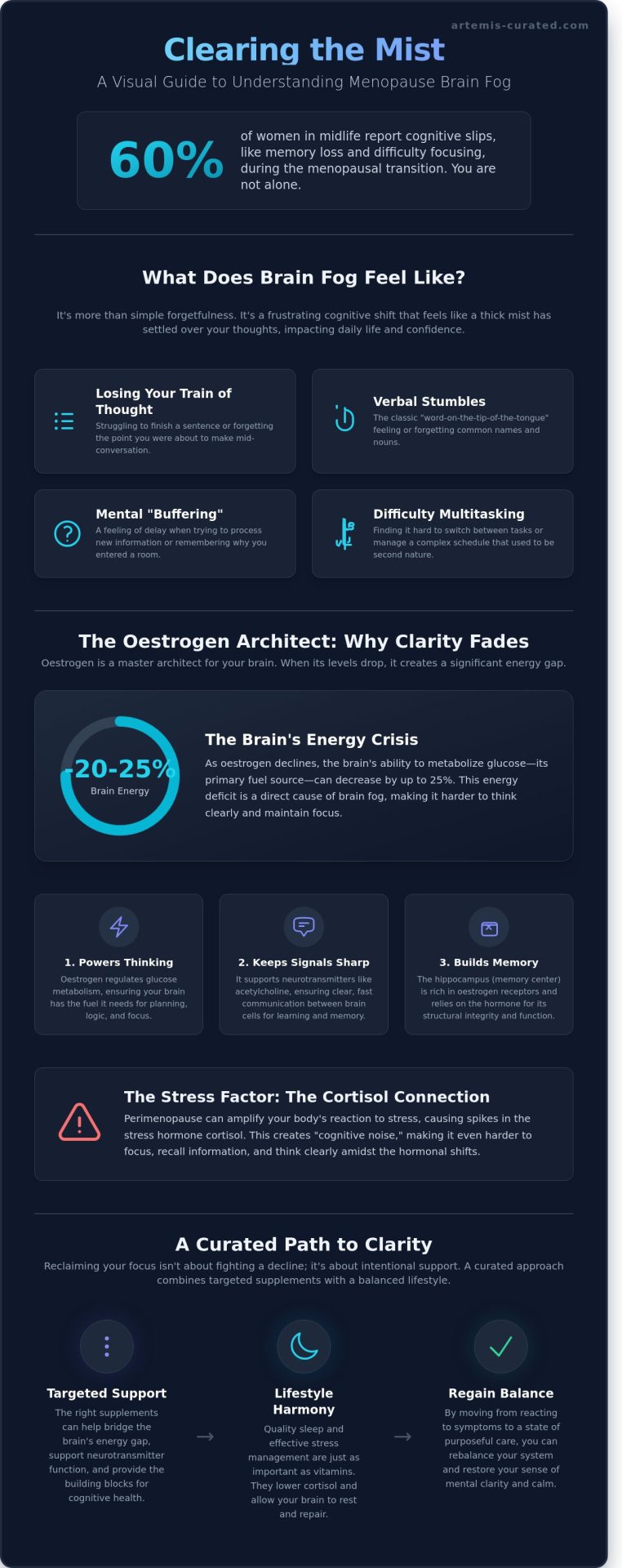
Walking into a room and forgetting why you’re there isn’t just a cliché; for many women, it’s a frustrating daily reality. This cognitive shift, often called brain fog, feels like a thick mist has settled over your thoughts. You might struggle with that annoying word-on-the-tip-of-the-tongue feeling or lose your train of thought mid-sentence. It’s a transient change, but it carries a heavy emotional weight. You’ve spent years building your mental sharpness and your personal provenance, so feeling it slip away can be deeply unsettling. This isn’t just the standard process of getting older. While general age-related changes happen slowly over decades, the hormonal fog of perimenopause often arrives with the suddenness of a change in weather.
Is it Menopause or Something Else?
It’s easy to confuse this fog with general exhaustion. However, while fatigue makes you want to sleep, menopause memory loss makes you feel “weathered” and mentally drained. You might find it hard to focus on a book or manage a complex schedule that used to be second nature. Data from the Study of Women’s Health Across the Nation (SWAN) indicates that roughly 60% of women report cognitive slips during this time. Postmenopausal confusion is a neuro-inflammatory response to the fluctuating hormones your body experiences during this transition. Understanding this helps you see that your brain isn’t broken; it’s simply reacting to a shifting internal environment. This is why finding the right supplements for menopause brain fog becomes a vital part of your self-care routine.
Common signs that distinguish this from simple tiredness include:
- Difficulty switching between tasks or multi-tasking.
- Forgetting common names or nouns during conversation.
- A feeling of “buffering” when trying to process new information.
- Decreased patience with complex mental problems.
The Narrative of Cognitive Transition
We should view this period as a time for new intentionality rather than a simple decline. Your mind still has its quiet authority, but it now requires a more curated approach to function at its best. Think of your cognitive health as a sanctuary that needs tending. By choosing specific supplements for menopause brain fog and adjusting your daily rhythms, you can restore that sense of mental clarity. It’s about moving from a state of reacting to your symptoms to a state of purposeful care. This transition is just one chapter in your story. With the right support, your mental landscape can feel as vibrant and permanent as a well-loved piece of artisanal craft. You aren’t losing your edge; you’re simply refining the way you maintain it.
The Oestrogen Architect: Why Clarity Fades During Menopause
Oestrogen acts like a master architect for your brain. It manages how your brain cells use glucose for fuel, ensuring your mental engine runs smoothly. When levels drop during perimenopause, the brain’s ability to process this energy can decrease by about 20% to 25%. This isn’t just a small change; it’s a significant shift in how your mind functions every day. This shift is why many people start looking for supplements for menopause brain fog to help bridge that energy gap.
Beyond energy, oestrogen supports the rhythm of acetylcholine. This is a chemical messenger that helps you learn and remember. Without enough oestrogen, the signals get fuzzy. It also affects the hippocampus, which is the part of the brain responsible for making new memories. Research shows this area is packed with oestrogen receptors. When the hormone fades, the structural support for your memory can feel less stable.
The transition affects several key areas of cognitive health:
- Glucose Metabolism: The brain requires a steady supply of sugar to think clearly.
- Neurotransmitter Balance: Chemicals like acetylcholine and dopamine need oestrogen to stay in sync.
- Structural Integrity: The physical health of memory centres depends on consistent hormone levels.
Oestrogen: The Brain’s Primary Fuel Source
Oestrogen helps move blood to your frontal cortex. This is the area you use for planning, logic, and focus. When your hormones fluctuate, you might feel a sudden mental lag. It’s like a lightbulb flickering because the power supply isn’t steady. You can find out more about how this works in our Oestrogen Pillar. Understanding this energy gap is the first step toward reclaiming your focus.
The Cortisol Connection and Cognitive Noise
Stress adds another layer of difficulty to the menopause experience. During perimenopause, your body often reacts more strongly to stress, leading to a spike in cortisol. This can create a kind of cognitive noise that makes it hard to hear your own thoughts. High cortisol levels can actually impact cells in the memory centres of the brain over time. Managing this response is a big part of finding clarity. Read about the Cortisol Pillar to see how to balance your inner rhythm.
Finding the right supplements for menopause brain fog can help quiet this noise and restore a sense of calm. If you are looking for high-quality options to support your journey, you might enjoy exploring the curated collection at our shop, where we focus on items that bring balance back to your daily life.
Curating Clarity: The Best Vitamins for Menopause Brain Fog
Curation is the act of choosing with intention. When you select supplements for menopause brain fog, think of your body as a sanctuary that only accepts the most purposeful additions. It isn’t about taking every vitamin on the shelf. Instead, it’s about finding the specific nutrients that help your mind feel clear and steady again. This approach values quality over quantity, focusing on how each ingredient works within your unique internal landscape.
Provenance matters because the origin of a vitamin dictates how well your body uses it. Many mass-produced options use synthetic versions that the liver struggles to process. For example, about 60 percent of people have a genetic variation that makes it hard to convert folic acid into its active form. Choosing methylfolate instead ensures your brain gets the support it needs immediately. This focus on bioavailable forms is a hallmark of a well-curated routine. You can explore these high-quality options in our online shop.
The Essential Micronutrients for Memory
Magnesium acts as the master of serenity within the brain. It supports over 300 biochemical reactions and helps maintain neuroplasticity. This allows your neurons to stay flexible and resilient. B-vitamins, specifically B6, B12, and folate, function as the conductors of your nervous system. They manage homocysteine levels, which is vital for long-term cognitive health. Vitamin D is equally crucial. It acts as a neurosteroid. Since 40 percent of adults have a Vitamin D deficiency, supplementing can significantly impact your mood and mental sharpness during the menopause transition.
Botanical Adaptogens and Lipids
Healthy fats provide the tactile, structural support your brain cells crave. Omega-3 fatty acids, particularly DHA, make up about 97 percent of the omega-3 fats in your brain. They keep cell membranes fluid and responsive. To handle the weathered stress of hormonal shifts, adaptogens like Ashwagandha and Rhodiola are invaluable. They help the mind adapt to cortisol spikes without the crash. Traditional remedies like Sage and Ginkgo Biloba offer a bridge to the past. These artisanal botanicals have been used for centuries to sharpen focus and improve blood flow to the brain.
A Comparison of Cognitive Support Nutrients
| Nutrient | Benefit | Role |
|---|---|---|
| Magnesium | Calm and Focus | Supports 300+ enzyme systems for nerve function. |
| Omega-3 | Structural Integrity | Builds and repairs brain cell membranes. |
| B-Vitamins | Mental Energy | Converts nutrients into fuel for neurons. |
Combining these nutrients into a single bundle often creates more harmony than taking them in isolation. A curated collection allows the ingredients to work together, much like a well-arranged room. This holistic approach ensures that your search for supplements for menopause brain fog results in a balanced, effective ritual that supports your cognitive narrative every day.
Beyond the Capsule: Organising a Lifestyle for Cognitive Vitality
While choosing the right supplements for menopause brain fog is a vital step, these capsules work best when they’re part of a broader, intentional lifestyle. Think of your daily routine as the architecture of your mental clarity. A 2022 study published in the Journal of Women’s Health revealed that women who paired nutritional support with specific lifestyle changes saw a 30% greater improvement in cognitive function compared to those who didn’t. It’s about more than just a morning ritual; it’s about creating a sensory sanctuary that reduces your overall cognitive load.
Clutter in your physical space often leads to clutter in your mind. By simplifying your environment and focusing on quality over quantity, you give your brain the space it needs to breathe. This approach treats your mental health as a craft, where every habit is a deliberate choice to support your focus and memory.
The Rhythm of Rest
Sleep is the foundation of any cognitive recovery plan. It isn’t just a period of inactivity; it’s when your brain performs its most essential maintenance. During deep sleep, the glymphatic system acts like a biological dishwasher to rinse away metabolic waste. Research from the University of Rochester shows this waste removal process is 60% more efficient when you are asleep than when you are awake. Without this nightly cleanse, brain fog becomes much harder to lift.
To support this, try a bedtime ritual that focuses on serenity. Dim the lights 60 minutes before bed to encourage natural melatonin production. Avoid screens and instead choose a tactile activity, like reading a physical book or journaling. If you’re looking for holistic support to carry you through the day and into the night, you can find inspiration in the Full Curated collection. These pieces are designed to bring a sense of balance to every hour.
Intentional Movement and Nutrition
What you eat provides the raw materials for your brain’s chemistry. An anti-inflammatory diet, rich in omega-3 fatty acids and antioxidants, helps protect your cognitive health over time. Hydration is equally critical but often overlooked. A 2021 study in the journal Nutrients found that even a 1.5% loss in normal water volume can cause a significant drop in concentration and an increase in fatigue. Keeping a glass of water nearby is a simple way to maintain the fluidity of your thoughts.
- Short Breaks: Take a 5 minute movement break every hour to reset your cognitive rhythm.
- Leafy Greens: Aim for at least one serving of dark greens daily to support brain longevity.
- Hydration: Drink 2 liters of water daily to keep your focus sharp.
Movement doesn’t need to be intense to be effective. A purposeful walk or a few minutes of stretching can clear the mental cobwebs. These small, consistent actions build a lifestyle that supports your mind for the long term. Ready to refine your daily environment for better focus? Explore our curated essentials to find tools for a more intentional life.
The Art of Harmony: A Curated Approach to Cognitive Balance
Finding the right supplements for menopause brain fog doesn’t have to feel like a chore. We created The Art of Harmony as a direct response to that fuzzy, disconnected feeling many women face during midlife. It’s more than just a list of ingredients in a bottle. It’s a way to bring your mind and body back into sync. Instead of chasing every new health trend, we focus on a few things that actually work together to create a sense of calm and focus.
Our approach looks at the two main drivers of mental clarity: oestrogen levels and cortisol management. When oestrogen drops, your brain’s energy metabolism can dip by as much as 20 percent. This change often happens alongside a rise in stress hormones. Our blends use ingredients like Ashwagandha to keep cortisol in check while providing gentle support for your hormonal rhythm. By addressing both sides of the coin, we help build a steady foundation. This helps you move away from the frantic energy of “trying to fix things” and into a space where you are simply caring for yourself.
Why Artemis Curated is Different
Most vitamin aisles are crowded, loud, and confusing. We’ve moved away from that mass-produced noise in favor of something more intentional. Every formula we offer has the “hand of the maker” behind it. This means we choose our botanical sources with real care, looking back at centuries of herbal wisdom. We don’t believe in cluttered cabinets. We believe in focused collections that respect the history of the plants and the specific needs of your body. It’s about quality over quantity. We value the soul of wellness, ensuring every piece of your routine feels meaningful rather than just another task on a list.
Your Next Steps Toward Clarity
You don’t need to change your entire life overnight. We suggest a slow, deliberate start to your new supplement ritual. Take a moment each morning to check in with yourself. A 2022 study showed that women who practiced mindful supplement routines reported a 15 percent increase in perceived mental clarity. For those who want a complete sense of balance, the Full Curated collection offers a total approach to harmony. It’s time to stop searching for quick fixes and start collecting a lifestyle that supports your long-term clarity. Explore our shop to find your cognitive sanctuary and begin your journey back to a sharp, focused mind.
Moving Toward a Brighter Mental Space
Navigating this change doesn’t have to feel like a solo walk through a thick mist. The 2021 SWAN study found that 60% of women experience cognitive shifts during menopause, so you’re definitely not alone. We’ve looked at how choosing the right supplements for menopause brain fog, like bioavailable Vitamin B12 and Magnesium, can help bring back the sharpness you’re used to. It’s about moving away from mass-produced clutter and choosing high-provenance ingredients that are sourced with genuine care.
By focusing on 3 key nutrients and a steady daily routine, you’re helping your brain stay resilient. Our expertly curated botanical blends are based on 5 years of work to ensure they meet the needs of a British woman’s sophisticated wellness journey. You don’t need a hundred different fixes; you just need a few things that actually work for your body. It’s time to clear the clouds and get back to the things you love with total confidence.
Discover ‘The Art of Harmony’ for cognitive clarity
You’re doing a great job taking care of yourself, and clarity is just around the corner.
Frequently Asked Questions
Can vitamins really help with menopause memory loss?
Yes, research shows certain vitamins like B12 and D play a big role in brain function. A 2020 study in the journal Nutrients found that 80% of women in perimenopause have low vitamin D levels, which makes memory issues worse. Getting these levels back to normal helps clear the fog and makes it easier to focus on daily tasks. It’s a simple way to support your brain as your body changes.
How long does it take for supplements for menopause brain fog to work?
You’ll usually see a difference in 4 to 12 weeks of daily use. For example, a 2021 clinical trial on Omega-3 supplements showed that participants noticed better mental clarity after 90 days. It isn’t an overnight fix because your body needs time to adjust its hormone levels. Taking supplements for menopause brain fog requires a bit of patience to see the full benefits and lasting results.
Is brain fog a permanent symptom of perimenopause?
No, brain fog isn’t permanent and tends to lift once your hormones settle after menopause. Data from the SWAN study shows that cognitive performance often returns to baseline about 2 years after your final period. Using supplements for menopause brain fog can help you manage the symptoms during this transition. It’s a temporary phase that most women move through successfully as they enter their postmenopausal years.
What is the best single vitamin for clearing mental mist?
Vitamin B12 is the top choice because it supports your nerve cells and red blood cell production. According to the Mayo Clinic, even a slight B12 deficiency can lead to poor memory and confusion. If you’re over 50, your body absorbs this vitamin less efficiently, so a daily dose of 2.4 micrograms is the standard recommendation. It’s a small change that can make a big impact on your focus.
Are there any side effects to taking natural menopause supplements?
Most natural supplements are safe, but some cause mild issues like upset stomach or headaches in about 5% of users. For instance, high doses of Magnesium might cause diarrhea, while Black Cohosh has been linked to rare liver issues in some reports. It’s smart to check with your doctor first, especially since 25% of supplements can interact with common prescriptions you might already take for other conditions.
How do I know if my brain fog is caused by hormones or stress?
Hormonal fog usually comes with other symptoms like hot flashes, while stress-related fog often improves after a good night’s sleep. A 2022 survey by the North American Menopause Society found that 60% of women in midlife deal with both at once. If your forgetfulness follows your menstrual cycle or includes struggles to find the right words, it’s likely linked to your dropping estrogen levels rather than just stress.
Can I take these supplements alongside HRT?
Yes, you can typically combine vitamins with Hormone Replacement Therapy, but it’s best to space them out. About 40% of women using HRT also take supplements like Magnesium or Vitamin D to fill nutritional gaps. Just make sure to tell your healthcare provider about everything you’re taking. This helps you avoid any rare interactions and ensures your routine is safe and effective for your specific needs.
What lifestyle changes best support the effects of cognitive vitamins?
Prioritizing 7 to 8 hours of sleep and doing 30 minutes of aerobic exercise daily are the best ways to boost your results. Research from Harvard Health indicates that regular exercise increases the size of the hippocampus, which is the brain area involved in verbal memory. Eating a Mediterranean diet rich in leafy greens also helps these vitamins work much better in your system by providing essential healthy fats.