


Imagine waking up at 3:00 AM, not from a night sweat, but from a persistent, maddening itch that seems to radiate from deep within. You aren’t alone in this experience. Research from the British Menopause Society indicates that around 40% of women report significant skin changes during this transition. If you find yourself dealing with itchy skin during perimenopause, it’s easy to feel like your body is suddenly becoming a stranger. This sensation, often called pruritus, is more than just a minor annoyance. It’s a clear signal that your hormonal landscape is shifting.
It’s frustrating when the skin that once felt resilient now feels thin, parched, and sensitive. We understand that you want to reclaim that sense of comfort and restore your natural radiance without resorting to complicated or harsh routines. You’ll discover exactly why your oestrogen levels affect your skin’s hydration and how to curate a lifestyle of relief through internal support and gentle daily rituals. We’ll explore the science of hormonal skin health and the simple, effective ways to soothe the itch and bring back your glow.
Key Takeaways
- Learn why perimenopause can make your skin feel like it’s tingling or crawling and why this common symptom often goes unspoken.
- Understand the link between falling oestrogen levels and collagen loss, which is the real reason your skin feels so dry and fragile right now.
- Discover why dealing with itchy skin during perimenopause requires more than just high-street creams and how internal nutrition offers a more lasting sense of comfort.
- Find out how small, gentle shifts in your daily routine—like adjusting your shower temperature—can help restore a sense of calm to your skin.
- Explore how targeted supplements can bridge nutritional gaps to support your sleep, mood, and skin health as one complete, balanced system.
Understanding the “Menopause Itch”: Why Your Skin Feels Different
It often begins as a faint, elusive tingle. A phantom tickle that refuses to settle, no matter how much you try to ignore it. In clinical circles, this persistent irritation is known as pruritus. For many women, it is a hallmark of the transition into a new life stage. Dealing with itchy skin during perimenopause is a common experience, yet it often catches many by surprise because it is rarely discussed with the same urgency as hot flushes.
The sensation itself can vary wildly. Some describe a general, prickly heat. Others experience the unsettling feeling of tiny insects moving just beneath the surface, a specific phenomenon called formication. This isn’t merely a surface-level annoyance. The constant need to scratch can become a heavy weight, fraying your nerves and clouding your daily focus. It is a deeply tactile reminder of the profound changes happening within.
This physical shift is a direct reflection of your internal hormonal narrative. To gain a broader perspective on these changes, Understanding Menopause provides essential context on how your body’s chemistry evolves during this time. Your skin is essentially the canvas upon which these internal shifts are being painted.
The Role of Oestrogen in Skin Health
Oestrogen acts as a quiet guardian for your skin’s vitality. It stimulates the production of natural oils and hyaluronic acid, which keep the epidermis plump and resilient. This hormone is the architect of your moisture barrier, the protective shield that locks in hydration and keeps irritants out. When oestrogen levels begin to dip, this barrier becomes fragile and thin. Declining oestrogen levels lead to a noticeable loss of skin elasticity and structural firmness.
Beyond the Surface: The Sensory Experience
When you are dealing with itchy skin during perimenopause, you might find that your body becomes hyper-reactive to the world around it. A favourite wool jumper that once felt cosy may now feel like sandpaper against your arms. Fragrances in laundry detergents or soaps that you have used for years can suddenly trigger a flare-up. This heightened sensitivity is a result of the skin becoming more porous and less capable of defending itself.
The itch can be maddening. It disrupts sleep, lowers mood, and can make you feel disconnected from your own body. However, this period of change doesn’t have to be a source of constant distress. It can be viewed as an invitation to slow down and adjust your self-care narrative. By choosing products with intentionality and focusing on soothing, high-quality ingredients, such as those suggested by BelleVie Cosmetic, you can restore a sense of calm to your skin and your sanctuary.
The Biological Narrative: Oestrogen, Collagen, and the Stress Response
Your skin acts as a living record of your internal rhythm. It’s a tactile organ that responds to every shift in your hormonal landscape. When you’re dealing with itchy skin during perimenopause, your body is communicating a shift in its internal chemistry. This isn’t just a surface-level annoyance. It’s a physical manifestation of a deeper biological narrative where oestrogen, collagen, and stress hormones intersect.
Oestrogen is the primary messenger that tells your body to produce the oils and proteins that keep your skin supple. As these levels fluctuate, the skin’s ability to protect itself changes. This makes the skin feel thin and vulnerable. Understanding this biological shift is the first step in dealing with itchy skin during perimenopause effectively, as it allows us to treat the cause rather than just the symptom.
Collagen: The Architect of Skin Comfort
Collagen is the scaffolding of your skin. It provides structure and, crucially, acts as a reservoir for moisture. Oestrogen directly supports collagen synthesis; when one falls, the other follows. Research indicates that women lose approximately 30% of their skin’s collagen during the first five years of menopause. This rapid decline is why many women suddenly experience a “tight” sensation that feels impossible to soothe with standard lotions.
- Water Retention: Collagen holds water in the deeper dermis. Without it, moisture evaporates quickly.
- Elasticity: A loss of collagen makes the skin less resilient to movement, which can trigger “formication,” or the sensation of insects crawling on the skin.
Restoring this sense of comfort requires a focused approach. You can explore how to nurture your skin from the inside out in our guide, Collagen: A Guide to Supporting Your Body’s Natural Radiance.
Cortisol and the Inflammatory Itch
The transition through perimenopause is often accompanied by a rise in cortisol, the body’s primary stress hormone. High cortisol levels can be disruptive, as they often trigger a histamine release. This is the same chemical your body produces during an allergic reaction, which leads directly to redness and that persistent, prickly itch. Many women find this sensation peaks at night when cortisol levels should naturally be dropping to allow for rest.
When stress stays high, the skin remains in a state of high alert. This heightened sensitivity makes even the softest fabrics feel irritating. A detailed look at Perimenopause and Itchy Skin shows that managing the nervous system is just as vital as topical skincare. By lowering the inflammatory response, we can begin to quiet the itch.
Creating a sense of calm in your environment helps to settle these internal spikes. To support your body’s natural rhythm, you might find balance in our guide to Cortisol: Curating the Rhythm of Inner Harmony. For those looking to refine their daily rituals with intentional products, you can browse our curated collection of essentials designed for the home sanctuary.
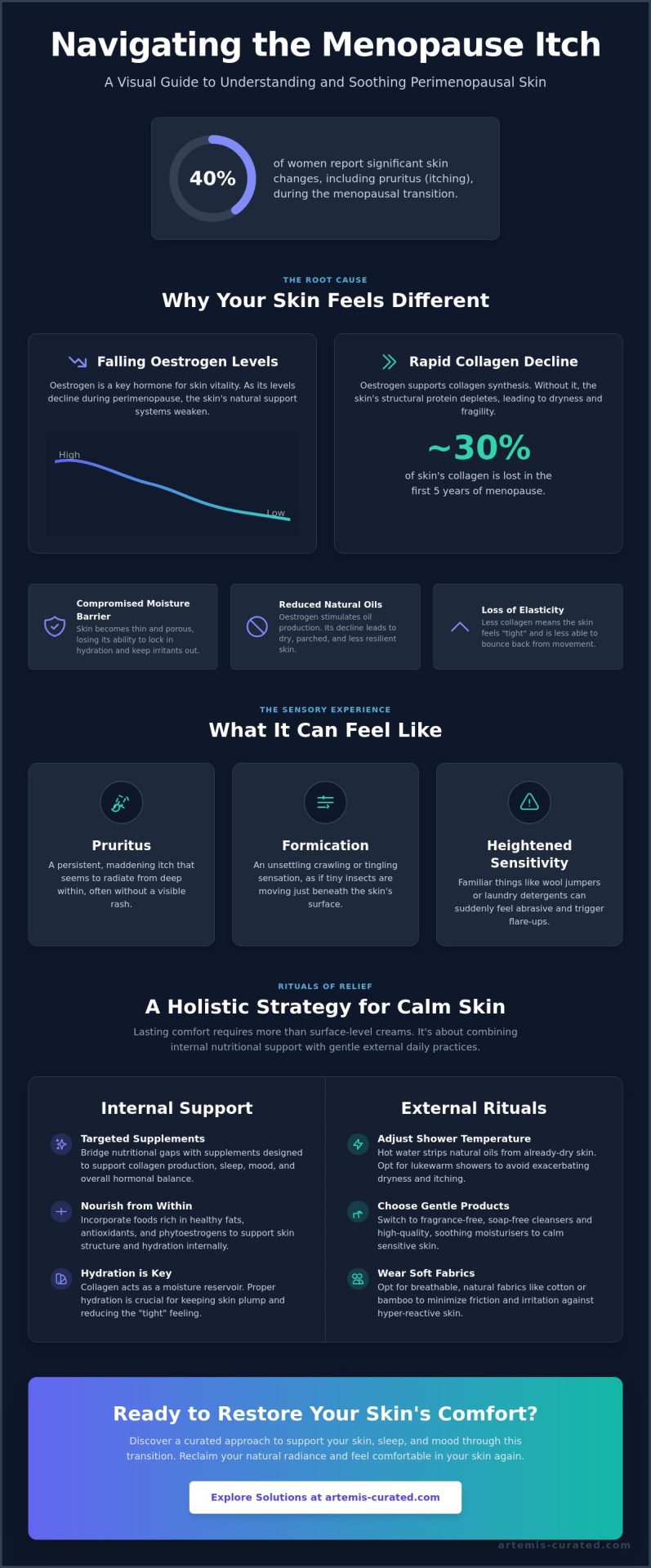
External Comfort vs. Internal Support: Mapping Your Relief Strategy
Dealing with itchy skin during perimenopause often feels like a constant battle against your own body. It’s tempting to grab the first bottle of lotion you see on a chemist’s shelf, but these quick fixes usually only offer a moment of peace. Most standard high-street moisturisers, typically priced between £5 and £12, are formulated to sit on the top layer of the skin. They create a temporary barrier that feels good for twenty minutes, but they don’t address the deeper depletion happening underneath. True relief requires a dual approach that balances surface care with internal nourishment.
We should think about our skin as a living landscape that needs tending from both sides. Intentionality is the key here. It isn’t just about stopping the itch; it’s about restoring the skin’s narrative of health. By choosing what we put on and in our bodies with care, we move away from frantic consumption and toward a sense of lasting harmony. This strategy ensures you aren’t just reacting to symptoms but are actively building a foundation of calm.
Choosing Skincare with Intention
When you’re dealing with itchy skin during perimenopause, your topical choices should be deliberate. Look for ceramides, which are lipids that help form the skin’s barrier and retain moisture. Hyaluronic acid is also essential, as it can hold up to 1,000 times its weight in water, providing much-needed plumpness. Steer clear of common irritants like sodium lauryl sulfate or heavy synthetic fragrances that often hide in scented lotions. For those nights when the itching feels unbearable, try “skin-slugging.” This involves layering a thick, petrolatum-based occlusive or a rich artisanal balm over your cream to lock in every drop of hydration while you rest.
Feeding the Skin from Within
What you consume is just as vital as what you apply. Omega-3 fatty acids and Vitamin E are crucial for maintaining the integrity of the skin barrier from the inside out. Hydration is more than just drinking two litres of water; it’s about cellular health and ensuring your body has the electrolytes to absorb it. The Menopause Preparedness Toolkit highlights how biological changes during this time require specific lifestyle shifts to maintain wellbeing. Specific vitamins, such as Vitamin A and C, act as the fundamental building blocks for skin repair and renewal. If you’re looking for high-quality tools to support this journey, you can browse our curated selection of wellness essentials designed for a balanced life.
Rituals of Relief: Practical Lifestyle Shifts for Sensitive Skin
Dealing with itchy skin during perimenopause requires a shift in perspective. Instead of seeing it as a symptom to be silenced, think of it as a signal to curate a lifestyle that prioritises calm. The most immediate change involves temperature. While a steaming hot shower feels like a comfort, it’s often a thief of hydration. Hot water dissolves the very lipids your skin needs to stay supple. Switching to lukewarm water is a small but vital ritual that protects your moisture barrier from unnecessary stress.
Tactile comfort is equally essential. When you’re dealing with itchy skin during perimenopause, your choice of clothing becomes a language of care. Natural fibres like organic cotton, linen, and silk allow the skin to breathe; they don’t trap heat or cause the friction that synthetic polyesters often do. Beyond what you wear, consider the link between your mind and your epidermis. Stress triggers a spike in cortisol, which can intensify the sensation of itching. An evening wind-down isn’t just a luxury; it’s a dermatological necessity that helps settle the nervous system before sleep.
The Art of the Soothing Bath
Transform your bathing routine into a restorative ceremony. For a skin-soothing soak, add 200g of finely ground colloidal oatmeal or 500g of Epsom salts to lukewarm water. Limit your soak to 15 minutes to avoid over-drying. The most critical step is the three-minute rule; you must apply a rich moisturiser or body oil within three minutes of stepping out. This window allows you to lock in the moisture while the skin is still damp. Use slow, deliberate strokes to apply your oils, turning a chore into a moment of intentional self-connection.
Creating a Sleep Sanctuary for Skin
Your bedroom should function as a recovery suite. Friction is the enemy of sensitive skin, so consider investing in 400-thread-count cotton or mulberry silk pillowcases and sheets. These materials glide against the skin rather than tugging at it. Keep the room temperature around 18°C and use a humidifier if the air feels brittle, especially during the winter months when central heating is high. Aiming for a humidity level between 30% and 50% helps prevent overnight drying. Deep, uninterrupted rest allows the skin’s natural repair narrative to unfold, giving your body the space it needs to heal.
Explore our collection of intentional essentials to support your daily rituals at Artemis Curated.
Curating Inner Balance: How Targeted Supplements Support Skin Health
Dealing with itchy skin during perimenopause often feels like a constant battle with your own senses. While creams and oils provide immediate relief, true calm usually begins beneath the surface. Supplements act as a bridge. They fill the nutritional gaps that appear as your body enters this new chapter. When you choose to support your system from within, you’re creating a foundation that topicals simply can’t reach on their own. This isn’t just about fixing a symptom; it’s about a holistic approach where sleep, mood, and skin health are treated as one connected story.
Think of internal support as the baseline for a radiant, itch-free existence. Taking a daily supplement is a quiet act of kindness toward your changing body. It’s a way of saying that you’re listening to its needs. By choosing targeted nutrients, you help your body regain its footing. This intentionality shifts the focus from managing discomfort to fostering long-term resilience and wellbeing.
Supporting Hormonal Harmony
Your hormones act as the conductors of your body’s chemistry. When oestrogen levels begin to fluctuate, the message sent to your oil glands changes. This often leads to a drop in sebum production, leaving your skin feeling tight and reactive. Data from the British Menopause Society suggests that roughly 75% of women experience symptoms related to these hormonal shifts. By stabilising your internal environment, you can indirectly soothe your skin and restore its natural protective barrier.
You might find that The Art of Harmony provides the specific support your body craves during these transitions. It’s designed to help you find a sense of equilibrium when things feel out of sync. For those looking to understand the broader context of these changes, our guide on Navigating Menopause: A Curated Guide to Holistic Harmony offers deeper insights into maintaining balance. Supporting your hormones isn’t just about comfort; it’s about reclaiming your sense of self.
The Art of Radiance: Targeted Skin Support
As you move through perimenopause, your skin’s structure undergoes a significant shift. Research shows that collagen levels can drop by about 30% during the first five years of menopause. This loss of elasticity is a primary reason why dealing with itchy skin during perimenopause becomes such a common challenge. Marine collagen and specific antioxidants work to replenish what time and hormones take away, helping to keep the skin supple and hydrated from the inside out.
Products like The Art of Radiance are crafted to address these exact needs. They provide the raw materials your skin requires to stay resilient against environmental stressors. It’s vital to take a long-term view here. Consistency is your most powerful tool. Most women notice visible, tactile results after about 12 weeks of daily use. This patient, steady approach leads to a lasting glow that reflects a body in balance. By investing in your internal health today, you’re ensuring your skin remains a source of comfort rather than a source of irritation.
Restoring Your Skin’s Natural Rhythm
Navigating the shifts of midlife often feels like learning a new language for your body. When you’re dealing with itchy skin during perimenopause, it’s usually because your internal foundations are changing. Research from the British Menopause Society indicates that skin collagen can decrease by approximately 30% during the first five years of the menopause transition. This biological shift leads to the restless dryness and sensitivity you’re likely feeling. Relief comes from a blend of gentle lifestyle changes and intentional internal support. You can start by lowering your shower temperature and choosing fabrics that breathe. These small acts of care create a quiet space for your skin to heal.
True comfort begins beneath the surface. Our supplement bundles are expertly designed for the unique needs of women in perimenopause. We focus on high quality, targeted ingredients like Marine Collagen to help restore the moisture and resilience your skin craves. Explore our Full Curated Collection to support your skin and hormonal harmony from within. It’s a beautiful way to reclaim your sense of calm and feel at home in your body again.
Frequently Asked Questions
Why does my skin itch more at night during perimenopause?
Itching often intensifies at night because your body’s natural anti-inflammatory levels, such as cortisol, drop during the evening hours. At the same time, your skin temperature rises slightly, which can trigger sensitivity and irritation. Without the distractions of the day, your brain focuses more on these physical sensations. The British Skin Foundation notes that nocturnal itching affects about 60% of people with chronic skin conditions, making a cool, calm bedroom environment essential for rest.
Can perimenopause cause a “crawling” sensation on the skin?
Yes, perimenopause frequently causes a sensation known as formication, which feels like insects crawling on or under the skin. This happens because falling estrogen levels affect the sensory nerves and reduce skin hydration. It’s a documented symptom of the transition, often appearing alongside general dryness. While it’s unsettling, it’s a recognized neurological response to hormonal shifts rather than an actual skin infestation or allergy.
What are the best natural remedies for menopause-related itchy skin?
Colloidal oatmeal baths and cold-pressed plant oils are among the most effective natural ways of dealing with itchy skin during perimenopause. Adding 200g of fine oatmeal to lukewarm bathwater helps create a protective barrier on the skin surface. You can also use evening primrose oil or aloe vera to soothe inflammation. These simple rituals help restore moisture without the need for harsh chemicals or synthetic fragrances that might irritate sensitive areas.
Does HRT help with itchy skin during perimenopause?
Hormone Replacement Therapy (HRT) can significantly reduce skin itching by restoring estrogen levels that maintain skin thickness and moisture. Estrogen stimulates the production of collagen and natural oils, which keep the skin barrier strong and resilient. According to the NHS, many women see an improvement in skin texture and comfort within 3 to 6 months of starting treatment. It’s best to discuss specific patches or gels with your GP to find the right balance for your needs.
How much water should I drink to help with menopause skin dryness?
You should aim to drink between 1.2 and 1.5 litres of water daily, which is roughly six to eight glasses, to maintain hydration from the inside out. While water alone won’t cure the itch, it helps your skin cells stay plump and functional. The Eatwell Guide in the UK suggests that staying hydrated supports the skin’s ability to flush out toxins. This simple habit forms a foundational part of your daily self-care routine and overall health.
Are there specific vitamins I should take for itchy skin?
Vitamin E and Omega-3 fatty acids are particularly beneficial for soothing dry, irritated skin during this transition. A 2020 study published in the Journal of Clinical Medicine found that Omega-3 supplements improve skin barrier function in 12 weeks. You might also consider Vitamin C to support collagen production. These nutrients help rebuild your natural defenses, making your skin more resilient against the environmental triggers that often lead to discomfort.
When should I be worried about itchy skin during menopause?
You should consult a doctor if your itching is accompanied by a yellowing of the skin, unexplained weight loss, or severe fatigue. If the itch is so intense that it prevents sleep for more than 3 nights a week or causes bleeding from scratching, it’s time for a professional check-up. While hormonal changes are the usual culprit, persistent itching can sometimes signal underlying issues with the liver or kidneys that require a simple blood test to rule out.
Does stress make perimenopause itching worse?
Stress definitely worsens the physical sensation of itching by triggering the release of cortisol and histamine in the body. When you’re stressed, your nervous system becomes more reactive, which heightens your perception of physical discomfort. Practicing 10 minutes of daily mindfulness or gentle yoga can lower these stress markers. Reducing the frantic pace of daily life helps create a sense of internal calm that reflects directly on the health and comfort of your skin.