


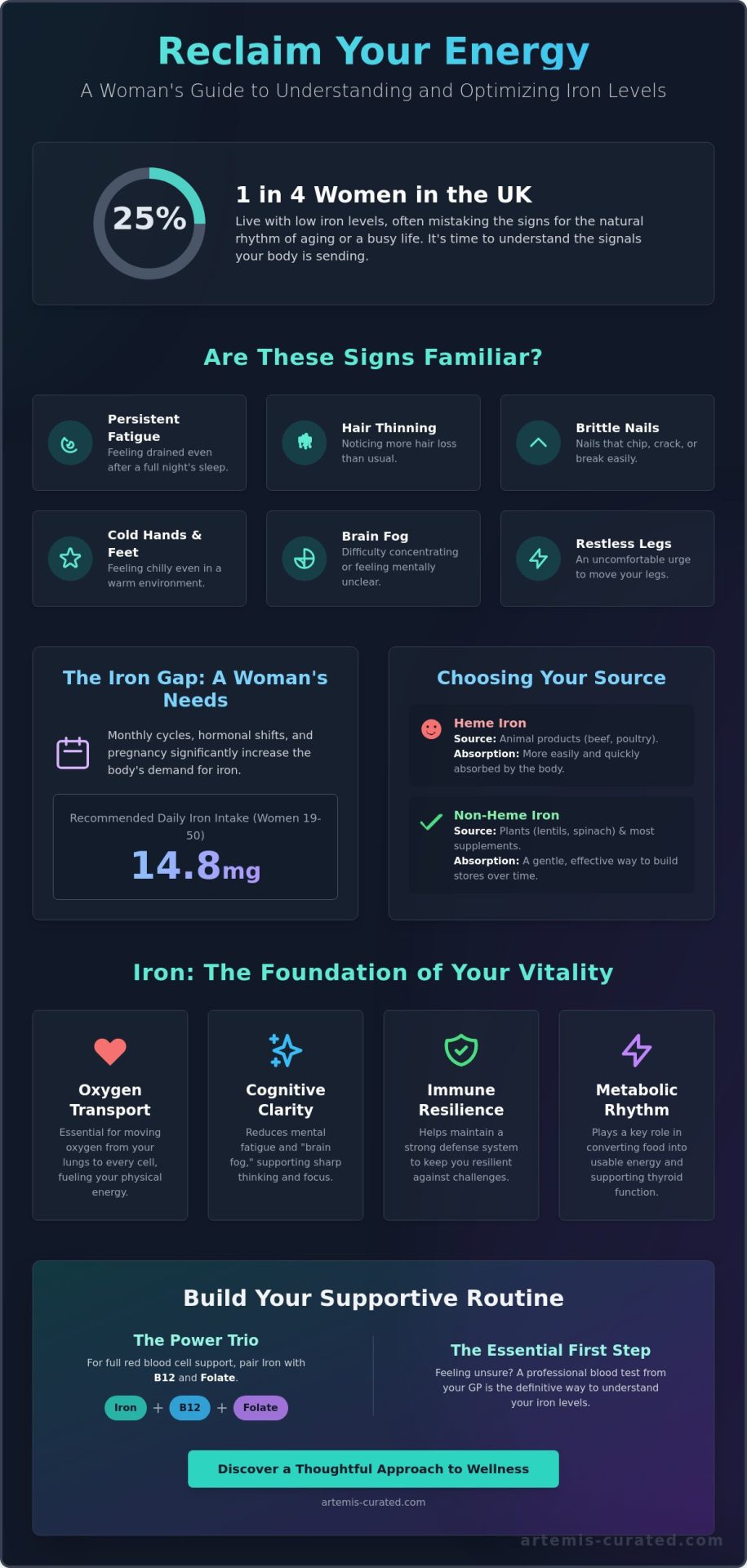
Did you know that 25% of women in the UK are currently living with low iron levels, often mistaking the signs for the natural rhythm of aging or a busy life? It’s incredibly frustrating to wake up feeling drained after eight hours of sleep, or to notice your hair thinning and your nails becoming brittle. You might even wonder if these changes are just part of the menopause, leaving you feeling a bit lost in your own body. We understand that your health is the foundation of your sanctuary, and it deserves a thoughtful, intentional approach.
This guide is here to help you reclaim your energy. You’ll discover how choosing the right iron tablets can support your hormonal balance and help you feel like yourself again. We’ve simplified the science so you can make an informed choice for your wellbeing. We will walk through the different types of iron, share practical tips for better absorption, and help you decide when a simple supplement is enough or if a visit to your GP is the next best step for your personal story.
Key Takeaways
- Understand how hormonal shifts and heavy cycles can drain your natural energy, helping you distinguish between general fatigue and iron depletion.
- Learn how to choose the right iron tablets for your body, focusing on gentle, highly-absorbable options that are kind to your digestive system.
- Identify the subtle physical signs that your levels might be low, such as cold hands or restless legs, and why a professional blood test is the essential first step.
- Discover how to build a thoughtful daily routine by pairing iron with B12 and Folate to fully support your red blood cell health and long-term vitality.
What Are Iron Tablets and Why Do They Matter for Women?
Iron is a quiet hero within the body; it’s a vital mineral that acts as the primary vehicle for oxygen transport. It lives within your red blood cells, ensuring that every breath you take reaches your muscles and organs to sustain life. While we ideally source this mineral from a balanced diet, the modern pace of life can make it difficult to maintain optimal levels. This is where iron tablets become a meaningful addition to a wellness routine. Unlike the varying amounts of iron found in a serving of spinach or red meat, these tablets offer a concentrated, measured dose designed to restore your internal reserves with precision.
Biologically, women navigate a more complex relationship with iron than men. Monthly menstrual cycles and the significant physical demands of pregnancy mean that women lose and require iron at much higher rates. According to data from the Scientific Advisory Committee on Nutrition, women aged 19 to 50 in the UK require approximately 14.8mg of iron daily to stay healthy. When these needs aren’t met, the vibrant energy that defines a fulfilling life can begin to dim. Maintaining steady iron levels isn’t just about avoiding fatigue; it’s about ensuring a consistent, rhythmic flow of vitality that supports everything from your morning stretches to your evening rest.
The Difference Between Heme and Non-Heme Iron
Understanding what you’re consuming helps you make more intentional choices for your body. Iron exists in two distinct forms: heme and non-heme. Heme iron is found in animal products like beef, sardines, and poultry; it’s known for being easily absorbed. Non-heme iron comes from plant sources such as lentils, chickpeas, and fortified cereals. Most Iron supplements found in tablet form contain non-heme iron. While the body processes this form a bit more slowly, it provides a gentle and effective way to build up your stores over time without relying solely on animal proteins.
Iron as a Foundation for Overall Wellness
The benefits of iron extend far beyond simple physical energy. It’s a foundational element for a robust immune system, helping your body stay resilient against seasonal challenges. There’s also a profound connection between iron and cognitive clarity. If you’ve ever experienced “brain fog” or a lack of focus, it may be your body’s way of signaling a deficit. Healthy iron levels support sharp thinking and emotional balance, allowing your mind to feel as clear and refreshed as a well-ordered home. For those looking to create a more holistic approach to their health, you can explore how this mineral fits into a wider routine in our guide to the Best Supplements for Women in 2026.
- Oxygen Transport: Essential for moving oxygen from lungs to tissues.
- Immune Support: Helps maintain a strong defense system.
- Cognitive Function: Reduces mental fatigue and improves concentration.
- Metabolic Health: Plays a role in converting food into usable energy.
Choosing to incorporate iron tablets into your daily ritual is an act of self-care that acknowledges your body’s unique narrative. It’s about more than just a supplement; it’s about providing your system with the raw materials it needs to thrive with grace and strength.
The Connection Between Iron, Hormones, and Your Daily Energy
Vitality isn’t just about how much sleep you managed to get last night; it’s about the biological foundations that keep your internal rhythm steady. Iron acts as a silent conductor for your body’s energy production. When your levels are optimal, your hormones and metabolism sing in harmony. When they drop, the music stops. This is especially true for women because our iron needs aren’t static. They shift and change with our cycles, our age, and our life stages. If you’ve been feeling a persistent, heavy fatigue that a weekend of rest won’t fix, it might be time to look at how your iron stores are supporting your hormonal health.
Iron plays a vital role in thyroid function by helping your body convert T4 into T3, the active hormone that regulates your metabolism. Without enough iron, your metabolic rhythm slows down, leaving you feeling cold, sluggish, and mentally foggy. It’s a holistic puzzle where every piece matters. Taking high-quality iron tablets can often be the missing step in restoring that sense of balance and intentionality to your daily life.
Iron and the Perimenopause Transition
Many women start feeling the effects of perimenopause in their early 40s and assume their fatigue is just a natural part of aging. However, this transition often brings heavier or more frequent periods. Statistics show that up to 25% of women in the UK experience heavy menstrual bleeding during this time, which rapidly depletes your monthly iron budget. This creates a frustrating cycle where low iron mimics menopause symptoms like brain fog and low mood. To understand how these changes fit into your broader wellness journey, you can explore our Navigating Menopause guide. Understanding iron-deficiency anemia in women is a crucial part of managing this transition with grace and clarity.
Why “Normal” Blood Results Might Not Be Enough
You might have visited your GP, had a blood test, and been told your results are “normal” even though you still feel exhausted. This often happens because standard tests look at your current circulating iron (haemoglobin) rather than your stored reserves. You can have a normal haemoglobin count but still suffer from low iron stores, a condition that affects roughly 10% to 20% of menstruating women. Ferritin is the body’s long-term iron warehouse. If your warehouse is empty, your body doesn’t have the backup it needs to handle stress or busy weeks. If your ferritin levels fall below 30ng/mL, you’ll likely feel the symptoms of deficiency even if you aren’t technically anaemic yet. Finding the right iron tablets can help replenish these stores over time, ensuring your energy levels remain consistent throughout the month.
If you’re ready to start building back your reserves, you can find a curated selection of wellness essentials designed to support your body’s natural rhythm.
Gentle Iron vs. Traditional Tablets: Finding What Works for You
Choosing the right supplement is an act of quiet care for your future self. Most high-street options rely on ferrous sulphate. While it’s a standard choice, many women find it a bit aggressive for their digestive systems. Iron bisglycinate offers a different narrative. It’s a chelated form, meaning the iron is bound to amino acids. This structure allows it to pass through the stomach more gracefully, making it much kinder to your system. Investing in these curated forms often costs a few pounds more, perhaps £15 to £25 for a high-quality supply, but the lack of side effects makes it a worthy trade.
The Problem with Standard High-Dose Iron
Traditional iron tablets often come in massive 200mg doses. This sounds impressive on the label, but the body can only process a small percentage at once. The National Institutes of Health explains that as doses increase, the percentage of absorbed iron actually drops. This excess iron remains in the gut; it’s the primary cause of nausea, constipation, or that heavy, uncomfortable feeling. Choosing a lower, highly bioavailable dose is a more intentional way to support your body. It ensures you’re actually absorbing the mineral rather than just overloading your digestive tract.
How to Maximise Your Iron Absorption
Making the most of your supplement requires a little strategy and a respect for your body’s natural rhythm. Vitamin C is your greatest ally here. A simple glass of orange juice or a few slices of red pepper can significantly increase how much iron you actually take in. Conversely, your morning brew is a bit of a hurdle. The tannins in tea and coffee can block iron uptake by up to 60 percent. It’s best to wait at least sixty minutes after your tablet before reaching for the kettle. You should also check labels for synthetic fillers like titanium dioxide or artificial colours. A curated supplement prioritises clean ingredients that respect your health and the environment.
A Checklist for Reading Labels Like a Pro:
- The Form: Look for “Bisglycinate” or “Fumarate” if you have a sensitive stomach.
- The Helpers: Check for added Vitamin C (Ascorbic Acid) to aid uptake.
- The Cleanliness: Avoid products with excessive binders, magnesium stearate, or synthetic dyes.
- The Dosage: Ensure the “Elemental Iron” content matches what your GP recommended, usually around 14mg to 28mg for daily maintenance.
Taking iron tablets shouldn’t feel like a chore or a physical burden. When you select a form that works with your biology, the process becomes a seamless part of your daily ritual. It’s about finding that balance between efficacy and comfort, ensuring your path to vitality is as smooth as possible.
How to Tell if Your Iron Levels Need a Boost
Low iron doesn’t always announce itself with a dramatic collapse. Instead, it often whispers through subtle changes in how you feel and look. You might find your hands and feet stay icy even when you’re wrapped in a wool blanket. Perhaps your skin looks slightly washed out, or you’ve noticed a frustrating, restless twitch in your legs that keeps you awake at night. These small signals are your body’s way of asking for more support.
One of the most distinct physical markers is a change in your nail health. Known as koilonychia, or “spoon nails,” this happens when your nails become thin and concave enough to hold a drop of liquid. It’s a clear sign that your internal stores are depleted. Tracking your menstrual cycle is equally vital. Since about 25% of women in the UK manage heavy periods, noticing a sharp drop in energy during your flow can indicate that your diet or current iron tablets aren’t quite keeping up with your body’s demands.
Decoding Your Blood Test Results
Before you start high-dose supplements, you need a clear picture of your internal landscape. Ask your GP for a full iron panel. This should include Serum Iron, Transferrin, and, most importantly, Ferritin. While Serum Iron shows what’s in your blood right now, Ferritin reveals your long-term storage levels. In the UK, a “normal” ferritin result can be as low as 15ng/mL, but many women don’t feel their best until that number sits between 50 and 100ng/mL. For a deeper look at how your biology interacts with your energy, explore our guide on Blood Tests for Women.
When to Expect Results After Starting Iron
Patience is a necessary part of the healing process. You won’t feel a shift the morning after your first dose. Most women report a lift in their energy levels after about 21 days of consistent use. However, it takes roughly 3 to 6 months to fully replenish your ferritin stores and reach a state of harmony. You’ll know your iron tablets are working when the afternoon slump feels less like a wall and more like a gentle pause. Consistency in your daily ritual is the key to moving from surviving to thriving.
Ready to support your journey toward better energy? Explore our curated selection of wellness essentials to find the right fit for your daily routine.
Making Iron Part of Your Daily Wellness Routine
Taking your supplements shouldn’t feel like a chore. It’s about finding a rhythm that works for your body and fits into your life without friction. When you introduce iron tablets into your morning or evening, you’re doing more than just ticking a box. You’re giving your blood the essential tools it needs to carry oxygen effectively to every cell. To get the most out of your routine, pair your iron with Vitamin C. A simple glass of orange juice or a squeeze of fresh lemon in your water can increase absorption by up to 67 percent, based on research from the American Journal of Clinical Nutrition. This small tweak ensures your body actually uses the minerals you provide.
It’s also vital to look at the bigger picture of blood health. Iron doesn’t work in a vacuum; it relies on Vitamin B12 and Folate to build robust red blood cells. If one of these components is missing, the others can’t perform their best. Many women find that a curated approach, where these nutrients are balanced together, leads to more consistent energy levels throughout the day. Instead of viewing your supplement as just a pill, think of it as a small, intentional investment in your long-term vitality. It’s a transition from basic maintenance to a lifestyle of wellness.
Supplements for Women Over 40
As we enter new life chapters, our nutritional requirements shift significantly. For women over 40, the focus often moves toward hormonal balance and bone density alongside blood health. Data from the National Diet and Nutrition Survey shows that approximately 25 percent of women in the UK are at risk of low iron levels. Finding a high-quality multivitamin for women over 40 can help bridge these gaps without the digestive discomfort sometimes associated with high-dose iron tablets. It’s about finding that perfect equilibrium for your changing body.
Creating a Sanctuary of Health
Your wellness routine is a private ritual. It’s a moment of quiet in a busy world where you put yourself first. When you take your supplements with intention, you’re practicing the Art of Harmony. This means listening to the quiet signals your body sends, whether it’s a slight dip in energy or a need for more rest. By supporting your iron levels, you’re building a foundation of resilience. We invite you to explore the Artemis shop to find the support you need to feel your best. Your journey to vitality is unique, and we’re here to help you curate it with care.
Reclaim Your Natural Energy
Restoring your vitality starts with understanding that your body has its own unique rhythm. We’ve explored how the right nutritional support can transform your daily energy, especially when you prioritize bioavailability and gentle digestion. It’s not just about hitting a target; it’s about feeling like yourself again. The NHS suggests that women aged 19 to 50 require 14.8mg of iron a day to maintain health, and finding a routine that fits your lifestyle makes all the difference.
Choosing high-quality iron tablets shouldn’t feel like a chore or a compromise. Our expert-led formulations are designed specifically for the nuances of women’s bodies, ensuring you get the nutrients you need without the digestive discomfort often found in traditional options. When you’re ready to invest in your long-term well-being, we offer free UK delivery on all orders over £50 to help you begin your journey toward balance. Every small choice you make today contributes to a more vibrant story for your future self.
Explore our curated collections for hormonal harmony and vitality
Take that first step toward a more energized and balanced version of yourself today.
Frequently Asked Questions
Can I take iron tablets every day or should I take them every other day?
You can take iron tablets every other day to potentially improve absorption and reduce stomach discomfort. A 2017 study published in The Lancet Haematology found that alternate-day dosing reduced side effects by 40% compared to daily intake. This method allows your body’s hepcidin levels to reset, making it easier to process the mineral. Always check with your GP before changing your routine, as they may suggest a daily dose for severe deficiencies.
What is the best time of day to take an iron supplement for absorption?
The best time to take your supplement is first thing in the morning on an empty stomach. For maximum absorption, take it 60 minutes before breakfast or two hours after a meal. If you have a sensitive stomach, you can take it with a small amount of vitamin C, like a 150ml glass of orange juice. This creates an acidic environment that helps your body use the iron tablets more effectively than taking them with food.
Will iron tablets help with my thinning hair and brittle nails?
Iron tablets often help restore the health of thinning hair and brittle nails by supporting oxygen delivery to your follicles and nail beds. A 2013 study in the Journal of Korean Medical Science showed that 67% of women with unexplained hair loss also had low ferritin levels. By replenishing these stores, you provide the essential nutrients needed for growth. It’s a slow process, so you might not see a visible difference for 3 to 6 months.
Can I take iron tablets if I am already taking a multivitamin?
You can take iron alongside a multivitamin, but you should check the label for calcium or zinc. These minerals compete for the same absorption pathways, which can reduce the effectiveness of your supplement by up to 50%. If your multivitamin is high in calcium, try to space the two at least 2 hours apart. This intentional timing ensures your body receives the full benefit of each specific nutrient without interference.
How long does it take for iron tablets to stop me from feeling tired?
Most women begin to feel a lift in their energy levels within 2 to 4 weeks of starting treatment. While the initial fog may clear quickly, the NHS recommends continuing the course for 3 to 6 months to fully replenish your internal stores. Think of it as a long term narrative for your health rather than a quick fix. Regular blood tests every 12 weeks will help you track your progress accurately.
Are there any foods I should avoid when taking iron tablets?
You should avoid drinking tea or coffee within one hour of taking your supplement because the tannins can block absorption. Research from the American Journal of Clinical Nutrition indicates that tea can reduce iron uptake by 60% to 70%. Similarly, high-calcium foods like milk or cheese and high-fibre whole grains can interfere with the process. Pairing your tablet with a source of vitamin C instead is a much more effective choice.
What are the signs that I might be taking too much iron?
Signs of excessive iron include persistent nausea, sharp stomach pain, or unexplained joint discomfort. According to the NHS, taking more than 20mg of iron per day can cause constipation or sickness in some people. In rare cases, extreme fatigue and a bronze tint to the skin may occur. If you experience these symptoms, it’s vital to contact a healthcare professional to check your ferritin levels via a blood test.