


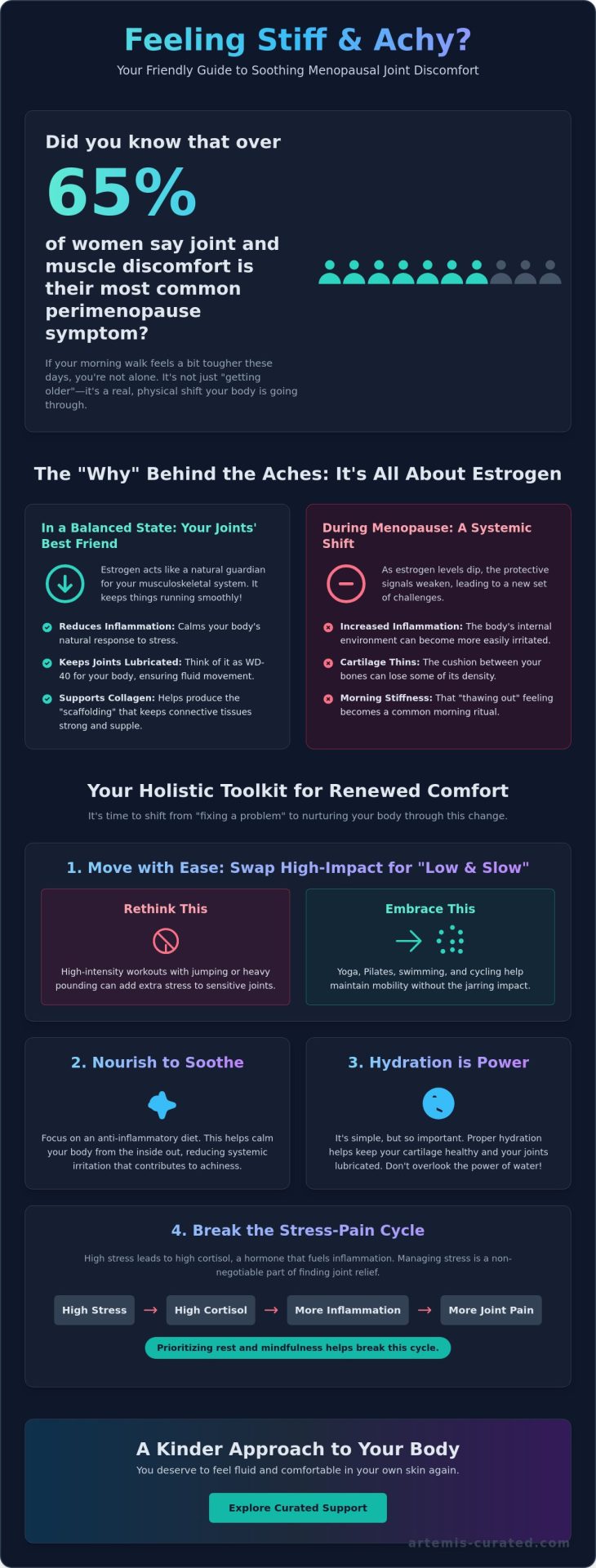
Did you know that over 65% of women find that joint and muscular discomfort is the most common symptom during perimenopause? It often starts with a lingering stiffness in the morning or a sudden ache in your knees that makes you second-guess your favorite morning walk. If you’ve been searching for what helps with painful joints in menopause, you aren’t alone in feeling like your body has suddenly become a stranger. It’s natural to worry that you’re just “getting old,” but the reality is often tied to the shifting rhythm of your hormones rather than a permanent loss of vitality.
We understand how frustrating it is to feel restricted by a body that used to move with effortless ease. You deserve to feel fluid and comfortable in your own skin again. This guide will help you uncover the “why” behind this physical transition and offer holistic, natural strategies to restore your mobility. We’ll explore how to reduce inflammation and curate a supplement routine that supports your body’s unique needs. From understanding the link between oestrogen and joint health to finding better morning mobility, we’re here to help you move through this season with grace and renewed comfort.
Key Takeaways
- Understand how declining oestrogen levels affect your natural joint lubrication and cartilage health, leading to that familiar morning stiffness.
- Learn why swapping high-impact routines for gentle, “low and slow” movement can better support your mobility without adding extra stress to your frame.
- Discover what helps with painful joints in menopause by focusing on anti-inflammatory nutrition and the simple, often overlooked power of hydration.
- Identify the link between high cortisol levels and physical inflammation to break the cycle of stress and joint discomfort.
- Shift your mindset from trying to fix a mechanical failure to nurturing your body through a curated, holistic approach to wellness.
Understanding the Link Between Oestrogen and Joint Health
Many of us think of menopause as a series of internal temperature shifts and emotional waves, but the physical reality often hits much closer to the bone. Oestrogen is far more than a reproductive hormone; it’s a vital guardian for our musculoskeletal system. It acts as a natural anti-inflammatory and a source of lubrication, keeping the spaces between our bones moving smoothly. When levels begin to dip, the protective layer of cartilage can start to thin, leading to a loss of the fluid flexibility we once took for granted. This shift can make everyday movements feel heavy and uncoordinated.
Medical professionals are increasingly identifying these specific aches as Musculoskeletal Syndrome of Menopause (MSM). It’s a unique condition that often gets confused with traditional osteoarthritis. While osteoarthritis is typically the result of mechanical wear and tear over many years, menopausal joint pain is often more systemic. It can appear quite suddenly in several areas at once, such as the fingers, knees, and hips. Recognizing this difference is crucial when looking for what helps with painful joints in menopause, as the solution lies in addressing the hormonal root rather than just the mechanical symptoms.
The physical symptoms of menopause are diverse, but the impact on our joints is one of the most frequently reported. This discomfort isn’t all in your head, and it isn’t just a sign of “getting older.” It’s a measurable physiological change that occurs as your body adapts to a new hormonal baseline. Understanding this process allows us to move away from frustration and toward a more supportive, intentional way of living.
The Role of Oestrogen Receptors
Our joints are actually peppered with specific receptors that are designed to receive oestrogen. They act like tiny listeners waiting for the signal that keeps collagen production high and tissues supple. As perimenopause progresses, these receptors receive fewer signals, and the production of collagen begins to slow down. This change affects the integrity of the connective tissues, making everything feel a bit more brittle. It’s why morning stiffness becomes such a common experience. You might wake up feeling like you need a few minutes to “thaw out” before your body can truly start the day with ease.
Inflammation: The Hidden Menopause Symptom
The hormonal fluctuations of midlife can trigger a state of systemic inflammation. Without the steadying hand of oestrogen, your body’s ability to recover from the micro-stresses of daily life is diminished. This can lead to a lingering discomfort that feels like it’s coming from deep within the joint itself. Menopausal joint pain is a biological response to hormonal shifts. Finding what helps with painful joints in menopause involves looking beyond simple pain relief and focusing on how we can soothe the body’s internal environment through intentional, holistic care found in curated support.
Movement as Medicine: Gentle Strategies for Mobility
When your joints feel heavy or stiff, your first instinct might be to rest and remain still. It’s a natural response to discomfort. However, stillness can often lead to more restriction. The key is to transition your routine from high-impact energy to a “low and slow” approach. High-intensity workouts that involve jumping or heavy pounding can be jarring for joints that are already navigating the hormonal shifts we discussed earlier. By choosing gentler paths, you allow your body to stay active without the risk of further inflammation.
Yoga and Pilates are wonderful tools for this season of life. They focus on lengthening the body and maintaining a full range of motion. These practices encourage you to move with intentionality, focusing on the breath and the subtle alignment of your frame. This consistency is vital. It prevents the “freezing” of joints, a common complaint during menopause, by ensuring that the synovial fluid continues to circulate and nourish your tissues. Finding what helps with painful joints in menopause often starts with these mindful, daily rituals of movement.
The Power of Low-Impact Exercise
Low-impact exercise is a cornerstone of what helps with painful joints in menopause, providing a way to stay strong without the sting of impact. Swimming and cycling are exceptional ways to build cardiovascular health while keeping joint stress to a minimum. In the water, your body feels weightless, allowing you to move through a full range of motion without the pressure of gravity. Even a simple daily walk in a green space can work wonders. It provides a sense of mental harmony while keeping the legs and hips moving. To combat that lingering morning stiffness, consider a short, five-minute stretching ritual before you even leave your bedroom. It sets a tone of fluidity for the rest of your day.
Building Supporting Muscle
We often focus on the bones and joints, but the muscles surrounding them are just as important. Muscle mass acts as a protective shield, absorbing the impact of daily activities before it reaches your joints. As we move through menopause, a slight decline in testosterone can make it harder to maintain this muscle. Light resistance training is a practical way to counter this loss. You don’t need a professional gym; simple movements with light hand weights or resistance bands at home can provide the stability your body needs. Supporting your physical structure through intentional wellness choices can make the journey toward comfort much smoother. Consistency and kindness to your body are the most effective strategies for long-term mobility.
Nutritional Support: What to Eat and Which Supplements Help
While movement keeps the joints active, what we put on our plates provides the raw materials for repair and resilience. Adopting an anti-inflammatory way of eating, often inspired by the Mediterranean approach, is a gentle way to soothe the body from the inside out. This isn’t about restriction; it’s about selection. By filling your meals with rich olive oils, leafy greens, and fatty fish, you’re giving your body the tools it needs to dampen systemic inflammation. These foods act as a natural buffer against the discomfort that often accompanies hormonal shifts.
One of the most overlooked aspects of what helps with painful joints in menopause is simple hydration. Our joints rely on a fluid called synovial fluid to glide without friction. When we’re dehydrated, this fluid becomes less effective, making movement feel stiff or “crunchy.” Think of water as the most basic, yet essential, lubricant for your frame. Alongside hydration, Omega-3 fatty acids play a starring role. Found in salmon, walnuts, or high-quality supplements, these fats are incredible at reducing joint tenderness and morning stiffness by blocking the pathways that lead to inflammation.
Essential Nutrients for Joint Comfort
Specific minerals act as the quiet architects of our physical comfort. Magnesium is often called the “master mineral” because it helps muscles relax, which in turn reduces the tension placed on your joints. It’s a foundational element for anyone seeking relief. Additionally, the synergy between Vitamin D and K2 is vital. While Vitamin D helps you absorb calcium, K2 ensures it actually reaches your bones and joints rather than settling in your soft tissues. Traditional supports like Glucosamine and Chondroitin also have their place; they provide the building blocks for cartilage repair, helping to maintain the integrity of your joints as you move through this transition.
The Collagen Connection
Collagen is the invisible scaffolding that gives our joints their structure and strength. As we’ve discussed, declining oestrogen levels can lead to a drop in collagen production, which directly impacts joint flexibility. Supplementing with high-quality collagen can be a dual-purpose ritual. It supports the health of your joints while also providing the nutrients needed for vibrant skin and hair. For a deeper look at how this works, you might find our Collagen Guide helpful for understanding how to support your body’s natural vitality. Choosing what helps with painful joints in menopause is an act of self-care that builds a more comfortable future, one meal and one supplement at a time.
The Cortisol Connection: Why Rest is Non-Negotiable
While we often look to movement and nutrition as the primary pillars of relief, there is an invisible factor that can quietly undermine your progress. Stress is not just a mental state; it is a physical event in the body. When we are constantly under pressure, our bodies produce a hormone called cortisol. In short bursts, it helps us manage challenges. However, when cortisol levels remain high over long periods, it acts as a trigger for systemic inflammation. This internal “heat” is a significant part of what helps with painful joints in menopause, as managing your stress levels is just as important as the supplements you take.
This creates a difficult cycle that many women know all too well. Joint pain makes it hard to get comfortable at night, leading to poor sleep. A lack of rest then leaves the body in a state of high alert, which spikes cortisol levels the next day. This increased stress makes the nervous system more sensitive to pain, making those morning aches feel even more intense. Breaking this cycle requires more than just willpower; it requires an intentional shift toward rest as a form of active recovery.
Rest is not a luxury or a sign of slowing down. It is the only time your body can truly focus on cellular repair. During deep sleep, your system works to mend joint tissues and clear out the inflammatory markers that accumulate during the day. Creating a sanctuary for sleep helps your body transition from the frantic energy of the day into a state of healing. Understanding what helps with painful joints in menopause means prioritizing these quiet moments of restoration as much as your daily exercise.
Managing Stress for Physical Ease
Your nervous system and your perception of pain are deeply linked. When you are stuck in a “fight or flight” mode, your body is less capable of dampening pain signals. Simple evening rituals, such as dimming the lights or practicing deep breathing, can help lower your cortisol levels before your head hits the pillow. You can find more strategies for balancing your internal vitality in our Cortisol Rhythm Guide, which explores how to curate a life of inner harmony.
Sleep as a Healing Ritual
The REM cycle is a vital period for your physical health. It is during these hours of deep rest that the body’s natural mending process is at its peak. A rested mind often experiences a more comfortable body. To support your body’s natural mending process and find deeper restoration, you may wish to explore The art of sleep as a foundation for your nightly routine. By treating sleep as a sacred healing ritual, you give your joints the best possible environment to recover and thrive.
Curating Your Menopause Harmony: A Holistic Approach
Approaching joint health isn’t just about finding a temporary solution. It’s about shifting your perspective from fixing a broken part to nurturing a natural transition. When you look at what helps with painful joints in menopause, you realize that your body is asking for a more comprehensive level of care. It’s an invitation to slow down and listen to what your system truly needs to feel balanced again. This shift in mindset allows you to move away from frustration and toward a more soulful way of living.
Our collection, specifically The art of harmony, was created to provide this very foundation for wellness. It doesn’t work in isolation. Instead, it complements the movement, nutrition, and rest rituals we’ve explored in previous sections. By addressing the hormonal roots of discomfort, you create an environment where your body can thrive rather than just endure. Many women find that bundling this support with The art of sleep or The art of radiance creates a synergy that supports every aspect of their day. It’s a way of reclaiming your story, from morning mobility to nightly restoration.
While holistic strategies are powerful, it’s always wise to consult a healthcare professional if your pain is persistent, accompanied by visible swelling, or significantly limits your daily life. They can help rule out other conditions and ensure your approach is perfectly tailored to your health history. Integrating professional advice with intentional lifestyle choices is often the most effective way to find long-term relief and peace of mind.
The Artemis Art of Harmony
This menopause support collection is designed with a targeted approach to help you regain your sense of self. It bridges the gap between traditional wellness and a more soulful, intentional lifestyle. Whether you’re just starting your journey or looking to refine your current routine, you can explore the full range of support in the Artemis Curated Shop. It’s about choosing quality and finding the specific support that completes your personal wellness narrative.
Final Steps to Joint Comfort
Consider keeping a simple symptom diary for a few weeks to identify your unique triggers. Note down your activity levels, what you’ve eaten, and your stress markers to see if patterns emerge. When you start a new supplement ritual, remember that your body needs time to respond. Patience is a vital part of the process. By staying consistent and treating your body with kindness, you can reclaim the vitality and ease of movement that allow you to enjoy your favorite exercises and daily rituals once again. Finding what helps with painful joints in menopause is a journey toward a more comfortable, vibrant version of yourself.
Embracing Your Body’s New Rhythm
Finding a path back to comfort doesn’t have to be a struggle against your own biology. By understanding how oestrogen affects your joints and choosing “low and slow” movement, you can begin to ease that morning stiffness and reclaim your daily rituals. Your body is a space that deserves intentional care through balanced nutrition, hydration, and deep, restorative rest. Navigating what helps with painful joints in menopause is ultimately about listening to these physical signals and responding with kindness and targeted support rather than frustration.
We invite you to discover a more intentional way of supporting your physical wellness. Our collection is curated by experts for holistic balance, focusing on natural, high-quality ingredients that honor your body’s history. This approach is designed for the modern woman’s wellness ritual, providing a bridge between science and a more soulful way of living. To find deeper comfort today, explore The Art of Harmony for targeted menopause support. You deserve to move through the world with ease and confidence. Trust in your body’s ability to adapt, and know that a more comfortable, vibrant future is well within your reach.
Frequently Asked Questions
Is joint pain a common symptom of menopause?
Yes, joint and muscle aches are among the most frequent experiences during this transition. Research indicates that over 65% of women in perimenopause report joint discomfort as a primary symptom. It often starts with a subtle stiffness that makes your morning routine feel a bit heavier than usual. Understanding that this is a widespread physiological shift can help you move away from worry and toward more intentional self-care.
Can menopause joint pain be mistaken for arthritis?
It is very common for hormonal joint pain to be mistaken for traditional osteoarthritis. While both involve discomfort, menopausal pain is often linked to the drop in oestrogen rather than just mechanical wear and tear. This is why looking for what helps with painful joints in menopause often requires a holistic approach that addresses hormonal balance alongside physical support. If your pain appears suddenly in multiple joints, it’s likely linked to these internal shifts.
How long does menopausal joint pain usually last?
There isn’t a single timeline for everyone, as every woman’s hormonal narrative is unique. For many, the discomfort is most intense during the fluctuations of perimenopause and begins to settle once the body reaches a new post-menopausal baseline. However, the changes to cartilage and collagen can be lasting if not addressed. Maintaining a consistent ritual of movement and nutrition is the best way to ensure long-term comfort and mobility as your body adapts.
Does magnesium help with joint pain during menopause?
Magnesium is a foundational mineral that provides significant relief for many women. It acts as a natural muscle relaxant, which helps take the pressure off your joints and reduces overall physical tension. When you’re exploring what helps with painful joints in menopause, adding magnesium to your evening ritual can also improve your sleep quality. This creates a better environment for your body to focus on cellular repair and tissue mending overnight.
What is the best exercise for painful joints in menopause?
The most effective exercises are those that build strength without adding jarring impact to your frame. Swimming and cycling are excellent because they allow for a full range of motion while the water or the bike supports your weight. Yoga and Pilates are also wonderful for maintaining flexibility and lengthening the body. These “low and slow” movements ensure that your joints stay lubricated and your supporting muscles remain strong and resilient.
Can dehydration make menopause joint pain worse?
Staying hydrated is one of the simplest ways to keep your joints moving smoothly. Your joints rely on synovial fluid for lubrication, and this fluid is primarily made of water. When you don’t drink enough, that lubrication thins out, which can lead to increased friction and discomfort. Think of water as an essential part of your daily joint maintenance, as vital to your comfort as any specific supplement or exercise.
Will HRT help with my joint stiffness?
Many women find that Hormone Replacement Therapy (HRT) significantly reduces their joint stiffness. By restoring oestrogen levels, HRT can help maintain the thickness of cartilage and the quality of joint lubrication. While we don’t provide clinical consultations for HRT, it’s a common path for those seeking to address the hormonal root of their symptoms. It’s always best to discuss these medical options with a knowledgeable healthcare provider to see what fits your history.
Are there natural ways to increase oestrogen for joint health?
You can support your body’s hormonal balance through a diet rich in phytoestrogens, such as flaxseeds, sesame seeds, and organic soy. These plant-based compounds can mimic some of oestrogen’s effects in the body. Additionally, focusing on overall hormonal harmony through curated supplements and stress management can help your system adapt more gracefully to lower levels. It’s about creating a supportive environment that honors your body’s natural transition and supports long-term vitality.