


What if the “normal” result on your latest blood test is actually the reason you’re struggling to clear the morning fog? If you’ve spent months feeling like your spark has dimmed, only to be told your levels of ferritin are “borderline,” you aren’t alone. It’s incredibly frustrating to live with thinning hair and brittle nails while being told there’s nothing clinically wrong. You know your body better than a generic lab report does.
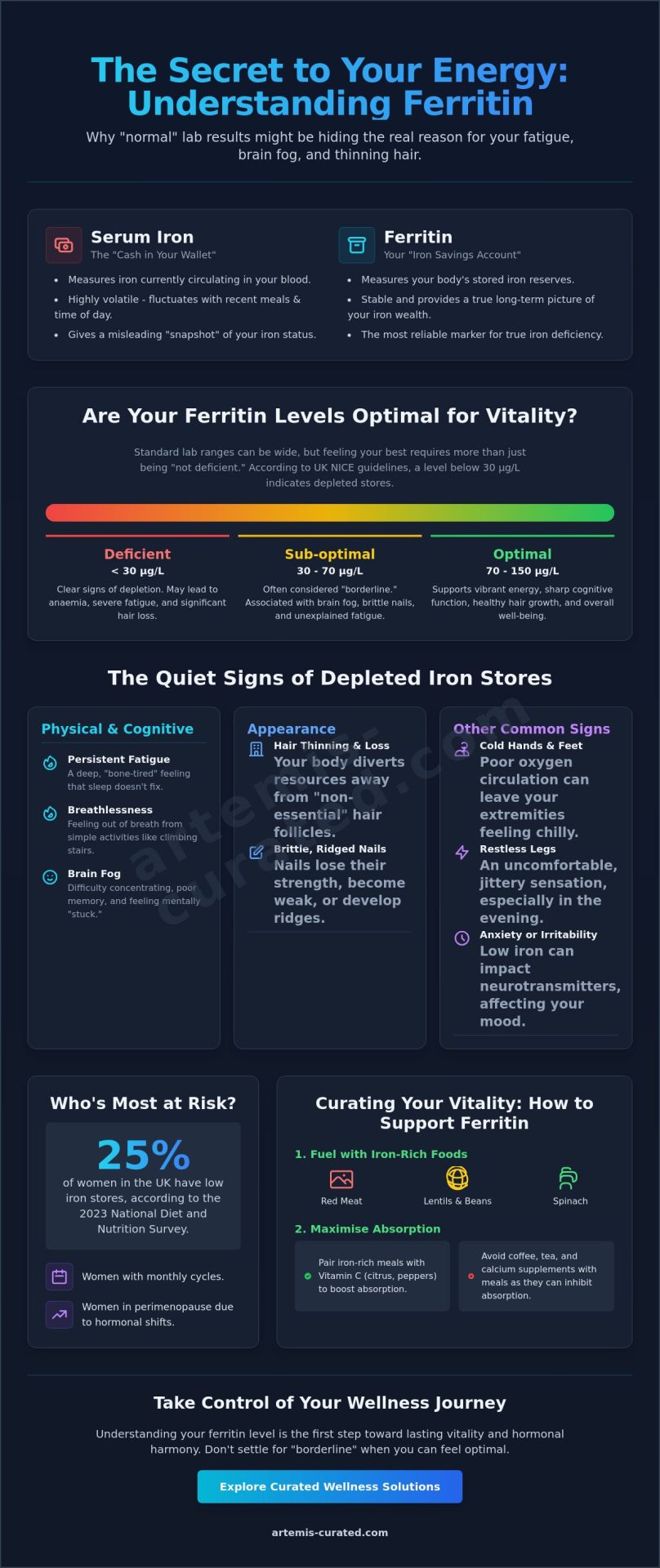
According to the 2023 National Diet and Nutrition Survey, 25% of women in the UK are living with low iron stores, which often goes unnoticed during routine check-ups. I’ll show you why this protein is the secret to your daily energy and how to manage your levels for long-term hormonal harmony. We’ll explore the difference between circulating iron and your storage tanks, the specific numbers you should aim for to feel truly well, and natural ways to support your vitality from the inside out.
Key Takeaways
- Understand how ferritin works as your body’s essential iron storage, acting like a backup fund for your energy and focus.
- Spot the quiet signs that your iron levels might be dipping, including unexplained fatigue and changes to the strength of your hair or nails.
- Learn why life stages like perimenopause and your monthly cycle can drain your reserves and what you can do to stay balanced.
- Get practical tips on choosing the right iron-rich foods and simple habits that help your body absorb them more efficiently.
- Discover how taking a thoughtful, intentional approach to your health can lead to lasting vitality and hormonal harmony.
Understanding Ferritin: Your Body’s Private Iron Reserve
To understand your daily energy, you have to look deeper than the surface of a standard blood test. Ferritin is a specialized protein found inside your cells that stores iron, releasing it only when your body requires a boost. If you think of iron as the cash you carry in your wallet for immediate spending, ferritin is your long-term savings account. It’s the backup that keeps your internal systems running smoothly even when you haven’t had enough iron in your diet. While you might wonder What is ferritin? exactly, it’s essentially the most reliable way to measure your body’s true iron wealth. Most of this storage happens in your liver and spleen. These organs act as quiet managers, carefully holding onto these reserves until they are needed for vital functions.
Serum iron levels can be incredibly fickle. They fluctuate based on what you ate for breakfast or the time of day your blood was drawn. A single bowl of fortified cereal can spike your serum iron, giving a false impression of abundance. Ferritin tells a much more honest story. It reflects the narrative of your health over months rather than minutes. Because it stays tucked away inside the cells, it doesn’t bounce around with your daily habits. It provides a stable, clear picture of whether your body is truly prepared for the demands of a busy life.
How Ferritin Differs from Standard Iron
A standard iron test only captures what is currently circulating in the blood, which is a tiny fraction of your total supply. It’s a snapshot of the commute, not the destination. Ferritin is the essential marker for long-term energy reserves. When your daily iron intake is low, your body doesn’t panic immediately. It simply taps into these stored reserves to maintain balance. However, if your “account” is consistently overdrawn, your ferritin levels will drop long before you show signs of full-blown anaemia. According to 2021 clinical guidelines from NICE in the UK, a ferritin level below 30 micrograms per litre is a definitive sign that your stores are depleted, even if your red blood cell count looks normal on paper.
Why Your Body Needs an Iron Bank Account
Your body relies on iron for one primary, non-negotiable task: transporting oxygen. Iron helps create haemoglobin, which carries oxygen to your brain and muscles. When your ferritin stores are healthy, this process is seamless and quiet. You feel capable and alert. If those stores dwindle, your brain is often the first to notice. This is where the heavy, persistent “brain fog” begins to settle in. Healthy stores support sharp cognitive function and act as a foundation for overall vitality. By maintaining these reserves, you ensure your body has the oxygen it needs to power through every part of your day. It’s about more than just avoiding tiredness; it’s about curating a sense of lasting well-being. If you are looking to support your daily rituals with intentionality, exploring our curated collection can help you create a sanctuary that fosters this sense of internal balance.
When the Reserves Run Low: Signs You Might Need a Ferritin Check
You’ve likely had those days where your limbs feel like lead and the simple act of climbing a flight of stairs leaves you breathless. It’s easy to dismiss these moments as the natural tax of a modern, busy life. We often tell ourselves we’re just tired or that we’ve been doing too much. However, these physical whispers are often the body’s way of signaling that its internal stores are depleted. When your ferritin levels drop, the body begins a process of triage, prioritizing essential organs while leaving the rest of your systems to struggle.
Low iron reserves manifest in ways that are both deeply physical and quietly emotional. You might notice a persistent chill in your hands and feet, even when the room is warm, or a restless, jittery sensation in your legs that makes quiet evenings feel impossible. These aren’t just inconveniences; they’re vital data points. To truly understand what’s happening beneath the surface, a comprehensive blood test is the most effective way to move from guesswork to clarity.
The Subtle Symptoms of Low Ferritin
The connection between your iron stores and your outward radiance is profound. Your body considers hair and nails to be non-essential luxuries. When iron is scarce, it’s diverted away from the scalp, leading to noticeable thinning or a change in texture that no amount of topical treatment can fix. You might also find that your nails become brittle or develop small ridges, losing their natural strength. Beyond the physical, low ferritin can cast a shadow over your mood. It’s common to experience a heightened sense of anxiety or irritability that feels disconnected from your actual circumstances. This happens because iron is a key player in how your brain processes neurotransmitters, making its presence essential for emotional equilibrium.
Why Normal Test Results Can Be Misleading
In the UK, the standard reference range for a ferritin test is remarkably wide, often spanning from 15 to 150 ng/mL. The difficulty is that “normal” isn’t the same as “optimal.” Many women find they feel their best when their levels are above 50 or even 70 ng/mL, yet they are told their results are fine because they sit just inside the lower boundary. It’s important to ask for your specific numbers rather than accepting a generic verdict. You should also be aware that ferritin is an acute phase reactant. This means if you have a cold, a minor injury, or chronic inflammation, your levels might look falsely elevated on paper, masking a true deficiency. Understanding these nuances is a form of self-advocacy that allows you to curate a lifestyle based on genuine health rather than just the absence of illness.
Taking a proactive approach to your internal health is the ultimate act of self-care. If you’re looking to support your body’s natural rhythms with high-quality essentials, explore our curated collection of wellness tools designed for the discerning woman.
The Hormonal Dance: Ferritin, Menopause, and Your Monthly Cycle
Our bodies possess an internal narrative, often written in the subtle shifts of our monthly cycles. During the transition into perimenopause, this narrative can become quite loud and unpredictable. Heavy periods, known medically as menorrhagia, affect roughly 25% of women in the UK. Each heavy cycle isn’t just a loss of blood; it’s a significant withdrawal from your internal iron bank. When these withdrawals happen faster than you can replenish them, your ferritin levels begin to dip, leaving you feeling hollow and exhausted.
There’s a quiet, essential partnership between your iron stores and your thyroid health. Without sufficient iron, your body struggles to utilise thyroid hormones effectively. This often reflects in your serum tsh level. If your iron is low, your thyroid might work harder to maintain balance, yet you still feel a heavy, lingering fatigue. It’s a frustrating experience to feel “fine” on paper while your lived reality tells a different story of depletion.
How Heavy Periods Impact Your Iron Stores
The impact of monthly blood loss is cumulative. Even if a period feels relatively normal, losing 30ml to 40ml of blood every month adds up over time. Over a single year, that’s nearly half a litre of blood. For women experiencing perimenopause, this volume often increases significantly. Understanding Ferritin as a storage protein helps us see how it acts as a buffer. Once that buffer is gone, the symptoms of deficiency arrive quickly.
- Track your patterns: Document your cycle alongside your daily energy levels to see if your fatigue peaks after your heaviest days.
- Monitor the duration: Periods lasting longer than seven days are a common cause of depleted iron reserves.
- Watch for subtle signs: Breathlessness or a racing heart during light exercise can signal that your stores are low.
Ferritin’s Role in Menopause and Beyond
Once you reach menopause and menstruation stops, your body’s iron requirements shift. In the UK, the recommended daily intake for women over 50 drops from 14.8mg to about 8.7mg. While the risk of loss through bleeding disappears, we must remain vigilant about energy. Ferritin remains a vital marker of health, ensuring your cells have the oxygen they need to thrive in this new chapter.
Wellness in midlife requires a curated approach to the whole self. This includes paying attention to your skeletal health. A dexa scan is an excellent tool during this time to ensure your foundation remains strong. By balancing your iron levels and monitoring bone density, you create a sanctuary of health that supports a vibrant, active life well beyond the menopause transition.
Curating Your Vitality: Practical Ways to Support Healthy Ferritin Levels
Supporting your body isn’t about following rigid rules or chasing fleeting trends. It’s about making small, intentional choices that build your internal reserves over time. To support healthy ferritin levels, we look toward the kitchen and the cabinet with a sense of purpose and grace. By treating your daily habits as a form of self-care, you create a sustainable path to lasting energy.
Iron-Rich Foods for a Balanced Life
The foundation of vitality begins with the ingredients you choose. In the culinary world, we distinguish between two types of iron. Heme iron, found in animal sources like grass-fed beef, venison, and mussels, is highly bioavailable. Your body absorbs about 25 percent of the heme iron you consume. Non-heme iron comes from the earth, found in spinach, lentils, and pumpkin seeds. While non-heme iron is beautiful and essential, it’s slightly more delicate, with an absorption rate closer to 5 or 10 percent.
You can transform these ingredients into meals that feel like a gift. Consider these curated ideas:
- A warm salad of puy lentils and roasted red peppers, finished with a generous squeeze of fresh lemon.
- Seared venison served with a side of wilted kale and toasted pine nuts.
- A morning bowl of quinoa topped with dried apricots and a handful of cashews.
The secret to unlocking plant-based iron is the Vitamin C trick. Research from the British Dietetic Association shows that pairing non-heme iron with Vitamin C can significantly boost absorption. A simple splash of citrus or a side of berries makes a profound difference. Conversely, try to wait at least 60 minutes after eating before enjoying your tea or coffee. The tannins in your favourite brew can block iron uptake by up to 90 percent if consumed during a meal.
The Role of Supplements in Maintaining Harmony
Sometimes, even a thoughtful diet needs a gentle companion. If your blood tests show that your ferritin stores are low, a supplement can act as a bridge back to balance. Many traditional iron tablets are known for being harsh, often causing digestive discomfort or bloating. This is why we advocate for gentler alternatives like iron bisglycinate or liquid formulas. These options are kinder to the system and respect the body’s natural rhythm.
Supplements should never replace a nutrient-dense diet; they should complement it. When you choose a supplement, look for quality and provenance. You can explore a selection of holistic support options at the Artemis shop to find pieces that align with your wellness philosophy. Always consult with your GP or a healthcare provider before starting a new regimen. They can help you monitor your progress with a simple blood test every three to six months, ensuring your journey toward vitality is both safe and effective.
Ready to bring more intentionality to your daily routine? Discover our curated collection of wellness essentials.
Navigating Your Wellness Journey with Artemis Curated
At Artemis Curated, we believe wellness isn’t a box to tick or a final destination you reach. It’s an intentional, unfolding journey that requires patience and a gentle touch. We don’t want you to wait until you’re facing total burnout to start listening to what your system needs. Instead, we encourage a proactive approach that treats your health as a continuous narrative. Our collections, such as the Art of Harmony, are designed to support the female body holistically, ensuring every choice you make feels like a meaningful step toward a more balanced version of yourself.
A Holistic View of Women’s Health
Your body is an intricate system where every element is connected. Oestrogen, cortisol, and iron levels all work together to create your inner balance. When your ferritin levels are low, it doesn’t just affect your energy; it shifts the way you experience your entire day. We see the body as a sanctuary for rest and recovery, much like the home. By listening to your body’s unique story, you can identify when things feel slightly off before they become a larger issue. This awareness allows you to protect your vitality and maintain a sense of calm even when life gets busy.
Taking the Next Step Toward Balance
Reclaiming your radiance starts with small, deliberate actions. If you’ve been feeling unusually tired or out of sync, it might be time to speak with a professional. We’ve put together a simple checklist to help you get the most out of your next GP appointment:
- Request a full blood count including specific ferritin and iron studies.
- Track your energy levels over a 14 day period to show clear patterns.
- Mention any changes in hair texture, skin tone, or breathlessness.
- Ask for a copy of your results so you can keep your own records.
We invite you to join the Artemis community for ongoing wellness inspiration and support as you refine your daily rituals. There’s a profound sense of power in understanding your biology and choosing products that truly serve you. You deserve to feel vibrant and full of life. To help you find the right support for your specific needs, explore our full range of best supplements for women. You can also visit our shop to see how we bring intention to every part of your wellness routine.
Nurturing Your Natural Vitality
Managing your energy starts with understanding that your body isn’t a machine; it’s a living story that needs the right resources to thrive. Keeping a close eye on your ferritin levels is one of the most effective ways to ensure your internal iron reserves are ready when you need them most. Current health data from the NHS suggests that nearly one in four women in the UK may experience low iron stores at some point, which often leads to persistent fatigue and a lack of focus. By tracking these levels alongside your monthly cycle or menopausal transitions, you’re taking a proactive step toward long-term harmony.
We’ve spent years listening to women and working with experts to create solutions that are as gentle as they are effective. Our focus is always on high-quality ingredients that honour your body’s unique chemistry. You don’t have to navigate this journey alone. Our team of women designers has carefully vetted every item to ensure it meets the highest standards of care and efficacy. It’s time to move away from the noise of mass-produced supplements and embrace a more intentional way of living.
Discover our Full Curated Collection to support your journey toward harmony and vitality. You have the power to redefine your wellness path, and we’re here to guide you every step of the way.
Frequently Asked Questions
What is a “normal” ferritin level for a woman in the UK?
In the UK, the NHS generally considers a ferritin level between 15 and 150 micrograms per litre (µg/L) to be within the normal range for women. However, many specialists and the British Society of Haematology suggest that levels below 30 µg/L indicate an iron deficiency even if your other blood markers appear stable. Finding your own ideal level is often about how you feel rather than just hitting a specific number on a lab report.
Can I have low ferritin even if my haemoglobin is normal?
You can definitely have low ferritin levels while your haemoglobin remains within a standard range. This condition is known as non-anaemic iron deficiency and affects roughly 15% of women in the UK. Since ferritin represents your body’s stored iron, it’s the first marker to drop when your reserves run low; your haemoglobin only falls once those stores are almost entirely depleted.
How long does it take to increase ferritin levels with supplements?
It typically takes three to six months of consistent supplementation to see a meaningful rise in your iron stores. While you might start to feel a lift in your energy after just four weeks, replenishing the deep reserves of ferritin is a slow and steady process. Your body can only absorb a small amount of iron at a time, so patience is a vital part of the journey back to vitality.
Are there any side effects to taking iron supplements for ferritin?
Common side effects include digestive issues like constipation, nausea, or stomach cramps, which are reported by about 30% of people taking standard ferrous sulfate tablets. You might also notice your stools becoming darker in colour. If these symptoms feel too disruptive, switching to a gentler liquid iron or a food-based supplement often makes the process feel much more comfortable and manageable.
Does menopause cause high ferritin levels?
Ferritin levels often rise during menopause because the monthly loss of iron through menstruation stops. Data indicates that post-menopausal women can see their levels double or triple compared to their previous baseline. While this is a natural shift as your body enters a new season, it’s still important to monitor these levels to ensure they stay within a healthy and balanced range for your age.
Can coffee and tea really stop me from absorbing iron?
Drinking tea or coffee with a meal can reduce your iron absorption by as much as 60% to 90% because of compounds called polyphenols and tannins. These substances bind to iron in the digestive tract, making it much harder for your body to pull that nutrition into your system. To protect your levels, it’s best to wait at least 60 minutes after eating before you enjoy your morning cup.
How often should I have my ferritin levels checked?
If you’re actively treating a deficiency, checking your levels every three months is a standard way to track your progress and adjust your plan. For women who feel healthy and balanced, an annual blood test provides a helpful record of your internal health and ensures you aren’t caught off guard by dipping stores. Regular checks help you move away from guesswork and toward a more intentional approach to your well-being.