


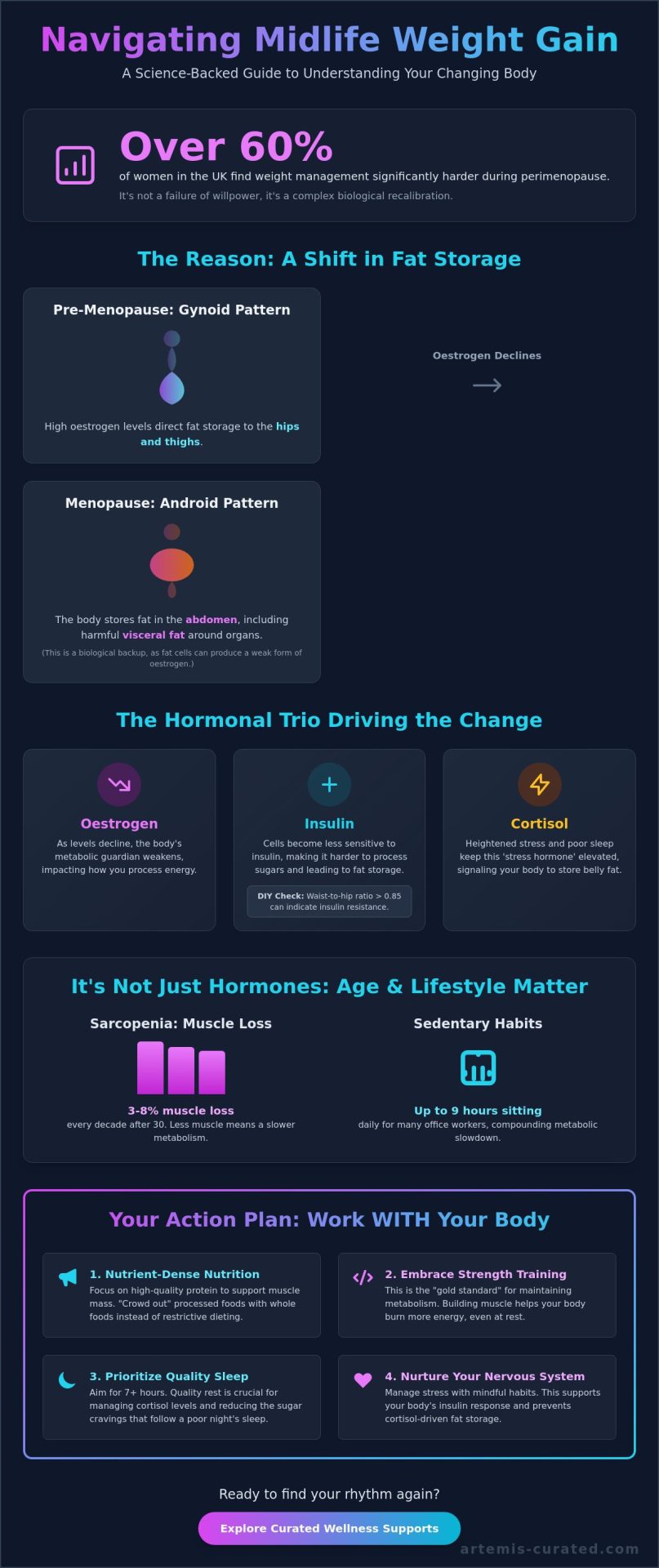
What if the stubborn shift in your waistline isn’t a failure of willpower, but a sophisticated dialogue your body is having with its own biology? A 2022 study published in the journal Post Reproductive Health indicates that over 60% of women in the UK find weight management significantly harder during perimenopause. If you’re searching for how to stop menopause weight gain uk, you’ve likely felt the frustration of a menopause middle that seems resistant to every old trick in your book. It feels as though the rules of your own body have been rewritten overnight without your consent.
It’s exhausting to feel like your metabolism has suddenly changed pace while you’re already managing hot flushes and disrupted sleep. You aren’t alone in feeling that the standard advice to just eat less feels hollow when your energy levels hit a wall by mid-afternoon. This guide offers a gentle, science-backed way to find your rhythm again by working with your changing hormones rather than fighting them. We’ll explore how to stabilise your weight, reclaim your vitality, and understand the specific metabolic shifts occurring in this new chapter of your personal narrative.
Key Takeaways
- Understand why your body is changing and how shifting hormones like oestrogen influence where you store fat during midlife.
- Explore science-backed tips on how to stop menopause weight gain uk by managing stress and supporting your body’s insulin response.
- Learn why focusing on high-quality protein and “crowding out” processed foods is more effective than traditional restrictive dieting.
- Discover why strength training and quality sleep are the real “gold standards” for maintaining a healthy metabolism and feeling your best.
- Move toward a more nurturing approach to health that uses thoughtful supplements and mindful habits to support your body’s unique rhythm.
Why Menopause Weight Gain Happens (and Why It’s Not Your Fault)
If you have noticed your favourite trousers feeling snug around the waist despite eating the same meals you always have, you aren’t alone. It is a common story across the UK. Many women find that the “menopause middle” appears almost overnight, creating a sense of frustration that traditional dieting just can’t fix. Understanding the changes during menopause helps us see that this isn’t a failure of willpower. It is a complex biological recalibration. When you are looking for how to stop menopause weight gain uk, the first step is realizing your body is actually trying to protect you in its own way.
The Shift from Gynoid to Android Fat
Before perimenopause, oestrogen usually directs fat toward the hips and thighs. This is known as the gynoid pattern. As oestrogen levels decline, the body begins storing fat in the abdomen instead, which is the android pattern. This shift acts as a biological backup plan because fat cells can actually produce a weak form of oestrogen when the ovaries stop doing so. Visceral fat is the hidden adipose tissue stored deep within the abdominal cavity that surrounds your vital organs and can impact your metabolic health.
The Role of Ageing vs. Hormones
It is easy to blame hormones alone, but ageing plays a significant part too. Most adults lose between 3% and 8% of their muscle mass every decade after they turn 30. This process, called sarcopenia, slows down your metabolism because muscle burns more energy than fat does. In the UK, our modern lifestyle often makes this transition harder. Statistics show that many office workers spend up to 9 hours a day sitting at desks. This sedentary habit combined with hormonal shifts makes the old “eat less, move more” mantra feel completely ineffective.
We also need to consider metabolic flexibility. This is your body’s ability to switch between burning carbohydrates and burning fat for fuel. During the midlife transition, this system often gets “stuck,” making it harder to tap into fat stores. Instead of fighting your body with the restrictive diets that worked in your 20s, the goal is to help it regain that flexibility. You can explore our curated collection of wellness supports to help find your balance again. Learning how to stop menopause weight gain uk starts with working with your biology rather than against it. It is about choosing quality over quantity and soul over fleeting trends.
The Science of the Shift: Oestrogen, Insulin, and Cortisol
Weight changes during midlife aren’t merely a matter of calories. They represent a complex internal dialogue between your hormones. Understanding this chemistry is the first step in learning how to stop menopause weight gain uk. As oestrogen levels begin to fluctuate and eventually decline, the body’s ability to manage energy shifts. This isn’t a failure of discipline; it’s a physiological transition that requires a more intentional approach to daily habits.
Understanding Insulin Sensitivity
Oestrogen acts as a quiet guardian of our metabolic health. It helps our cells remain sensitive to insulin, the hormone responsible for moving sugar from the blood into the cells for energy. When oestrogen levels drop, this process becomes less efficient. You might find that carbohydrates you once enjoyed now lead to brain fog or a soft thickening around the waist. Research suggests that menopause weight gain is common because of these cellular changes. You can check for signs of insulin resistance at home by measuring your waist-to-hip ratio; a ratio above 0.85 often indicates your body is struggling to process glucose. For a deeper look at this hormonal architect, explore our Oestrogen Pillar.
Cortisol: The Rhythm of Inner Harmony
Perimenopause often makes the nervous system feel more fragile. You might notice you’re more reactive to daily stressors that previously felt manageable. This heightened state keeps cortisol levels elevated. When cortisol remains high, it signals the body to store fat, particularly in the abdominal area, as a survival mechanism. This stress state is often worsened by poor sleep. If you’re getting less than seven hours of rest, your body naturally seeks quick energy sources, leading to intense sugar cravings the following afternoon. Managing this rhythm is essential for anyone looking at how to stop menopause weight gain uk. Our Cortisol Pillar offers specific strategies to soothe the nervous system and restore balance.
Many women attempt to combat these changes by “crashing” through high-intensity workouts. While movement is vital, excessive cardio can sometimes backfire by spiking cortisol even further. This tells your body to hold onto fat rather than burn it. Instead, focus on blood sugar stability and strength-based movement to protect your muscle mass. Small, purposeful choices in your daily routine create a sense of sanctuary for your body to heal. You might find that our carefully selected essentials provide the gentle support needed to navigate these transitions with grace.
Nutrients to Embrace: Curating a Menu for Metabolic Balance
Shifting your mindset from restriction to abundance is a powerful step in understanding how to stop menopause weight gain uk. Instead of focusing on what to remove, consider the concept of “crowding out.” By filling your plate with high-quality, vibrant nutrients, you naturally leave less space for the processed foods that often disrupt metabolic harmony. This approach isn’t about deprivation; it’s about intentionality and choosing foods that respect your body’s changing needs.
Fibre plays a vital role in this transition. It acts as a natural hormone sponge, helping your system clear out excess oestrogen that might otherwise contribute to stubborn weight. Incorporating UK-grown pulses and legumes, such as fava beans or lentils from local producers, provides a steady source of energy and gentle phytoestrogens. These plant-based compounds offer a soft echo of the hormones your body is producing less of, creating a sense of internal balance.
The Power of Protein and Healthy Fats
Protein is a non-negotiable element for maintaining lean muscle mass, which naturally tends to decline during midlife. When you are looking at how to stop menopause weight gain uk, you should aim for 20g to 30g of protein at every meal to keep your metabolism firing. This could be as simple as two local eggs at breakfast or a piece of grilled chicken at lunch. Timing matters. Spreading your intake throughout the day ensures your muscles have a constant supply of what they need to stay strong.
Healthy fats are equally essential. They serve as the foundation for hormone production and shouldn’t be feared. Focus on UK-friendly sources that offer both texture and depth. Oily fish like mackerel or sardines from British waters provide vital omega-3s, while a handful of walnuts or a drizzle of cold-pressed rapeseed oil adds a rich, satisfying finish to any dish. These fats keep you satiated and support brain health during the fog of menopause.
Phytoestrogens and Plant Wisdom
Adding flaxseeds or organic soy to your diet can provide a gentle way to support your endocrine system. These foods contain lignans and isoflavones that mimic oestrogen in a very subtle way. A “rainbow plate” approach ensures you’re getting a broad spectrum of antioxidants to support your gut microbiome. A healthy gut is a key player in weight management, as it influences how you store fat and regulate hunger signals.
Creating a sanctuary within your own body starts with these daily choices. If you feel your routine needs an extra layer of support, you might consider exploring the Menopause Support Collection for supplemental harmony. Every ingredient you choose is a part of your personal narrative, helping you move through this life stage with grace and vitality.
Movement and Rest: Building Strength and Managing Stress
Finding a sustainable rhythm for your body is the most effective way to understand how to stop menopause weight gain uk. During this transition, your body becomes more sensitive to stress. While you might feel the urge to push harder with intense gym sessions, your hormones often require a gentler, more intentional approach. High-intensity interval training (HIIT) can sometimes backfire by spiking cortisol, which signals the body to store fat around the middle. Instead, focus on Non-Exercise Activity Thermogenesis, or NEAT. This includes simple movements like walking through a local park, gardening, or taking the stairs. These activities keep your metabolism humming without triggering a stress response.
Strength Training: Your Metabolic Fire
Lifting weights is the gold standard for managing your shape during menopause. Research from the British Journal of Sports Medicine indicates that adults lose between 3% and 8% of their muscle mass every decade after the age of 30. This decline accelerates during the perimenopause years. Muscle tissue is metabolically active, meaning it burns more energy than fat even when you are completely at rest. By preserving and building lean muscle, you turn your body into a more efficient engine.
You don’t need an expensive gym membership to begin. Start at home with simple resistance bands or even weighted household objects like water bottles. Focus on functional movements like squats, lunges, and wall push-ups three times a week. These exercises don’t just help with weight; they provide the essential mechanical loading needed to maintain bone density, which is a vital concern for women in the UK today.
Sleep: The Foundation of Vitality
Rest is not a luxury; it’s a metabolic necessity. When you lose out on deep sleep, your hunger hormones fall out of balance. Levels of leptin, the hormone that tells you you’re full, drop by about 18%, while ghrelin, the hormone that triggers hunger, rises by roughly 28%. This chemical shift makes sugary cravings almost impossible to resist the following day. Quality sleep allows your body to repair tissues and regulate the insulin sensitivity that often wavers during menopause.
Managing night sweats is key to staying in a deep sleep state. Try keeping your bedroom temperature at a steady 16-18°C and choose breathable linen bedding. Creating a dedicated evening ritual can help lower cortisol before your head hits the pillow. You might try dimming the lights an hour before bed, sipping herbal tea, or practicing five minutes of box breathing. For those looking for extra support, you can find guidance in this list of the Best Supplements for Women in 2026.
To support your journey toward a more balanced lifestyle, explore our curated collection of wellness essentials designed for the modern home sanctuary.
Supporting Your Journey with a Holistic Approach
Managing your body during midlife isn’t about fighting a battle or forcing a sudden transformation. It’s about moving away from the idea of “fixing” yourself and toward a philosophy of nurturing. When you understand how to stop menopause weight gain uk, you realise it’s less about restriction and more about providing your system with the specific tools it needs to thrive in a new season. High quality supplements play a vital role here by filling nutritional gaps that even the best diets can miss. For instance, data from the British Nutrition Foundation suggests that many adults in the UK have low levels of Vitamin D and Magnesium; both are essential for metabolic health and mood regulation during the menopause transition.
Think of this process as a marathon of self-care rather than a frantic sprint. Your body is navigating a complex hormonal shift, and it deserves patience. Small, intentional choices made daily create a cumulative effect that far outweighs the impact of any “crash” diet. By focusing on nourishment and gentle movement, you create a foundation for long-term vitality that feels sustainable and kind. It’s about listening to the subtle signals your body sends and responding with the right support at the right time.
The Art of Harmony
At Artemis Curated, we believe that balance is an intentional practice. Our approach focuses on how targeted botanicals can ease the transition by supporting your metabolism and nervous system simultaneously. These natural ingredients are selected for their ability to work with your body’s rhythm, helping to steady the fluctuations that often lead to weight changes. We invite you to view the Full Curated collection to discover how these thoughtful formulations can integrate into your daily ritual.
A Final Note on Consistency
Sustainable change rarely comes from drastic, short-term overhauls. It’s the quiet, consistent habits that truly matter. Whether it’s prioritising sleep, increasing your protein intake, or finding 15 minutes for mindfulness, these actions build a narrative of health. You don’t have to do this alone; sharing the journey with a community of like-minded women can provide the emotional support needed to stay the course. This is your time to listen to your body and respond with grace. To begin your journey toward balance, you can Shop the Art of Harmony for menopause support and find the right companions for your wellness ritual.
Your Path to Hormonal Balance and Renewal
Understanding the shift in your body is the first step toward feeling like yourself again. During this transition, oestrogen levels can drop by up to 40 percent; this shift directly impacts how your body processes insulin and stores energy. By focusing on metabolic balance and lowering cortisol through intentional rest, you can navigate these changes with grace. Learning how to stop menopause weight gain uk wide involves moving away from restrictive habits and toward a holistic way of living that respects your body’s new narrative. It isn’t about doing more, but about doing what’s right for your chemistry.
Our founders, Milly and Sarah, have carefully selected every element of our collection to offer targeted support for your vitality. We provide UK-based national shipping and personal support to ensure your journey feels supported at every turn. It’s time to stop fighting against your biology and start working with it. Explore The Art of Harmony for curated menopause support and discover a more serene approach to your wellbeing. You deserve to feel vibrant, steady, and entirely balanced in this new season of life.
Frequently Asked Questions
Is menopause weight gain inevitable for UK women?
Weight gain during menopause isn’t a certainty, though 50% of UK women report changes in their body shape during this transition. While hormonal shifts naturally slow your metabolism, these changes are manageable through intentional movement and dietary adjustments. It’s about understanding your body’s new rhythm rather than fighting a losing battle. You can learn how to stop menopause weight gain uk by focusing on muscle preservation and stress reduction.
How much protein should I eat daily to stop menopause weight gain?
You should aim for 1.2 to 1.5 grams of protein per kilogram of body weight every day to maintain muscle mass. For a woman weighing 70kg, this equals roughly 84g to 105g of protein. Including high-quality sources like organic eggs, lean meats, or pulses at every meal helps keep you full and supports your metabolic rate. It’s a simple, foundational habit that makes a visible difference in how your clothes fit.
Can I lose menopause belly fat without doing high-intensity cardio?
You can absolutely lose midlife belly fat without stepping foot in a high-intensity interval class. In fact, heavy lifting and resistance training are often more effective for hormonal balance than long, stressful cardio sessions. Walking 8,000 to 10,000 steps daily also lowers cortisol levels, which is the hormone often responsible for storing fat around your middle. Gentle, consistent movement creates a sustainable path to a leaner silhouette.
Do menopause supplements actually help with weight management?
Supplements aren’t a magic fix, but they provide essential support for your metabolic health when chosen with care. A 2023 study found that Magnesium and Vitamin D3 are particularly helpful for UK women in managing insulin sensitivity and sleep quality. Better sleep leads to better food choices the next day. Think of them as supportive elements that help your body function more efficiently as you navigate these hormonal shifts.
Why am I craving sugar so much more since starting perimenopause?
Your sugar cravings are likely driven by fluctuating estrogen levels, which directly impact how your body processes insulin and serotonin. When estrogen drops, your brain looks for a quick energy boost to lift your mood and energy. This often leads to a cycle of spikes and crashes. Balancing your meals with healthy fats and fibre helps steady these waves, making it much easier to skip the afternoon biscuit tin.
How does HRT affect weight gain during menopause?
Clinical evidence from the British Menopause Society shows that Hormone Replacement Therapy is generally weight-neutral and may even help prevent abdominal fat accumulation. By stabilising your hormone levels, HRT can improve your sleep and energy, making it easier to stay active. It isn’t a weight loss drug, but it creates a balanced internal environment where your healthy habits can finally start to show results.
Is intermittent fasting safe or effective during menopause?
Intermittent fasting can be effective, but many women find a gentle 12 to 14 hour overnight window works best for their hormones. Longer fasts sometimes trigger a stress response, which might actually encourage fat storage in your 40s and 50s. If you try it, focus on nutrient density during your eating hours. It’s about finding a sustainable pace that respects your body’s need for nourishment and steady energy.
What are the best exercises for menopause weight gain in my 50s?
The most effective way to address how to stop menopause weight gain uk in your 50s is through consistent resistance training. Lifting weights twice a week helps counteract the 3% to 8% loss of muscle mass that typically occurs each decade after 30. Combine this with yoga or Pilates to maintain flexibility and bone density. These practices don’t just change your reflection; they build a foundation of strength for the years ahead.