


Imagine waking up at 3:00 AM to find your mind racing and your duvet tossed aside after another drenching night sweat. You aren’t alone in this experience; research from the British Menopause Society shows that roughly 60% of women struggle with sleep disturbances during perimenopause and menopause. It’s incredibly draining to spend your days in a state of “wired but tired” exhaustion, where brain fog feels like a permanent companion and your bed no longer feels like the sanctuary it once was.
You deserve to wake up feeling refreshed and calm, rather than counting the hours until you can crawl back under the covers. In this guide, we’ll explore exactly how to improve sleep during menopause by looking at the quiet connection between your changing hormones and your nightly rest. We’ll move beyond quick fixes to help you reclaim those elusive seven to eight hours of uninterrupted peace through a more intentional approach to your evening.
We’ve curated a thoughtful path that combines lifestyle shifts with gentle nighttime rituals. You will discover how to manage temperature fluctuations effectively and create a sleep environment that truly supports your body’s needs, ensuring your nights become a time of genuine restoration once again.
Key Takeaways
- Understand the biological shifts in your internal thermostat to help you navigate and manage the night sweats that often disrupt your rest.
- Learn why seeking natural light within 30 minutes of waking is a simple yet powerful way to reset your master clock for a more predictable evening.
- Discover how to improve sleep during menopause by curating a bedroom environment that prioritises a cool, restorative temperature of 16-18°C.
- Uncover the truth about how caffeine and alcohol affect your sleep architecture, helping you avoid those frustrating 2 AM wake-up calls.
- See how daytime stress management and targeted supplements work together as supportive pillars to create a more harmonious rhythm for your body.
Why Menopause Disrupts Sleep: The Hormonal Connection
The internal landscape of a woman’s body undergoes a profound transformation during midlife. Understanding What is Menopause? helps clarify why your nights suddenly feel restless and fragmented. As oestrogen and progesterone levels decline, they disrupt the delicate balance of your internal systems. This shift isn’t just a physical change; it’s a fundamental rewiring of how your body perceives rest and restoration. Knowing how to improve sleep during menopause starts with acknowledging this biological narrative and its impact on your sanctuary of rest.
Oestrogen, Progesterone, and Your Circadian Rhythm
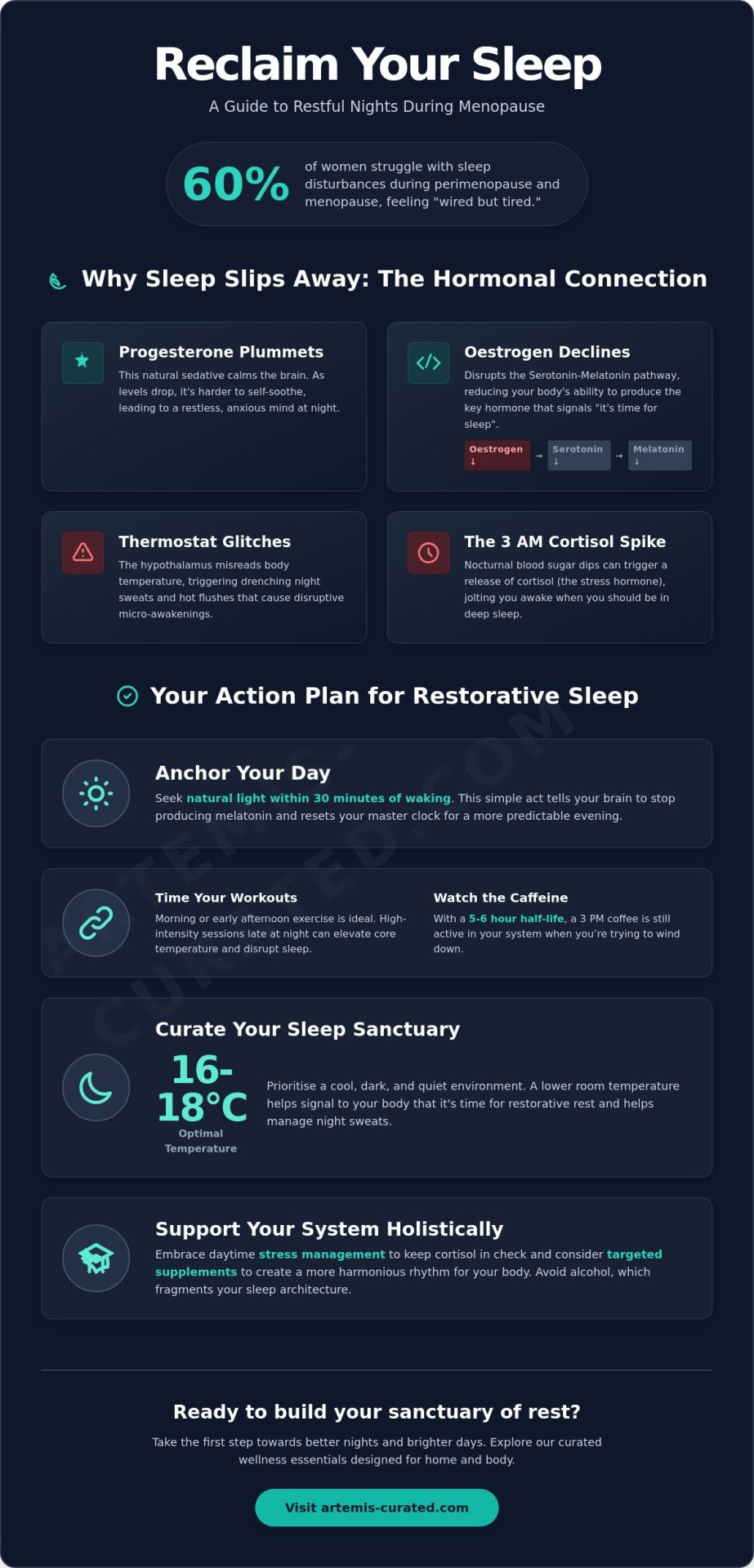
Your circadian rhythm is the master clock that coordinates the timing of hormone release to align your body with the natural cycle of day and night. Progesterone acts as a natural sedative for the brain. It converts into allopregnanolone, a substance that calms the GABA receptors, helping you drift into a peaceful state. When progesterone levels drop, that inherent sense of calm vanishes, often replaced by a restless mind. Oestrogen also plays a vital role by supporting the production of serotonin. Since serotonin is a necessary precursor to melatonin, lower oestrogen levels directly reduce your body’s ability to produce the hormone that signals it’s time for deep sleep.
The Reality of Night Sweats and Sleep Fragmentation
The hypothalamus serves as your brain’s thermostat, but fluctuating oestrogen levels cause it to misread thermal signals. It suddenly perceives the body is overheating, even in a cool room. This triggers a false heat signal, resulting in a hot flush or drenching night sweat. These events lead to micro-awakenings that ruin sleep quality. A 2018 study published in the Journal of Clinical Sleep Medicine found that menopausal women experience significantly more sleep fragmentation than their pre-menopausal counterparts. This constant interruption takes a heavy psychological toll, eroding your daytime resilience and mood while making the bed feel like a place of struggle rather than peace.
Many women find themselves staring at the ceiling at 3 AM. This isn’t a coincidence; it’s often linked to a spike in cortisol. When oestrogen is low, the body becomes more sensitive to blood sugar fluctuations. If blood sugar drops too low during the night, the adrenals release cortisol to boost it back up. This leaves you feeling wired but tired, where your body is physically exhausted but your mind is racing with nighttime anxiety. Learning how to improve sleep during menopause involves stabilising these internal rhythms to reclaim the quiet of the night.
- Progesterone decline reduces the brain’s natural ability to self-soothe.
- Oestrogen loss disrupts the serotonin-melatonin pathway.
- Hypothalamic glitches cause disruptive micro-awakenings through night sweats.
- Cortisol spikes at 3 AM are often triggered by nocturnal blood sugar dips.
By understanding these hormonal shifts, you can begin to curate a nighttime routine that addresses the root causes of wakefulness. If you are looking for specific tools to support your journey toward better rest, you can explore our curated collection of wellness essentials designed for the home and body.
Managing Daytime Rhythms for Better Nighttime Rest
Rest isn’t a switch you flip at 10 PM. It’s a narrative that begins the moment you open your eyes. To understand how to improve sleep during menopause, we must look at the hours long before the sun sets. Your body operates on a delicate master clock that requires clear signals to function properly. One of the most vital signals is natural light. Stepping outside or sitting by a bright window within 30 minutes of waking tells your brain to stop producing melatonin and start the timer for its release later that evening. It’s an intentional act that anchors your day.
Movement also plays a pivotal role. While exercise is essential, timing is everything. Morning or early afternoon sessions are ideal for menopausal health. High-intensity workouts late in the evening can keep your core body temperature elevated and your nervous system wired, making it harder to drift off. If you feel that familiar afternoon slump around 3 PM, try a glass of cold water or a brief stretch instead of coffee. Caffeine has a half-life of roughly 5 to 6 hours, meaning that afternoon latte is likely still circulating when you’re trying to settle down.
Taming the Cortisol Spike
When stress becomes a constant companion, your cortisol levels stay elevated. This is problematic because cortisol and melatonin have an inverse relationship; when one is high, the other is suppressed. Chronic stress creates a nervous system “hum” that prevents you from entering deep, restorative stages of sleep. You can lower this intensity through small, daytime micro-habits like five minutes of box breathing or mindful observation of your surroundings. For a deeper look at managing these internal waves, explore our Artemis guide on cortisol to find your own sense of inner harmony.
The Role of Nutrition and Blood Sugar Balance
Many women find themselves wide awake at 3 AM with a racing heart. This is often a blood sugar crash rather than a simple case of insomnia. When glucose levels drop too low, the body releases adrenaline to trigger a release of stored sugar, effectively waking you up in a state of high alert. Learning how to improve sleep during menopause involves stabilising these levels throughout the day.
Focus on a lunch and dinner rich in lean protein and complex carbohydrates, such as quinoa or sweet potato. These provide a slow, steady release of energy. Incorporating Tips for Better Sleep often includes dietary adjustments, such as having a small, protein-dense snack before bed. A few almonds or a spoonful of Greek yoghurt can provide enough fuel to keep your blood sugar stable until morning. If you’re looking to enhance your evening environment, you might find inspiration in our curated collection of home essentials designed for peaceful living.
Creating Your Sleep Sanctuary: A Step-by-Step Evening Ritual
Transforming your bedroom into a sanctuary requires more than just closing the door on the day’s stress. It’s about intentional curation. During menopause, your body’s internal thermostat and stress responses are often in flux. A space that feels restorative can signal to your nervous system that the day is done. Creating a dedicated environment helps you reclaim the night from the unpredictability of hormonal shifts.
Temperature plays a vital role in this process. Experts suggest that 16 to 18°C is the ideal range for a restful night. This “goldilocks” zone helps counteract the night sweats that frequently disrupt rest. Understanding how to improve sleep during menopause often begins with controlling these environmental variables. When your room is too warm, your body struggles to reach the deep, restorative stages of sleep that are essential for cognitive health.
Start a digital sunset at least 60 minutes before you intend to sleep. Swap the blue light of a smartphone for the soft glow of a low-wattage lamp. This isn’t about feeling isolated; it’s about protecting your melatonin levels from artificial disruption. Complement this by engaging your senses. A familiar scent, like lavender or sandalwood, can act as a psychological anchor. It tells your brain it’s safe to downshift and leave the demands of the day behind.
Optimising Your Physical Environment
Focusing on tactile quality is a practical way to manage physical discomfort. Breathable, natural fibres like bamboo or linen are essential for managing temperature spikes. Unlike synthetic polyesters, these materials allow air to circulate and moisture to wick away. You might consider the following adjustments to your space:
- Light Control: Invest in blackout curtains to ensure total darkness. Even a tiny LED light from a charging cable can interfere with hormone production.
- Visual Calm: A cluttered bedroom leads to a cluttered mind at 2 AM, as every unfinished task in your line of sight becomes a mental hurdle.
- Surface Textures: Choose bedding that feels cool to the touch, providing immediate relief during a hot flush.
If you’re looking for tactile elements to enhance this ritual, you can find thoughtfully selected pieces in our curated shop that prioritise both form and function.
The Art of the Downshift
Transitioning to sleep is a skill that requires practice. This National Institute on Aging guide to sleep and menopause suggests that consistent routines are key to managing disruptions. Develop a 30 minute sequence that involves zero screens. You might try box breathing, inhaling for four counts and exhaling for four, to release physical tension held in the jaw and shoulders.
A warm bath, rather than a hot one, is also effective. It triggers a natural drop in your core body temperature once you step out, which is a primary signal for your body to fall asleep. This simple physiological shift is a powerful tool when learning how to improve sleep during menopause. Pair this with gentle stretching to ground yourself in the present moment, ensuring your bedroom remains a place of peace rather than a place of worry.
Lifestyle Adjustments: What to Embrace and What to Limit
Sleep isn’t just something that happens at night; it’s a story you begin writing the moment you wake up. When you’re looking for how to improve sleep during menopause, your daily choices become the foundation of your evening rest. Small, intentional shifts in what you consume and how you move can transform your bedroom into the sanctuary it’s meant to be. By curating your habits with the same care you’d use to select a piece of fine art, you create a narrative of wellness that carries you through the night.
Refining Your Relationship with Stimulants
Many people reach for a glass of wine to unwind after a long day, but alcohol is a master of disguise. While it might help you fall asleep faster, it wreaks havoc on your sleep architecture. A 2013 study published in the journal Alcoholism: Clinical & Experimental Research shows that even moderate drinking reduces REM sleep by 9.2%. This disruption often leads to a sudden wake-up call at 2 AM, usually accompanied by intensified night sweats because alcohol causes your blood vessels to dilate.
Caffeine is another subtle thief of rest. It has a half-life of about 5 to 6 hours, meaning if you enjoy a latte at 4 PM, half of that caffeine is still circulating in your system at 10 PM. This blocks adenosine, the chemical your brain produces to signal sleepiness. Try swapping your afternoon coffee for a ritual that truly serves you. Consider these options:
- Tart cherry juice: It contains natural melatonin and procyanidins that help increase sleep efficiency.
- Herbal infusions: A warm cup of chamomile or valerian root tea offers a gentle, tactile way to signal the end of the day.
- Check for hidden stimulants: Be mindful of dark chocolate or certain over-the-counter migraine tablets, which can contain up to 100mg of caffeine per dose.
Movement for Better Sleep
Regular movement is essential for encouraging deep, slow-wave sleep. Aerobic exercise, such as a brisk walk through a local park or a steady cycling session, helps regulate your body temperature. This is vital during the hormonal shifts of menopause. Timing is everything; try to finish any vigorous activity at least 3 hours before you plan to tuck in. This allows your core temperature to drop and your heart rate to settle into a resting rhythm.
If anxiety feels heavy, yoga or Pilates can be a soulful way to reconnect with your body. These practices focus on controlled breathwork, which lowers cortisol levels. Learning how to improve sleep during menopause often involves these gentle, meditative movements that calm the nervous system before bed.
Your diet also plays a quiet, supporting role. Magnesium is often called nature’s relaxant, and many women find their levels dip during this life stage. Try to include these magnesium-rich foods in your daily meals:
- Pumpkin seeds: A small handful provides nearly 40% of your daily requirement.
- Leafy greens: Spinach and kale are excellent sources for your evening meal.
- Almonds: These provide a satisfying crunch along with muscle-relaxing benefits.
To stay hydrated without the frustration of midnight bathroom trips, try front-loading your water intake. Drink the majority of your fluids before 6 PM and only take small sips in the evening. This simple strategy protects your sleep cycle from unnecessary interruptions.
Explore our curated collection of wellness essentials to help create your perfect evening ritual.
Curated Support: The Role of Targeted Supplements
Supplements shouldn’t be viewed as a quick fix or a replacement for a healthy lifestyle. Instead, think of them as support pillars that hold up the house you’re building through better habits. When you’re looking at how to improve sleep during menopause, it’s vital to realise that your body needs consistent, gentle assistance rather than a heavy-handed approach. This is about creating a foundation where your hormones feel supported rather than forced into submission.
The secret to a restful night often begins the moment you wake up. There’s a beautiful synergy between how you manage your energy during the day and how easily you drift off at night. If your nervous system is frazzled by 3:00 PM, your brain will struggle to find the “off” switch when your head hits the pillow. By choosing supplements that offer daytime balance, you’re essentially clearing the path for your evening routine to be more effective.
Supporting Daytime Harmony
Menopause symptoms don’t keep office hours. Hot flushes, brain fog, and sudden spikes in anxiety can happen at any time, and they all add to the “stress debt” your body carries into the bedroom. Using adaptogens like Ashwagandha helps your body buffer this stress. These botanicals work by modulating your cortisol response, ensuring that a busy afternoon doesn’t leave you in a state of high alert at midnight. You can explore The Art of Harmony to find tools designed to steady these daily hormonal fluctuations. When you reduce the daytime burden on your system, you’re making it much easier to learn how to improve sleep during menopause naturally.
Deepening the Nightly Rest
As evening approaches, the focus shifts from balance to preparation. This is where “The Art of Sleep” becomes a central part of your ritual. It isn’t just about taking a pill; it’s about the intentional act of telling your body it’s safe to rest. Quality matters immensely here. For example, many high-street supplements use magnesium oxide, which the body struggles to absorb. Opting for magnesium glycinate is a much smarter choice because it’s highly bioavailable and gentle on the stomach. Data from a 2012 study in the Journal of Research in Medical Sciences showed that magnesium significantly improves sleep efficiency and increases melatonin levels, which is exactly what a menopausal body needs.
- Magnesium Glycinate: Known for its ability to relax muscles and calm the nervous system.
- Ashwagandha: An adaptogen that helps lower cortisol, making it easier to stay asleep.
- L-theanine: An amino acid found in tea leaves that promotes relaxation without drowsiness.
Try to view this routine as a small, daily act of self-care. It shouldn’t feel like a chore or another box to tick on a long to-do list. Instead, it’s a quiet moment of intentionality. When you choose high-quality ingredients and pair them with a calm environment, you’re giving yourself the best possible chance at a restorative night. It’s about being kind to yourself during a transition that can often feel quite turbulent.
Reclaiming Your Restful Evenings
Navigating the shifts in your body requires a blend of patience and intentionality. The British Menopause Society notes that nearly 75% of women find their sleep disrupted during this phase, primarily due to fluctuating oestrogen levels that affect your internal thermostat. By focusing on a consistent evening ritual and managing your light exposure during the day, you can begin to steady these rhythms. Understanding how to improve sleep during menopause is ultimately about creating a lifestyle that respects your body’s changing needs while providing the right environment for recovery.
Sometimes, your routine needs a little extra support to bridge the gap. We believe that what you put into your body should be as considered as the space you inhabit. Our collection is expertly formulated for women’s hormonal needs, focusing on bioavailable, high-quality ingredients that are easy for your system to absorb. These tools are designed to be entirely complimentary to a holistic wellness lifestyle, helping you find your way back to deep, uninterrupted rest without the fuss of complicated regimes.
Discover ‘The Art of Sleep’ – our curated support for deep, restorative rest.
You don’t have to settle for restless nights. With the right adjustments and a bit of gentle self-care, restorative sleep is well within your reach again.
Frequently Asked Questions
Is it normal to have insomnia during menopause?
Yes, it’s entirely normal to struggle with sleep, as around 60% of women in the UK report sleep disturbances during the menopause transition according to the British Menopause Society. Fluctuating hormone levels, particularly the decline in oestrogen and progesterone, directly disrupt your body’s internal clock. This often leads to fragmented rest or difficulty drifting off in a quiet, intentional way. Understanding that this is a natural physiological shift helps you approach your rest with more patience.
How can I stop night sweats from waking me up?
You can manage night sweats by curating a sleep environment focused on temperature regulation, such as keeping your bedroom at a steady 18 degrees Celsius. Choose breathable, natural fibres like linen or bamboo for your bedding to help moisture evaporate quickly. These tactile choices create a more comfortable narrative for your evening. Avoid heavy synthetic layers that trap heat and lead to those sudden, jarring awakenings that break your natural sleep cycle.
Does magnesium really help with menopause sleep problems?
Magnesium is a helpful tool for how to improve sleep during menopause because it supports the nervous system and relaxes tired muscles. A study published in the Journal of Research in Medical Sciences found that taking 500mg of magnesium daily significantly improved sleep efficiency and melatonin levels. It’s a simple, grounded way to support your body’s natural rhythms. Focus on high quality glycinate or citrate forms for better absorption and a gentler effect.
Can I take sleep supplements if I am also on HRT?
You can often combine sleep supplements with Hormone Replacement Therapy (HRT), but it’s vital to speak with your GP or a pharmacist first to ensure there are no interactions. While HRT addresses the root hormonal cause, supplements like valerian root or 5-HTP offer additional support for relaxation. This combined approach should be intentional and tailored to your specific health history. The NHS suggests a review of all medications every six months to keep your routine safe.
How long does menopause-related insomnia typically last?
Sleep issues can last throughout the perimenopause and menopause transition, which typically spans around seven years for many women in the UK. For some, these disturbances may resolve once hormones stabilise post-menopause, while others might find that new sleep habits become a permanent part of their wellness routine. It is a long journey, so focusing on a timeless approach to self-care is important. Tracking your patterns over a few months can help you see how your rest is unfolding.
What is the best time of day to exercise for better sleep during menopause?
Morning or early afternoon is the best time for exercise if you want to protect your evening rest. Engaging in movement before 2pm helps regulate your circadian rhythm without spiking your core temperature too close to bedtime. The Sleep Foundation notes that vigorous activity should end at least three hours before you plan to sleep. This timing allows your body to cool down naturally, making it easier to drift into a deep, restorative state.
Should I avoid naps if I can’t sleep at night?
It is usually best to avoid long naps during the day so you can build up enough sleep pressure for the night. If you’re feeling exhausted, a short, intentional rest of no more than 20 minutes before 3pm can provide a refresh without ruining your evening. This helps you figure out how to improve sleep during menopause by maintaining a consistent schedule. Long naps late in the day often lead to a cycle of wakefulness that is hard to break.
How much caffeine is too much when you’re going through menopause?
You should aim to keep your caffeine intake below 400mg per day, which is roughly four cups of brewed coffee, and stop drinking it by midday. Caffeine has a half-life of about six hours, meaning it stays in your system much longer than you might think. For menopausal women, caffeine can also trigger more frequent hot flushes. Choosing a more soothing, caffeine-free herbal tea in the afternoon helps create a calm narrative for your transition into the evening hours.