

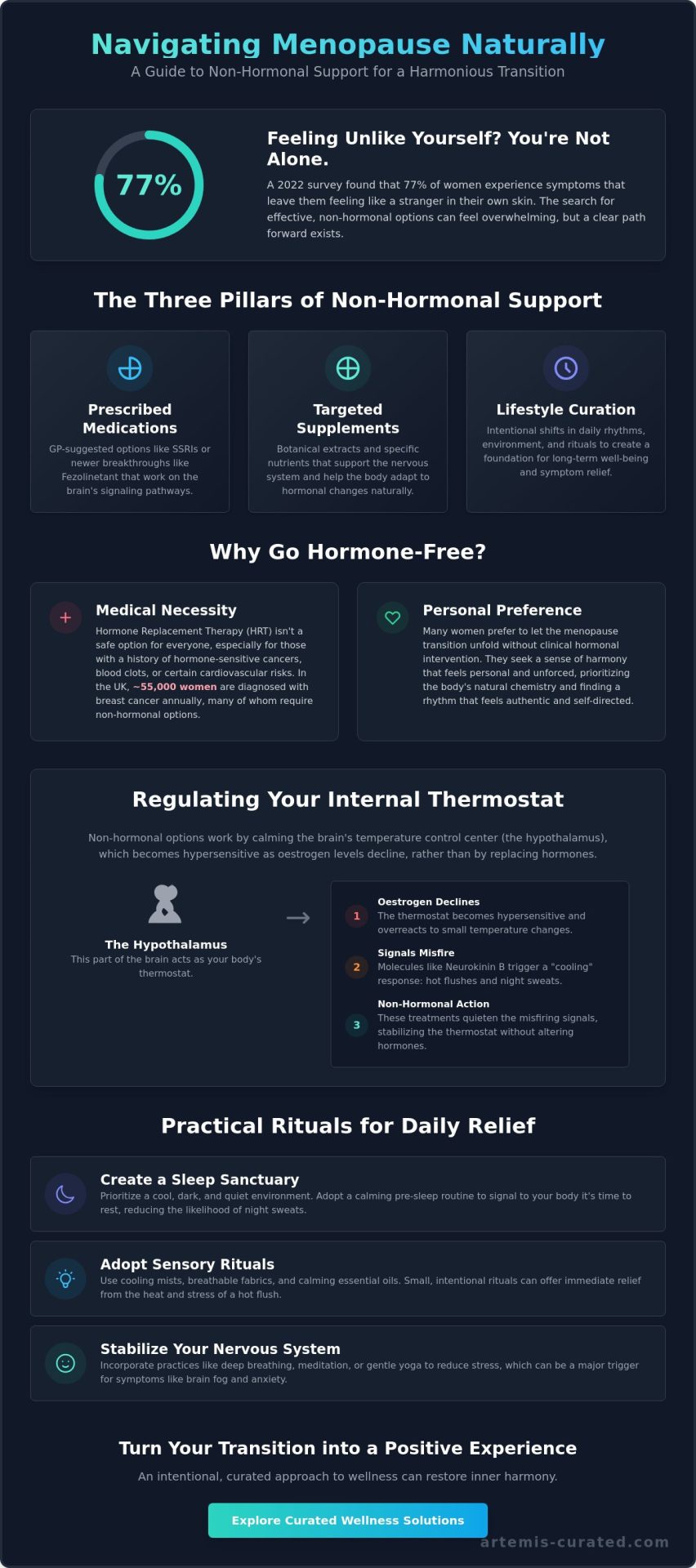
What if the secret to reclaiming your sense of self wasn’t found in a prescription pad, but in a more intentional, curated approach to your daily rituals? You’ve likely spent far too many nights staring at the ceiling while a night sweat passes, feeling like a stranger in your own skin. It’s unsettling. The anxiety surrounding potential side effects often makes the search for effective non-hormonal treatment for menopause symptoms feel even more overwhelming. According to a 2022 survey by the Fawcett Society, 77% of women in the UK experience symptoms that leave them feeling unlike themselves, yet finding a clear path forward remains a challenge.
We agree that you shouldn’t have to choose between your peace of mind and your physical comfort. This guide is designed to help you manage your transition naturally, restoring your inner harmony without relying on traditional hormone replacement therapy. You’ll learn how to build a reliable daily routine that reduces disruption and empowers you with informed, non-clinical options. We’ll look at the specific supplements that hold real promise and the lifestyle shifts that provide a foundation for long-term well-being.
Key Takeaways
- Understand why many women choose to manage their symptoms without altering oestrogen levels and how these options provide a gentle, effective alternative.
- Discover how your body’s internal thermostat reacts to change and how the right nutrients can support your nervous system to keep you feeling steady.
- Compare the latest breakthroughs like Fezolinetant with traditional botanical extracts to find the right non-hormonal treatment for menopause symptoms for your lifestyle.
- Learn how to create a peaceful sleep sanctuary and adopt small, sensory rituals that offer real relief from the heat and stress of daily life.
- Find out how an intentional, curated approach to wellness can turn this transition into a more harmonious and positive experience.
Understanding Your Options for Non-Hormonal Menopause Support
Choosing a non-hormonal treatment for menopause symptoms is a decision rooted in the desire for a specific kind of balance. These treatments work by addressing the physical and emotional changes of the transition without altering your body’s natural levels of oestrogen or progesterone. It’s a path that prioritises the body’s existing chemistry while seeking relief from common disruptions like hot flushes or night sweats. For many, this isn’t a secondary choice; it’s a primary strategy for living well.
There are three main pillars to this approach. First, we have prescribed medications that a GP might suggest, such as selective serotonin reuptake inhibitors or newer options like Fezolinetant. Second, there are targeted supplements that offer a more tactile connection to wellness. Finally, we look at lifestyle curation. This involves intentional changes to your environment and daily rhythms. Effective support comes from how these elements work together. Non-hormonal options are highly effective when they’re selected with a sense of purpose and a clear understanding of your body’s narrative.
Why Go Hormone-Free?
Many women choose this route because of their medical history. In the UK, around 55,000 women are diagnosed with breast cancer every year; for many of them, hormone replacement therapy isn’t a safe option due to the hormone-sensitive nature of their condition. Others may have concerns about blood clots or cardiovascular risks. Beyond medical necessity, there’s a growing movement toward a more natural transition. You might simply prefer to let the menopause unfold without clinical intervention, seeking a sense of harmony that feels personal and unforced. This comprehensive overview of menopause explains the biological shifts that make this search for balance so vital.
The Spectrum of Non-Hormonal Care
The journey away from hormones exists on a broad spectrum, ranging from clinical interventions to holistic wellness. It’s rarely about finding one single cure. Instead, it’s about a curated collection of tools that support your unique experience. Since every woman’s story is different, your toolkit might include a specific supplement for bone health alongside a refined sleep routine. This approach values the provenance of what you put into your body and the quality of the space you inhabit. By moving away from mass-produced solutions, you can find a rhythm that feels authentic. If you’re looking to begin your own collection of wellness tools, you can explore a curated selection of support options designed for this stage of life. Every choice you make should feel like a deliberate step toward a more comfortable, intentional home for your spirit.
How Non-Hormonal Approaches Actually Work in the Body
Understanding how a non-hormonal treatment for menopause symptoms functions requires a look at the brain’s command centre. The hypothalamus serves as your body’s internal thermostat, responsible for keeping your core temperature within a very narrow, comfortable range. As oestrogen levels decline, this centre becomes hypersensitive. It begins to misinterpret small changes in temperature as major emergencies, triggering the cooling responses we know as hot flushes and night sweats.
Neurokinin B is a signalling molecule in the brain that helps regulate body temperature and acts as a key trigger for hot flushes when hormone levels fluctuate. Rather than trying to replace the missing oestrogen, non-hormonal options focus on quietening these signals. They work to steady the communication between the brain and the rest of the body, offering a sense of calm without altering your hormonal profile directly. This approach respects the body’s natural transition while providing the relief needed to move through the day with ease.
Managing the “Internal Thermostat”
Non-hormonal approaches target the brain’s temperature control centre instead of the ovaries. This shift in focus is vital for those who prefer or require an alternative to traditional hormone therapy. Many plant-based compounds contain molecules that mimic a sense of balance within the brain’s receptors. These aren’t hormones themselves, but they speak a language the brain understands, helping to stabilise the “thermoneutral zone” that often becomes erratic during menopause.
Stabilising the nervous system is often the secret to reducing the mental haze known as brain fog. When we use non-hormonal menopause treatments, we are essentially nourishing the nerves. Nutrients such as magnesium play a central role here, acting as a gentle gatekeeper for the nervous system to prevent it from becoming overstimulated. This creates a clearer mental landscape, allowing for more focus and a more grounded presence in your personal sanctuary.
The Cortisol and Menopause Connection
Stress is a powerful amplifier of physical discomfort. When you’re stressed, your adrenal glands release cortisol, which directly interferes with the hypothalamus. This connection explains why a frantic afternoon often leads to a more restless night. Managing the rhythm of inner harmony is essential for physical relief, as lower cortisol levels help the body remain in a state of rest rather than high alert.
A 2022 study indicated that women reporting high psychological stress were significantly more likely to experience severe vasomotor symptoms. By addressing the stress response through botanical extracts and mindful habits, you change the narrative of your menopause experience. You can explore our curated collection of wellness supports to help bring this sense of balance back to your body. Every small adjustment helps in building a daily ritual that feels both restorative and deeply meaningful.
Comparing Prescribed Medications and Natural Supplements
Choosing a non-hormonal treatment for menopause symptoms involves weighing the immediate impact of clinical drugs against the steady, holistic support of nutrition. It’s a personal journey. Some find that their symptoms require the direct intervention of a prescription, while others prefer the unfolding benefits of a botanical routine. It is about finding a rhythm that respects your body’s specific needs during this transition.
The Clinical Route: What to Discuss with a GP
When symptoms like hot flushes become unmanageable, a GP might suggest pharmaceutical options. These include older medications like Clonidine or Gabapentin. Clonidine is a blood pressure drug, while Gabapentin is typically used for nerve pain. Both can reduce flushes, but they often bring side effects like dizziness or a dry mouth. Some doctors also prescribe low-dose antidepressants, such as SSRIs or SNRIs. These don’t just help with mood; they change how the brain processes temperature signals.
A significant shift happened in December 2023 when the UK’s MHRA approved Fezolinetant, known as Veoza. This drug is a breakthrough. It targets the KNDy neurons in the brain to regulate temperature without touching oestrogen levels. It’s a sharp, effective tool for those who need relief but want to avoid hormones. You can learn more about these non-hormonal treatments for menopause through reputable clinical guides. Prescription meds are often a necessary choice when symptoms disrupt daily life or work, providing a clinical foundation when the body’s internal thermostat feels broken.
The Botanical and Nutritional Path
The “Art of Harmony” approach looks at the body as a whole. Instead of blocking a single receptor, it uses high-quality supplements to fill the nutritional gaps that appear during menopause. This path is about quiet strength and intentionality. It’s a way to support your system without the heavy side-effect profile of traditional medications.
- Magnesium: This mineral is vital for the 60% of women who experience disrupted sleep. It helps the nervous system relax and supports muscle recovery.
- Ashwagandha: As a traditional adaptogen, it helps the body manage the cortisol spikes that cause midday anxiety and stress.
- Vitamin B Complex: These vitamins are the foundation of energy production, helping to clear the brain fog that many find so frustrating.
Using a curated collection of nutrients provides a sense of vitality that feels natural. While clinical meds have their place, they can sometimes feel invasive. Supplements offer a lighter touch, supporting the body’s own narrative rather than overriding it. You can explore these supportive elements in our curated shop. Choosing a non-hormonal treatment for menopause symptoms this way focuses on long-term wellness and internal balance, allowing you to create a sanctuary of health from within.
Practical Rituals and Lifestyle Shifts for Daily Relief
Living through menopause isn’t just a medical transition. It’s a sensory one. While clinical options exist, many find that a non-hormonal treatment for menopause symptoms begins with the small, intentional rituals of the day. These shifts aren’t about rigid discipline. They’re about honoring the body’s changing narrative through tactile experiences and quiet pauses. Instead of viewing lifestyle changes as a set of rules, see them as a way to curate a life that feels supportive and grounded.
Creating a Sanctuary for Sleep
A restful night starts with the environment. Experts at the Sleep Charity UK suggest keeping the bedroom at a cool 18°C to help prevent the night sweats that affect roughly 70% of menopausal women. Choose natural, breathable fabrics like organic cotton or French linen for your bedding. These materials wick moisture away from the skin, unlike synthetic polyesters. Lowering cortisol is essential before rest. Try a ten-minute “wind down” ritual involving dim lights and soft music. This signals to your nervous system that the day’s demands have ended. You can find items to enhance this experience in The Art of Sleep collection.
Mindful Nutrition for Hormonal Ease
Dietary choices act as a subtle dial for your symptoms. Certain foods can trigger heart palpitations or sudden heat. A study published in the journal ‘Menopause’ found that caffeine intake is significantly linked to more bothersome hot flushes. Reducing these triggers can change your daily experience. Focus on building a plate that supports your structural health:
- Prioritise Protein: Aim for 1.2 grams of protein per kilogram of body weight to help maintain muscle mass and skin elasticity as oestrogen levels dip.
- Healthy Fats: Incorporate omega-3s from sources like walnuts or oily fish to support cognitive function and dampen inflammation.
- Hydration Rituals: Swap a second coffee for herbal infusions that don’t spike your heart rate.
Movement should feel like a celebration of what your body can do, not a chore for weight loss. Weight-bearing exercises are vital. They strengthen bones which can lose up to 20% of their density in the five to seven years following menopause. Short, purposeful walks or resistance training provide a steady rhythm for your hormones and help maintain a sense of physical agency. Using movement as a non-hormonal treatment for menopause symptoms allows you to reconnect with your strength on your own terms.
Explore our curated collection of home essentials to begin building your personal sanctuary.
Curating Your Personal Journey with Artemis
Wellness shouldn’t feel like a frantic search for a quick fix. At Artemis, we believe your health is a curated experience, much like the way you might select a beloved piece of art or a hand-woven textile for your home. It’s about being intentional with what you bring into your life. This stage of life isn’t an ending. It’s a transition that deserves a soulful approach, where every choice you make supports your body’s changing narrative with grace and quiet authority.
The Art of Harmony: Beyond Just a Supplement
Our Harmony blend serves as the foundation for those seeking a non-hormonal treatment for menopause symptoms. We didn’t create it to simply sit on a shelf; we designed it to address the 73% of women who report that hot flushes and mood swings disrupt their daily rhythm. The ingredients are selected for their provenance, ensuring each capsule contains the highest quality extracts. By focusing on botanical integrity, the Harmony blend helps steady the emotional waves and physical heat that often define this period.
You can learn more about this holistic approach in our guide, Navigating Menopause: A Curated Guide. We believe that when you understand the history and science behind what you’re taking, the ritual of self-care becomes more meaningful. It’s about finding a rhythm that works for you, rather than following a mass-produced plan that doesn’t account for your individual needs. Our full collection is designed to meet these unfolding needs as they arise, providing a sense of permanence in a time of change.
Your Next Steps to Balance
Finding balance doesn’t require an overnight overhaul of your entire life. Often, the most profound shifts come from one small, intentional change. It might be a morning ritual of quiet reflection or choosing a targeted supplement that speaks to your specific needs. According to a 2023 survey, 65% of women felt more in control of their symptoms when they adopted a structured, holistic routine. We invite you to explore the Artemis shop to find the targeted support that resonates with your journey right now.
This chapter of your life is an unfolding story. You have the power to curate it with care, surrounding yourself with tools that bring vitality and harmony back into focus. Reclaiming your sense of self starts with the decision to treat your body with the respect it’s earned over the years. Let’s make this transition a beautiful, deliberate part of your history. You deserve to feel harmonious in your own skin again.
Finding Your Personal Rhythm
Navigating the transition of menopause doesn’t have to feel like a series of compromises. You’ve explored how botanical ingredients offer a gentle bridge between clinical prescriptions and daily comfort. By focusing on targeted support for women over 40, you can choose a path that respects your body’s natural pace. Founders Milly and Sarah established Artemis to ensure that finding a non-hormonal treatment for menopause symptoms feels like a thoughtful choice rather than a struggle. Their UK-based brand prioritizes high-quality ingredients that work with your biology; not against it.
Success lies in the small, daily rituals you build. Whether you’re adjusting your evening routine or incorporating specific botanical blends, these shifts create a foundation for long-term balance. It’s about moving away from one-size-fits-all solutions and toward a curated approach that honors your unique experience. You deserve to feel like yourself again, supported by knowledge and nature.
Explore The Art of Harmony for natural menopause support and begin your journey toward a more balanced, vibrant daily life. You’re not just managing symptoms; you’re reclaiming your sense of self.
Frequently Asked Questions
Is it possible to manage severe menopause symptoms without HRT?
You can manage severe symptoms without HRT by using targeted medical alternatives and mindful lifestyle shifts. Data from the NHS suggests that while 80 percent of women experience symptoms, many successfully use non-hormonal routes. Prescription options like Fezolinetant or low-dose SSRIs provide relief for those who can’t take oestrogen. It’s about finding a personal rhythm that respects your body’s unique narrative.
What is the best non-hormonal supplement for hot flushes?
Fezolinetant is currently considered a leading non-hormonal treatment for menopause symptoms, specifically for moderate to severe hot flushes. Clinical trials in 2023 showed this drug can reduce the frequency of flushes by over 60 percent. If you prefer a botanical approach, high-quality Sage extracts have a long history of use. These preparations offer a tactile connection to traditional healing while providing modern, evidence-based relief.
Can lifestyle changes really make a difference in menopause?
Lifestyle changes provide a foundational shift in how you experience this transition. Research indicates that reducing caffeine and alcohol can lower the intensity of night sweats for about 35 percent of women. Daily movement, particularly 30 minutes of resistance training, protects bone health and lifts your mood. These intentional choices turn your daily routine into a private sanctuary of well-being and balance.
Are there any side effects to non-hormonal menopause medications?
Every intervention has potential side effects that vary depending on the specific medication you choose. Non-hormonal options like Venlafaxine might cause dry mouth or sleep changes in roughly 15 percent of patients. Fezolinetant requires occasional liver function tests, as less than 3 percent of users show enzyme changes in clinical studies. Understanding the provenance of your treatment helps you make informed choices for your health.
How long does it take for non-hormonal treatments to start working?
The timeline for relief depends on the method you choose, but most people see changes within 4 to 8 weeks. Botanical supplements like Black Cohosh often require 12 weeks of consistent use to reach their full potential. In contrast, medical options like Oxybutynin can start working on hot flushes in as little as 2 weeks. Patience is a vital part of this unfolding journey toward comfort.
Can I take non-hormonal supplements alongside HRT?
It’s often possible to use supplements with HRT, though professional guidance is essential to avoid interactions. For example, St John’s Wort is known to interfere with the metabolism of many prescription drugs, including some hormonal therapies. You should always speak with a pharmacist or GP to ensure your curated supplement routine doesn’t clash with your primary medical care or affect its efficacy.
What is the most effective natural remedy for menopause-related anxiety?
Magnesium glycinate is a standout natural remedy for soothing the anxiety and restlessness often felt during the menopause transition. A study published in 2017 found that daily magnesium supplementation significantly improved sleep quality and reduced feelings of stress. Pairing this with Ashwagandha helps balance cortisol levels. These elements work together to restore a sense of quiet authority over your emotional landscape.