

What if the shifts of menopause weren’t a fracture in your foundation, but a chance to curate a more resilient, soulful connection? In the UK, where millions of women are currently navigating this transition, you are certainly not the only one feeling a sense of helplessness as a partner experiences sudden mood swings or a cooling of physical intimacy. Learning how to support a partner through menopause is often a journey of moving away from the idea of fixing a problem and toward the practice of presence. You might worry that the sanctuary you’ve built together is under threat, but this transition can actually be a period of profound growth.
We promise to help you navigate these emotional and physical changes together, fostering a deeper bond through empathy and intentional support. In this guide, we will explore practical ways to reduce household tension, improve your communication, and provide a roadmap for maintaining intimacy. By focusing on a shared rhythm of wellness, you can ensure your home remains a place of peace and mutual understanding during this significant life transition.
Key Takeaways
- Understand the biological shifts of this transition to learn exactly how to support a partner through menopause with newfound patience and clarity.
- Discover communication strategies that focus on “holding space” and validation rather than offering immediate solutions to emotional shifts.
- Learn how to curate a supportive home environment that prioritizes temperature regulation and stress reduction for better rest and recovery.
- Find practical ways to maintain your connection and redefine intimacy, ensuring your relationship remains a sanctuary during hormonal changes.
- Explore a holistic path toward internal balance that moves your household from simply managing symptoms to achieving genuine harmony.
Understanding the Season: The Biology of the Menopause Transition
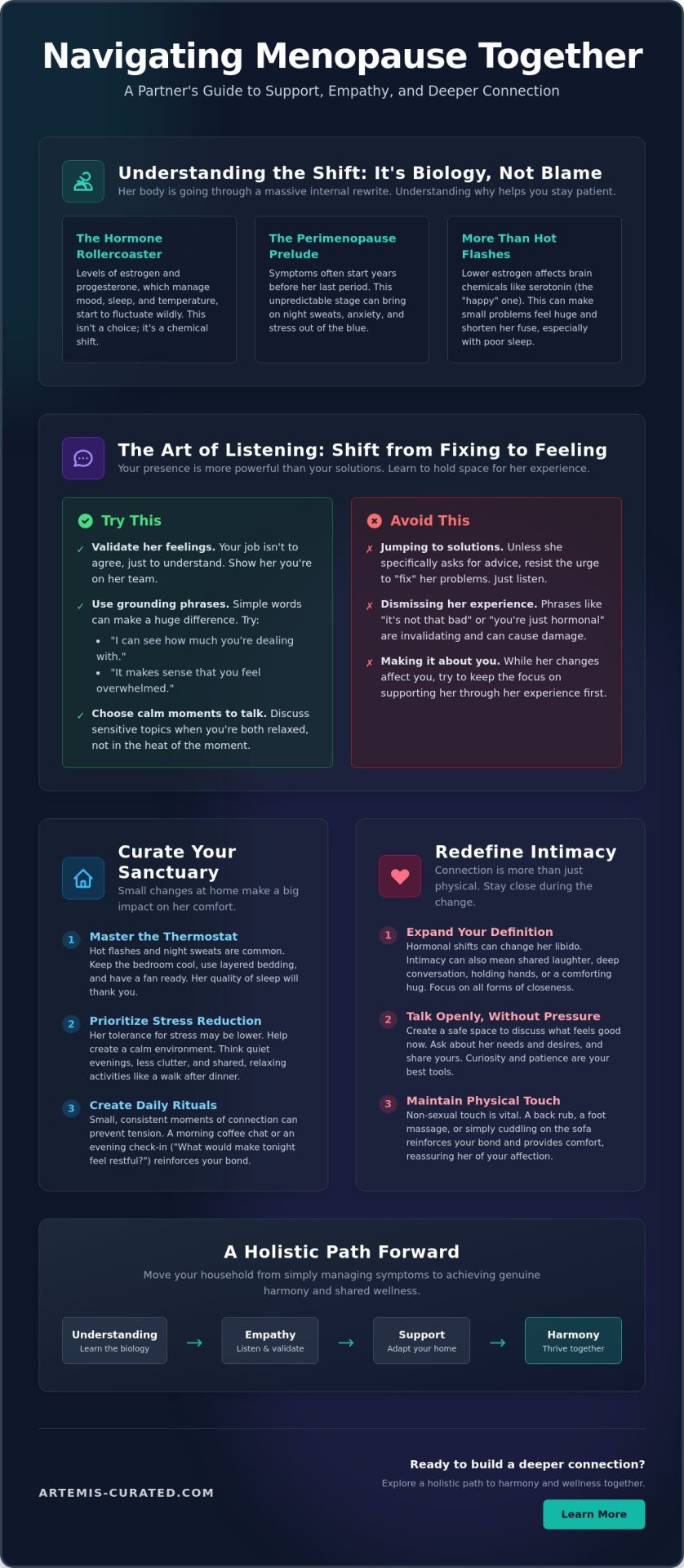
Menopause isn’t just a single date on the calendar; it is a long stretch of time that usually begins way before her periods actually stop. If you want to know how to support a partner through menopause, you have to start by getting a handle on what is actually happening inside her body. It’s a natural shift, but it changes more than just her cycle. It actually affects how her brain works. When you understand the biology of menopause, it is much easier to stay patient. You realize she isn’t just being difficult; her body is going through a massive internal rewrite.
The main players here are hormones called estrogen and progesterone. They don’t just handle fertility; they also help manage things like mood, body temperature, and sleep. As these levels start to bounce around, it affects the whole house. You might notice she is suddenly staying up late, forgetting where she put her keys, or getting frustrated over things that used to be no big deal. These aren’t just “mood swings.” They are real physical reactions to her changing chemistry. Since you live together, these changes affect your daily life too, making it a team effort to find a new sense of balance in your home.
The Perimenopause Prelude
Most people don’t realize that symptoms can start years before the final period. This early stage is called perimenopause, and it is often the most unpredictable part. One week she might feel great, and the next she is dealing with night sweats or feeling totally stressed out. Keep an eye out for small changes, like her having trouble sleeping or being more on edge than usual. Spotting these signs early helps you get ahead of things before they feel overwhelming for both of you.
Beyond Hot Flushes: The Emotional Landscape
When estrogen drops, it messes with chemicals like serotonin, which helps us feel happy and calm. This is why small problems can suddenly feel like a big deal. If she isn’t sleeping well because of night sweats, her fuse is naturally going to be shorter. It is helpful to remember that these “mood swings” are actually biological responses to chemical shifts, not personal attacks. Your job is to be the steady one while she figures out how to navigate this new phase of life.
The Art of Listening: Communication Strategies for Partners
Listening is more than just a passive act; it’s an intentional practice of presence. When we consider how to support a partner through menopause, our first instinct is often to offer a solution. We want to mend the broken sleep or quiet the sudden anxiety. However, the most profound support often comes from simply holding space. This means being a witness to her experience without the urge to fix it. It involves listening with a quiet authority that says, “I am here, and I hear you.”
Validation is the bridge that connects two people during a time of change. Using simple, grounding phrases can build trust and lower the temperature of a tense moment. Instead of offering advice, try using scripts that acknowledge her reality. Phrases like “I can see how much you’re dealing with right now” or “It makes sense that you feel overwhelmed” are incredibly powerful. They signal that you aren’t judging her response to biological shifts, but rather, you’re walking alongside her. This approach fosters a sense of safety that is essential for relationship harmony.
Timing is equally vital. Discussing the intricacies of managing menopause symptoms is best saved for quiet, low-stress windows. Avoid bringing up hormonal shifts in the heat of an argument or when she is clearly exhausted. Approach the topic with a sense of reverence for her journey, rather than treating it like a clinical checklist. This ensures your help feels like a gift rather than a critique. By choosing the right moment, you transform a potentially sensitive topic into an opportunity for deeper connection.
Conversational Rituals
Creating small, daily moments of connection can prevent tension from building. A check-in doesn’t have to be a formal meeting. It can be a soft conversation over morning coffee or a quiet walk in the evening. Use open-ended questions like, “What would make your evening feel more restful?” This allows her to lead the narrative. It moves the focus from the “problem” of menopause to the “practice” of living well together. If you’re looking for ways to enhance these moments of calm, you might explore the Full Curated collection for tools that support a peaceful home life.
Managing Conflict with Grace
There will be moments when irritability feels sharp. It’s crucial not to take these flashes personally. Often, they are the result of physical discomfort or a sudden chemical shift. If things become heated, practice the “pause.” Simply saying, “Let’s take a break and come back to this when we both feel more centered,” can preserve the sanctuary of your relationship. Staying calm doesn’t mean you’re indifferent. It means you’re providing the steady foundation she needs while her own internal world is in flux. This is the heart of true partnership.
Curating the Sanctuary: Practical Ways to Ease Physical Symptoms
Support is often felt most deeply in the quiet details of a room. When you are exploring how to support a partner through menopause, it helps to look at the environment you share. A home should be a sanctuary where the body feels understood and at ease. Small, intentional adjustments to your living space can significantly lower the physical burden of symptoms like hot flushes and night sweats. By curating a space that prioritizes physical comfort, you offer a form of care that words alone cannot express.
Managing the cortisol rhythm is another essential part of this shared journey. High stress in the evening can trigger more intense symptoms at night, creating a cycle of exhaustion. You can help break this cycle by co-creating a low-stimulation environment after sunset. This might mean dimming the lights earlier or choosing calming activities over high-energy chores. When you take the lead on the more demanding household tasks, you aren’t just helping with the work. You are protecting her energy and allowing her body the space it needs to find a sense of internal balance.
The Architecture of Sleep
Sleep is often the first thing to suffer during this transition. It’s difficult to maintain emotional resilience when you’re consistently exhausted. Focus on the physical elements of the bedroom. Opt for cooling bedding made from natural, breathable fibers and keep the room temperature lower than usual. A structured “winding down” ritual is also vital. Encourage a transition away from screens and bright lights at least an hour before bed. If you’re looking for targeted support for restorative rest, The Art of Sleep offers a thoughtful approach to deep, uninterrupted recovery.
Reducing the Cognitive Load
The “brain fog” associated with hormonal shifts can make even simple decision-making feel like a monumental task. This mental fatigue is real and draining. Supporting Your Partner Through Menopause often means stepping in to handle the administrative side of daily life. Take over the meal planning, manage the family calendar, or handle the household life-admin without being asked. This provides the “mental space” she needs to navigate her own physical changes. It’s a quiet, powerful way to show that you are an active partner in her well-being.
Finally, remember that rest is not a luxury. It’s a productive act of wellness. Encourage her to take breaks and lead by example by prioritizing stillness in your own life. When the household values rest, the pressure to “keep up” fades away. This shift in perspective helps maintain harmony and ensures that your home remains a true place of recovery for both of you.
Rediscovering Desire: Navigating Intimacy and Connection
Intimacy often undergoes a quiet transformation during this season of life. It’s common for partners to feel a sense of loss or confusion when previous rhythms of passion seem to shift. However, discovering how to support a partner through menopause means shifting your gaze from what has changed to what is currently blooming. This isn’t a time to mourn the past, but an opportunity to curate a new, more profound type of connection. Intimacy is a narrative that evolves, and your role is to be a patient co-author in this new chapter.
The biological decline in estrogen and progesterone is more than a medical fact; it’s a shift in the body’s internal drive. These hormones are the chemical foundation of libido, and their absence can make physical desire feel distant or even foreign. When you understand that this cooling is a chemical reality rather than a personal rejection, you can approach your partner with a renewed sense of grace. Patience itself becomes a form of passion. By removing the pressure of performance and focusing on presence, you create the safety required for desire to eventually resurface in its own time.
The Emotional Foundation of Desire
Desire rarely exists in a vacuum. For many women, the path to physical connection begins with feeling seen and supported in the mundane moments of the day. When you take the lead on household rhythms or manage the evening’s “cognitive load,” you’re doing more than just chores. You’re clearing the mental clutter that often blocks the way to intimacy. Non-sexual touch, like a hand on the shoulder or a long hug, becomes a vital part of your shared language. These small acts of affection build a bridge of safety, allowing her to navigate physical changes without the weight of expectation or shame.
Supporting Her Vitality
Vitality is a shared pursuit. While the internal chemistry is shifting, there are gentle, effective ways to support her natural drive. A shared approach to wellness can make the journey feel like a team effort rather than a solo struggle. You might explore how specific, high-quality ingredients can help restore a sense of passion and energy. Supporting her vitality is about more than just the bedroom; it’s about helping her feel like herself again. To explore a curated approach to desire and libido support, you can find The art of passion within our collection.
Communication is the final, essential element. Talking about physical changes, such as discomfort or a lack of drive, requires a gentle touch. Approach these conversations with curiosity rather than frustration. Ask her how she’s feeling and what makes her feel most connected to you. By keeping the dialogue open and honest, you ensure that the sanctuary of your relationship remains intact, even as the physical landscape shifts. This shared vulnerability is often where the deepest, most enduring intimacy is found.
A Holistic Path Forward: The Artemis Approach to Harmony
True support is an ongoing dialogue between two people. It moves beyond the immediate physical shifts and looks toward the horizon. When we consider how to support a partner through menopause, we are really talking about moving from “managing” to “curating.” It is the difference between simply reacting to a storm and building a home that is inherently weather-proof. This holistic path doesn’t just address the symptoms of today. It builds a foundation for the years that follow, ensuring your shared life remains a sanctuary of balance and grace.
Moving from a clinical perspective to a lifestyle approach allows for a more soulful connection. It shifts the narrative from “fixing” a partner to “supporting” a person. By focusing on internal balance, you help her navigate the transition with a sense of agency. This shared commitment to wellness is what transforms a challenging season into a period of growth. When you learn how to support a partner through menopause with intentionality, you are investing in the long-term health of your relationship.
The Art of Harmony
Selection is a fundamental philosophy for living well. The art of harmony embodies this by offering a focused approach to internal balance. It uses botanical elements like Red Clover and Sage to help the body recalibrate its own hormonal rhythms. This isn’t a quick fix, but a respectful way to support the body’s natural wisdom. You can find more on this approach in our Navigating Menopause Pillar, which serves as a knowledgeable guide for this entire season of life.
Consistency and Commitment
Consistency is the human element that makes a wellness routine effective. For these natural supports to truly take hold, the body needs time to integrate the change. A three-month commitment is usually the window where the real transformation begins to surface. You can play a vital role here by making this routine a seamless part of your daily life together. Whether it’s a gentle reminder or simply ensuring the morning ritual is a quiet, uninterrupted moment, your involvement matters. It shows that her comfort is a shared priority. This dedication to the process is what turns The Full Curated collection from a set of products into a lifestyle of harmony.
A relationship that survives change is beautiful, but one that thrives through it is a work of art. Menopause is a significant transition, but it doesn’t have to be a disruptive one. By choosing empathy and intentionality, you’re honoring the story you’ve already written while preparing for the chapters yet to come. This journey is an invitation to deepen your connection, proving that the most enduring sanctuaries are the ones we build together, day by day.
Building a Future of Shared Harmony
Navigating this transition is a journey that requires both heart and intention. You’ve learned that understanding the biological shifts is the first step in moving away from confusion. By practicing active listening and curating a home environment that prioritizes rest, you are creating a sanctuary where your relationship can truly thrive. Learning how to support a partner through menopause is ultimately about being a steady presence while her internal rhythm recalibrates. It’s an opportunity to build a deeper, more resilient connection that honors the history you share.
If you’re ready to take a holistic step forward, our collection offers a path toward internal balance. Our products are designed by UK-based wellness experts using intentionally selected botanical ingredients to support holistic hormonal health. Whether you’re looking for deep rest or daily stability, we provide the tools to help restore a sense of peace to your household. Explore the Art of Harmony: Curated Menopause Support and discover how intentional wellness can support your shared journey.
This season of life is simply a new chapter in your story. With the right support and a commitment to understanding each other, you can ensure that your home remains a place of beauty and mutual respect. You’ve got this.
Frequently Asked Questions
What is the single most important thing I can do for my partner during menopause?
The most vital thing you can do is offer your presence without trying to provide a quick solution. Many people feel a natural urge to “fix” the situation, but simply listening and validating her feelings is much more powerful. It’s about creating a safe space where she feels heard and respected as she navigates these deep internal changes. Your stillness is often the best gift you can give.
How long do menopause symptoms typically last?
The transition is a long season, often lasting between seven and fourteen years from the start of perimenopause. While the average age for the final period in the UK is 51, the symptoms leading up to it can vary significantly in length and intensity. It’s helpful to view this as a gradual evolution rather than a sudden event with a fixed end date. Patience is required as the body finds its new rhythm.
My partner seems like a different person; is this normal?
It’s completely normal to feel like your partner’s personality has shifted, but it’s actually a biological response to changing hormones. Fluctuations in estrogen and progesterone directly affect the brain’s chemistry, which can lead to irritability or sudden anxiety. Understanding that this is a chemical shift helps you learn how to support a partner through menopause with more patience and less personal hurt. It isn’t a choice; it’s a recalibration.
How can I talk about our lack of intimacy without making her feel guilty?
Approach the topic of intimacy by focusing on emotional closeness rather than physical performance or expectations. You might say, “I miss our quiet moments of connection and I want to make sure you feel comfortable and seen.” This removes the pressure and guilt, allowing you both to explore new ways of being close. Connection can be found in a long hug or a shared walk just as much as in the bedroom.
Are there natural ways to help her with hot flushes and night sweats?
You can support her naturally by making small, intentional changes to your shared environment. Focus on breathable, natural fabrics for bedding and keeping the home at a cooler temperature during the evening. Botanical supports like Red Clover or Sage can also be helpful for internal balance. These shifts help manage the body’s internal thermostat and encourage a more restful night without the need for clinical interventions.
Should I suggest she sees a doctor about HRT?
You can certainly support her in researching medical options, but it’s best to let her lead the conversation. In the UK, the NICE guidelines provide clear, evidence-based information on the benefits and risks of hormone replacement therapy, moving away from outdated fears. Your role is to be a knowledgeable guide who helps her weigh the options rather than someone pushing a specific treatment path. Let her decide what feels right for her own body.
How can I help her with the “brain fog” she keeps mentioning?
You can help with brain fog by taking over the “cognitive load” of the household. This means managing the family calendar, meal planning, or handling daily administrative tasks without being asked. By clearing her mental space, you allow her brain the room it needs to recalibrate without the added stress of minor daily decisions. Taking the lead on these tasks is a profound act of care.
What can I do if my own mental health is suffering while supporting her?
It’s essential to maintain your own well-being so you can continue to be a steady source of support. Don’t hesitate to seek your own space or talk to friends who might be going through something similar. When you prioritize your own mental health, you ensure that your home remains a sanctuary of balance for both of you. This is a key part of learning how to support a partner through menopause effectively over the long term.