


What if the “normal” range on your latest blood test is actually the very thing keeping you stuck in a cycle of fatigue? It’s a common story; in fact, a 2023 survey revealed that 40% of women felt their health concerns were dismissed during their initial medical consultations. You know your body better than a standardized chart does. When you’re told your hormones are fine but you still can’t find the energy to get through the day, it’s time to look closer at the narrative your data is trying to tell.
We agree that your health should feel like a sanctuary, a space of quiet strength rather than a source of confusion or stress. You deserve to understand the specific markers that dictate your vitality without getting lost in a sea of medical jargon. This guide will help you decode your results so you can reclaim your energy and curate a wellness routine that’s built on intentionality rather than guesswork. We’ll explore the essential markers to track and provide clear, actionable steps to ensure you feel empowered and informed when you walk into your next appointment.
Key Takeaways
- Learn how a blood test acts as a personal snapshot of your health, helping you understand your body’s unique needs as you navigate hormonal shifts.
- Move beyond basic screenings by discovering why checking specific markers like ferritin is more important for your daily energy than a standard iron check.
- Find out why being told your results are “normal” doesn’t always mean you’re feeling your best and how to identify your own optimal ranges.
- Get practical tips on preparing for your appointment to ensure your data is accurate, including how simple hydration makes the process much easier.
- Discover how to use your results to build a personalized wellness routine, matching your specific markers to the right supplements and daily rituals.
What a blood test can tell you about your body’s unique rhythm
Think of your health as a story that is always unfolding. A blood test acts as a single, clear photograph of your internal landscape at one specific moment. It captures the quiet details that we often overlook in the rush of daily life. For women, especially those moving through the shifts of perimenopause and menopause, these screenings are more than just a medical box to tick. They are a moment of pause to see how your systems are communicating. Regular data helps you see the transition coming long before the symptoms take hold.
There is a meaningful difference between the routine panels you might receive from the NHS and a comprehensive wellness blood test. Standard tests are designed to catch disease. They look for markers that have already crossed a clinical threshold. A wellness-focused approach looks at the “optimal” range; it asks how your body is thriving, not just surviving. By tracking these numbers over time, you can see how your vitality is changing as you age. It allows you to make intentional choices about your lifestyle and nutrition.
The role of blood tests in hormonal harmony
Hormones like oestrogen and progesterone perform a delicate dance. When they are in sync, you feel energized and clear-headed. When they fall out of step, the results often show up as brain fog or deep fatigue. A 2023 report from the British Menopause Society highlighted that 75 percent of women experience these symptoms during the transition. Seeing the data behind these feelings is grounding. It is important to remember that your baseline is more valuable than any single result. Seeing how your levels shift over several months gives a much truer picture of your health than a one-off check.
When should you consider a blood test?
Your body usually whispers before it shouts. You might notice a lingering tiredness that sleep doesn’t fix, or perhaps your mood feels heavier than usual. These are signals that it’s time to check in. While annual check-ups are a great foundation, symptom-led testing is often necessary when you feel “off.” In 2024, the Women’s Health Strategy for England emphasized that early diagnostic markers are key to managing long-term health effectively.
- The best timing: If you still have a regular cycle, doctors often recommend testing on day 2 or 3 for the most accurate hormonal reading.
- Consistency: Try to have your blood drawn at the same time of day, usually in the morning, to keep your data points comparable.
- Intentionality: Use these results to curate a lifestyle that supports your unique needs. You can find tools to support your wellness journey in our curated shop.
By treating these tests as a regular conversation with your body, you move away from the fear of diagnosis toward the joy of maintenance. It is about honoring the history of your body while preparing for its future.
The essential markers every woman should monitor
Living well is an intentional act. It requires an understanding of the subtle narratives within our bodies, moving beyond surface symptoms to find the source of our vitality. To truly curate a life of balance, we must look at the essential markers every woman should monitor through a routine blood test. These markers act as a quiet guide, revealing the history and current state of our internal sanctuary.
Understanding these results isn’t about chasing perfection. It’s about gathering the data needed to make informed choices for your home and health. While many focus on general health, the following markers specifically impact your daily sense of presence and energy.
Ferritin and the energy connection
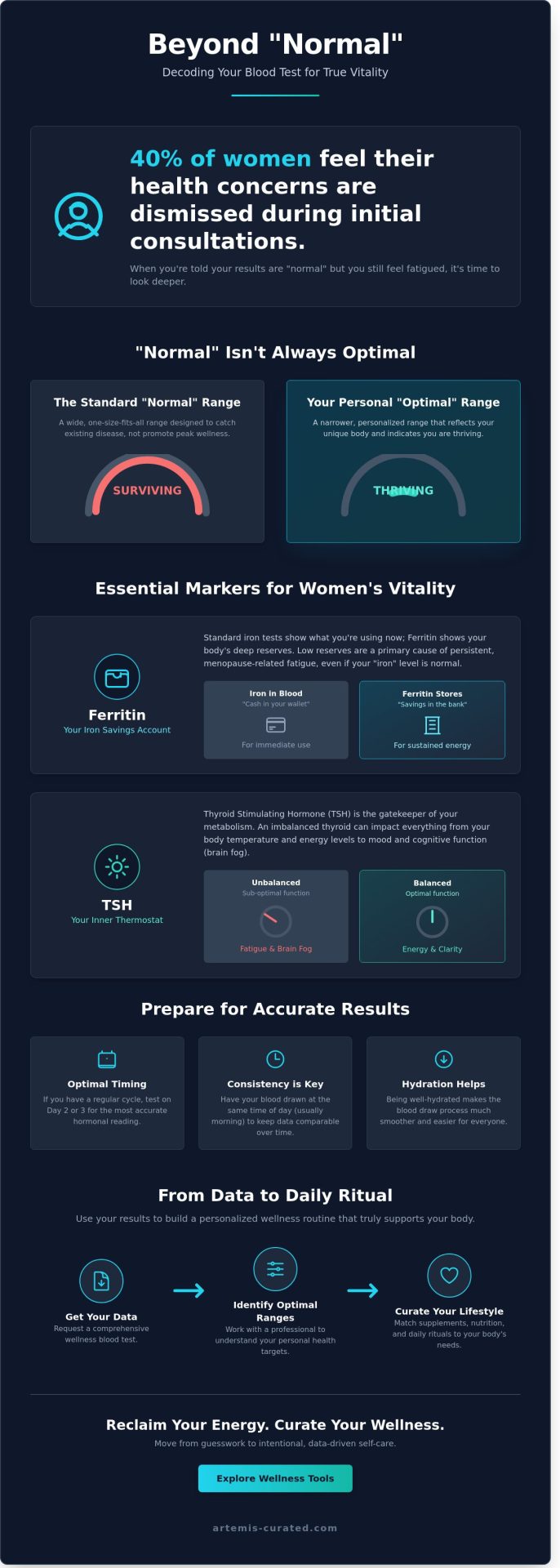
Many women experience a sense of exhaustion that a simple night of rest can’t fix. Often, they check their iron levels and find them within a standard range, yet the fatigue remains. This happens because iron in the blood is like the cash in your wallet, it’s what you’re using right now. Ferritin is your body’s iron savings account. Ferritin is a protein that stores iron, essential for preventing menopause-related fatigue. Without deep reserves in this account, your energy levels can’t sustain the unfolding demands of a busy life. You can explore more about understanding ferritin levels and their impact on women’s energy and vitality to see how these stores impact your daily rhythm and overall well-being.
Thyroid Stimulating Hormone (TSH) and your inner thermostat
Your thyroid is the gatekeeper of your metabolism, acting as a subtle thermostat for your entire system. When TSH levels drift, they can mimic or worsen symptoms we often associate with aging, such as unexplained weight gain or a constant chill in the bones. A standard blood test often stops at TSH, but a full picture requires testing T3 and T4 levels as well. This comprehensive view ensures your inner thermostat remains balanced and responsive. According to 2023 data from the American Thyroid Association, about 60 percent of people with thyroid disease are unaware of their condition. To better understand what your serum TSH level is really telling you, it helps to look beyond the standard range and explore what optimal thyroid function means for your energy and metabolism. Thyroid health is a cornerstone of Cortisol: Curating the Rhythm of inner harmony, providing the foundation for a steady, grounded life.
The unsung heroes: Vitamin D and B12
Vitamin D and B12 are the silent architects of our long-term health and cognitive clarity. Vitamin D isn’t just a nutrient; it’s a hormone that supports bone density and immune function. Research from 2024 suggests that nearly 40 percent of adults have insufficient levels, which can lead to a sense of physical and emotional heaviness. B12 is equally vital for keeping the mind sharp and the nervous system calm. These markers provide a clear narrative of how well we’re supporting our future selves. By monitoring these levels, you’re not just checking a box, you’re honoring the craftsmanship of your own body.
If you’re looking to bring more intentionality to your wellness routine, consider how a curated approach to your supplements can support these essential markers.
Why “normal” results might not mean you are feeling your best
It’s a common story. You wake up feeling like you’ve barely slept, your hair feels thinner than it was in 2024, and your mood feels heavy. You go for a blood test, hoping for answers. When the results come back, your doctor says everything is “normal.” This gap between how you feel and what the paper says is where many women lose their way. It’s frustrating to be told you’re fine when your daily reality feels like a struggle.
Labs create reference ranges by looking at the average results of everyone who walked through their doors that year. This often includes people who are already dealing with chronic stress or nutrient deficiencies. If the laboratory’s “normal” is based on a population where 35% of women are iron deficient, being at the low end of that range doesn’t mean you’re healthy. It just means you aren’t currently in a state of clinical crisis. You deserve more than just the absence of disease; you deserve to feel vibrant.
The “Reference Range” trap
A reference range is a statistical snapshot, not a blueprint for vitality. For example, a standard lab might list a Ferritin level of 15 ng/mL as normal. However, research frequently shows that women often experience significant fatigue and hair thinning when levels drop below 50 ng/mL. There’s a massive difference between being “not sick” and truly thriving. As you navigate the results, look for the “optimal” zone. This is the narrow window where your body functions with ease and grace. Understanding the difference between borderline and optimal ferritin levels for women can be the key to finally bridging the gap between what your results say and how you actually feel.
Listening to your body’s story
Your symptoms are the most sophisticated data points you have. They are the narrative of your internal world. If your blood test shows you are within range but you still feel 40% less energetic than you did three years ago, that data matters. Doctors are trained to spot disease, but you are the expert on your own lived experience. Your intuition is a powerful diagnostic tool that shouldn’t be ignored.
Start keeping a symptom journal for at least 14 days before your appointment. Note your energy levels on a scale of 1 to 10, track your sleep quality, and record any brain fog. Bringing this specific evidence to your provider changes the conversation from a simple check-up to a collaborative curation of your health. You aren’t just a number on a page; you’re a person with a unique biological history that deserves to be honored. If you’re looking to support your daily rituals, you can find intentional tools in our curated shop to help create a more supportive environment at home.
How to prepare for your blood test and navigate the results
Preparing for a blood test is a quiet act of intentionality. It ensures the data you collect is a true reflection of your current health. Think of this process as gathering the raw materials for your personal wellness narrative. Accuracy begins long before you reach the clinic. You want your results to be a clear mirror of your internal state, not a reflection of what you had for dinner the night before.
Hydration is your most valuable tool. Drinking plenty of water makes your veins more visible and the draw much smoother. If you’re required to fast, usually for 8 to 12 hours, you should still sip plain water. Fasting is essential for tests like glucose or lipid panels. Food intake causes immediate spikes that can lead to a misleading report, making it harder to track long term trends accurately.
The morning of your test
Skip the morning workout. Intense exercise can temporarily elevate liver enzymes and inflammatory markers like C-reactive protein. You should also avoid your morning coffee. Caffeine stimulates the nervous system and can skew cortisol levels. If needles make you feel anxious, practice presence. Focus on the sensation of your feet on the floor and use slow, rhythmic breathing to stay grounded. Scheduling is also vital. Aim for an appointment before 9:00 AM. This is when your hormones are at their peak, providing a clear baseline for comparison.
Decoding the jargon
Your results will arrive with a list of technical terms that can feel overwhelming. Serum refers to the liquid portion of the blood after it has clotted; plasma is the liquid when clotting is prevented. The “Range” column shows where your numbers sit compared to a standard healthy population. Use these markers to build a complete picture of your vitality. You might find it helpful to look at Understanding the DEXA Scan to see how bone density data complements your hormonal blood work.
Before your follow-up, write down three specific questions. Ask your practitioner how these results compare to your last draw and what lifestyle shifts could improve specific markers. This turns a simple data sheet into a roadmap for your future. Organizing your results chronologically allows you to see the unfolding story of your health over time.
Explore our collection of wellness essentials at the Artemis Curated shop to support your journey toward balance.
From data to daily ritual: Curating your wellness path
Your blood test results offer more than just a clinical snapshot. They provide a map for your personal evolution. This data allows you to browse the Artemis Curated Shop with a clear sense of purpose and intentionality. Instead of guessing what your body might need, you can select tools that address your specific internal landscape. If your lab work reveals a dip in Vitamin D, reaching for “The Art of Radiance” becomes a deliberate act of restoration. It’s about matching a known deficiency with a high quality solution that honors your body’s unique requirements.
Targeted support for your results
When your hormones fluctuate during significant life stages, The Art of Harmony provides a soulful way to support your body’s natural transition. If your blood test indicates high cortisol or disrupted sleep markers, it’s often a signal for more stillness. In these moments, exploring the benefits of magnesium and “The Art of Sleep” helps restore a sense of evening rhythm. These supplements should always complement the story your blood test tells, never replace it. They function best as supportive chapters in a larger, evidence based narrative of your health.
Choosing the right support requires a discerning eye. You’re looking for supplements with a clear provenance and artisanal quality. Every choice should feel like a meaningful addition to your daily life. When you align your rituals with your biological data, you move away from mass consumption toward a more purposeful way of living.
Building your sanctuary of health
Think of your supplement shelf as a curated collection of tools designed for your long term vitality. This process isn’t about a quick fix or immediate gratification. Natural wellness moves at a slow, deliberate pace. Your body requires time to respond to these new rituals and integrate the support you provide. It’s a tactile and unfolding experience that rewards patience and consistency.
The importance of re-testing cannot be overstated. Most practitioners suggest a follow up blood test every four to six months to see how your lifestyle changes are unfolding. This cycle of testing and adjusting ensures your approach remains relevant as your needs change over time. It allows you to witness the tangible impact of your choices.
Health is a continuous, beautiful journey of curation. It requires a quiet authority over your own well being and a willingness to listen to your inner world. By taking the first step toward understanding your blood markers, you begin a more informed and elegant path toward vitality. Surround yourself with the tools that speak to your needs and enjoy the process of becoming your own most knowledgeable guide.
Start Your Journey Toward Lasting Vitality
Your health isn’t a static number on a page. It’s a living story that changes as you do. A routine blood test offers the clarity you need to understand your body’s current rhythm in 2026. By looking beyond the standard results, you can identify the specific markers that influence your energy and mood. Data from 2025 clinical surveys indicate that 30 percent of women feel significantly better once they optimize their levels rather than settling for a result that simply falls within a wide “normal” range.
Taking this data and turning it into a daily ritual is where true change happens. Our founders are women who understand the complexity of hormonal balance. We focus on high quality, artisanal ingredients that work in harmony with your biology. Our formulas are expertly created for every stage of your unique path. Explore our Curated Collections to support your health journey and find the support your body has been asking for. You deserve to feel your best every single day.
Frequently Asked Questions
Do I need to fast before every blood test?
No, you don’t need to fast for every blood test, though it’s required for specific ones like glucose or cholesterol. For a fasting glucose test, you’ll usually need to avoid food and drink, except water, for 8 to 12 hours. Always check your lab instructions, as about 20% of common tests require an empty stomach to ensure accuracy. If you’re unsure, it’s always best to ask your clinician the day before your appointment.
Can I have a blood test while I am on my period?
Yes, you can have a blood test during your period, but the timing matters for hormone panels. If you’re checking FSH or LH levels, doctors typically recommend testing on day 3 of your cycle. Menstruation shouldn’t affect a general blood test for things like iron levels, though your ferritin might naturally dip slightly during heavy flow days. Knowing your cycle day helps the lab interpret your results correctly and gives you a clearer picture.
How long does it usually take to get blood test results back in the UK?
Most routine results in the UK arrive within 48 to 72 hours. While a basic full blood count might be ready the next day, complex hormone investigations can take up to 10 working days. The NHS App now gives roughly 80% of patients direct access to their results as soon as they’re processed by the lab. This digital access helps you track your health markers over time without waiting for a phone call from the surgery.
What is the difference between a full blood count and a hormone panel?
A full blood count (FBC) looks at your physical blood cells, while a hormone panel measures chemical messengers. The FBC checks your red cells, white cells, and platelets to screen for anemia or infection. A hormone panel focuses on substances like estrogen or progesterone. In 2024, these two tests remain the most common way to get a snapshot of your overall health and energy levels. They serve different purposes but work well together.
Can supplements affect my blood test results?
Yes, supplements can definitely change your results. Biotin is a major culprit, as the FDA warned in 2017 that it can interfere with lab assays for thyroid and heart health. If you take a high dose of vitamin B7, you should stop taking it at least 48 to 72 hours before your blood test to avoid false readings. Always tell your nurse about any vitamins you’re currently taking so they can note it on your file.
Is it better to get a blood test through the NHS or a private clinic?
Choosing between the NHS and a private clinic depends on your speed and specific needs. The NHS provides essential diagnostic care for free, but wait times for non-urgent appointments can vary by region. Private clinics often offer appointments within 24 hours and provide more detailed reports. About 15% of UK adults now use private screening to bypass GP waiting lists and get faster answers about their health markers and general vitality.
How often should a woman over 40 have her blood markers checked?
Women over 40 should consider checking their markers at least once every 12 months. This yearly check is vital because perimenopause often begins between ages 45 and 55, causing shifts in cholesterol and thyroid function. Monitoring these numbers annually helps you catch small changes before they become larger health issues as you age. It’s a simple way to keep a record of how your body is changing and ensures you stay on top of things.
What happens if my results are “normal” but I still feel unwell?
Feeling unwell despite a normal result is common because standard ranges are very broad. A 2023 study showed that many patients feel symptoms even when they’re at the low end of a healthy range. You might need to look at optimal levels rather than just normal ones. Talk to your doctor about subclinical symptoms if your energy or mood still feels off after your initial screening. Your personal experience is just as important as the data.