

Did you know that in the UK, one in two women over 50 will experience a bone fracture due to osteoporosis according to the Royal Osteoporosis Society? It’s a startling figure. It often brings a quiet anxiety to the menopausal years. You might feel lost among the clinical acronyms or worry about what these invisible changes mean for your future. Understanding your bone health starts with a dexa scan, a simple and non-invasive way to see exactly how your internal structure is holding up as you move through this new season of life.
It’s natural to want clarity. You deserve to understand your health without the weight of medical jargon or fear of the unknown. This guide is here to demystify the process, offering you a calm perspective on what the results actually mean for your daily rhythm. We’ll walk through the procedure together, from what to wear to how you can interpret your scores with confidence. You’ll also find actionable, gentle steps to support your bone strength naturally, allowing you to curate a lifestyle that honours your body’s enduring resilience.
Key Takeaways
- Understand how a dexa scan goes beyond a standard X-ray to reveal the true story of your bone mineral density and long-term strength.
- Discover what to expect during this gentle, non-invasive procedure, ensuring you feel calm and prepared for your visit.
- Learn how to interpret your T-scores and Z-scores, moving away from simple pass-fail results toward a clearer picture of your skeletal health.
- Explore how simple, intentional changes like weight-bearing exercise can help you curate a lifestyle that supports your bones through menopause.
- See how tracking your bone health fits into a broader philosophy of informed living, allowing you to make choices that honour your body’s unique narrative.
What is a DEXA scan and why does it matter for your health?
Think of your skeleton as the silent architecture of your life. It supports every movement and protects your most vital organs, yet we rarely consider its strength until it feels fragile. A Dual-energy X-ray absorptiometry scan, or dexa scan, is a specialised tool that looks deeper than a standard X-ray. While a regular X-ray is excellent for identifying a break after it happens, this technology measures the actual mineral content tucked away within your bones. It reveals the density and structural integrity of your frame with incredible precision.
This measurement matters because bone loss is a quiet, invisible process. It doesn’t ache or announce itself with physical symptoms. By the time a bone breaks, the underlying thinning is often advanced. Choosing a dexa scan is a proactive way to understand the narrative of your skeletal health. It identifies conditions like osteopenia, a precursor to more significant thinning, or osteoporosis long before they impact your quality of life. This knowledge gives you the power of choice. You can adjust your nutrition, movement, or medical care with clarity and confidence.
The menopause connection: Why oestrogen is key
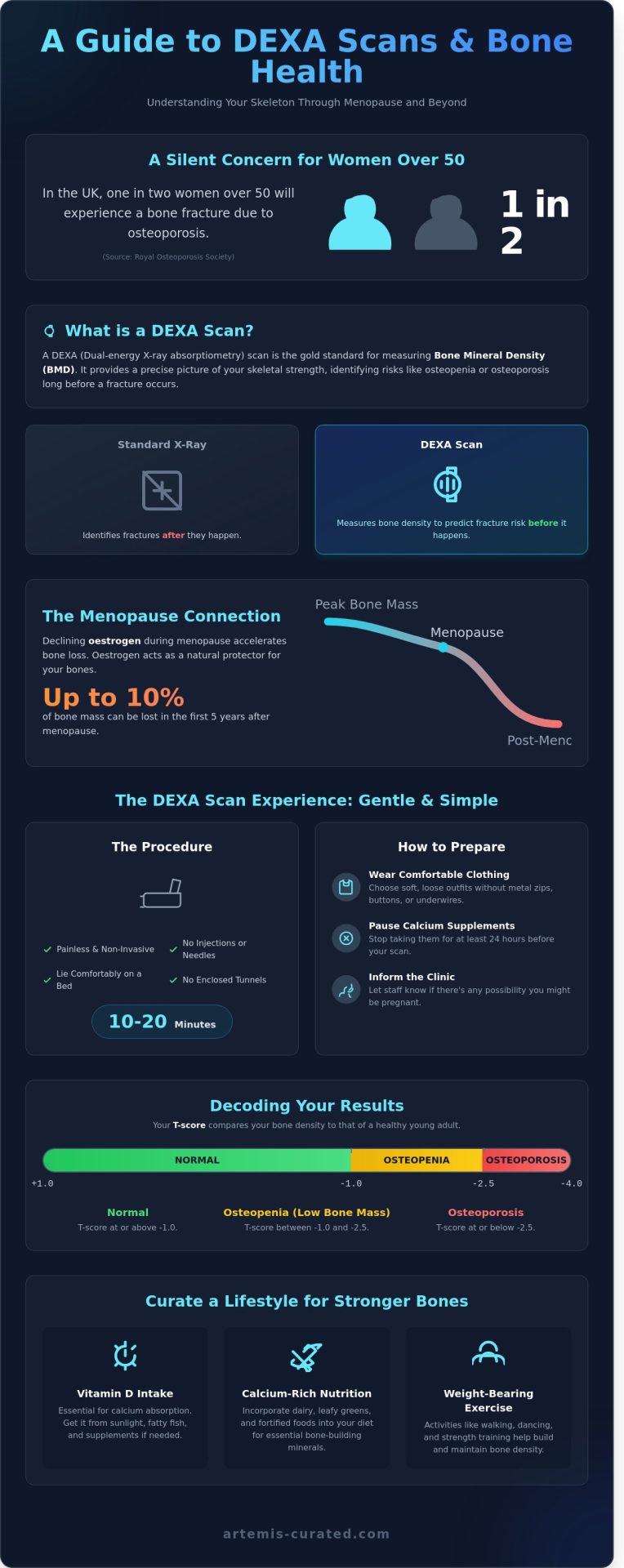
Oestrogen acts as a natural guardian for our bones. It maintains a delicate balance between the cells that build bone and those that break it down. When levels drop during the menopause transition, this protective scaffolding begins to thin. Research from the Royal Osteoporosis Society indicates that women can lose up to 10% of their bone mass in the first five years following their final period. A scan serves as a vital compass during this journey. It helps you understand exactly how your body is responding to these hormonal shifts, allowing you to curate a wellness routine that supports your long-term strength.
Who should consider booking a scan?
The Royal Osteoporosis Society notes that 1 in 2 women over the age of 50 will break a bone due to osteoporosis. If you have reached this milestone, booking a scan is a sensible step for your future self. Family history plays a significant role too. If a parent suffered a hip fracture, your own risk profile changes. Certain lifestyle factors, such as long-term steroid use or smoking, also impact bone health. Many women now choose to have a baseline scan during early perimenopause. This provides a clear starting point for their health journey. You can find supportive tools for your wellness routine in our curated shop.
What to expect: The DEXA scan experience explained
The experience of a dexa scan is remarkably gentle. You’ll find yourself in a quiet, clinical room that feels more like a space for reflection than a traditional medical theatre. The central feature of the room is a large, flat scanning bed where you’ll be invited to lie down. There are no needles, no injections, and no enclosed tunnels. It is an entirely painless and non-invasive procedure designed to be as stress-free as possible.
Most appointments conclude within 10 to 20 minutes. You’ll simply lie still while a mechanical arm passes slowly over your body. Unlike other medical imaging, you can usually remain in your own clothes. This adds a sense of personal comfort to the process, provided your outfit doesn’t feature metal fastenings like zips, heavy buttons, or underwired bras. It’s a brief pause in your day, a moment of stillness that provides deep insight into your physical narrative.
Preparing for your appointment
Preparation is straightforward and requires very little effort. It’s best to wear soft, loose-fitting pieces like leggings or a comfortable cotton tracksuit. A Bone Density Scan requires precision; avoiding metal ensures the sensors can read your bone structure without interference. You must stop taking calcium supplements for at least 24 hours before your visit to ensure the reading isn’t skewed by undissolved tablets in your digestive tract.
- Choose clothing without metallic embellishments or fasteners.
- Pause calcium supplements for a full 24-hour period.
- Eat and drink normally on the day of the test.
Always inform the clinic staff if there is any possibility you might be pregnant. This is a standard safety protocol for any procedure involving imaging technology. By following these simple steps, you ensure the results are accurate and the process remains seamless. As you curate your path toward long-term wellness, you might look for objects that support a restful environment at our shop.
The technology and safety
The safety profile of the dexa scan is one of its most reassuring features. The machine directs two separate X-ray beams toward the body; one beam is absorbed primarily by soft tissue, while the other focuses on bone. By comparing these two readings, the computer filters out the soft tissue to provide a clear, detailed picture of your bone density. The exposure is comparable to the background radiation you would encounter during a short-haul flight from London to a European destination. The radiation safety profile of a DEXA scan is remarkable; the dose is significantly lower than that of a standard chest X-ray. This makes it a highly safe and effective tool for monitoring your bone health over time.
Decoding your results: Understanding T-scores and Z-scores
Reading your report shouldn’t feel like looking at a clinical verdict. Instead, view it as a detailed map of your internal architecture at a specific moment in time. The results don’t offer a simple pass or fail mark. They provide a comparison that helps you and your doctor understand the current strength of your bones. When you receive the results of your DXA Scan (Bone Density Test), you’ll see two primary numbers: the T-score and the Z-score. These figures allow for a nuanced look at how your bone density measures up against different benchmarks.
The T-score acts as a baseline, comparing your bone density to that of a healthy young adult of your same gender at their peak bone mass. This is the standard used to determine if your bones are thinning. Your Z-score offers a different perspective by comparing your results to people of your own age, gender, and ethnicity. If this number is unusually high or low, it might signal to your doctor that something other than natural ageing is affecting your bone health. Doctors use these numbers to calculate your future fracture risk, allowing you to make intentional choices about your health before a break occurs.
What does your T-score actually mean?
A score of -1.0 or above is considered normal bone density. If your result falls between -1.0 and -2.5, it indicates osteopenia, which means your bone density is lower than average but not yet in the range of osteoporosis. A score of -2.5 or below leads to a diagnosis of osteoporosis. This middle ground of osteopenia is a gentle invitation. It’s a significant opportunity to adjust your lifestyle, perhaps by increasing weight-bearing exercise or refining your nutrition, to protect your skeletal sanctuary for the years ahead.
Next steps after receiving your report
Schedule a follow-up conversation with your GP or a health professional to discuss the narrative your report reveals. They can help you interpret the nuances of the dexa scan and decide if treatment or simple monitoring is the best path forward. Most women in the UK find that a repeat scan every two to five years is sufficient to track changes, though your doctor might suggest a different rhythm based on your specific risk factors.
Start a personal health folder to keep your results organised. This allows you to see the unfolding story of your bone health over time rather than viewing each scan in isolation. Bringing this history to your appointments ensures your care is curated specifically for your needs. It transforms a collection of data points into a meaningful record of your journey toward long-term wellness. Pairing your scan results with a comprehensive blood test for hormones and vitality can give you an even fuller picture of how your body is navigating the menopause transition. Using a dexa scan as a regular check-in point helps you maintain a sense of agency over your physical strength as you navigate the transition of menopause.
Supporting your bones: Natural ways to curate strength
Your skeleton isn’t a static frame; it’s a living archive of your daily habits. Every step you take and every meal you choose writes a new chapter in your bone density narrative. When you receive the results of a dexa scan, you aren’t just looking at cold numbers on a page. You’re seeing the cumulative effect of how you’ve nurtured your physical self over the years. This data offers a moment of reflection, allowing you to adjust your lifestyle with intentionality and grace.
Movement as a foundation for vitality
Bones respond to pressure. When you lift weights or walk briskly, you signal to your osteoblasts; the cells responsible for building bone; that it’s time to strengthen the structure. Research from the Royal Osteoporosis Society suggests that weight-bearing exercise is the most effective way to maintain mineral density as we age. It doesn’t require intense, high-impact sessions. Gentle yoga or Pilates can be incredibly effective, as these practices improve balance and proprioception. Improving your stability can reduce the risk of falls by up to 25% in adults over 50. It’s never too late to start a strength-based routine. Even small, consistent movements create a lasting impact on your skeletal integrity.
Nourishing the skeletal system
Calcium acts as the primary building block for your frame, but it doesn’t work in isolation. Vitamin D and K2 are essential partners that ensure calcium actually reaches your bones instead of settling in your arteries. While dairy is a traditional source, you can find rich deposits of calcium in tinned sardines, almonds, and dark leafy greens like kale or spring greens. A dexa scan provides the baseline for your bone health, but your kitchen habits provide the daily maintenance.
Be mindful of how certain rituals affect your mineral absorption. Consuming more than three cups of coffee a day can lead to a slight increase in calcium loss through urine. Similarly, regular alcohol consumption can interfere with the balance of calcium and vitamin D metabolism. Supporting your oestrogen levels naturally also plays a quiet, crucial role in this process. Oestrogen helps regulate the bone-remodelling cycle; when levels dip during menopause, the rate of bone loss often accelerates. By focusing on phytoestrogen-rich foods like flaxseeds and fermented soy, you can help buffer these transitions. If you’re also experiencing persistent fatigue or unexplained weight changes alongside bone health concerns, it may be worth exploring your serum TSH level, as thyroid function can significantly influence both energy and bone metabolism during menopause. Low iron stores can also quietly undermine your energy and vitality during this time; understanding your ferritin levels and what they mean for your daily energy is another important piece of the picture.
To support your journey toward a more balanced and intentional lifestyle, you can explore our curated collection of wellness essentials.
A holistic approach to menopause and bone health
Viewing the results of a dexa scan shouldn’t feel like a clinical verdict; it’s a vital piece of your personal narrative. This diagnostic tool offers a moment of clarity, allowing you to move away from guesswork and toward a life of intentionality. When you understand the density and strength of your skeletal system, you gain the agency to make informed choices about your movement, nourishment, and daily rituals. It’s about honouring the body you inhabit by giving it exactly what it requires to thrive in this new season. Knowledge isn’t just power, it’s the foundation of a more serene and confident way of living.
Statistics from the British Menopause Society suggest that women can lose up to 20% of their bone density during the first seven years after menopause. This transition isn’t a decline, but a call to refine your self-care. Artemis Curated is dedicated to supporting you through every stage of this journey, providing a sanctuary of knowledge and products that respect the natural rhythms of your body. By integrating medical insights with a soulful approach to wellness, you can create a lifestyle that feels both supportive and deeply restorative. We believe in a rejection of the mass-produced, focusing instead on the carefully selected and the deeply meaningful.
- Intentional Movement: Prioritise weight-bearing exercises that challenge your bones without compromising your joints.
- Nourishing Foundations: Focus on calcium-rich foods and Vitamin D, ensuring your body has the raw materials it needs for repair.
- Restorative Rest: Recognise that your bones and tissues repair themselves most effectively during deep, undisturbed sleep.
Curating your daily wellness rhythm
True skeletal health isn’t built in a day. It’s the result of a consistent, gentle rhythm that prioritises rest and emotional equilibrium. High levels of stress can lead to elevated cortisol, which may interfere with bone-building cells and disrupt your hormonal balance. Focusing on deep, restorative sleep and mindful stress management is just as crucial as physical exercise. We encourage a slow, deliberate approach to your wellness journey. Rather than rushing into a complex regime, take the time to build a supplement routine that feels right for your specific needs, focusing on quality and purpose over sheer volume. Every addition to your daily ritual should feel like a conscious choice rather than a chore.
Finding your harmony
Hormonal transitions require a delicate touch and an appreciation for the body’s changing needs. The art of harmony lies in finding products and practices that support your body without overwhelming it. Whether it’s through targeted nutritional support or creating a home environment that fosters peace, every choice you make contributes to your long-term vitality. There is a profound beauty in ageing with strength and grace, knowing that you’ve tended to your foundation with care and respect. This period of life is an invitation to listen more closely to your body’s whispers before they become shouts.
Your journey through menopause is unique, and it deserves a curated approach that reflects your values. We invite you to explore our curated collections for menopause support, where you’ll find essentials designed to help you maintain your balance and embrace the years ahead with confidence. By choosing pieces and practices with a storied past and a clear purpose, you ensure that your wellness journey is as beautiful as it is effective.
Cultivating Strength for the Years Ahead
Your journey through menopause is a personal narrative that deserves a foundation of strength. Understanding your bone density through a dexa scan provides the clarity needed to make informed choices for your future self. Royal Osteoporosis Society data indicates that 1 in 2 women over 50 will experience a fracture because of bone thinning, but these numbers don’t have to define your story. By decoding your T-scores and embracing a lifestyle rich in weight-bearing movement and specific nutrients, you’re taking a proactive step toward lasting vitality.
Supporting your body should feel like a natural extension of your daily ritual. Our British-founded brand is dedicated to women’s wellness, offering solutions that are expertly formulated for the unique transitions of the menopause journey. These pieces are designed to foster holistic harmony and inner vitality, helping you create a sanctuary of health within yourself. View the Full Curated Collection for Menopause Support to discover how we can help you thrive through every season of change. You’ve got the tools to build a resilient and vibrant future.
Frequently Asked Questions
Is a DEXA scan the same as a bone scan?
No, this procedure isn’t the same as a nuclear bone scan. While both look at your skeleton, the former measures mineral density to assess osteoporosis risk. Nuclear bone scans involve an injection of radioactive tracers to identify infections, tumours, or hidden fractures. They’re different tools for different health stories, providing distinct layers of information about your skeletal integrity.
How much does a DEXA scan cost in the UK?
A private dexa scan in the UK typically costs between £100 and £250 depending on your location and the clinic’s depth of analysis. If you meet specific clinical criteria, such as being over 50 with a previous fracture, the NHS provides these scans at no cost. Many people choose private options for quicker access to results, which usually arrive within 24 to 48 hours.
Can I have a DEXA scan if I am on HRT?
You can certainly have a scan while taking Hormone Replacement Therapy. In fact, HRT is often prescribed specifically to protect bone health during menopause. The scan acts as a helpful benchmark to see how well your bones are responding to the treatment. It’s a useful way to track your progress and ensure your skeletal strength stays where it needs to be over time.
How often should a woman have a bone density test?
Most women at risk of osteoporosis should have a test every 2 to 5 years according to Royal Osteoporosis Society guidelines. If your initial results are healthy, you might not need another for a longer period. However, if you’re managing low density, your doctor might suggest a follow-up after 24 months to monitor any changes. It’s about finding a rhythm that suits your specific health profile.
What happens if my DEXA scan shows low bone density?
If your dexa scan shows low density, your doctor will likely discuss lifestyle adjustments or medication to strengthen your bones. This often includes increasing Vitamin D and calcium intake or starting weight-bearing exercises. In 2024, treatments like bisphosphonates are commonly used to reduce fracture risk. It isn’t a crisis; it’s an invitation to care for your body with more intention and focus.
Is there any reason I should not have a DEXA scan?
You shouldn’t have the scan if you’re pregnant or if you’ve had a contrast medium like barium or a CT scan in the last 7 days. These substances can interfere with the accuracy of the bone density readings. Most clinics also advise waiting at least 2 weeks after a radioactive isotope injection. Always tell your radiographer about any recent medical imaging to ensure your results are precise.
Do I need a referral for a private DEXA scan in the UK?
You don’t always need a GP referral for a private scan, as many UK clinics now offer self-referral services. This allows you to book directly if you’re concerned about your bone health during menopause. However, some providers still require a letter from a doctor to ensure the procedure is clinically appropriate. It’s best to check the specific requirements of your chosen clinic before you book your appointment. Reviewing your hormone levels through a dedicated women’s blood test for hormones and vitality alongside your scan results can provide a more complete picture of your overall health.