

Imagine standing in the quiet of your kitchen at 3 am, watching the moonlight on the floor while a sudden, sharp wave of dread washes over you for no clear reason. For the 13 million women currently experiencing menopause in the UK, these moments of inner static are often more disruptive than the physical heat. You might feel like a guest in your own skin, searching for a way to ground yourself. If you’re looking for a path toward managing menopause anxiety without medication, you aren’t alone. It’s about finding a sense of balance within your own daily life again.
It’s exhausting when the calm you’ve spent years building suddenly feels fragile. You deserve to feel like yourself, even when your hormones are shifting. This guide will help you reclaim your serenity through intentional rituals, nutritional choices, and botanical support designed specifically for this transition. We’ll explore how to build a curated toolkit of daily habits that bring a predictable, timeless sense of peace back to your home and your heart.
Key Takeaways
- Understand why your hormones make stress feel more intense and how to recognise the physical signs of menopause anxiety.
- Learn how to turn your home into a calming sanctuary that supports your nervous system during this transition.
- Discover simple daily rituals and techniques to stimulate your vagus nerve to help you feel more grounded and centred.
- Explore natural ways of managing menopause anxiety without medication by using gentle botanical extracts and adaptogens.
- Find out how an intentional, layered approach to your daily routine can help you reclaim a lasting sense of calm.
The Unfolding of Menopause Anxiety: Understanding the Shift
Menopause isn’t just a change in your cycle; it’s a deep shift in how your body communicates with your mind. Many women find themselves feeling a sudden, unspecific dread that doesn’t have a clear cause. This isn’t just “nerves” or a lack of resilience. It’s a physiological response to the natural ebb and flow of hormones. Understanding Menopause helps us see that these feelings are rooted in biology rather than external stress. By looking at managing menopause anxiety without medication, we can start to treat our bodies with the same care we might give a piece of fine art that needs a gentle hand.
This experience is often sensory. You might find that your perception of the world around you changes. Sounds feel louder, and small tasks feel more daunting. It’s a time of biological transition where the nervous system is trying to find a new equilibrium. Instead of viewing this as a flaw, we can see it as a soulful invitation to slow down and curate a life that supports our changing needs.
The Provenance of Your Inner Dread
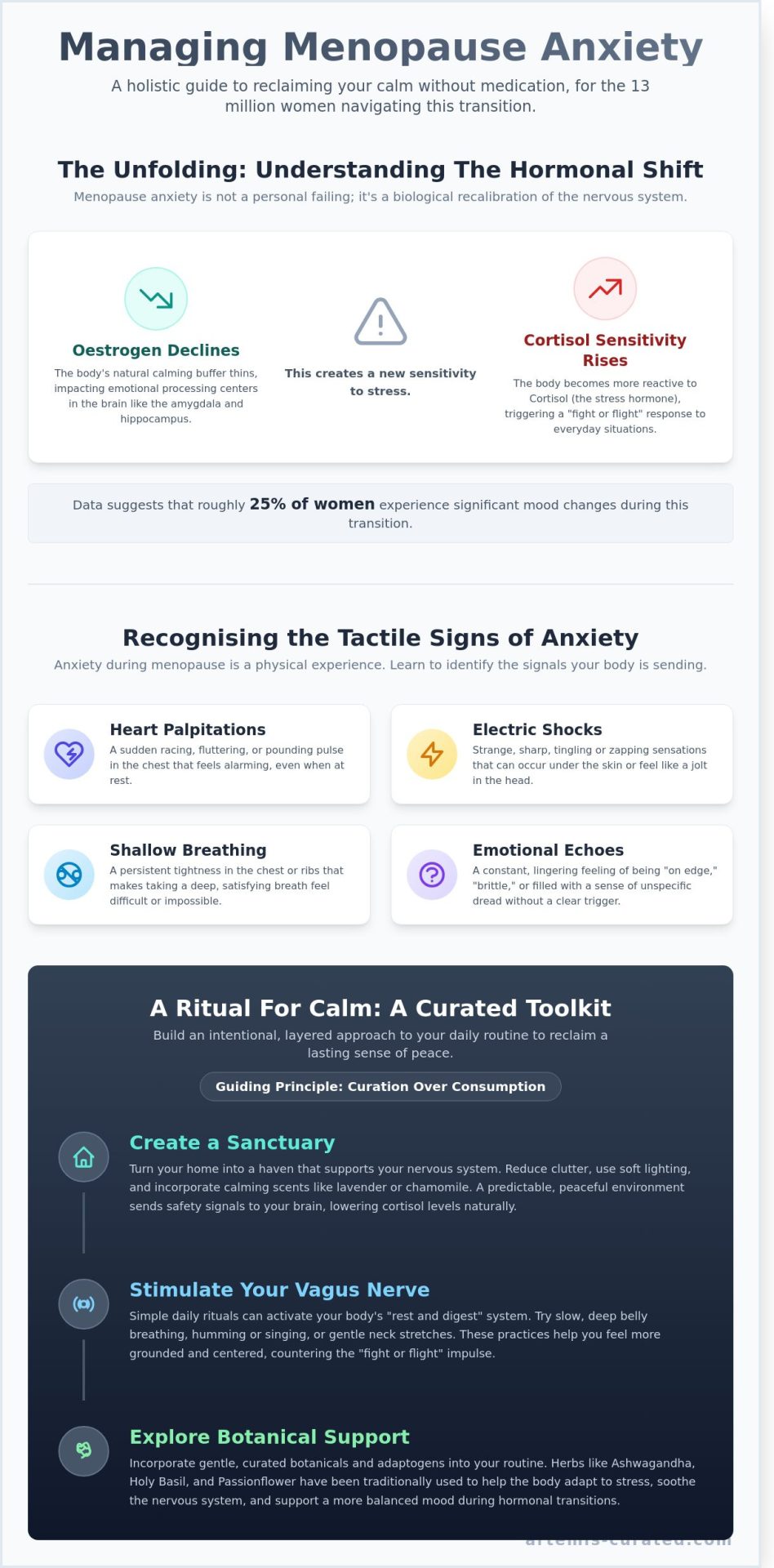
The drop in oestrogen levels directly impacts the amygdala and the hippocampus. These are the brain’s emotional processing centres. When oestrogen declines, your brain becomes more sensitive to stress signals. This is different from general anxiety disorder. It’s often a series of sudden surges rather than a constant state of worry. Your history matters here too. If you struggled with PMS or postnatal moods, your nervous system might be more sensitive to these shifts. Data suggests that roughly 25% of women experience significant mood changes during this transition. It’s a narrative written by your hormones, not a personal failing. Understanding this provenance allows you to detach from the guilt and focus on your well-being.
Recognising the Tactile Signs of Anxiety
Anxiety during this time is a very physical, tactile experience. You might feel it in your chest or your skin before you even think a worried thought. These symptoms are your body’s way of reacting to a shifting internal environment. Managing menopause anxiety without medication often starts with simply naming these sensations as they happen.
- Heart palpitations: A sudden racing pulse that feels like a flutter in the chest.
- Electric shocks: Sharp, tingling sensations that can occur under the skin or in the head.
- Shallow breathing: A feeling of tightness in the ribs that makes it hard to take a full breath.
- Emotional echoes: A persistent feeling of being “on edge” or “brittle” without an obvious trigger.
Menopause anxiety is a biological recalibration of the nervous system.
When you recognise these signs, you can begin to create a sanctuary for yourself. It’s about moving away from the frantic search for a “cure” and toward a refined understanding of your own body’s story. By acknowledging the physical reality of these shifts, you regain a sense of quiet authority over your daily life.
The Delicate Balance: Oestrogen, Cortisol, and Inner Rhythm
Understanding your body’s changing rhythm is the first step in managing menopause anxiety without medication. For years, oestrogen has acted as a soft, protective buffer for your nervous system. It’s the quiet architect that keeps your stress response in check. When these levels begin to dip, that buffer thins out. Suddenly, daily tasks that once felt manageable might trigger a visceral sense of dread. This isn’t just in your head; it’s a biological shift in how your body processes the world around it.
The National Institute on Aging on Menopause explains that these hormonal shifts are a natural part of the transition, but they can significantly alter your internal narrative. When oestrogen wanes, your body becomes more sensitive to cortisol, the primary stress hormone. You might notice a “fight or flight” feeling during a simple conversation or a sudden spike in heart rate during a quiet moment. This physical reaction often precedes the anxious thought, creating a loop that feels difficult to break. By curating a deeper understanding of these triggers, you can begin to reclaim your sense of calm.
Cortisol: The Architect of Modern Stress
As your ovaries produce less oestrogen, your adrenal glands try to fill the gap. This puts a heavy burden on your adrenals, often leading to a state of high alert. This constant “on” switch can drain your long-term vitality, making you feel “tired but wired” by 9:00 pm. To understand how to soothe this response, explore our Artemis Curated guide on cortisol for deeper context on balancing your inner rhythm.
Oestrogen’s Role in Emotional Sanctuary
Oestrogen is closely linked to serotonin and dopamine, the chemicals responsible for joy and focus. When oestrogen fluctuates, these neurotransmitters can drop, leading to “brain fog” or a fragmented ability to organise your thoughts. It’s like losing the tactile thread of a familiar story. You can read more about this in our oestrogen pillar article to see how this hormone shapes your emotional landscape.
This hormonal interplay often peaks in the early hours, typically around 3:00 am or 4:00 am. At this time, cortisol naturally begins to rise to prepare you for the day. However, without the balancing effect of oestrogen, this rise can feel like a jolt of pure adrenaline. You might wake up with a racing heart or a hot flush, which is your body’s internal thermostat reacting to the chemical surge. Recognising that this is a biological event rather than a personal failing is a powerful way of managing menopause anxiety without medication. If you are looking to create a more supportive environment for your wellbeing, you might find comfort in our curated collection of sanctuary essentials designed for the home.
Curation over Consumption: A Holistic Philosophy
Managing menopause anxiety without medication is rarely about finding a single “quick fix” that works overnight. Instead, it involves a layered approach where you intentionally choose what enters your life. This philosophy moves away from the frantic energy of trying every new supplement on the shelf; it focuses on the slow, artisanal process of healing. You’re not just fixing a problem. You’re finding a new point of harmony within a changing body. This takes time, and patience is your most valuable tool during this transition. You can’t rush the body into a state of calm.
Your home acts as a direct reflection of your internal state. When your environment feels like a sanctuary, your nervous system can finally begin to settle. A study from Princeton University found that physical clutter in your surroundings competes for your attention, which spikes stress levels. By curating a space that feels calm and intentional, you give your mind the quiet it needs to process the hormonal shifts happening inside. You can find pieces that support this sense of peace in our curated collection. About 80% of women in the UK report that their physical environment directly impacts their mood during the menopause transition.
The Narrative of Ritual
There is a big difference between a routine and a ritual. A routine is something you tick off a list, like brushing your teeth. A ritual is an anchor. It’s a moment where you are fully present. For many women, tactile experiences are the most effective way to ground a wandering mind. This might be the weight of a heavy linen blanket or the warmth of a bath at the end of a long day. According to Johns Hopkins on Menopause and Mental Health, these lifestyle adjustments are vital for managing the emotional surges that often come with perimenopause. Silence isn’t a void to be filled; it’s a space for your body to breathe. It helps you stay connected to yourself when things feel chaotic.
The Imperfection of Progress
Healing isn’t a straight line. You’ll have “weathered” days where anxiety still feels heavy, even when you’ve done everything right. This is part of the process. Think of curation as an ongoing dialogue between you and your body. You have to develop a discerning eye for what triggers your specific surges. Maybe it’s a certain type of artificial lighting or a busy schedule on a Tuesday. Data suggests that 60% of women find that tracking these triggers helps them regain a sense of control. Embracing these imperfections allows you to move forward without the pressure of being “perfect.” It’s about progress, not a total absence of symptoms.
A Ritual for Calm: Practical Steps to Manage Anxiety
Living with a shifting hormonal landscape means your nervous system often feels exposed. Managing menopause anxiety without medication is about building a daily rhythm that respects your body’s current limits. Instead of pushing through the day, try organising your schedule around your energy levels. This approach turns your home into a sanctuary where you can return to centre whenever things feel overwhelming.
Your vagus nerve acts as a reset button for your body. It runs from your brain to your gut and controls your “rest and digest” response. You can stimulate this nerve through simple acts like humming, splashing cold water on your face, or deep, slow breathing. These small rituals signal to your brain that you’re safe; they stop the frantic fight-or-flight response before it takes over your afternoon.
Breathwork and Somatic Grounding
Breathwork is a highly effective tool for managing menopause anxiety without medication. The “Box Breathing” ritual is a simple four-step process. Inhale for four seconds, hold for four, exhale for four, and hold again for four. It works quickly to steady a racing heart. Research published in 2017 shows that just 5 minutes of mindful breathing can lower serum cortisol levels by up to 20%.
- Tactile grounding: If a panic surge starts, touch something with a distinct texture. Feel the grain of a wooden table or the cool weight of a ceramic bowl to interrupt the spiral.
- Temperature shifts: Holding an ice cube or a chilled glass of water can shock the system back into the present moment.
The Nutritional Edit
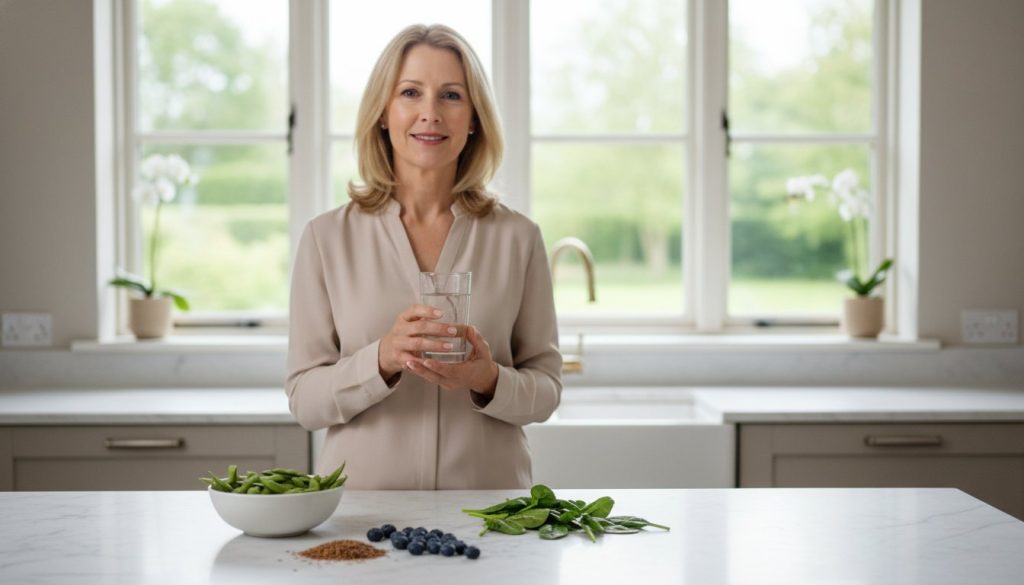
Stability starts with what you put on your plate. Reducing caffeine and refined sugars is vital to prevent “adrenal spikes” that mimic the feelings of anxiety. Focus on the provenance of your food; choose whole ingredients that support hormonal health. Magnesium is particularly important for muscle and mind relaxation; try adding more spinach, almonds, and seeds to your meals. A 2019 UK health survey suggested that roughly 70% of adults don’t get enough magnesium, which can worsen feelings of restlessness.
Movement as Meditation
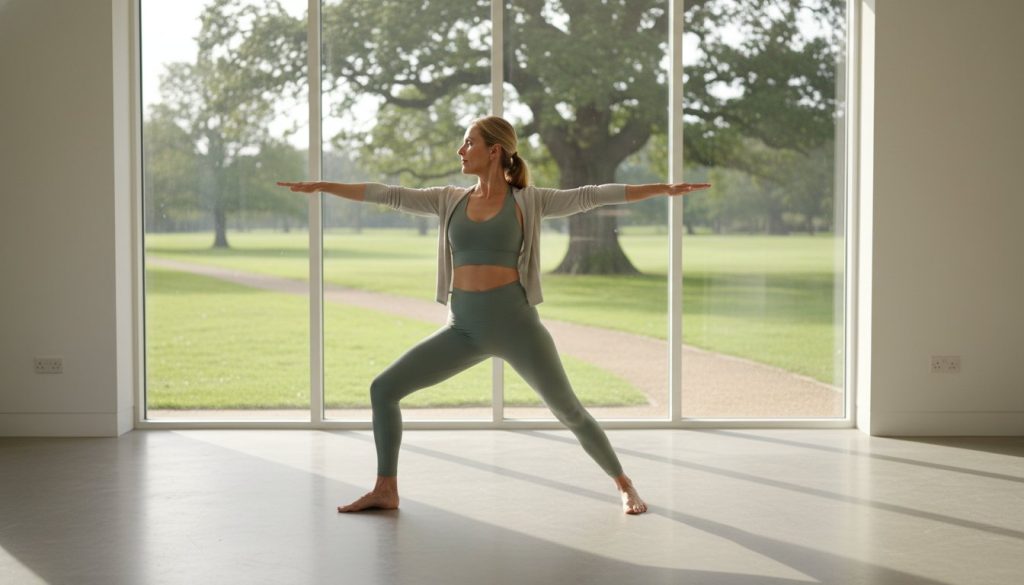
High-intensity workouts can sometimes trigger more stress hormones during menopause. Switching to “slow” exercise like Yin Yoga or a steady walk in nature is often more beneficial. Focus on being present in every step during a walk, noticing the sound of birds or the feel of the wind. Creating a dedicated sanctuary for movement within your home makes it easier to commit to these daily moments of peace. It’s about movement that feels like a gift to yourself rather than a chore.
If you’re ready to create a more peaceful environment for your daily rituals, explore our curated collection of home essentials to find pieces that bring harmony to your space.
The Art of Harmony: Botanical Support for a Serene Transition
Think of adaptogens as the artisanal tools for your hormonal balance. They don’t force a sudden change in your body. Instead, they work slowly to help you find a steady rhythm. When you’re managing menopause anxiety without medication, these botanical extracts provide a natural patina of calm. They act as a buffer against the daily stresses that feel much heavier during this time of life. It’s about choosing ingredients that have a real history of helping people feel more grounded.
Selecting Your Botanical Palette
Ashwagandha is one of the most reliable tools in this collection. It’s well known for its ability to help the body handle cortisol, which is the hormone that triggers your stress response. A study published in 2012 showed that adults taking 600mg of high quality Ashwagandha extract daily saw a 44 percent reduction in their stress scales over 60 days. This isn’t about taking as many supplements as possible. It’s about quality. You want to look for extracts that have a clear provenance and a long narrative of traditional use. Lemon Balm is another excellent choice; it’s been used since the Middle Ages to promote better sleep and reduce the feeling of being overwhelmed.
The Artemis Approach to Harmony
We created The Art of Harmony to support the emotional landscape that shifts during menopause. It isn’t just a list of ingredients. It’s a synergy designed for women who value a sophisticated approach to their health. We believe that what you put into your body should be as carefully chosen as the objects you place in your home. By combining these specific botanicals, you’re not just treating a symptom. You’re supporting your whole self. You can find these intentional blends when you shop the full collection of our wellness edits.
Final Steps to Restoration
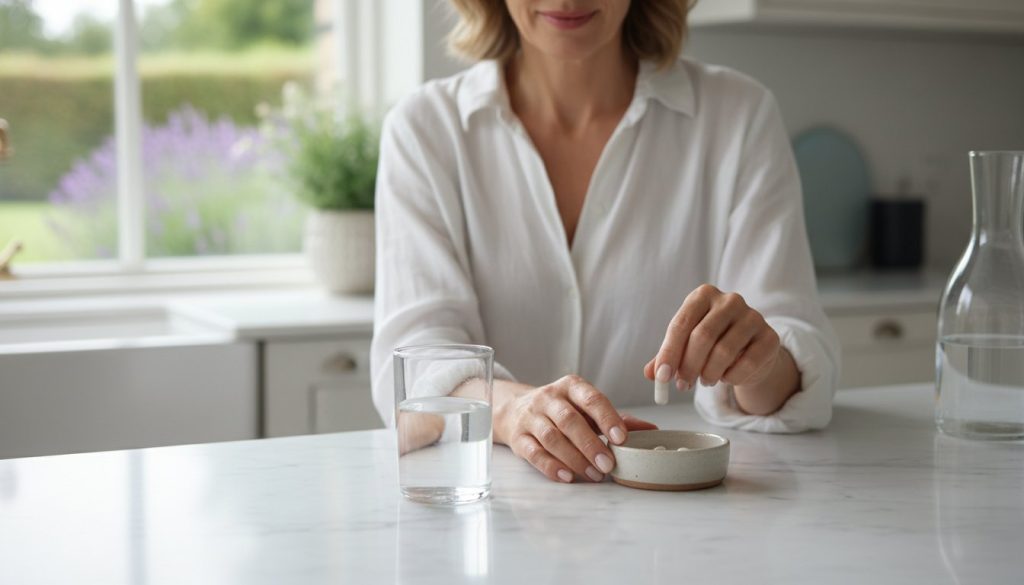
Consistency is what turns a supplement into a supportive ritual. It’s best to take your botanicals at the same time every day, perhaps alongside a morning cup of tea or as you wind down in the evening. Don’t expect a total shift overnight. It usually takes about 12 weeks to see the full benefits as your body adjusts. During this time, try tracking your “inner weather” in a simple journal. You’ll likely notice that the stormy days become less frequent and the quiet moments feel deeper. This slow unfolding is part of the beauty of natural support. It’s a gentle way of managing menopause anxiety without medication while staying connected to your own body’s story.
Embracing Your New Rhythm
You now have a clear path to reclaiming your sense of calm. By understanding the link between oestrogen and cortisol, you can start to see why your body reacts the way it does. It’s not just about managing symptoms; it’s about building a daily ritual that respects your body’s changing needs. Managing menopause anxiety without medication is a journey that focuses on balance rather than a quick fix.
We’ve focused on keeping things simple and effective. Our botanical blends are designed by a team of UK women who understand the menopause journey firsthand. These blends contain 0% synthetic fillers or mass-produced additives, ensuring you only put the best into your system. Every bottle reflects our commitment to high-quality ingredients and honest craftsmanship. You deserve a transition that feels supportive and natural.
Discover “The Art of Harmony”, our curated support for menopausal serenity
You’re doing a great job navigating this change. Take it one day at a time, and remember that finding your inner harmony is well within your reach.
Frequently Asked Questions
Is it normal to feel sudden anxiety during perimenopause?
Yes, sudden anxiety is a very common symptom of perimenopause. Data from the British Menopause Society shows that around 10% of women need specialist help for mood changes during this time. Your hormones, especially oestrogen, start to fluctuate. This shift affects the part of your brain that handles emotions. It can feel like a sudden wave of panic or worry that comes out of nowhere, often without a clear trigger.
How long does it take to manage menopause anxiety naturally?
Most women see a real change in their symptoms within 8 to 12 weeks of making lifestyle shifts. Managing menopause anxiety without medication requires patience as your body finds its new rhythm. You might notice small improvements in your sleep or mood after just 14 days of consistent practice. It’s about creating a daily ritual that supports your nervous system over the long term until balance returns.
Can certain foods make my menopause anxiety worse?
High levels of refined sugar and caffeine can definitely trigger or worsen your anxiety. A study in the journal Menopause found that women with high sugar diets were 20% more likely to experience moderate to severe symptoms. Caffeine mimics the physical signs of a panic attack by raising your heart rate. Try swapping your morning coffee for a herbal tea to keep your internal environment calm and steady throughout the day.
What is the best breathing technique for a menopause panic attack?
The 4-7-8 breathing technique is one of the most effective ways to stop a panic attack in its tracks. You inhale for 4 seconds, hold for 7, and exhale slowly for 8 seconds. This specific rhythm signals your nervous system to move from “fight or flight” into a state of rest. Repeating this cycle 4 times can lower your heart rate almost immediately. It’s a simple, tactile tool you can use anywhere.
Does magnesium really help with menopausal mood swings?
Magnesium is a powerful mineral that helps regulate your stress response and calm your nervous system. Taking 300mg of magnesium glycinate daily can improve mood stability and sleep quality. Research suggests that about 70% of adults in the UK don’t get enough magnesium in their diet. Adding this to your evening routine helps create a sense of sanctuary and relaxation before you drift off to sleep for the night.
Can I manage menopause anxiety without taking HRT?
You can absolutely find balance and relief without using Hormone Replacement Therapy. Many women choose to focus on managing menopause anxiety without medication by using a mix of nutrition, movement, and mindfulness. Clinical trials have shown that Cognitive Behavioural Therapy (CBT) reduces the impact of menopausal symptoms for 65% of participants. It’s about finding a curated path that feels right for your own body and your personal health history.
How does sleep deprivation affect my anxiety levels during menopause?
Lack of sleep causes your cortisol levels to rise, which directly increases feelings of anxiety. If you get less than 6 hours of sleep, your brain’s emotional centres become 60% more reactive to stress. This creates a difficult cycle where anxiety keeps you awake and tiredness makes the anxiety feel much worse the next day. Prioritising a restful bedroom environment is a vital step in reclaiming your inner peace and emotional stability.
What is the difference between anxiety and “brain fog” in menopause?
Anxiety is a feeling of dread or physical tension, while brain fog is a cognitive issue that makes you feel forgetful or confused. Brain fog affects about 60% of women during the menopause transition. You might struggle to find the right words or lose your train of thought mid-sentence. While they feel different, they are both linked to the same hormonal shifts that occur as your body moves into its next chapter.