


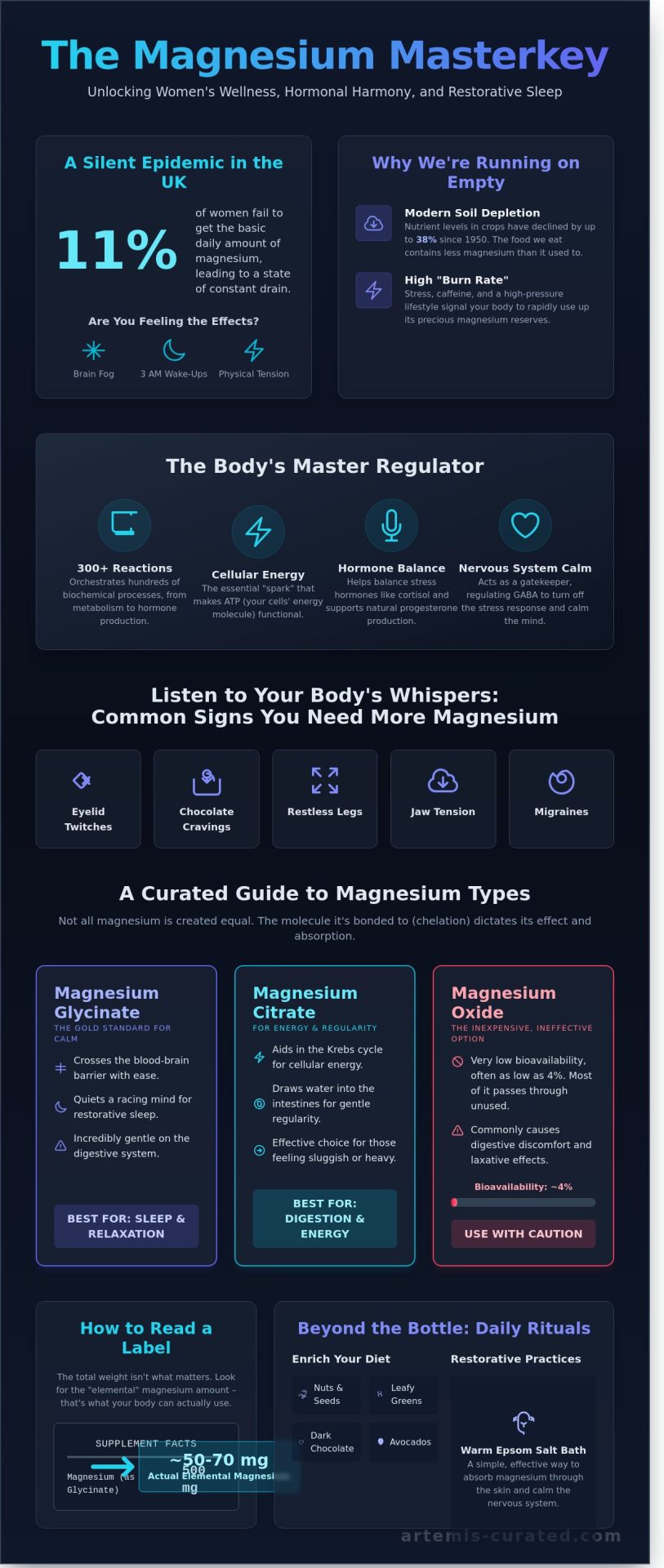
What if the persistent “brain fog” and those 3 am wake-up calls aren’t just an inevitable part of your busy schedule? In the UK, data from the National Diet and Nutrition Survey shows that roughly 11% of women are failing to get even the basic amount of magnesium needed for daily health. It’s incredibly draining to spend your days feeling physically tense and your nights tossing with restless legs; especially when you’re trying to keep your life feeling like a calm, intentional space. You’ve probably noticed that as hormones shift, your body’s ability to bounce back often feels like it’s drifting further away.
We’re going to change that narrative by exploring how this essential mineral acts as a master regulator for your entire system. You’ll discover how to achieve truly restorative sleep without that heavy “hangover” feeling the next morning, while learning to settle a frazzled nervous system. We will also provide a clear, practical guide on which specific forms are best for your needs, ensuring you invest in quality that actually delivers results for your hormonal harmony and long-term vitality. It’s time to move away from simply surviving and start collecting the tools that allow your health to unfold with ease.
Key Takeaways
- Learn why this essential mineral is so vital for your health and why it is often difficult to get enough from a modern diet alone.
- Navigate the different chelated forms to find the perfect match for your body, whether you are seeking better sleep or steady energy.
- Discover how magnesium helps balance stress hormones and supports natural progesterone for a calmer, more centred state of mind.
- Find out how to enrich your daily rituals with mineral-rich foods and the simple, restorative practice of a warm Epsom salt bath.
- Get practical tips on reading supplement labels to ensure you are choosing clean, effective products that offer real value for your health.
The Silent Essential: Why Magnesium is the Unsung Hero of Women’s Wellness
This mineral is much more than just a line item on a supplement bottle. It is a fundamental macro-mineral, an essential mineral nutrient for life that quietly orchestrates over 300 biochemical reactions within us. Think of it as the conductor of your internal orchestra, ensuring every note of your metabolism and hormone production hits the right pitch. While we should ideally get enough from our diet, modern farming practices have changed the narrative. Soil depletion means that the spinach or nuts you eat today often contain significantly lower mineral levels than those your grandmother enjoyed. A study from the University of Texas at Austin found that nutrient levels in 43 different garden crops declined by up to 38% between 1950 and 1999.
Your internal stores are also under constant pressure from what experts call the Magnesium Burn Rate. High-pressure careers, late-night scrolling, and that essential third cup of coffee all signal the body to use up its reserves faster. For women navigating their 30s, 40s, and 50s, this depletion feels particularly acute. Whether you’re managing the frantic energy of young children or the shifting tides of perimenopause, your body’s demand for this mineral peaks just as your lifestyle makes it hardest to retain. It’s a delicate balance that requires intentional curation of your daily habits.
The Science of the Spark: How Magnesium Powers Your Cells
Every time you blink, think, or move, your cells use a tiny molecule called ATP for energy. Magnesium is the necessary spark that makes ATP functional; without it, your cellular batteries simply can’t hold a charge. It also acts as a gatekeeper for your nervous system by regulating GABA to turn off the stress response. Magnesium deficiency is a silent epidemic affecting over half of the UK population.
Recognising the Whispers: Common Signs You Might Need More
Your body whispers through subtle cues like eyelid twitches or intense chocolate cravings. Restless legs at night and jaw tension are also common signs of sub-optimal levels. These signals differ from acute deficiency but deeply impact your daily vitality. Research in the Journal of Neural Transmission even suggests that up to 50% of migraine sufferers have low levels during an attack.
Choosing the Right Form: A Curated Guide to Magnesium Types
Magnesium is a social mineral. It rarely travels alone. To cross the threshold into your cells, it must be bound to a carrier molecule, a process known as chelation. This partnership determines how your body receives the mineral. Many high street supplements use Magnesium Oxide because it is inexpensive to produce. However, research shows its bioavailability is as low as 4%. This means the vast majority of the capsule passes through your system without effect. It is a wasteful approach to wellness that often leads to digestive discomfort rather than vitality.
When reading a supplement label, look for the term “elemental”. A 500mg capsule of magnesium glycinate doesn’t mean you are receiving 500mg of the mineral itself. Usually, only about 10% to 14% of that weight is the actual magnesium your body can use. Understanding gender differences in magnesium metabolism helps us see why women require these higher absorption rates, especially when managing hormonal shifts or stress. It is about the quality of the bond, not just the size of the dose.
Magnesium Glycinate: The Gentle Path to Better Sleep
This form is the gold standard for those seeking a sense of calm. By binding magnesium to glycine, an amino acid that promotes relaxation, we create a compound that crosses the blood-brain barrier with ease. It is incredibly gentle on the digestive system. It doesn’t cause the sudden laxative effects associated with cheaper salts. If your goal is to quiet a racing mind before bed, this is the choice. It pairs beautifully with a dedicated evening ritual. You might explore the art of sleep to find pieces that complement this restorative practice.
Magnesium Citrate and Malate: Digestion and Energy
Magnesium Citrate is bound to citric acid. It works by drawing water into the intestines, which makes it a reliable choice for gentle regularity. If you feel sluggish or heavy, Citrate provides a subtle nudge to the system. Magnesium Malate is different. It is bound to malic acid, a key player in the cycle that produces cellular energy. A 2019 study indicated that Malate stays in the blood longer than other forms. It is ideal for those managing muscle soreness or midday fatigue. Choosing the right form is a foundational step in your wellness narrative. You might explore our curated collection to find tools that support a more intentional lifestyle.
Quick Reference Guide:
- Choose Glycinate if you feel anxious, restless, or struggle to stay asleep.
- Choose Citrate if you experience occasional constipation or feel physically heavy.
- Choose Malate if you need support for physical energy, exercise recovery, or tender muscles.
The Hormonal Symphony: Magnesium’s Role in Menopause and Cortisol Balance
Think of your hormones as a delicate orchestra. When stress hits, cortisol takes the lead, often drowning out the softer melodies of your system. Magnesium acts like a steady conductor, helping regulate the adrenal glands and preventing them from pumping out excess cortisol when you are under pressure. According to the Linus Pauling Institute on magnesium, this mineral is involved in over 300 biochemical reactions, many of which are vital for how we process stress and maintain daily energy.
This mineral also supports the production of progesterone, our natural “calming” hormone. Progesterone is often the first hormone to decline during the late thirties and early forties, leaving many women feeling edgy, restless, or struggling to stay asleep. By aiding the body’s natural production of this hormone, you can find a sense of balance again. There is also the matter of the “menopause middle.” Around age 45, weight often shifts toward the waist. This is frequently linked to insulin sensitivity. This nutrient helps your cells listen to insulin, which keeps blood sugar stable and makes weight management much easier to handle.
We should be honest about expectations. A supplement isn’t a magic replacement for a healthy foundation; it’s a support tool. You can’t out-supplement a poor diet or a chronic lack of sleep. It works best when paired with nourishing food and consistent movement. Think of it as a helpful boost for your body’s existing structures. If you’re looking to stock up on high-quality options, you can browse our curated collection.
Cooling the Flames: Relief for Hot Flushes and Night Sweats
Hot flushes are exhausting. They happen when the body’s internal thermostat gets glitchy due to shifting oestrogen levels. Research suggests that this mineral can help stabilise this system. A deficiency often correlates with more intense vasomotor symptoms. When your levels are optimal, your body can manage these temperature spikes more effectively. For more advice on navigating this transition, check out our menopause guide.
Calming the Mind: Managing Perimenopausal Anxiety
Anxiety can feel like a constant hum in the background. This mineral is often called “nature’s tranquilliser” because of its relationship with GABA, the brain’s primary inhibitory neurotransmitter. GABA acts like the brain’s “brakes,” telling your nervous system to slow down and relax. By supporting GABA receptors, it helps quieten a busy mind and improve sleep quality. This ties into our cortisol pillar, which explores how to find your inner rhythm through the chaos of daily life.
Beyond the Bottle: Integrating Magnesium into Your Daily Rituals
True vitality begins with the ingredients in your larder. While supplements offer support, your body often responds best to a food-first approach. Incorporating 30g of pumpkin seeds into your morning porridge provides approximately 150mg of the mineral; this is nearly 50% of the daily requirement for adult women in the UK. Dark chocolate with at least 70% cocoa solids and leafy greens like spinach are equally vital additions to your daily menu.
Consistency is vital. Taking a large dose once a week won’t support your hormones as effectively as a steady, daily rhythm. You might find that an evening Epsom salt bath becomes a cherished ritual. Dissolving 200g of these salts in warm water allows for gentle transdermal absorption, helping to soothe muscles and quiet the mind before rest.
Creating a Sanctuary for Sleep
Taking your chosen supplement in the evening aligns with the body’s natural circadian rhythm. Try pairing this habit with a digital detox; put away your phone 60 minutes before bed. This nutrient works beautifully alongside Vitamin B6 to regulate hormonal activity. Instead of viewing this routine as a chore, treat it as a quiet moment of self-care. It’s a chance to breathe and reconnect. It’s a moment for you.
Magnesium-Rich Recipes for the Modern Kitchen
You can easily assemble a nutrient-dense bowl using a base of quinoa, steamed kale, and toasted sunflower seeds. If you enjoy grains or legumes, try soaking them overnight. This simple step reduces phytic acid, which makes the minerals they contain more bioavailable. Be mindful of lifestyle factors too. Research shows that high-sugar diets and regular alcohol consumption can cause the body to leak magnesium through increased urinary excretion. In fact, alcohol can increase this loss by up to 100% within 24 hours of consumption.
Browse our curated collection of wellness essentials to elevate your daily practice.
Quality Over Quantity: Why Bioavailability Defines Your Magnesium Journey
Choosing a supplement shouldn’t feel like a chore; it’s an act of self-care that requires a discerning eye. At Artemis, we believe your wellness journey deserves the same intentionality you bring to every other part of your life. The market is often flooded with products that boast high milligram counts on the front of the pack, but these numbers can be misleading. What truly matters is the elemental value of the magnesium. This represents the actual amount of the mineral your body can absorb and utilise. For instance, while a 500mg capsule of magnesium oxide might look impressive, it often has an absorption rate as low as 4%. In contrast, high-quality chelated forms like glycinate offer significantly higher bioavailability, ensuring the nutrient actually reaches your cells.
We focus on the “hand of the maker” in every selection. This means looking beyond the label to understand the sourcing and testing protocols. A 2022 report by the Clean Label Project found that nearly 25% of tested supplements contained detectable levels of heavy metals. This is why we prioritise brands that commit to rigorous third-party testing and transparent provenance. Our philosophy rejects unnecessary fillers like magnesium stearate, titanium dioxide, or artificial colours. We opt for clean, simple formulations that respect your body’s natural chemistry and provide a tactile sense of purity.
If you’re ready to introduce this mineral into your daily rhythm, start with a gentle protocol. It’s best to begin with a low dose of roughly 100mg to 150mg taken in the evening. This allows your system to adjust and helps support a restful night’s sleep. You can gradually increase this amount over a fortnight until you reach your personal “sweet spot.” For many women in the UK, a daily intake of 300mg to 400mg provides the best balance for hormonal support and energy levels.
The Full Curated Collection: A Holistic Approach
Magnesium is a foundational piece of a much larger wellness narrative. It works in harmony with other nutrients to support the health of your skin, the strength of your hair, and the vibrancy of your libido. When your hormones find their balance, every other aspect of your vitality begins to flourish. We encourage you to see your health not as a series of problems to be fixed, but as a beautiful, unfolding story of self-discovery. Each choice you make is a word in that story. By selecting supplements with purpose, you’re investing in a future of lasting harmony. Explore our curated range of supplements to find the pieces that fit your unique life.
Cultivating Your Daily Ritual of Rest
Embracing a more balanced life doesn’t have to be complicated. It’s about small, intentional choices that support your body through every stage of its journey. You’ve seen how magnesium acts as a quiet anchor for your hormones, helping to steady cortisol levels and ease the transitions of menopause. By focusing on how these minerals interact with your unique biology, you can move away from the noise of the supplement aisle and toward a more meaningful way of caring for yourself.
Quality matters more than quantity. The NHS recommends that women aged 19 to 64 aim for 270mg of this mineral daily, but the true impact lies in bioavailability. Our collection is expertly formulated for the female lifecycle, focusing on high-bioavailability ingredients your body can actually absorb. We’ve ensured every blend is free from unnecessary binders and synthetic fillers, keeping the focus on pure, effective support that fits into your evening rituals. It’s time to prioritise the restorative power of a body in harmony.
Discover The Art of Sleep and our full curated collection
You deserve a routine that feels as good as the results it brings. Here’s to finding your natural rhythm and waking up feeling truly restored.
Frequently Asked Questions
Can I take magnesium every day, and is there a limit?
Yes, you can take magnesium daily to support your hormonal health and nervous system. The NHS suggests a daily limit of 270mg for women aged 19 to 64. While it’s safe for long term use, taking more than 400mg from supplements might cause loose stools or stomach upset. It’s best to view your daily dose as a gentle foundation for your wellbeing rather than a high dose fix.
What is the best time of day to take magnesium for sleep and anxiety?
Take your supplement about 30 to 60 minutes before you plan to sleep for the best results. This timing helps your muscles relax and supports the production of GABA, a neurotransmitter that quiets a busy mind. If you’re using it to manage daytime anxiety, you can split your dose, taking half with breakfast and half before bed. Finding a rhythm that fits your evening wind down routine ensures you won’t forget this vital step.
Will magnesium interfere with my other medications or HRT?
Magnesium is generally safe to take alongside Hormone Replacement Therapy (HRT), but it can interfere with certain antibiotics and blood pressure medications. For instance, you should wait at least two hours after taking bisphosphonates or tetracycline antibiotics to ensure both are absorbed properly. Always speak with your GP or a pharmacist before starting a new supplement if you’re on a prescription. It’s about making sure your body gets the full benefit of every treatment.
How long does it take to feel the benefits of a magnesium supplement?
You might notice improvements in your sleep quality or a reduction in muscle cramps within 48 to 72 hours. However, balancing hormones or improving your mood usually takes a bit more time. A 2017 clinical study suggested it takes 8 to 12 weeks of consistent use to see significant changes in PMS symptoms and overall energy. Patience is essential when you’re working in harmony with your body’s natural monthly cycles.
Is it better to get magnesium from food or a tablet?
Food is always the ideal source, but many people in the UK struggle to meet the 270mg daily requirement through diet alone. Modern farming techniques have reduced the mineral content in our soil, so even a plate of organic spinach isn’t as potent as it was 50 years ago. A high quality magnesium supplement acts as a reliable bridge. It ensures you’re getting a precise, effective dose every day without the guesswork of meal planning.
Can magnesium help with period cramps and PMS symptoms?
Yes, magnesium is highly effective at easing menstrual cramps by relaxing the smooth muscle of the uterus. It also helps reduce prostaglandins, which are the compounds responsible for period pain. Research published in the Journal of Women’s Health found that women who supplemented regularly reported a 50% reduction in the severity of their PMS symptoms over three months. For a comprehensive approach to managing PMS and your hormonal rhythm, consider exploring gentle lifestyle adjustments alongside targeted nutritional support. It’s a simple, natural way to reclaim comfort and ease during your cycle.
Why does some magnesium cause an upset stomach?
Upset stomachs usually happen because certain forms, like magnesium oxide or citrate, have a natural laxative effect. These types draw water into the intestines, which can cause discomfort or loose stools if the dose is too high. If you have a sensitive digestive system, look for magnesium glycinate instead. This form is bound to an amino acid, making it much gentler on your stomach and far easier for your body to absorb.
Can I take magnesium if I am pregnant or breastfeeding?
Yes, magnesium is essential during pregnancy and breastfeeding, though you should always consult your midwife before starting any new regime. The recommended intake often increases to around 300mg daily to support your baby’s bone development and your own energy levels. It’s particularly helpful for common pregnancy issues like leg cramps and restless legs at night. Keeping your levels steady helps both you and your baby stay balanced during this physically demanding time.