

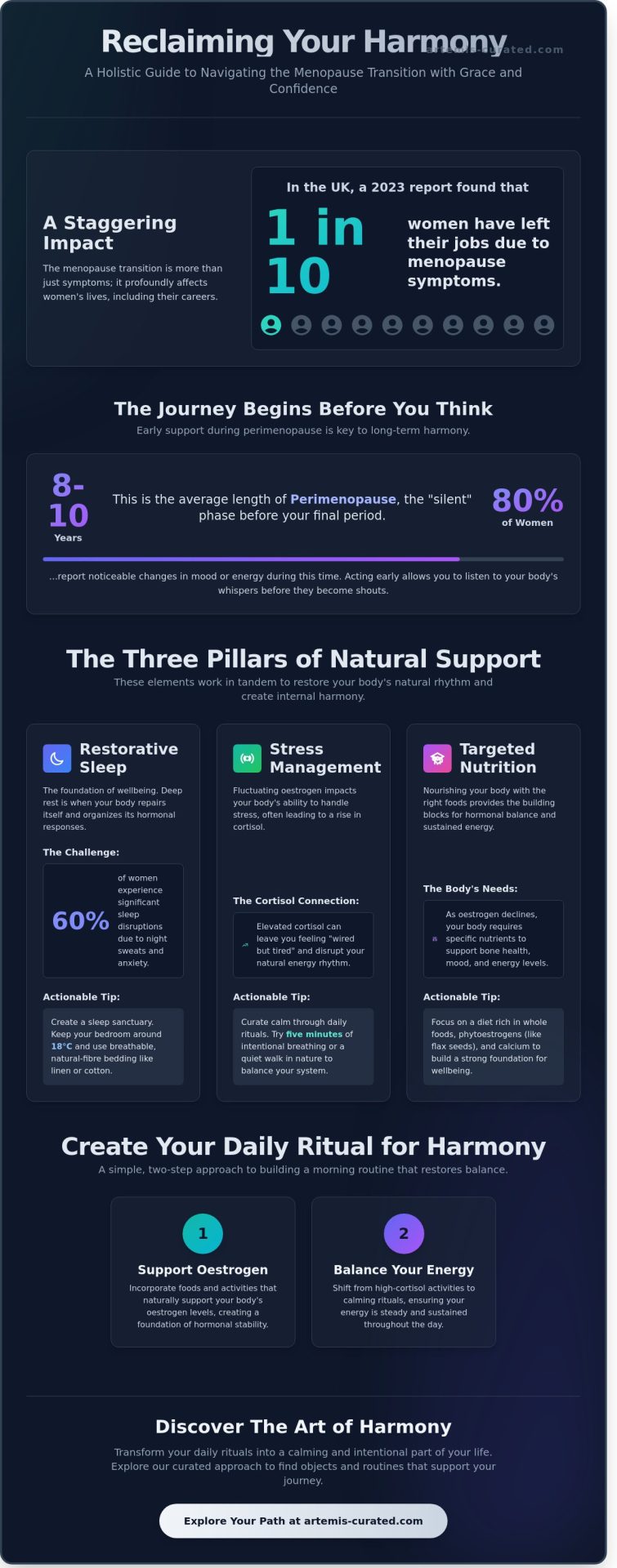
Did you know that a 2023 report from the Fawcett Society found that 1 in 10 women in the UK have left their jobs because of menopause symptoms? It’s a staggering figure that reflects just how disruptive this transition can be when you lack consistent menopause support. You might feel like your body has become an unfamiliar space lately. Deep sleep feels like a distant memory, and a persistent fog seems to cloud your once-sharp mind. It’s truly exhausting to feel like you’re losing your sense of self while trying to decode a mountain of conflicting health advice.
We believe your body should remain a sanctuary of calm and quiet authority. You deserve to feel balanced and in tune with your natural rhythm again. This guide shows you how to reclaim your energy and confidence through holistic shifts and curated natural supplements. We’ll explore how to build a simple, elegant daily routine that prioritises your well-being and restores your inner harmony. It’s time to move away from the noise and focus on a more soulful way of living well.
Key Takeaways
- Understand why comprehensive menopause support involves more than just managing symptoms, starting with a multi-layered approach during perimenopause.
- Identify the three essential pillars—restorative sleep, stress management, and nutrition—that work together to restore your internal harmony.
- Learn how to evaluate natural remedies alongside lifestyle shifts to see which options best suit your unique journey.
- Follow a simple, two-step guide to building a morning routine that supports your oestrogen levels and balances your energy.
- Discover how a curated approach to health can transform your daily rituals into a calming and intentional part of your life.
What Does Comprehensive Menopause Support Really Look Like?
For decades, the conversation around this transition felt clinical and cold. It was often presented as a checklist of deficits rather than a meaningful evolution of the self. True menopause support isn’t just a pill or a single appointment; it’s a multi-layered approach that honours the body’s changing narrative. This involves a thoughtful blend of nutrition, movement, and emotional wellbeing. We’re moving away from seeing this as a medical condition to be “fixed” and toward viewing it as a significant life transition. Finding support that feels personal and dignified is essential. It’s about creating a sanctuary within yourself where you feel heard and respected.
This journey is unique to every woman. While some find relief in medical interventions, others seek a more tactile, grounded approach. The goal is to find a balance that resonates with your personal values and lifestyle. To understand the biological foundation of this shift, it helps to look at What is Menopause? and how it impacts the body over time. This foundational knowledge empowers you to choose a path that feels right for your own story. It’s not about following a trend but about listening to the wisdom of your own experience.
The Difference Between Clinical and Holistic Support
Medical options like HRT are a path many women in the United Kingdom choose. In fact, NHS data from 2023 shows a 35% increase in HRT prescriptions over the previous year. While clinical routes address hormonal levels directly, holistic support looks at the whole person. It’s about the soul of your daily routine. This might mean using botanical extracts to steady the nerves or adjusting your environment to encourage rest. Natural support can work beautifully alongside clinical treatments or as a standalone philosophy. You can explore our curated shop to find objects and rituals that support this intentional way of living.
Why Early Support Matters for Long-term Harmony
Waiting for your periods to stop before seeking menopause support is a missed opportunity for grace. Perimenopause is the transformative years leading up to the final period. This “silent” phase can last for 8 to 10 years before menopause actually occurs. During this time, data from the British Menopause Society suggests that roughly 80% of women report noticeable changes in their mood or energy levels. Acting early allows you to listen to these subtle whispers from your body. Small, intentional adjustments in your 40s can prevent the frantic search for relief later. It’s about maintaining a steady rhythm and ensuring a peaceful unfolding of the years ahead. By acknowledging these changes now, you build a foundation for long-term harmony and vitality. Choosing the right perimenopause supplements during this earlier phase can make a meaningful difference to how you experience the years ahead.
The Three Pillars of Natural Menopause Support
Finding your internal balance during this transition isn’t about a single magic solution. It’s about how restorative sleep, stress management, and targeted nutrition work in tandem to support your body. When these three pillars are aligned, they create a sense of harmony that mirrors physical hormonal stability. You don’t need to overhaul your entire life in a single weekend. Small, consistent changes are far more effective for long-term menopause support than drastic, unsustainable shifts. It’s about listening to what your body needs and responding with kindness and intention.
Restorative Sleep: The Foundation of Wellbeing
Sleep often feels elusive during this phase. Recent data suggests that roughly 60% of women experience significant sleep disruptions during the menopause transition. Night sweats and spikes in anxiety are usually the primary culprits, pulling you out of the deep rest your body craves. To reclaim your nights, focus on creating a sanctuary. Keep your bedroom temperature around 18°C and choose bedding made from natural fibres like linen or organic cotton. These materials breathe, helping to regulate your body temperature. Deep rest is essential because it’s the time when your body organises its hormonal responses and repairs itself on a cellular level. Without it, everything else feels harder to manage.
Stress Management and the Cortisol Connection
Oestrogen levels have a direct impact on how your body handles stress. As these levels fluctuate, your natural ability to buffer daily pressures can feel thinner. This often leads to a rise in cortisol, the stress hormone that can leave you feeling “wired but tired” at the end of the day. You can begin curating calm through simple daily rituals. This might be five minutes of intentional breathing or a quiet walk in nature. Understanding how to manage cortisol and your inner harmony is vital for maintaining your energy and mood. When you lower your stress response, you give your endocrine system the space it needs to find a new rhythm.
Targeted Nutrition and Supplementation
Your nutritional needs change as your hormones shift. A standard, off-the-shelf multivitamin often doesn’t provide the specific support required for a maturing nervous system. Magnesium and B vitamins are particularly important now, as they help regulate mood and support muscle relaxation. Integrating lifestyle changes for menopause, such as increasing your daily calcium intake to roughly 1,200mg, helps protect your bone density. The best menopause supplements are those designed with these specific physiological shifts in mind. By focusing on high-quality ingredients, you ensure your body gets exactly what it needs to thrive. If you’re looking to enhance your daily rituals and find menopause support through beautiful, functional objects, you might enjoy exploring our curated collection.
Navigating Your Options: Lifestyle vs. Natural Remedies
Many women ask if natural methods can truly address the heat of a sudden flush or the heavy fog of a sleepless night. It is a valid concern. In a 2023 survey of 2,000 women across the UK, approximately 45% felt their symptoms were more intense than they had anticipated. This often leads to a search for immediate relief. However, effective menopause support isn’t about finding a quick fix that silences the body. Instead, it is about listening to the narrative of the body. Your symptoms are not just inconveniences; they are signals. They tell a story of a system in transition, seeking a new kind of equilibrium.
Approaching this stage of life requires a shift in perspective. You aren’t merely managing a condition. You are curating a lifestyle that honours your changing needs. This involves looking past the surface and understanding what your specific shifts in mood or energy are trying to communicate. When you listen closely, you can choose remedies that feel like a partnership rather than a correction.
Evaluating Menopause Treatments
When you begin to explore menopause treatments, it helps to distinguish between those that mask symptoms and those that offer root support. Masking might provide a temporary veil, but root support aims to nourish the underlying systems. A discerning approach is essential here. You might consult comprehensive menopause information to see how clinical data aligns with your personal experiences. The best treatment is never a one-size-fits-all solution. It is the one that aligns with your personal values and fits seamlessly into your daily rituals. It should feel intentional, reflecting a commitment to your long-term well-being.
The Role of Botanical Support
Botanicals like Ashwagandha and Sage offer a refined way to bridge the gap between tradition and modern living. These are not synthetic shortcuts. They possess a slow and deliberate nature, requiring a steady commitment to see their full effect. Ashwagandha, for instance, has been used for centuries to help the body adapt to stress, while Sage is often turned to for its cooling properties. Botanicals work in harmony with the body’s natural cycles over time. They don’t force a change; they invite it.
The quality and provenance of these supports are paramount. A root grown in nutrient-rich soil and harvested with care carries a different energy than a mass-produced alternative. Look for the hand of the maker and the history of the source. When you choose supplements with a clear story and high standards of purity, you are choosing to surround yourself with quality. This intentionality ensures that what you take into your body is as meaningful as the life you are building. If you are in the earlier stages of this transition, exploring evidence-based perimenopause supplements can help you lay the groundwork for lasting balance before symptoms intensify.
Creating Your Personalised Daily Routine for Harmony
Building a routine that offers genuine menopause support starts with listening to your body’s subtle cues rather than following a rigid timetable. You can begin by auditing your energy levels over a typical forty-eight hour period. Note when you feel vibrant and when the fog begins to roll in. Many women find their “favourite” time of day is actually 10:00 am, after the initial cortisol spike has settled but before the afternoon lull begins. Once you identify these windows, you can layer in habits that protect your peace.
Your routine should act as a gentle scaffolding for your day. It’s helpful to integrate your targeted supplements into a moment of mindful pause, perhaps while the kettle boils or as you watch the garden wake up. This turns a functional task into a grounding ritual. Because your hormonal profile shifts constantly, review these habits every four weeks. If a specific practice no longer serves you, give yourself permission to release it and try something new. Flexibility is the highest form of self-care during this transition.
Morning Rituals for Mental Clarity
The first hour of your day sets the tone for your emotional centre. Start with 500ml of room-temperature water to rehydrate your brain and combat morning sluggishness. Instead of high-intensity exercise which can spike cortisol, choose ten minutes of light movement like stretching or a brisk walk to clear brain fog. Nutrition plays a vital role here; aim for a protein-rich breakfast containing at least 25g of protein. This helps maintain hormonal stability and prevents the mid-morning energy crash that often leads to irritability. Before you open your laptop or check your phone, set a single intention for the day to keep your focus steady.
Evening Sanctuary: Preparing for Deep Rest
A 2023 survey indicated that 60% of women in the UK struggle with sleep during menopause, making the evening wind-down essential. Transform your bedroom into a sanctuary by reducing digital blue light at least sixty minutes before bed to support natural melatonin production. You might find that calming scents like lavender or a warm bath signal to your nervous system that it’s safe to rest. This consistency is a powerful tool to manage night-time anxiety. If you find yourself waking up exhausted, it is worth looking into specific vitamins for menopause fatigue to help replenish your reserves while you sleep.
Discover a collection of essentials designed to elevate your daily rituals and bring balance to your home.
Discovering The Art of Harmony: A Curated Approach
Finding balance doesn’t happen by accident. At Artemis Curated, we call this philosophy The Art of Harmony. It’s our way of saying that every object you bring into your home, and every supplement you put into your body, should serve a clear purpose. We believe your health is an extension of your environment. Our collections are designed to be soulful additions to your daily life, bridging the gap between intentional wellness and beautiful living. We focus on craftsmanship and the integrity of ingredients above all else. You won’t find generic, mass-produced items here. Instead, you’ll find a selection made with a deep respect for the makers and the natural world. If you’re looking for total support that feels as good as it works, we invite you to explore the Full Curated collection.
The Art of Harmony Menopause Support
Our menopause support blend is more than a standard vitamin. It’s a 100% natural, UK-made solution designed for the discerning woman who values quality. The experience starts the moment you hold the glass. There’s a weight and a tactile quality to our packaging that reflects the care held inside. This blend works with your body to ease common symptoms, helping you regain your sense of self during a period of change. We’ve sourced every ingredient for its purity and effectiveness. By producing our blends in the UK, we ensure they meet strict quality standards, including Good Manufacturing Practice (GMP) protocols. This isn’t just about nutrition; it’s about a sensory ritual that honours your body’s needs.
The Artemis Promise: Quality and Intention
We don’t believe in the frantic pace of modern retail. Our founders envisioned a space where women could find beauty in the everyday life transition. This means moving away from the disposable and towards the meaningful. We select every product with a specific narrative in mind, ensuring it contributes to a larger personal story of wellness. We want to help you see this phase of life as an unfolding journey rather than a hurdle. It’s about choosing items that have a voice and a history, from the small-batch herbs we use to the sustainable ways they are harvested. You can shop our curated wellness range to find the right tools for a more balanced tomorrow.
Every choice we make is intentional. We prioritise the hand of the maker and the small details that others might overlook. This commitment to quality ensures that when you choose menopause support from our range, you’re investing in something that has been carefully vetted for its soul and its science. We invite you to slow down, breathe, and find the pieces that resonate with your unique path to balance.
Step Into Your New Sense of Calm
Finding your way through this transition is less about managing symptoms and more about reclaiming your sense of self. We’ve explored how a blend of mindful lifestyle choices and natural remedies creates a foundation for lasting harmony. It’s clear that a personalised routine, built on the three pillars of support, makes the journey feel manageable and even empowering. Milly and Sarah started Artemis Curated to offer an expert-led, soulful alternative to the noisy world of wellness. They’ve focused on creating targeted formulations that respect the nuanced needs of your body during this time. Every ingredient is selected for its high quality, with a total commitment to transparency regarding where it comes from. You deserve menopause support that feels as refined and intentional as the rest of your life. When you choose products backed by expertise and honest sourcing, you’re investing in your long-term vitality. It’s time to move forward with confidence and grace.
Explore The Art of Harmony and shop our curated menopause support collection
You have everything you need to feel like yourself again, and we’re here to help you find that balance.
Frequently Asked Questions
Is menopause support only for women experiencing hot flushes?
Menopause support addresses a wide spectrum of symptoms beyond hot flushes, including joint pain, brain fog, and sleep disturbances. While 75% of women in the UK experience hot flushes, many others seek help for the psychological impact of hormonal shifts. According to the NHS, there are over 30 recognised symptoms that can affect your daily life.
Choosing the right support means looking at your personal journey holistically rather than focusing on a single physical sensation. It’s about finding balance for your mind and body as they evolve.
Can I take menopause supplements if I am already on HRT?
You can often combine specific supplements with Hormone Replacement Therapy (HRT), but it’s essential to consult your GP first to ensure there aren’t any interactions. Some botanical extracts might interfere with the way your body processes prescribed hormones. Safety is the priority when layering different types of care.
A 2023 study published in the Journal of the British Menopause Society suggests that vitamin D and magnesium are frequently recommended alongside HRT to support bone density and muscle function. Always share your full list of vitamins with your healthcare provider.
How long does it typically take to feel the benefits of natural menopause support?
You should expect to wait between 8 and 12 weeks to feel the full effects of natural menopause support. Herbal remedies and nutritional changes require time to influence the body’s internal chemistry. It isn’t an overnight fix; it’s a gradual unfolding of wellness.
Clinical trials for ingredients like Black Cohosh often use a 12-week observation period to measure significant improvements in comfort. Consistency is the key to seeing a shift in your well-being. Give your body the space it needs to respond to these gentle adjustments.
What are the most important vitamins for menopause fatigue?
Vitamin B12 and Magnesium are the most critical nutrients for managing the exhaustion that often accompanies this transition. B12 helps your body convert food into energy, while Magnesium supports the nervous system and improves sleep quality. These elements work together to help lift the heavy fog of fatigue.
Public Health England also recommends that everyone in the UK takes 10 micrograms of Vitamin D daily during autumn and winter. Low levels of Vitamin D are linked to low mood and tiredness, so maintaining these levels is vital for your daily vitality.
Can lifestyle changes really improve perimenopause symptoms?
Lifestyle adjustments significantly improve perimenopause symptoms by stabilising blood sugar and reducing cortisol levels. The NHS recommends 150 minutes of moderate aerobic activity per week to help manage weight and mood fluctuations. Even small, intentional changes to your routine can create a more peaceful internal environment.
Reducing caffeine and alcohol intake can also decrease the frequency of night sweats for about 60% of women. It’s about creating a calm sanctuary for your body to navigate these changes with greater ease and less disruption.
What is the best way to support my mood during the menopause transition?
Prioritising Cognitive Behavioural Therapy (CBT) is one of the most effective ways to manage mood swings and anxiety during this time. NICE guidelines specifically recommend CBT as a non-hormonal treatment option for menopause-related low mood. It provides practical tools to navigate emotional shifts.
Integrating daily mindfulness or gentle movement like yoga also helps regulate the nervous system. These practices offer a sense of agency and calm when your internal landscape feels unpredictable. It’s a soulful way to reconnect with yourself during a time of change.
Are there any side effects to natural menopause remedies?
Natural remedies can cause side effects such as nausea, headaches, or digestive upset in a small percentage of users. It’s a common misconception that “natural” always means “side-effect free.” Every body reacts differently to botanical compounds and concentrated extracts.
The MHRA monitors herbal medicines in the UK through the Yellow Card scheme to ensure safety and transparency. Always check for the Traditional Herbal Registration (THR) mark on products. This ensures they meet specific quality standards and have been tested for purity and consistency.