

On a Tuesday morning in late 2025, you might find yourself staring at a half-finished cup of tea, wondering why a simple question from a partner felt like a personal affront. It is that sudden, sharp shift in mood or the third night this week spent watching the clock at 3:00 AM that makes you question your own rhythm. You aren’t alone in this feeling of sudden internal weather changes. Many women realize that these unpredictable perimenopause symptoms are often the first signs of a new chapter, rather than a medical crisis to be feared. It is a shared experience that often feels isolating because the conversation around it has stayed quiet for too long.
You deserve to feel like the most vibrant version of yourself, even when your body feels like it is rewriting its own rules. This guide helps you identify exactly what is happening and offers a gentle way to manage the transition with confidence. We will walk through the most common signs you might encounter in 2026 and introduce you to holistic support like The Art of Harmony. By the end of this article, you will have a clear map to help you move from feeling overwhelmed to feeling deeply empowered in your own skin.
Key Takeaways
- Learn why this phase is often called a “second puberty” and how to spot the early signs of hormonal shifts in your 40s.
- Identify the most common perimenopause symptoms, from hot flushes to night sweats, and see how they impact your daily routine.
- Discover practical tips for clearing brain fog and managing the mood swings that can sometimes make you feel a bit off-balance.
- Find out how small changes to your diet, like adding more magnesium, can help you feel more comfortable and grounded.
- See why choosing the right supplements for your specific needs works much better than just taking a basic, one-size-fits-all vitamin.
Understanding the Transition: What are Perimenopause Symptoms?
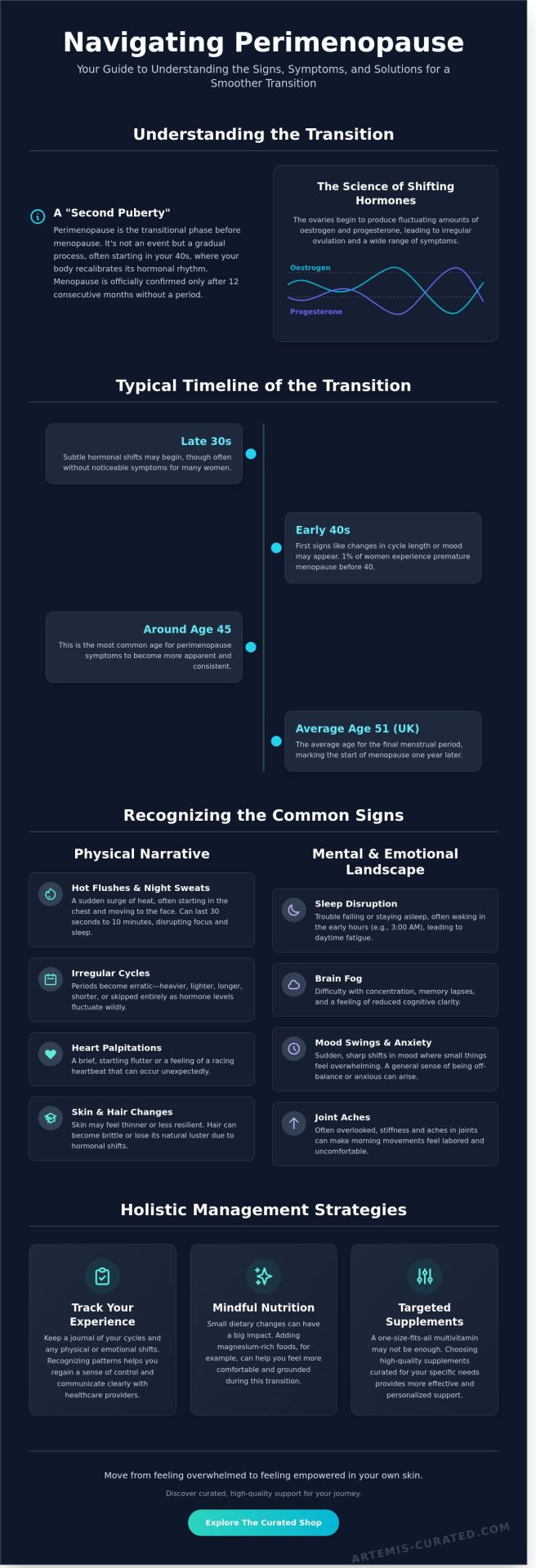
Perimenopause is frequently described as a “second puberty,” and the comparison is quite accurate. Just as your body transformed during your teenage years, it’s now entering a new phase of significant change. This period is the official menopausal transition. It isn’t a single event but a gradual process that leads toward the end of your reproductive years. While many people assume this only happens in your 50s, the reality is different for everyone. In the UK, the average age for menopause is 51, but the lead-up often begins years prior.
It’s helpful to understand the technical distinction between these stages. You are officially in menopause only after you’ve experienced 12 consecutive months without a menstrual period. Anything leading up to that milestone is perimenopause. During this time, perimenopause symptoms can be incredibly subtle or frustratingly erratic. You might feel perfectly fine for weeks, only to have a few days where your sleep or mood feels completely disrupted. Your experience is unique. There’s no standard way to feel, and validating your own observations is the first step in managing the change.
The transition often feels like an unfolding of a new physical state. You aren’t losing your old self; you’re simply moving into a different version of your narrative. By learning about Understanding the Transition: What are Perimenopause Symptoms?, you can gain a clearer perspective on what your body is trying to communicate.
The Science of Shifting Hormones
The root of these changes lies in the ovaries. They don’t simply switch off. Instead, they begin to produce varying amounts of oestrogen and progesterone. These fluctuations are what cause the rhythm of your cycle to become unpredictable. One month your oestrogen might be high, and the next, it might drop significantly. This hormonal tug-of-war makes ovulation irregular. Because these hormones act as messengers for your entire body, their inconsistency can affect your skin, your energy, and even your cognitive clarity. Start tracking your cycles and any physical shifts you notice. Seeing these patterns over time helps you regain a sense of control.
When Does Perimenopause Usually Begin?
Many women are surprised to find that changes can start in their late 30s or early 40s. It’s a common myth that you’ll be well into middle age before any shifts occur. Statistics show that roughly 1% of women experience these changes before age 40, often referred to as premature menopause. For the majority, the first perimenopause symptoms appear around age 45. If you’re noticing that your body feels different, trust your intuition. You can find supportive items for your daily rituals in our curated shop, which focuses on quality and intentionality. Being proactive about your health in your late 30s sets a strong foundation for the years ahead.
The Physical Narrative: Identifying the Most Common Signs
Your body begins to tell a new story during this transition. It isn’t just about the end of fertility; it’s a complex recalibration that affects your physical presence. Hot flushes often arrive without warning. They feel like a sudden surge of heat that starts in the chest and climbs to the face. According to The Physical Narrative: Identifying the Most Common Signs, these episodes can last anywhere from 30 seconds to ten minutes. This internal heat isn’t just a physical sensation. It disrupts your focus and drains your energy throughout the day.
You might notice your skin feels thinner or less resilient as the months pass. Hair texture often changes, becoming brittle or losing its natural luster. These tactile shifts are subtle at first. Then there are the signs we don’t expect. Joint aches can make morning movement feel stiff and labored. Heart palpitations might cause a momentary, startling flutter in your chest. These perimenopause symptoms are frequently overlooked, yet they significantly impact how you move through your sanctuary and your daily life. Recognizing them is the first step toward reclaiming your sense of self.
Changes to Your Monthly Cycle
Your period might no longer follow the familiar rhythm of the calendar. It becomes erratic. One month is heavy and demanding; the next is light or skipped entirely. This happens because estrogen and progesterone levels are no longer in a steady dance. They fluctuate wildly. It’s a natural part of your body’s narrative shift. Don’t let the lack of predictability unsettle you. It’s simply the body finding a new way to exist.
Sleep and Vitality: The Night-time Struggle
Quality rest becomes elusive when night sweats interrupt your sleep. Waking up in damp sheets isn’t just uncomfortable; it’s emotionally draining. This leads to profound daytime fatigue. Your favorite rituals, like a morning walk or focused reading, might feel impossible to maintain when your energy is depleted. To help manage this, many women look toward vitamins for menopause fatigue as a way to reclaim their vitality. Supporting your body with the right nutrients can make the 2026 transition feel more manageable. Understanding these perimenopause symptoms allows you to respond with grace. If you’re looking for items to make your space more comfortable during this time, you can browse our curated collection for inspiration.
The Mental Landscape: Navigating Brain Fog and Anxiety
While physical changes often signal the start of this transition, the internal shifts can feel much more profound. You might notice a sudden dip in your self-esteem or a sense that your usual confidence has gone quiet. These “invisible” perimenopause symptoms are frequently the most distressing because they affect how you see yourself and interact with the world. It is common to feel like a stranger in your own mind, but understanding the biological roots of these changes can help you regain your footing.
Brain fog is a term many women use to describe a frustrating lack of focus or sudden memory lapses. It feels like a literal clouding of the mind where names, dates, and simple words seem to drift just out of reach. Learning about Navigating Brain Fog and Anxiety helps demystify why your mind feels less sharp than it did a year ago. Research from the University of Rochester in 2022 indicates that up to 60% of women in midlife experience these cognitive changes. This happens because oestrogen plays a vital role in the brain’s neurochemical balance, acting as a key for serotonin and dopamine. When oestrogen levels fluctuate, the brain’s ability to process information and regulate mood can falter.
Anxiety can also appear without warning, even if you have never struggled with it before. This isn’t just “stress” from a busy life; it’s a physiological response to shifting hormones. You might feel a racing heart or a sense of impending dread while doing something as simple as grocery shopping or reading a book. Acknowledging that these feelings are driven by biology rather than personal failure is a powerful step toward finding peace.
Understanding Hormonal Mood Swings
The feeling of unravelling or sudden irritability can be startling. You might find yourself snapping at a loved one or feeling deeply overwhelmed by a minor task. This often happens because cortisol, the body’s primary stress hormone, becomes more reactive as oestrogen declines. When these two hormones are out of sync, your emotional resilience thins. Recognizing these shifts as a temporary biological “unfolding” allows you to approach yourself with more grace. Reclaiming harmony starts with noticing the patterns in your mood and giving yourself permission to step back when the internal weather turns stormy.
Lifting the Fog: Cognitive Clarity
Managing memory lapses in a busy life requires a commitment to intentionality. Slowing the pace of your day isn’t a luxury; it’s a necessity for mental health. You can support your clarity with these practical steps:
- Write things down in a physical planner. The tactile act of writing helps anchor information in your memory better than typing on a screen.
- Single-task whenever possible. Trying to juggle three things at once only thickens the fog.
- Create a sanctuary at home that minimizes sensory overload. A quiet, clutter-free space allows the brain to rest and reset.
Natural support can also help clear the air mentally. You might find that adding specific rituals or carefully selected wellness items from a curated collection helps you feel more grounded. By choosing quality over quantity in your daily habits, you create the mental space needed to navigate this transition with quiet authority.
Nurturing Your Sanctuary: Holistic Management Strategies
Managing perimenopause symptoms doesn’t have to feel like a clinical chore. Instead, view this time as an opportunity to curate a lifestyle that feels deeply supportive and intentional. Your home should act as a soft refuge where every choice contributes to your well-being. Moving away from the idea of “fixing” yourself allows you to focus on nurturing your body through this transition.
Gentle movement plays a vital role in keeping your nervous system steady. A 2022 study found that just 30 minutes of restorative yoga can lower cortisol levels by 25 percent. Walking through a garden or a quiet park offers similar benefits. These activities aren’t about burning calories; they’re about finding a rhythm that calms the mind. When you move with intention, you create space for your body to process hormonal shifts without the added weight of high-intensity stress.
Dietary Rituals for Balance
Nourishment is a soulful act. Rather than following restrictive rules, focus on incorporating whole foods that naturally support your hormones. Phytoestrogens found in flaxseeds and organic soy can mimic oestrogen in a gentle way. Research from 2021 indicates that adding two tablespoons of ground flaxseed to your daily routine can reduce the frequency of hot flushes by nearly 40 percent. Adding magnesium-rich foods like pumpkin seeds or dark leafy greens also helps steady your mood and improve muscle relaxation.
It’s helpful to be mindful of how certain triggers affect your internal climate. A 2023 survey revealed that 85 percent of women noticed an increase in vasomotor symptoms after consuming caffeine. Alcohol can have a similar effect, often disrupting sleep patterns and triggering night sweats. Choosing herbal infusions or chilled mineral water with citrus can be a beautiful way to stay hydrated without the heat. Focus on what makes you feel vibrant and steady.
The Power of Restorative Sleep
Creating a sleep sanctuary is essential for managing night-time perimenopause symptoms. Start by looking at your bed linens. Natural fabrics like 100 percent linen or organic cotton allow your skin to breathe and help regulate your body temperature. Keep the lighting dim and cool to signal to your brain that it’s time to rest. A digital detox is another powerful tool; turning off screens 60 minutes before bed prevents blue light from interfering with your melatonin production.
You can view the “Art of Sleep” as an evening ritual that prepares your mind for stillness. This might include a warm bath or a few minutes of quiet reflection. If you’re looking for more natural remedy ideas, you can explore this guide on menopause treatments. By organizing your space to support rest, you’re giving yourself the gift of recovery. Every element in your bedroom should serve the purpose of peace and cooling comfort.
To find pieces that help you build your own quiet refuge, you can browse our curated collection here.
Curating Your Support: The Role of Targeted Supplements
Taking care of yourself during this transition is about finding a new internal rhythm. Many women find that a standard, one size fits all vitamin doesn’t quite meet the mark when perimenopause symptoms start to appear. Your body is going through a complex shift that requires a more thoughtful approach. Think of supplementation as a way to fine tune your system. It’s about adding exactly what’s missing, rather than just filling a cabinet with generic pills. Choosing ingredients with a clear purpose ensures you aren’t overwhelming your body. Quality matters because your system deserves things that are easy to absorb and effective. In 2026, we have better access to clean, bioavailable formulas than ever before, making it easier to be selective about what we ingest. If you want to explore your options in depth, our guide to perimenopause supplements offers an evidence-based look at the ingredients that can make a genuine difference to your daily rhythm.
The Art of Harmony: Finding Your Centre
Irritability and sudden shifts in mood can make you feel disconnected from your own life. Targeted support can help bridge that gap. When you focus on quality over quantity, you give your body the space to find its center again. We don’t believe in clutter, especially when it comes to your health. A few well chosen ingredients often do more than a dozen low grade alternatives. This philosophy of curation means looking for formulas that prioritize purity and potency. If you’re looking for a place to start, the Artemis Curated Shop offers a selection of items designed for this specific purpose. These aren’t just products; they are tools to help you regain your sense of calm and steady your hormonal flux.
Building Your Personal Wellness Edit
Your experience is yours alone. Some women might prioritize rest, while others want to focus on maintaining their natural glow. Listen to what your body is telling you. If sleep is your main struggle, look for magnesium or calming botanicals. If you’re feeling less vibrant, focus on antioxidants. Addressing perimenopause symptoms requires a personalized touch. This is a journey of unfolding, not a problem that needs to be solved overnight. It takes time for these changes to take hold. Most people notice a real difference after about 60 to 90 days of consistent use. Remember that you’re building a routine that supports your long term well being. It’s a personal narrative that you write one day at a time, choosing each piece of your wellness edit with intention and care.
Stepping Into Your New Rhythm
Navigating this transition isn’t just about managing perimenopause symptoms; it’s about reclaiming your sense of self and your comfort. We’ve explored how physical changes and mental shifts like brain fog can feel overwhelming. Research from the North American Menopause Society identifies more than 30 distinct signs that women might experience during this multi-year phase. By 2026, health experts predict a significant shift toward personalized, natural support systems that value the whole person. Taking a holistic approach means looking at your daily routine and choosing what feels right for your unique body. Our founders, Milly and Sarah, spent over two years perfecting a collection that prioritizes natural ingredients and genuine harmony. They designed these tools for the modern woman who wants a wellness routine that feels soulful rather than clinical. You don’t have to navigate these changes alone or settle for generic solutions that don’t speak to your experience. Finding comprehensive menopause support that addresses both the physical and emotional aspects of this transition can help you maintain your sense of sanctuary and quiet authority throughout this natural life phase.
Explore ‘The Art of Harmony’ and curate your own path to hormonal balance.
Your journey toward balance is a personal one, and it’s a beautiful opportunity to finally listen to what your body needs. You’ve got this.
Frequently Asked Questions
What are the first signs of perimenopause usually like?
The first perimenopause symptoms usually show up as subtle changes in your period length or quality of sleep. You might notice your cycle shortens by 2 or 3 days, or you find yourself awake at 3:00 AM for no clear reason. According to the North American Menopause Society, about 40 percent of women experience these early sleep disruptions. It’s a quiet shift rather than a sudden change, signaling your body is entering a new season.
Can perimenopause symptoms start in your late 30s?
Yes, you can definitely start noticing changes in your late 30s. While the average age to begin this transition is 45, the Cleveland Clinic reports that some women enter this phase 8 to 10 years before menopause actually hits. This means if you’re 38 or 39 and feeling off, it isn’t in your head. Your hormone levels are simply beginning their natural, long term recalibration process a bit earlier than others might expect.
How long do perimenopause symptoms typically last?
Most women navigate perimenopause symptoms for about 4 to 8 years. This timeframe varies for everyone, as some people only experience a few months of transition while others might find the process lasts up to a decade. Data from the Study of Women’s Health Across the Nation (SWAN) suggests the average duration is roughly 7 years. It is a slow unfolding that requires patience and a gentle, intentional approach to your daily self care routine.
Is it possible to have perimenopause symptoms but still have regular periods?
You can absolutely have regular periods while experiencing these hormonal shifts. Many women maintain a predictable 28 day cycle even as their hormone levels start to fluctuate wildly behind the scenes. You might still bleed on schedule, but notice new issues like increased anxiety or night sweats. This happens because progesterone often begins to decline before your estrogen levels become consistently low enough to stop your monthly period or cause skipped cycles.
What is the difference between brain fog and normal forgetfulness?
Brain fog is a distinct feeling of mental fatigue that goes beyond just forgetting where you put your keys. It feels like a heavy cloud or a lag in your processing speed that makes simple tasks feel overwhelming. A study from the University of Rochester found that 60 percent of women in midlife struggle with this cognitive change. While normal forgetfulness is occasional, brain fog is a persistent sense of being disconnected from your sharpest self.
Can natural supplements really help with perimenopause anxiety?
Natural options can be very effective for managing the nervous energy that often comes with this stage. For instance, taking 300 milligrams of magnesium glycinate daily has been shown to help calm the nervous system and improve rest. Many women also find relief using carefully selected adaptogens like Ashwagandha to lower stress markers. It’s about choosing high quality ingredients that support your body’s rhythm without the harshness of more aggressive, non natural interventions. Our curated guide to perimenopause supplements for anxiety and balance can help you identify the most effective options for your specific needs.
When should I see a doctor about my perimenopause symptoms?
You should book an appointment if your symptoms interfere with your work, relationships, or sleep quality. It is also vital to see a professional if you experience heavy bleeding, which the Mayo Clinic defines as soaking through a pad or tampon every hour for several hours. If your period lasts longer than 7 days, that is another clear sign to seek guidance. Checking in early helps you create a personalized plan for your comfort.
Do perimenopause symptoms get worse before they get better?
Symptoms often intensify in the 1 to 2 years leading up to your final period. This late transition phase is usually when hormone fluctuations are at their most dramatic, leading to more frequent hot flashes or mood shifts. Once you reach menopause, which is defined as 12 consecutive months without a period, many of these symptoms begin to stabilize. It is a bell curve where the most intense moments eventually give way to a new state.