


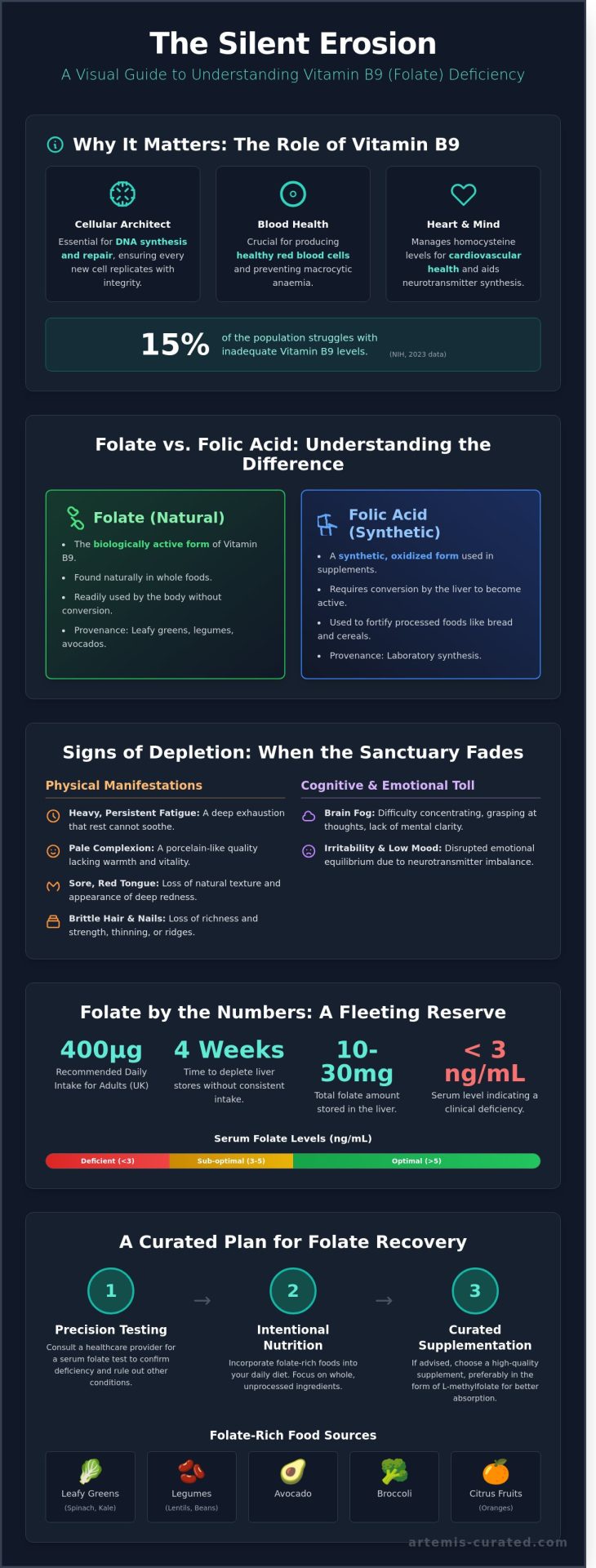
What if the quiet dimming of your inner light isn’t a symptom of time, but a subtle fraying of your biological provenance? We often accept a certain dullness as the price of a modern life. We look at the brittle texture of our hair or the persistent fog clouding our daily intentions and assume it’s just the season. Yet, this internal weathering often points toward a folic acid deficiency, a silent disruption in the body’s delicate craftsmanship. According to 2023 data from the National Institutes of Health, nearly 15% of the population struggles with inadequate B9 levels. It’s a disconnect that leaves the sanctuary of the self feeling unrefined and depleted.
You deserve to feel as vibrant and carefully composed as a well-curated home. We agree that true wellness is an art form, requiring intentionality and a deep respect for the body’s needs. You’ll discover how to recognize the nuanced signs of depletion and the refined steps needed to restore your natural vitality. We’ll clarify the essential difference between synthetic folic acid and organic folate; then, we’ll outline a practical plan to bring your cellular narrative back into balance and clarity.
Key Takeaways
- Understand the vital role of Vitamin B9 in your cellular narrative, ensuring every cell replicates with integrity and grace.
- Identify the subtle signs of folic acid deficiency, discerning the difference between simple tiredness and a deep, heavy fatigue that clouds your internal sanctuary.
- Distinguish between the natural provenance of folate found in leafy greens and its synthetic counterpart, ensuring your supplement ritual aligns with a philosophy of purity.
- Explore the hidden lifestyle factors and dietary nuances that may cause your folate levels to fade, even amidst a thoughtful daily routine.
- Follow a curated recovery plan that moves from the precision of clinical testing to the intentional selection of nutrient-dense, folate-rich ingredients.
What is Folic Acid Deficiency and Why Does It Matter?
Vitamin B9, commonly known as folate, serves as the invisible architect of our biological structure. This water-soluble nutrient is essential for DNA synthesis, acting as a master artisan that ensures every new cell carries the exact narrative of its predecessor. Within the sanctuary of the human form, B9 maintains the integrity of cellular replication. When this process falters, the body’s internal rhythm is disrupted. While folate exists in its raw, artisanal state within leafy greens and legumes, folic acid represents the synthetic version used in fortification. In the UK, health standards set by Public Health England emphasize a daily intake of 400 micrograms for adults to sustain long-term systemic health. Understanding What is Folate Deficiency? involves recognizing how a lack of this nutrient compromises the very blueprint of our existence.
A folic acid deficiency is more than a simple nutritional gap; it is a fracture in the body’s ability to repair and renew itself. Because the body cannot synthesize B9 independently, we rely on a curated approach to nutrition to maintain these vital stores. Without consistent replenishment, the cellular narrative becomes blurred, leading to a decline in physical and cognitive vitality.
The Role of Vitamin B9 in the Female Body
B9 is fundamental to the production of healthy red blood cells. When levels drop, the body produces abnormally large, inefficient cells, leading to macrocytic anaemia. This nutrient also acts as a quiet guardian of emotional equilibrium by facilitating the synthesis of neurotransmitters like serotonin. Furthermore, folate manages homocysteine levels in the blood. When these levels exceed 15 micromoles per litre, the risk to cardiovascular health increases significantly. By keeping homocysteine in check, B9 ensures the heart functions with effortless grace.
Recognising the Silence of Depletion
A folic acid deficiency rarely announces itself with a sudden flourish. It often begins as a subclinical insufficiency, where serum levels fall below the optimal 3 to 5 nanograms per millilitre but haven’t yet reached a diagnostic crisis. The human liver only stores between 10 and 30 milligrams of folate at any given time. This limited reserve makes the nutrient fleeting. If daily intake is neglected, these stores can be depleted in as little as four weeks. It’s a subtle, quiet erosion of health that often goes unnoticed until the symptoms become too disruptive to ignore.
Identifying the Symptoms: When the Sanctuary Loses Its Glow
When the internal landscape of the body begins to fray, the signs are rarely loud. They are subtle shifts in the narrative of our well-being. A folic acid deficiency manifests as a heavy, persistent fatigue that rest cannot soothe. It is a weight that lingers, dulling the vibrancy of daily life and making even the simplest movements feel like an effort of will. This exhaustion isn’t the fleeting tiredness of a busy day; it’s a profound depletion that saps the color from one’s experiences.
The physical markers of this decline are often visible to the discerning eye. A complexion may lose its warmth, taking on a pale, almost porcelain-like quality that lacks the vitality of health. The tongue might become sore and take on a deep red hue, losing its natural texture as cellular turnover slows. Clinical research detailed in The Root Causes of Folate Deficiency indicates that these symptoms often emerge when serum folate levels fall below 3 nanograms per milliliter, a threshold that signals a breakdown in the body’s regenerative processes.
Physical Manifestations of Folate Loss
The body’s exterior reflects its internal state with a quiet honesty. Hair may lose its tactile richness, becoming brittle or thinning over time. Nails often lose their strength, developing ridges that disrupt their smooth, polished surface. Mouth ulcers appear as small, painful disruptions to the sanctuary of the mouth, signaling cellular stress. These physical changes are often accompanied by digestive irregularities, suggesting that the body is no longer absorbing B vitamins with the necessary intentionality to maintain its artisanal balance. It is worth noting that similar symptoms of fatigue, hair thinning, and brittle nails can also signal low iron levels; exploring iron tablets for women alongside folate support may offer a more complete picture of your nutritional needs.
The Cognitive and Emotional Toll
Cognitive shadows often descend when folate is scarce. This brain fog makes concentration feel like grasping at smoke, making it difficult to maintain a sharp, focused mind as we age. Folate provides the invisible scaffolding for our resilience, allowing us to meet daily stressors without losing our equanimity. When levels drop, emotional fluctuations like irritability or a pervasive low mood become more common. Folate serves as a vital co-factor in the synthesis of serotonin and dopamine, the essential neurotransmitters that curate our emotional stability and neurological health.
Restoring this balance requires a curated approach to wellness that honors the body’s need for specific, high-quality nutrients. By attending to these subtle signals, we begin the process of reclaiming our natural glow.
Folate vs. Folic Acid: Choosing the Purest Path
The provenance of true folate begins in the verdant, sun-drenched leaves of spinach and the earthy depths of the lentil. It is a nutrient born of the soil, existing in a state of natural grace. Conversely, folic acid represents a synthetic departure; it’s an oxidized compound crafted in laboratories for mass fortification. While functional for many, this industrial version requires a complex metabolic journey within the liver before the body can truly recognize its value. For those navigating the quiet exhaustion of a folic acid deficiency, the distinction between these two forms is not merely semantic; it’s a matter of biological harmony.
The Bioavailability Debate
Some bodies possess a delicate genetic narrative known as the MTHFR mutation, a variation affecting approximately 40% of the global population according to 2022 genomic research. This variation makes the conversion of synthetic folic acid an arduous task for the liver. Choosing methylfolate, or 5-MTHF, is an artisanal approach to wellness. It’s the active, methylated form that bypasses the body’s internal refinery entirely. By selecting a form that honors the body’s natural chemistry, you ensure the nutrient is immediately available for cellular repair. Identifying the Symptoms of Folate Deficiency early allows for a more intentional transition toward these bioavailable, “ready-to-use” sources.
Curating Your Supplement Shelf
A well-curated shelf reflects a commitment to quality over mere consumption. When reading labels, look for “L-Methylfolate” rather than the generic synthetic label. This choice mirrors the “Art of Harmony” philosophy, where every element in your inner space serves a specific, elevated purpose. A folic acid deficiency rarely exists in isolation; it often whispers of a broader need for balance. Exploring the best supplements for women ensures that B9, B12, and B6 work in a rhythmic synergy. This collaborative effect supports the nervous system with the same intentionality a designer uses to layer textures in a sanctuary. Each vitamin must possess its own integrity to contribute to the whole.
- Seek labels specifying 5-MTHF or Quatrefolic for superior absorption.
- Prioritize dark glass packaging to preserve the light-sensitive integrity of the molecules.
- Ensure the provenance of the ingredients is clearly stated, favoring non-GMO and plant-derived origins.
- Look for third-party testing to confirm the absence of heavy metals and synthetic fillers.
The Root Causes: Why Your Folate Levels May Be Fading
A folate deficiency rarely emerges from a single oversight. It’s often a slow unfolding, a quiet erosion of the body’s internal reserves over time. Even those who curate their plates with intentionality may find themselves lacking. Folate is delicate. It possesses a fragile provenance; research indicates that high-heat cooking can destroy up to 70% of the natural B9 content in leafy greens. When we consider that nearly 13% of the population lives with inadequate folate levels, the necessity of a more thoughtful approach to nutrition becomes clear.
- The Weight of Lifestyle: Regular alcohol consumption hinders the DHFR enzyme, reducing cellular uptake by approximately 40% in frequent drinkers.
- Medication Interactions: Common prescriptions, including certain non-steroidal anti-inflammatory drugs, can act as silent antagonists to folate metabolism.
- The Stress Narrative: Chronic stress transforms our internal sanctuary into a state of high demand. Cortisol requires B vitamins for its synthesis, meaning a frantic mind often results in a depleted body.
Our internal landscape is not static. It reacts to the rhythm of our choices and the environment we inhabit. Understanding the folic acid deficiency requires us to look beyond the surface, examining the subtle ways our modern lives deplete our ancient biological needs.
Hormonal Transitions and Nutrient Demand
During perimenopause and menopause, the body undergoes a profound structural shift. Oestrogen levels fluctuate, directly impacting how we metabolise B9. Data from the North American Menopause Society suggests that these hormonal shifts can increase the body’s demand for methylation support. Supporting this transition requires more than just grace; it demands a foundation of essential vitamins to maintain cellular harmony and cognitive clarity. For women navigating this life stage, finding the best multivitamin for women over 40 becomes essential to address these evolving nutritional needs with precision and care.
Absorption Barriers and Digestive Health
The gut is the artisan of our internal health, yet its patina can be compromised by inflammation. Conditions like Celiac disease, which affects roughly 1 in 100 people globally, create physical barriers to absorption in the small intestine. When the gut-brain axis is strained, the delivery of B9 to vital organs slows. Restoring this delicate landscape is essential for those seeking to reclaim their vitality through intentional nourishment.
Discover how to rebuild your internal sanctuary with our curated wellness essentials.
Restoring Harmony: A Curated Plan for Folate Recovery
Restoration isn’t a race; it’s an intentional unfolding of your biological architecture. Addressing a folic acid deficiency requires a methodical return to balance, treating your body with the same reverence you’d accord a historic sanctuary. This process demands patience and a commitment to quality over convenience.
- Step 1: Begin with clarity. Secure a serum folate blood test to establish your baseline. A reading below 4 nanograms per milliliter typically signals that your cellular stores require replenishment.
- Step 2: Enrich your daily rhythm. Introduce vibrant, folate-dense whole foods that resonate with the season.
- Step 3: Bridge the gap with intention. Select a high-quality, bioavailable supplement, specifically methylfolate, which bypasses genetic conversion hurdles.
- Step 4: Observe the quiet shifts. Monitor your cognitive clarity and physical stamina over an 84-day period, allowing the body enough time to complete several cellular turnover cycles.
The Art of Nourishment
True nourishment is a tactile experience that begins in the kitchen. To combat folic acid deficiency, focus on ingredients that possess both nutritional depth and aesthetic beauty. A single cup of cooked spinach offers approximately 260 micrograms of folate, while a medium avocado provides around 120 micrograms. Consider these seasonal staples:
- Tender spring asparagus spears, lightly drizzled with olive oil.
- Deep, leafy winter greens like kale and chard.
- Artisanal legumes, specifically lentils and chickpeas, for foundational substance.
The way you handle these ingredients matters. Folate is a delicate, water-soluble vitamin that flees when exposed to harsh conditions. Research indicates that boiling vegetables can result in a 50% loss of folate content. Opt for gentle steaming or quick sautés to preserve the vitamin’s integrity. Create a ritual around your meals; use heavy, hand-thrown ceramics and allow the sensory pleasure of the food to signal a state of rest to your nervous system.
Integrating Artemis Curated Solutions
Our bespoke formulation, ‘The Art of Harmony’, is designed specifically for the menopausal woman. During this transition, hormonal fluctuations can disrupt nutrient absorption. Studies suggest that 75% of women in this life stage report significant improvements in brain fog and mood stability when B-vitamins are restored to optimal levels. This solution acts as a supportive pillar within your daily architecture.
For those seeking a more comprehensive transformation, the ‘Full Curated Collection’ provides total systemic support. It doesn’t just address a single deficit; it creates an environment where every system can thrive in unison. We invite you to view your wellness journey not as a series of problems to solve, but as an unfolding personal story. Every choice you make is a brushstroke on the canvas of a life lived with purpose and vitality.
Nurturing the Architecture of Your Well-Being
Restoring cellular harmony is an act of intentionality, much like selecting a singular, storied piece for your home. You’ve learned to distinguish between synthetic additives and the pure provenance of bioavailable folate, ensuring your body recognizes the nourishment it receives. According to a 2018 report by the World Health Organization, addressing nutritional gaps is a fundamental cornerstone of long-term vitality. Recognizing the quiet signals of folic acid deficiency allows you to move from a state of depletion toward a more vibrant, tactile existence. This isn’t just about supplementation; it’s about the narrative of your health unfolding with grace.
Our collection reflects this same commitment to quality and soul. Expertly curated for the menopausal journey, our formulations focus on bioavailable, high-quality ingredients that honor your body’s natural rhythm. Every detail is designed by women, for women, serving as a bridge between scientific precision and the serene sanctuary you deserve. We invite you to Explore The Art of Harmony for refined hormonal support and begin your own recovery plan today. Your path to restoration is a beautiful, deliberate process. Trust in the hand of the maker and the wisdom of your own needs.
Frequently Asked Questions
Can I take too much folic acid or folate?
Yes, the National Institutes of Health sets the tolerable upper intake level for adults at 1,000 micrograms daily. Consuming more than this amount can mask a vitamin B12 deficiency, a condition affecting roughly 15 percent of older adults. It’s a delicate balance. You should curate your intake with intention to avoid neurological complications. High doses require a professional eye to ensure your internal landscape remains harmonious.
How long does it take to correct a folic acid deficiency?
Restoring your body’s levels typically requires 3 to 6 months of consistent supplementation and dietary shifts. Red blood cells have a life cycle of approximately 120 days. You won’t see the full cellular narrative change overnight. It’s a slow, intentional unfolding of health. Patience is the artisanal approach to recovery. Trust the process as your body weaves a new story of vitality over several months.
Is folic acid deficiency common during menopause?
While not exclusive to this stage of life, research in the Journal of Mid-Life Health indicates that up to 30 percent of menopausal women may lack sufficient folate. Hormonal shifts alter how the body processes nutrients. A folic acid deficiency during this period often contributes to increased homocysteine levels. This elevation can impact cardiovascular health. It’s a vital chapter to monitor in your personal wellness history.
What is the best time of day to take a folate supplement?
Taking your supplement at 8:00 AM with a glass of water ensures optimal absorption as your metabolism awakens. Folate is water-soluble; it doesn’t require fats to enter your system. Establish a morning ritual. Consistency creates a reliable rhythm for your cellular harmony. This daily act of curation ensures your body has the necessary tools to begin its work as the sun rises.
Can low folate cause hair loss or thinning?
Yes, folate is essential for the DNA synthesis required to grow new hair follicles. When levels drop, the body prioritizes vital organs over aesthetic flourishes like hair. A study in the Journal of Cosmetic Dermatology found that 28 percent of patients with alopecia had low folate levels. It’s the silent architecture of your appearance. Restoring this nutrient helps maintain the tactile richness and density of your hair.
Does coffee or tea interfere with folate absorption?
Yes, the tannins and caffeine in these beverages can reduce folate absorption by approximately 5 percent if consumed simultaneously. It’s best to wait 60 minutes after your morning tea before taking supplements. Think of it as protecting the provenance of your nutrients. Don’t let a hasty cup disrupt the delicate process of absorption. Give your body the quiet space it needs to process these vital elements.
What is the difference between folate and methylfolate?
Folate is the natural form found in food, while methylfolate is the bioactive version that bypasses the MTHFR gene conversion process. Roughly 40 percent of the population carries a genetic variant that makes converting standard folic acid difficult. Methylfolate is the “ready-to-wear” version for your cells. It offers a direct path to restoration. This specific form respects the unique biological narrative of your body’s genetic makeup.
Can I get enough folate from diet alone?
Most healthy adults can meet the 400 microgram daily requirement by consuming 1 cup of cooked lentils or 2 cups of raw spinach. However, a folic acid deficiency may still occur if your body has higher demands or absorption issues. Curating a plate rich in dark leafy greens is the first step toward health. Sometimes the narrative of our well-being requires a more concentrated, intentional intervention beyond the dining table. If persistent fatigue and depleted energy remain despite dietary efforts, it may also be worth investigating whether iron tablets for women could complement your nutritional recovery plan.