


Did you know that for many women, the clock strikes exactly 3:29 a.m. when their eyes snap open? It’s a startlingly common experience, with research showing that up to 60 percent of women in menopause struggle with these midnight interruptions. If you find yourself staring at the ceiling and asking, “why do I wake up at 3am during menopause,” you’re not alone. This isn’t a failure of your will or just a sign of getting older. It’s a biological rhythm that has simply lost its steady beat. You deserve a bedroom that feels like a true sanctuary; a place of deep, restorative quiet rather than a site of midnight anxiety.
We understand how exhausting it is to navigate your day through a heavy fog of fatigue. In this guide, you’ll discover the biological triggers behind that 3 a.m. wake-up call, from shifting cortisol levels to subtle dips in your blood sugar. We’ll explore how to reclaim your rest through gentle, effective strategies like the art of sleep. You’ll also learn about the latest clinical recommendations, including why cognitive behavioral techniques are now the first line of defense for rest. By the end, you’ll have a clear path to balancing your body’s internal chemistry and finding a supplement routine that truly supports your journey toward a peaceful night.
Key Takeaways
- Understand why the 3 a.m. waking is a predictable biological signal during your menopausal transition.
- Explore the relationship between cortisol and declining progesterone to answer the question, why do I wake up at 3am during menopause?
- Recognize how daily choices, from your afternoon coffee to an evening glass of wine, can disrupt your natural sleep cycles.
- Learn to craft a restorative evening ritual that uses magnesium to settle both your mind and your muscles.
- Discover how “The art of sleep” and “The art of harmony” can help you build a foundation for deep, uninterrupted rest.
The Midnight Clockwork: Why 3am Feels Like a Scheduled Appointment
The house is silent. The moon is high. Yet, your eyes are wide open. It happens with such uncanny precision that you could almost set your watch by it. For many, this isn’t just a random occurrence but a shared experience often called the “3am Club.” If you’ve been searching for answers to why do I wake up at 3am during menopause, know that this isn’t a glitch in your character. It’s a biological shift. Your body is navigating a profound transition, and this midnight wake-up call is simply a symptom of internal rhythms finding a new way to exist. It’s a signal that your system is seeking a deeper sense of balance.
The “3am Club” Phenomenon
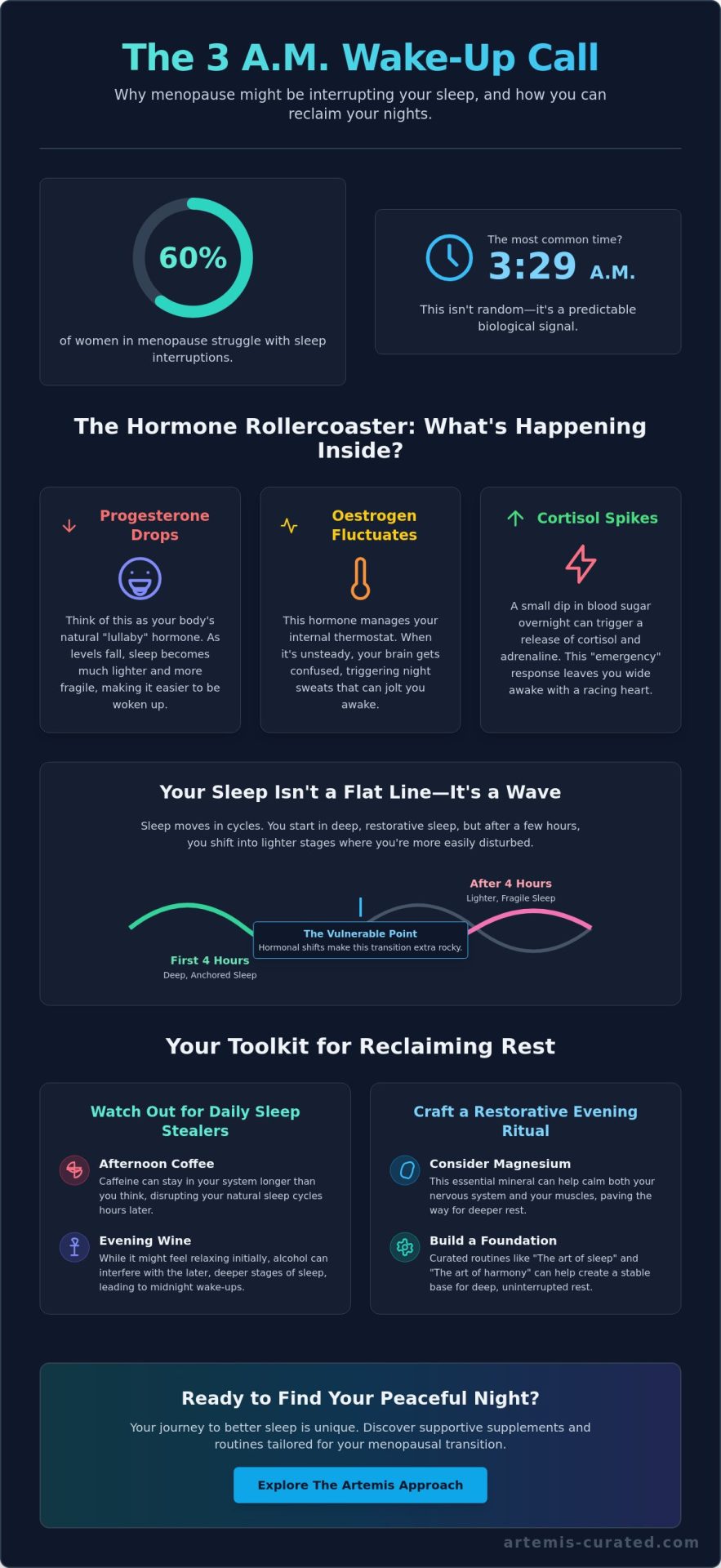
There is a specific kind of loneliness that comes with being awake while the rest of the world sleeps. You might feel a surge of heat or a sudden prickle of anxiety as you stare at the ceiling. This is one of the common symptoms of menopause, and it’s remarkably widespread. Research suggests that insomnia affects between 20 percent and 60 percent of women during this stage of life. In fact, one survey identified the most common time for this awakening as exactly 3:29 a.m. At this hour, your hormones are in a state of flux. Your internal thermostat is struggling to maintain its usual cool composure. Understanding this as a manageable biological response is the first step toward reclaiming the peace of your bedroom sanctuary.
The Role of Sleep Architecture
Sleep isn’t a flat, unchanging state. It’s a series of waves, moving from deep, restorative rest into lighter REM cycles. During the first four hours of the night, we usually stay in the deep end of the pool. However, around that four hour mark, our sleep architecture naturally shifts. We enter a much more fragile phase. In menopause, the drop in progesterone, which typically acts as a natural “calmer,” makes this transition incredibly rocky. Even a minor night sweat or a slight shift in room temperature can be enough to pull you fully into consciousness. When you ask yourself why do I wake up at 3am during menopause, the answer often lies in this structural vulnerability. Your body’s “quiet” hormones are no longer there to anchor you through the lighter stages of the night. You can find ways to support these rhythms through intentional selections in the art of sleep, helping you stay grounded when the world is still.
The Biological Culprits: Oestrogen, Progesterone, and Cortisol
The reason your body seems to have an internal alarm set for the middle of the night isn’t a mystery of the mind. It’s a result of a delicate chemical shift. Progesterone is often thought of as your body’s natural sedative. It helps you drift into a deep rest and stay there. As levels of this hormone drop during the menopausal transition, your sleep becomes noticeably more fragile. You lose that heavy, anchored feeling that keeps you under. Instead, you’re left in a lighter state where even the smallest internal change can pull you back to the surface of consciousness.
Oestrogen and the Thermostat
Oestrogen plays a lead role in how your brain manages heat. When levels fluctuate, the hypothalamus, which acts as your internal thermostat, gets confused. It might suddenly decide you’re overheating when the room is perfectly cool. This confusion triggers a night sweat. The sudden spike in body temperature, followed by a damp chill, is a frequent answer to why do I wake up at 3am during menopause. If you’re curious about how this hormone shapes your overall well-being, our oestrogen pillar offers a deeper look at its vital role as an architect of vitality.
The Cortisol-Adrenaline Loop
This is where the mystery of the midnight wake-up call really unfolds. Your body follows a natural 24-hour clock. Around 2 or 3 a.m., your cortisol levels start a slow, planned rise to prepare you for the morning. When your hormones are in balance, you sleep right through this subtle increase. However, during menopause, your system becomes much more sensitive to these shifts.
A small dip in blood sugar can also occur in the early hours. Your brain often misinterprets this drop as a minor emergency. To fix it, the body releases a burst of adrenaline and more cortisol to bring your sugar levels back up. This “emergency” response is exactly what leaves you wide awake with a racing heart and a mind that won’t stop spinning. You can find more strategies for balancing these internal signals in our cortisol guide.
Finding a sense of quiet again is about more than just hope. It’s about intentionality. You might find that introducing the art of harmony into your daily rhythm helps smooth out these hormonal peaks and valleys, allowing for a more settled and predictable night.
Beyond Hormones: Lifestyle Factors That Steal Your Rest
While the internal shifts of oestrogen and cortisol create the foundation for these disruptions, our daily habits often act as the supporting cast in this midnight drama. If you’ve been asking yourself why do I wake up at 3am during menopause, it’s helpful to look at how your evening choices might be amplifying those biological signals. Our bodies become more sensitive during this transition. What once felt like a harmless routine may now be the very thing pulling you from your rest. It’s about finding a new rhythm that respects your body’s changing needs.
Consider the “wine trap.” Many of us reach for a glass of red to soften the edges of a long day. While alcohol is a sedative that helps you fall asleep quickly, it’s a deceptive friend. As your liver processes the sugar and alcohol, a rebound effect occurs in the second half of the night. This often coincides with that 3 a.m. window, causing a spike in alertness just as your progesterone levels are at their lowest. It’s a jarring transition that leaves you wide awake and often feeling uncomfortably warm. It turns a potential sanctuary of rest into a space of restless heat.
Dietary Triggers and Sleep Quality
Your metabolism also undergoes a quiet transformation during the perimenopause years. Caffeine, which you might have handled easily in your thirties, now lingers much longer in your system. That mid-afternoon latte can still be active at midnight, making your sleep architecture more fragile. To encourage a more settled night, consider these small shifts:
- The Noon Cut-off: Try moving your last caffeine fix to before midday to ensure it’s cleared your system by bedtime.
- Blood Sugar Anchors: A small, protein-rich snack before bed, like a few almonds, can help prevent the blood sugar dips that trigger adrenaline.
- Hydration Timing: Sip water throughout the day but taper off in the evening to avoid waking for bathroom trips.
The Mental Burden
The psychological loop of “worrying about sleep” is perhaps the most difficult hurdle. When you wake up at 3 a.m., your mind often races with the “menopause brain” fog of tomorrow’s to-do list. You check the clock, calculate how many hours are left, and the anxiety builds. This mental load keeps your nervous system in a state of high alert. Breaking this cycle requires a gentle, almost reverent approach to your wakefulness. If you find your current routine isn’t enough, exploring the curated selections in the art of sleep can help provide the deep support your body is asking for. Instead of fighting the silence, try to accept it; a cool, dark room that feels like a true sanctuary is your best ally in returning to a peaceful state.
Reclaiming Your Night: Practical Rituals for Uninterrupted Rest
Understanding the biological mechanics of why do I wake up at 3am during menopause is the first step toward change. The second step is creating a nightly environment that signals safety and stability to your nervous system. Transforming your bedroom into a true place of rest requires more than just high-thread-count sheets. It involves a series of intentional choices that help anchor your body through those fragile early morning hours. By focusing on rhythm and preparation, you can begin to smooth out the jagged edges of menopausal sleep disruptions.
The Art of the Wind-Down
Your preparation for rest should begin long before your head hits the pillow. We recommend a “digital sunset” at least two hours before you intend to sleep. The blue light from phones and tablets mimics daylight, which can trick your brain into suppressing melatonin and boosting cortisol. Instead, choose rituals that lower your core temperature and calm your pulse. A tepid bath or reading by a soft, warm light can help. Keep your bedroom cool; many experts suggest a temperature around 18 degrees Celsius (64 degrees Fahrenheit) to prevent the night sweats that often trigger a 3 a.m. awakening.
Nutritional Support for Sleep
What you consume in the evening plays a vital role in your sleep architecture. Magnesium glycinate is a particularly effective choice for women in menopause. Unlike other forms of magnesium, the glycinate version is highly absorbable and gentle on the system, helping to relax both tight muscles and a racing mind. For a more comprehensive approach to your well-being, you can explore our best supplements for women guide.
To prevent the blood sugar dips mentioned earlier, consider a “sleep bridge.” This is a small, high-protein snack eaten about 30 minutes before bed. A few walnuts or a small piece of turkey can provide enough steady fuel to keep your glucose levels stable, preventing the adrenaline surge that often causes you to wake up. If you do find yourself awake at 3 a.m., resist the urge to check your phone. The light and the sudden influx of information will only make it harder to drift back. Instead, try a simple breathing exercise or a mental visualization of a peaceful space.
Restoring your natural rhythm is a journey of patience and selection. If you are ready to deepen your commitment to restorative rest, consider introducing the art of sleep into your nightly routine to support your body’s transition into deep, quiet harmony.
Curating Harmony: The Artemis Approach to Menopause Sleep
We’ve looked at the biological mechanics and the daily habits that answer the question, why do I wake up at 3am during menopause. Now, we turn toward a more intentional way of being. At Artemis Curated, we believe that wellness shouldn’t feel like a frantic search for a quick fix. Instead, it should be a deliberate act of selection. Our approach is grounded in the idea of the home and the body as a sanctuary. This transition is a time to move away from the noise of mass-produced options and toward a more soulful, focused way of caring for yourself. It’s about finding a rhythm that feels both professional and deeply personal, respecting the history of your own body.
Targeted Support for the 3am Wake-Up
The foundation of a good night actually begins the moment you wake up. Our menopause support, which we call The art of harmony, works to balance the hormonal peaks and valleys that occur throughout your day. By addressing these fluctuations early, you’re setting the stage for a more stable evening. When the sun goes down, The art of sleep takes over. This collection uses specific, high-quality botanicals designed to gently nudge your cortisol levels back into their proper place. Artemis Curated focuses on the quality of every ingredient, ensuring that every element in your routine has a purpose. This isn’t about taking a handful of pills; it’s about a curated selection that supports your deep, uninterrupted rest.
A Soulful Transition
Menopause is a profound milestone, a time when your body’s narrative is shifting. We encourage you to see this not as a loss of control, but as a period of refined wellness. Choosing quality over quantity is a fundamental philosophy for living well during these years. Every piece of your routine should contribute to a larger story of health and radiance. Sleep is a vital part of that narrative. It’s the time when your body repairs and your mind finds its quiet authority. Choosing the right support is an act of respect for your own artistic process of aging.
We invite you to view your evening ritual as a reverent practice. When you choose from The Full Curated collection, you are acting as a discerning tastemaker for your own life. You’re selecting products that possess a distinct voice and a respect for the process of well-being. Let’s reclaim the quiet beauty of the early morning hours together. Your journey toward balance is unique, and it deserves a supportive, knowledgeable guide. Explore our offerings at Artemis Curated and discover how a soulful approach to health can transform your nights from a struggle into a serene, restorative experience.
Embracing Your Journey Toward Restful Nights
The transition through menopause is a deeply personal story. It deserves a sense of calm and intentionality. By looking at the biological triggers and the lifestyle habits that shape your evenings, you can begin to shift the narrative of your sleep. Understanding why do I wake up at 3am during menopause is the first step toward reclaiming your bedroom as a true sanctuary. You now know that it’s often a combination of cortisol rhythms and shifting hormones that disrupts your peace. With the right rituals and targeted support, those midnight awakenings can become a thing of the past.
At Artemis Curated, we believe in the power of high-quality, artisanal ingredients. Our founders, health enthusiasts Milly and Sarah, created these targeted holistic formulas to support you through every stage of this change. We invite you to explore our curated collection for sleep and harmony and discover how a focused approach to wellness can restore your natural rhythm. You don’t have to navigate these changes alone. There’s a path toward feeling rested, radiant, and fully yourself again. Sleep well, and wake with a renewed sense of harmony.
Frequently Asked Questions
Is waking up at 3am a sign of perimenopause?
Yes, waking up in the early hours is one of the most frequent indicators that you’ve entered perimenopause. While many people focus on hot flashes, these midnight interruptions often appear first as your progesterone levels begin to decline. This loss removes the natural “anchor” that usually keeps your sleep deep and steady, making you much more vulnerable to waking up during the second half of the night.
How does low oestrogen affect my sleep cycle?
Low oestrogen directly impacts your hypothalamus, which is the part of your brain responsible for regulating temperature. When oestrogen levels drop, this internal thermostat becomes overly sensitive and might trigger a night sweat even if your room is cool. This sudden heat is a primary reason why do I wake up at 3am during menopause, as it jolts you out of your deeper sleep cycles and into a state of alertness.
Can magnesium help with menopause-related insomnia?
Magnesium is a wonderful addition to a nightly routine, particularly when you choose the glycinate form. It helps to quiet the nervous system and relax the muscles, making it easier to drift back into a restorative state. Many women find that this simple mineral provides a sense of calm that supports the body’s natural transition into deeper sleep without the grogginess often associated with traditional sleep aids.
Why do I feel wide awake when I wake up in the middle of the night?
That “wide awake” feeling is usually caused by a surge of adrenaline and cortisol. When your blood sugar dips or your hormones fluctuate, your body interprets the change as a minor crisis. It releases stress hormones to bring your system back into balance. This sudden chemical rush is what makes your heart race and your mind start spinning with tomorrow’s to-do list, even when you’re physically exhausted.
Should I take HRT for sleep problems during menopause?
Choosing a treatment path is a personal decision that should be discussed with a healthcare professional. Current clinical guidelines from April 2026 recommend starting with Cognitive Behavioral Therapy for Insomnia as a first line of defense. If you’re considering other options, it’s best to consult a specialist to see what fits your specific health history and needs, as we don’t offer clinical consultations or hormone therapies.
What is the best thing to do when I wake up at 3am?
The best approach is to stay in the quiet of the moment and resist the urge to check your phone. Avoid looking at the clock, as the blue light and the time pressure will only increase your anxiety. Instead, try a slow breathing exercise or a mental walkthrough of a peaceful space. This signals to your nervous system that you are safe and helps you return to rest more quickly.
How long does menopause-related insomnia usually last?
There isn’t a single timeline that fits everyone, as every woman’s journey is unique. For some, sleep issues are most intense during the perimenopause years and begin to settle once they reach post-menopause. Developing a consistent, curated routine early on can help manage these symptoms and support your body as it finds its new internal rhythm. It’s about supporting the transition rather than just waiting for it to pass.
Does cortisol really spike at 3am?
Yes, your body has a natural circadian rhythm where cortisol begins its daily rise around 2 or 3 a.m. to prepare you for the morning. Under normal circumstances, this rise is so gradual that you don’t notice it. However, the loss of calming hormones like progesterone makes you much more sensitive to this shift. This is a key factor in why do I wake up at 3am during menopause, as that small rise is enough to pull you fully awake.