


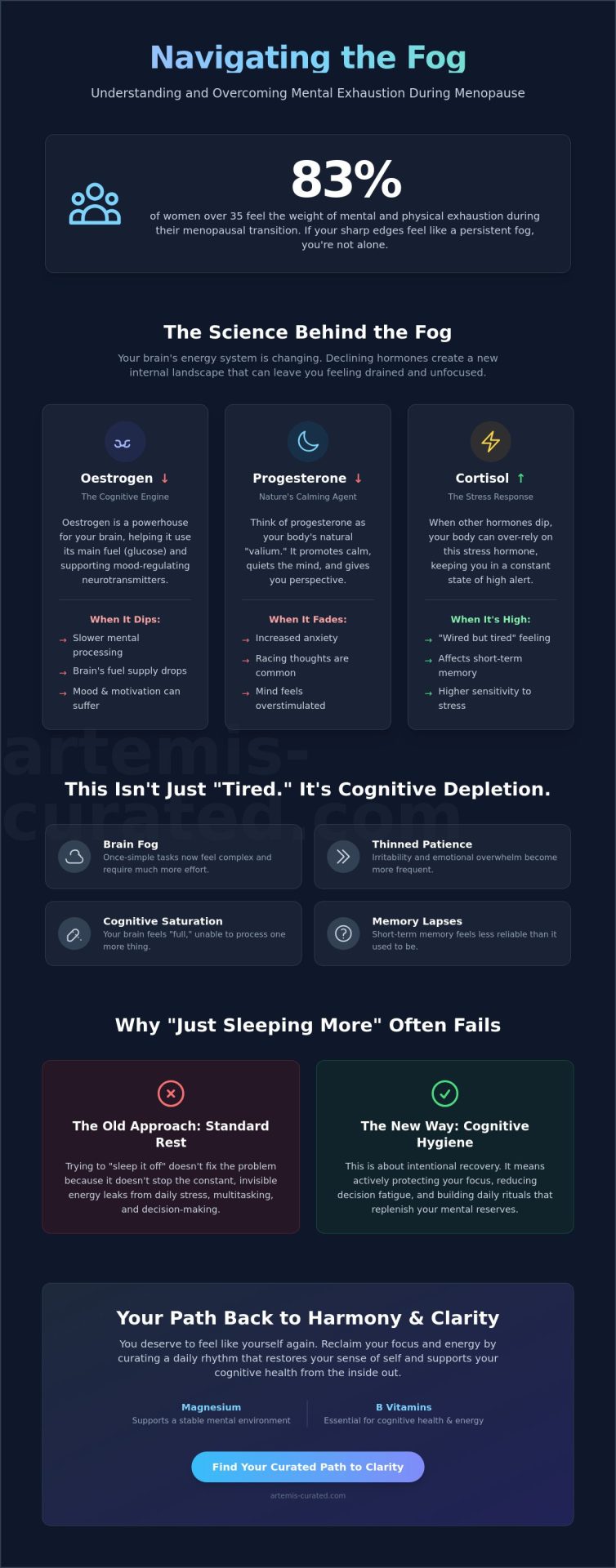
A 2026 study found that 83% of women over 35 experience profound mental exhaustion during their menopausal transition. It’s a quiet, heavy weight. It often makes the once-simple act of choosing a morning tea feel like an insurmountable task. If you feel as though your sharpest edges have softened into a persistent fog, you aren’t alone. It’s truly draining to feel like you’ve lost the natural rhythm of your own mind. You deserve to feel like yourself again.
We’ll show you exactly how to combat mental exhaustion during menopause by understanding the hormonal shifts that disrupt your clarity. You’ll learn to reclaim your focus and energy by moving beyond quick fixes and embracing a more intentional approach to your daily well-being. This guide explores the roots of brain fog and introduces gentle, effective rituals to help you manage your energy. We’re here to help you find your way back to a sense of harmony and mental vibrancy through the art of selection and mindful living.
Key Takeaways
- Identify the unique mental load of midlife and why this specific type of burnout requires more than just a standard rest.
- Discover how to combat mental exhaustion during menopause by understanding how declining hormones affect your brain’s natural energy supply.
- Move beyond the idea of simple sleep hygiene to embrace cognitive hygiene, a practice that protects your focus and reduces daily decision fatigue.
- Explore the role of magnesium and B vitamins in creating a more stable mental environment and supporting your cognitive health.
- Learn how “The art of harmony” and “The art of sleep” can help you curate a daily rhythm that restores your clarity and sense of self.
Beyond Tired: Defining Mental Exhaustion in Menopause
We often view menopause through a physical lens, focusing on the heat of a flush or the restlessness of the night. But for many women, the most disorienting change is the sudden, heavy fog that settles over the mind. It’s more than just being “tired.” It is a specific type of burnout that makes your once-sharp focus feel dull and distant. When you are searching for how to combat mental exhaustion during menopause, the first step is realizing that your brain is navigating a completely new landscape. This isn’t a failure of your will; it’s a physiological shift that requires a new way of living.
This isn’t just in your head; it’s a documented experience. In early 2026, research indicated that 83% of women over 35 reported experiencing fatigue and physical and mental exhaustion as symptoms of perimenopause. This mental load often feels like you’ve lost a part of your identity. You might feel less capable or less “like yourself” because your cognitive processing speed has slowed. A helpful Menopause Overview shows that the brain undergoes significant shifts during this time. It’s not a lack of effort. It’s a change in how your mind manages its daily energy supply.
The Symptoms of Cognitive Depletion
Brain fog isn’t just simple forgetfulness. It is a persistent struggle to focus on complex tasks that used to be second nature. You might find that your patience has worn thin, leading to a sense of emotional overwhelm that feels out of character. This irritability isn’t a personality flaw; it’s a symptom of a mind that is simply “full” and cannot take on one more piece of information. Menopausal mental exhaustion is a state of sensory and cognitive saturation where the brain’s ability to filter and process information is temporarily overwhelmed.
Why Traditional Rest Often Fails
We’ve all tried to “sleep it off,” only to wake up with the same heavy feeling in our temples. Standard rest often fails because it doesn’t stop the constant leaking of energy that happens throughout the day. We spend our hours multitasking and managing the “sandwich generation” stress of caring for children and aging parents. This invisible labor creates a drain that a few extra hours in bed cannot fix. To truly recover, we must move toward intentionality in our daily rhythms. It means choosing specific ways to quiet the noise and replenish our internal reserves. If you’re ready to start this journey, you can explore our curated collections designed to support this transition through the art of selection.
The Hormonal Architecture of Mental Fatigue
To understand the weight of your fatigue, we must look at the foundation. Your brain is a high-energy organ, and for decades, it has relied on a steady supply of hormones to keep its systems running smoothly. When these levels begin to shift, the very way your brain processes energy changes. It’s not just a feeling of being worn out; it’s a fundamental shift in your internal biology. Gaining a deeper Oestrogen Understanding is the first step in learning how to combat mental exhaustion during menopause. When we see the science behind the fog, we can begin to address it with the care it deserves.
As oestrogen declines, the brain’s ability to metabolise glucose, its primary fuel source, can drop. This creates a temporary energy gap that leaves you feeling mentally drained before the day has even truly begun. Progesterone also plays a vital role as your body’s “natural valium,” providing a sense of calm and perspective. As it fades, you might find yourself more prone to anxiety and racing thoughts. This double shift leaves the mind feeling vulnerable and overstimulated. Understanding this transition helps you realise that your search for how to combat mental exhaustion during menopause is a necessary act of self-care.
Oestrogen and the Cognitive Engine
Oestrogen does much more than manage your cycle. It supports the production of essential neurotransmitters like serotonin and dopamine, which regulate your mood and motivation. When these levels dip, your mental processing speed can feel sluggish, as if you’re thinking through water. Oestrogen acts as a protective shield for the female brain. Without this shield, the daily “mental load” feels much heavier, making simple tasks require significantly more effort than they once did.
The Cortisol Rhythm and Inner Harmony
When oestrogen and progesterone are in flux, your body often turns to cortisol to fill the gap. This stress hormone is helpful in short bursts, but when it remains high, it creates a “wired but tired” sensation. You feel exhausted, yet your mind refuses to rest. This chronic state of high cortisol can impact your short-term memory and make you more sensitive to small stress triggers. Learning to balance your Cortisol Rhythm is essential for restoring your sense of inner peace. To support this delicate balance, you might consider exploring our Full Curated collection, which offers tools designed to help you reclaim your mental clarity and physical vitality.
Why “Just Sleeping More” Isn’t the Only Answer
It’s a common frustration. You manage to get to bed at a reasonable hour and secure a full night’s sleep, yet the morning brings that same familiar heaviness. This happens because mental exhaustion isn’t just physical tiredness. While your body might have rested, your mind spent the night processing the residue of a thousand daily decisions. Learning how to combat mental exhaustion during menopause requires us to look at “Cognitive Hygiene” with the same level of care we give to our sleep routines. Passive rest is only one part of the story. True recovery for the menopausal brain demands active boundaries and a curated approach to what we let into our mental space.
We live in a world that prizes constant availability. For many women in midlife, this means managing a “mental load” that never truly powers down. You might be tracking family schedules, career milestones, and the needs of aging parents all at once. This chronic multitasking creates a sensory overload that sleep alone cannot resolve. To find clarity, we must move away from the idea of just “getting through the day” and toward a more intentional way of protecting our cognitive energy.
The Quality of Rest vs. The Quantity of Sleep
Eight hours of sleep can still leave you feeling drained if that sleep isn’t deep and restorative. During menopause, our brain’s natural detoxification process, which happens during deep rest, can be disrupted by shifting hormones. It’s also important to identify the “energy vampires” in your schedule. These aren’t just people; they’re habits like late-night scrolling or checking emails the moment you wake up. These activities keep your brain in a state of high alert, preventing the deep reset you need to feel sharp the next day.
Sensory Boundaries and Cognitive Space
Our brains weren’t designed for the constant ping of notifications. For a mind already navigating hormonal shifts, this digital noise can feel like a physical weight. Creating “quiet windows” throughout your day is a simple yet powerful way to reset your nervous system. Try setting aside ten minutes in the afternoon for total silence. No podcasts, no music, just space. This practice helps create a mental sanctuary even during a busy workday. By choosing what to exclude from your environment, you make room for the focus and clarity you’ve been missing. If you’re looking for more ways to support this journey, you can explore The art of sleep to help restore your natural rhythm.
Curating a Daily Rhythm to Reclaim Clarity
Finding your focus again isn’t about adding more tasks to an already crowded schedule. Instead, it’s about choosing small, intentional shifts that support your brain’s natural pace. When exploring how to combat mental exhaustion during menopause, we often look for one big solution. However, the most lasting changes usually come from the quiet rituals we weave into our day. By curating a rhythm that respects your energy, you can move away from the frantic feeling of “catching up” and toward a sense of steady, calm presence.
One of the most effective ways to protect your cognitive space is through the use of “Micro-Rest.” This isn’t a nap or a long break. It is a deliberate five-minute pause where you step away from all screens and inputs. Doing this every few hours prevents the afternoon mental crash that often leads to decision fatigue. It allows your nervous system to reset before it hits a point of total saturation. To support this internal balance, you can integrate The art of harmony into your daily routine, providing your body with the targeted support it needs during this transition.
Nutritional Anchors for the Mind
What we eat acts as the raw material for our thoughts. Keeping your blood sugar steady is vital for avoiding those sudden “brain slumps” that make you feel like you can’t think straight. Focus on including these key nutrients in your meals:
- Magnesium: Known for its ability to promote a sense of calm and support the nervous system.
- Omega-3s: Essential for maintaining the structural health of your brain cells.
- B12: A critical vitamin for energy production and maintaining your mental edge.
Specific micronutrients act as building blocks for mental resilience. When your brain has the right tools, it can better withstand the fluctuations of menopause without feeling completely depleted.
The Power of Intentional Rituals
Morning rituals help you set the cognitive tone for the day before the world’s demands take over. This might be as simple as five minutes of quiet breathing or a short walk in the morning light. As the day ends, an evening wind-down is equally important. It helps your brain transition from a high-beta state of active problem-solving to the restorative alpha waves needed for deep rest. Gentle movement, like a slow yoga flow or a mindful stroll, helps clear the mental clutter that accumulates throughout the day. These aren’t just chores. They are acts of selection that prioritize your well-being over the noise of the outside world.
If you’re ready to embrace a more balanced approach, you can find our full range of support in The art of harmony collection.
Restoring Harmony: The Artemis Curated Approach
Reclaiming your clarity is not about finding a quick fix or adding more noise to your life. It is about a fundamental shift in perspective. Instead of viewing this transition as a series of symptoms to be managed, we invite you to see it as an opportunity for refined self-care. When you look for how to combat mental exhaustion during menopause, you are really looking for a way to restore your internal rhythm. At Artemis, our philosophy centers on the act of curation. We believe in selecting only what is necessary and meaningful to support your unique story. It’s about quality over quantity and choosing tools that work in harmony with your body’s natural wisdom. This stage of life is a time to move away from the frantic energy of mere consumption and toward a more soulful, intentional way of living.
Our approach is rooted in the belief that your home and your body are sanctuaries. Every piece of support you choose should possess a distinct voice and a clear purpose. We don’t believe in the mass-produced or the generic. Instead, we focus on the hand of the maker and the integrity of the ingredients. By treating your wellness as a curated collection, you create a space where mental clarity can naturally return. This transition is not an end, but a beginning of a more discerning and balanced version of yourself.
The Art of Harmony: Balancing the Internal Landscape
The fluctuations that lead to brain fog can feel erratic and unpredictable. Our foundational tool, The art of harmony, is designed to smooth these edges through targeted botanical support. By addressing the hormonal roots of your fatigue, this collection helps you find a steady center amidst the change. It’s not just about addressing a single moment of fog; it’s about supporting your entire internal landscape. You can explore these focused solutions in our Menopause Shop to begin building your own ritual of balance. This holistic approach ensures that you are supported from the inside out, allowing your natural vibrancy to shine through once again.
The Art of Sleep: Reclaiming the Night
Deep sleep is the ultimate antidote to the mental exhaustion that defines this stage of life. It is during these quiet, reverent hours that the brain truly restores itself and clears the clutter of the day. The art of sleep offers curated blends that guide you gently into a state of restorative rest. By supporting your natural transition into sleep, you give your mind the space it needs to wake up with renewed focus and a sense of calm. We invite you to explore the full collection and discover how a more intentional approach to rest can help you reclaim your mental vibrancy. This is your time to curate a life that feels as clear, soulful, and balanced as you deserve.
Reclaiming Your Mental Vibrancy
You now have a clearer map for how to combat mental exhaustion during menopause. We’ve explored how shifting hormones like oestrogen and cortisol impact your brain’s energy, and why simple sleep isn’t always enough to clear the fog. By embracing cognitive hygiene and small, intentional rituals, you can begin to protect your mental space. It’s about choosing quality over quantity and finding a rhythm that feels right for you. This transition is a chance to listen more closely to what your body needs to thrive.
Artemis was founded by women for women. We believe in a holistic approach that focuses on the rhythm of inner harmony through high-quality, carefully selected supplements. You don’t have to navigate this transition alone or settle for feeling less like yourself. When you choose to support your body with intention, you’re not just managing symptoms; you’re curating a life of clarity and balance. We invite you to Explore our Curated Collections for Menopause Support and find the tools that speak to your personal story. You deserve to feel sharp, focused, and completely at home in your own mind.
Frequently Asked Questions
Is mental exhaustion a normal symptom of perimenopause?
Yes, mental exhaustion is an incredibly common and documented part of the menopausal transition. A 2026 study found that 83% of women over 35 report experiencing both physical and mental exhaustion as symptoms. It’s not a failure of your will; it’s a physiological response to shifting hormones that change how your brain processes energy and manages its daily workload.
How is menopausal brain fog different from normal tiredness?
Menopausal brain fog is a state of cognitive saturation that goes beyond feeling sleepy. While normal tiredness might be fixed with a nap, brain fog feels like a loss of “sharpness” and an inability to focus on complex tasks. It often includes decision fatigue, where even small choices feel overwhelming because your mental processing speed has temporarily slowed down during this hormonal shift.
Can supplements really help with mental exhaustion during menopause?
Targeted supplements can be a foundational part of how to combat mental exhaustion during menopause. Micronutrients like magnesium, B vitamins, and omega-3s act as essential building blocks for mental resilience and neurotransmitter support. Choosing a curated approach, such as “The art of harmony,” helps provide your brain with the specific nutrients it needs to navigate these fluctuations with more ease and clarity.
How long does menopausal mental fatigue usually last?
The duration of mental fatigue varies for every woman, but it often tracks with the length of the menopausal transition. For some, it might last a few years during perimenopause before settling. However, you don’t have to wait for it to pass on its own. Implementing supportive rituals and nutritional foundations can significantly reduce the impact and help you reclaim your mental energy much sooner.
What is the best way to clear brain fog quickly in the morning?
The best way to clear morning fog is to create a slow, intentional start that avoids immediate sensory overload. Try stepping into natural light and hydrating before checking your phone or digital notifications. This gives your brain a chance to transition into an alert state without being immediately hit by noise. A simple morning ritual helps set a calm cognitive tone for the day.
Does HRT help with the mental exhaustion associated with menopause?
Research suggests that hormone replacement therapy can help some women by stabilizing the hormone levels that impact brain function. The FDA recently updated labels on several HRT products in early 2026 to reflect a more nuanced understanding of their risks and benefits. Since we don’t offer clinical consultations, it’s best to discuss these medical options with a healthcare professional to see what fits your personal history.
Can high cortisol levels make menopausal brain fog worse?
Yes, high cortisol levels can absolutely make brain fog feel much heavier. When your body is in a chronic stress state, it produces cortisol which can interfere with memory and create a “wired but tired” feeling. Learning how to combat mental exhaustion during menopause involves managing this stress rhythm so your brain can move out of survival mode and back into a state of focus and calm.
What are the best foods to eat for mental clarity during menopause?
Focus on foods that support steady blood sugar and provide healthy fats for brain structure. Leafy greens, fatty fish rich in omega-3s, and complex carbohydrates help prevent the energy slumps that lead to mental crashes. Avoiding heavy stimulants and processed sugars can also help maintain a more consistent mental energy throughout the afternoon, allowing your mind to stay sharp and focused.