


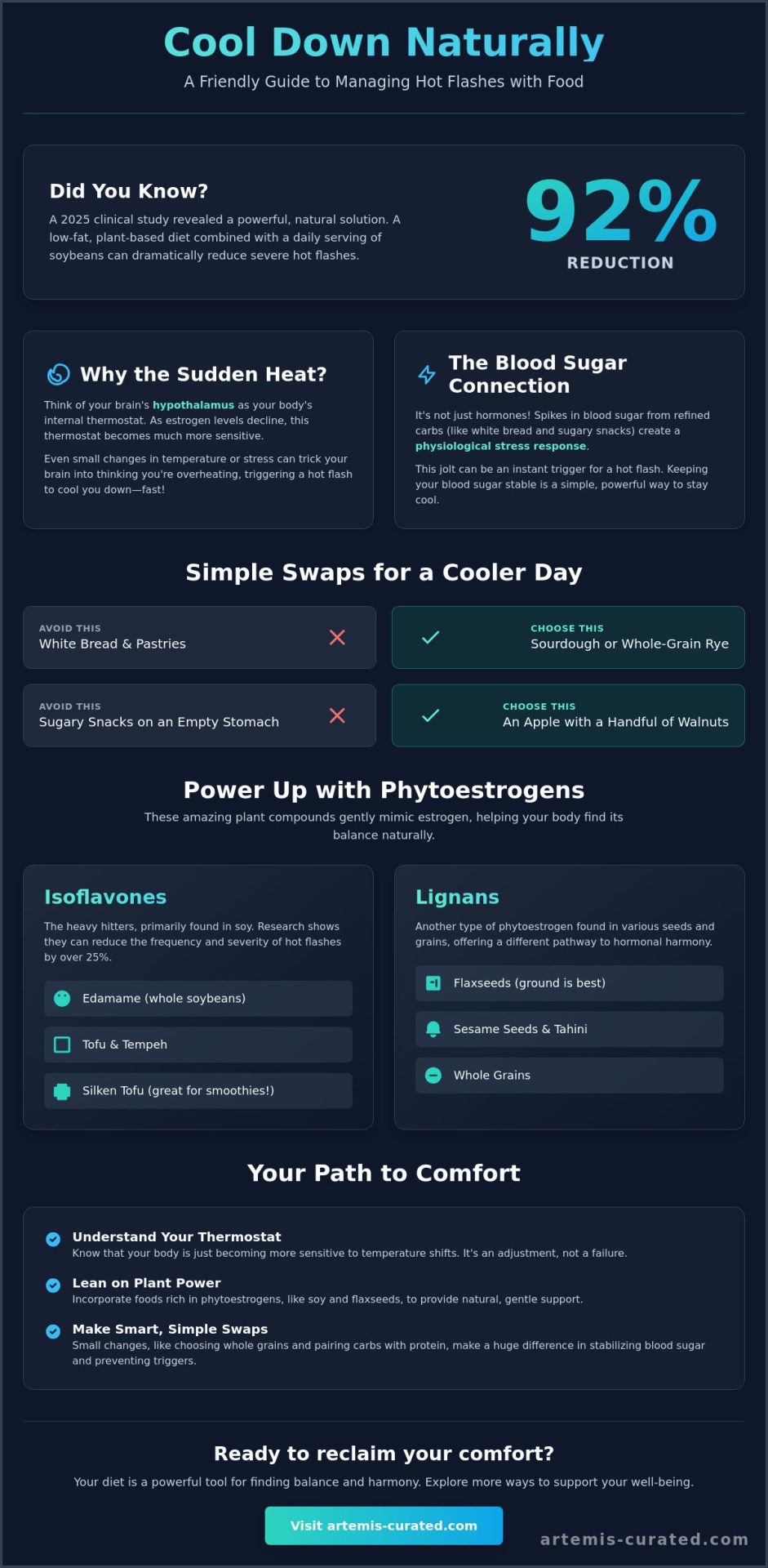
Did you know that a 2025 clinical study found that a low-fat plant-based diet, paired with a daily serving of soybeans, can reduce severe hot flushes by a staggering 92%? It is a remarkable figure. For those seeking foods that help with hot flushes, this data offers a path back to a sense of cool, collected ease. We understand how these moments can disrupt your life, from the heavy exhaustion of broken sleep to the sudden, prickling heat during an important meeting. You deserve to feel at home in your body again.
It is easy to feel overwhelmed by conflicting advice, especially when your energy is already low. This guide focuses on the intentional selection of nourishment, moving away from temporary trends toward a more soulful, grounded way of eating. You will discover how specific cooling ingredients and plant-derived compounds can help stabilize your internal rhythm. We have curated a clear, actionable shopping list to help you manage these symptoms naturally. It is time to reclaim your comfort and focus on the art of harmony within your own daily life.
Key Takeaways
- Understand how your internal thermostat works and why declining oestrogen makes your body more sensitive to sudden temperature shifts.
- Identify the most effective foods that help with hot flushes, focusing on how plant compounds like isoflavones and lignans offer natural support.
- Learn simple, effective food swaps that allow you to enjoy your favorite daily rituals without triggering a sudden spike in heat.
- Discover why a Mediterranean style of eating provides the essential healthy fats and nutrients needed to keep your body feeling balanced and cool.
- Explore how a holistic approach, including the art of harmony, can complement your kitchen changes to help you reclaim your comfort and ease.
Understanding Hot Flushes: Why Your Diet is a Tool for Temperature Control
Hot flushes are more than a passing nuisance. They represent a complex dialogue between your brain and your changing hormone levels. In the medical world, these episodes are known as vasomotor symptoms. This term describes the way your blood vessels dilate in response to signals from your nervous system. For many, these surges feel like an uninvited guest, arriving at the most inconvenient times. Understanding the mechanics of this heat is the first step toward finding relief. It’s helpful to view your body not as a failing machine, but as a sensitive system adjusting to a new rhythm. Gaining a deeper perspective on Understanding Hot Flashes allows you to see how your daily choices, especially the foods that help with hot flushes, can act as a gentle intervention. This intentional approach is a cornerstone of Navigating Menopause with grace.
The Science of the Internal Thermostat
Your hypothalamus sits at the center of this experience. It acts as your body’s master thermostat, constantly scanning for changes in temperature. During your younger years, oestrogen serves as a reliable buffer, keeping this thermostat steady and forgiving. As oestrogen levels shift, that “neutral zone” where you feel comfortable begins to narrow. Even a slight increase in room temperature or a stressful thought can trick the brain into thinking you are overheating. Vasomotor symptoms are the body’s overreaction to perceived heat. When this happens, your brain sends an emergency signal to cool down immediately, leading to that characteristic flush and sweat. Your diet can either calm or alarm this sensitive internal sensor.
The Blood Sugar Connection: A Hidden Trigger
While we often blame hormones alone, your blood sugar plays a surprisingly active role in these heat surges. This is a connection many people overlook. When you consume “white” carbohydrates like refined sugar, white bread, or processed pastries, your insulin levels spike rapidly. This creates a physiological stress response that can trigger a hot flush almost instantly. By choosing foods that help with hot flushes that have a lower glycaemic index, you provide your body with a more stable foundation. Consider these simple shifts:
- Swap white toast for sourdough or whole-grain rye to slow down sugar absorption.
- Always pair a carbohydrate with a protein or healthy fat, such as an apple with a handful of walnuts.
- Avoid sugary snacks on an empty stomach to prevent the insulin crashes that often precede a flush.
Stabilizing your blood sugar is a simple yet profound way to calm your internal thermostat. It moves you away from the frantic energy of symptom management toward a more balanced, harmonious daily life.
The Power of Phytoestrogens: Nature’s Oestrogen Mimics
Nature has a quiet way of providing exactly what we need when our internal landscape begins to shift. Phytoestrogens are plant compounds that share a structural similarity to our own hormones. When your body’s natural production of Oestrogen begins to decline, these molecules can step in and bind to your receptors. They don’t replace your hormones, but they offer a gentle nudge toward equilibrium. Identifying specific foods that help with hot flushes involves looking closely at these plant-based allies. While there has been much debate regarding soy, current research suggests it is a supportive ally for most people. These compounds are generally categorized into two main families: isoflavones, found predominantly in soy, and lignans, found in seeds and grains.
Soy, Tofu, and Edamame: The Isoflavone Leaders
Soy is perhaps the most well-known source of isoflavones. According to the Cleveland Clinic on cooling foods, soy isoflavones may help reduce the frequency and severity of hot flushes by more than 25%. The key is to focus on whole, non-processed sources rather than isolated soy proteins found in processed bars or powders. Edamame, tempeh, and tofu are excellent choices. Silken tofu has a beautifully delicate texture that disappears into smoothies or creamy soups, making it an easy addition to your daily routine. By choosing these whole foods, you’re embracing a tradition of nourishment that has supported women for centuries.
Flaxseeds and Sesame: Lignans for Balance
Lignans offer another layer of support for your internal thermostat. Flaxseeds are the richest source of these compounds, but they require a little bit of preparation to be effective. You should always choose ground flaxseeds over whole ones. The outer shell is quite tough, and your body cannot absorb the beneficial lignans if the seed remains intact. A simple daily ritual of sprinkling a tablespoon of ground flax or sesame seeds over your morning porridge or yoghurt can make a significant difference. Beyond their cooling properties, these seeds are high in fibre. This helps your body clear out “spent” hormones, ensuring your system remains as clear and balanced as possible. Finding balance is a personal journey, and some find that a more holistic approach, like the art of harmony, provides the perfect support alongside these dietary shifts.
Navigating Triggers: What to Swap for a Cooler Day
Managing your internal temperature doesn’t have to feel like a series of sacrifices. While it’s tempting to think only about the addition of foods that help with hot flushes, identifying the elements that stir the heat is equally vital. We often view our daily rituals, such as the morning espresso or the evening glass of red wine, as essential comforts. Yet, these choices can act as silent alarms for your hypothalamus. Instead of a philosophy of deprivation, we invite you to embrace the art of the swap. By subtly shifting your selections, you can maintain your sense of pleasure while inviting a newfound coolness into your daily rhythm. It’s about curating a lifestyle that respects your body’s current needs.
Caffeine and Alcohol: The Dehydration Duo
Caffeine is a powerful stimulant that constricts blood vessels. This makes it significantly harder for your body to shed excess heat. If you find yourself thinking, “But I need my coffee,” consider a gentle compromise. Implementing a noon cutoff for caffeine can protect your evening rest and reduce the likelihood of night sweats. Alcohol, particularly red wine, is a notorious trigger. It dilates blood vessels and increases heart rate, often leading to a sudden surge of heat. For a more serene evening, explore refined herbal infusions. Peppermint and sage are timeless choices. They offer a sensory experience that calms rather than agitates. These are excellent examples of foods that help with hot flushes because they provide hydration without the stimulating aftermath that often leads to discomfort. If your sleep remains disrupted despite these changes, exploring the art of sleep can offer the deeper support your system craves.
The Myth of the ‘Spicy’ Flush
The heat from a chili pepper isn’t just a flavor; it’s a chemical reaction. Capsaicin, the active compound in spicy foods, binds to the same nerve endings that detect physical heat. Your brain receives a signal that you are literally burning, which triggers an immediate flush to cool you down. You can still enjoy vibrant, flavorful meals by shifting your focus to cooling herbs. Fresh mint, coriander, and dill provide a lush, aromatic depth to your cooking without the fire. These herbs possess a quiet authority in the kitchen, offering complexity without the physiological cost. Triggers are personal and require a food diary approach to identify your unique patterns. By observing your reactions with a discerning eye, you become the knowledgeable guide of your own physical sanctuary. This process of selection allows you to move away from mere consumption toward a purposeful way of living well.
Creating Your Cooling Menu: Practical Menu Ideas
The Mediterranean diet is often celebrated for its heart health benefits, but it is also a powerful ally for temperature regulation. This way of eating prioritizes whole, unprocessed ingredients that provide a steady stream of energy. It avoids the blood sugar spikes that often lead to sudden heat surges. By focusing on foods that help with hot flushes, you can build a menu that feels like a sanctuary of cool. We recommend eating “with the sun,” which means enjoying your more substantial meals earlier and choosing lighter, cooler options as the evening approaches. This helps your body transition into a restful state without the heat generated by heavy digestion. It is a simple shift that respects your body’s natural rhythm.
The Mediterranean Framework
Legumes such as chickpeas and lentils are the quiet heroes of this framework. They offer a perfect combination of protein, fibre, and phytoestrogens. For a practical lunch, try a “Cooling Bowl” composed of quinoa, crisp cucumber, creamy feta, and a handful of seeds. These ingredients provide texture and satisfaction without the inflammatory response of processed foods. You should also include Vitamin C-rich vegetables like bell peppers and leafy greens. These support vascular health, helping your blood vessels respond more efficiently to temperature changes. This efficiency is vital for maintaining a steady internal thermostat throughout the day.
Hydration Rituals: More Than Just Water
Hydration is a proactive cooling strategy. It isn’t just a response to a flush. While drinking water is essential, your body needs electrolytes to maintain its internal balance effectively. You can elevate your daily hydration by infusing your water with slices of cucumber or melon. This creates a sensory experience that feels intentional and refreshing. You can also “eat your water” by selecting high-moisture foods like celery and watermelon. These provide hydration alongside essential vitamins, making it easier for your system to shed excess heat. It turns a basic necessity into a soulful ritual of self-care.
Healthy fats, particularly Omega-3 fatty acids found in oily fish and walnuts, are another critical component. These fats help manage inflammation and support the nervous system. Integrating these foods that help with hot flushes into your weekly routine creates a foundation of resilience. It is about more than just managing symptoms; it is about reclaiming your vitality. If you feel you need extra support to bridge the gap between your diet and your comfort, you might find balance with the art of harmony. This curated approach ensures that every choice you make contributes to a larger story of well-being and ease.
Beyond the Plate: Curating a Holistic Approach to Harmony
Even the most intentional diet sometimes needs a gentle boost to reach a state of true equilibrium. While we’ve discussed several foods that help with hot flushes, nourishment is only one part of a larger, more soulful story. This journey isn’t about finding a quick fix or a mass-produced solution. Instead, it’s about a slow and deliberate approach to wellness that values quality and craftsmanship. By looking beyond the plate, you can begin to curate a lifestyle that supports your body’s internal sanctuary from every angle. It’s a way of living that respects the history of your body and its evolving needs.
A calm nervous system is the secret to a cooler day. When we’re stressed or depleted, our bodies become hyper-reactive to temperature changes. Magnesium and B-vitamins play a vital role here. They act as a soothing presence, helping to settle the mind and steady the nerves. You can find these in seeds, leafy greens, and whole grains, but sometimes the concentrations found in food aren’t enough to bridge the gap during menopause. Recognizing when your body needs more is an act of self-respect, not a failure of your diet. It’s about selecting the right tools for the job.
Targeted Support for Menopause Harmony
There is a powerful synergy between a phytoestrogen-rich diet and high-quality, botanical support. While you continue to enjoy foods that help with hot flushes, adding concentrated extracts can deepen your sense of comfort. The Art of Harmony is designed to act as a partner to your kitchen changes. It incorporates botanicals like Red Clover and Sage, which have been valued for generations for their ability to soothe vasomotor symptoms. For those who want to address every facet of their well-being, the Full Curated collection provides a comprehensive way to support your radiance, sleep, and vitality in one cohesive ritual.
Establishing a Sanctuary for Rest
Night sweats often turn the bedroom from a place of rest into a source of frustration. Combating this requires a shift in your evening hygiene. A wind-down ritual helps signal to your brain that it’s time to shed the heat of the day. This might involve a cooling evening meal, a few moments of quiet contemplation, or simply turning down the lights to create a serene atmosphere. By treating your sleep as a sacred time, you allow your system to reset and find its natural balance. If you’re looking for more ways to support your internal rhythm, we invite you to explore the Artemis Curated Shop. Here, you’ll find a selection of products designed with a deep respect for the art of living well.
Embrace a Cooler, More Balanced Rhythm
You’ve explored how your plate can become a source of profound comfort. By understanding your internal thermostat and selecting foods that help with hot flushes, you’re no longer just reacting to symptoms. You’re building a foundation of ease. From the cooling power of the Mediterranean diet to the gentle support of plant-based mimics, every choice you make is a step toward harmony. Remember that managing triggers like caffeine isn’t about giving up joy. It’s about making space for a more serene daily life.
Sometimes, even a well-curated menu needs a specialized partner to help you feel your best. Sarah and Milly have expertly curated our collection to focus on holistic hormonal harmony. Every piece in our range is designed specifically for the modern woman’s wellness journey. It’s time to move away from the frantic search for relief and toward a purposeful way of living well.
Discover The Art of Harmony: Our Curated Menopause Support. You have the knowledge to reclaim your comfort. Trust in the process and enjoy the journey toward a cooler, more vibrant version of yourself.
Frequently Asked Questions
Can certain foods stop a hot flush once it has already started?
No food acts as an instant “off switch” once a vasomotor episode begins. However, sipping ice-cold water or placing a frozen grape against the roof of your mouth can provide a helpful sensory distraction. These small actions offer a slight cooling effect while the flush runs its course. Long-term relief comes from the consistent selection of nourishing ingredients rather than a single emergency snack.
Is soy safe to eat if I have a history of breast cancer in my family?
Current research from major health organizations suggests that moderate consumption of whole soy foods is safe for most women. The phytoestrogens in soy are significantly weaker than the oestrogen your body produces. They don’t appear to carry the same risks as synthetic hormones. It’s always a wise choice to discuss your specific family history and any concerns with a knowledgeable healthcare professional.
How long does it take for dietary changes to affect menopause symptoms?
You’ll typically begin to notice a meaningful shift in your symptoms within four to twelve weeks of consistent dietary changes. A 2025 study demonstrated that a low-fat plant-based diet including soybeans reduced severe flushes by 92% over a 12-week period. Your body needs this time to recalibrate its internal thermostat. Patience is a vital part of this soulful journey toward balance.
Are there any specific fruits that help with night sweats?
Cooling fruits with high water content, such as watermelon, apples, and pears, are excellent additions to your evening. These are foods that help with hot flushes because they provide hydration and vitamins without the heavy sugar load that can trigger heat surges. Enjoying a small serving of these as part of a lighter dinner helps maintain a more stable temperature throughout the night.
Does drinking cold water actually help reduce the frequency of hot flushes?
Drinking cold water is more effective at managing the immediate sensation of heat than reducing how often flushes occur. It helps lower your core temperature slightly and keeps your system hydrated. Consistent hydration is essential for your hypothalamus to regulate heat effectively. It’s better to sip water steadily throughout the day rather than waiting until you feel the prickle of a flush.
What is the best time of day to eat phytoestrogen-rich foods?
Spreading your intake of phytoestrogen-rich foods across your meals is the most effective way to support your body. Including a sprinkle of ground flaxseeds at breakfast and some tofu at lunch ensures a steady supply of these plant compounds. This consistent presence provides a more reliable buffer for your system. It’s about creating a gentle, sustained rhythm rather than a single daily dose.
Can a low-carb diet help with menopause-related heat surges?
Focusing on the quality of your carbohydrates is more beneficial than a strictly low-carb approach. Stabilizing your blood sugar is the primary goal. By choosing foods that help with hot flushes like lentils, chickpeas, and oats, you avoid the insulin spikes that often lead to sudden heat. These complex choices provide the steady energy your body needs to stay calm and collected.
Are there any ‘superfoods’ specifically for perimenopause?
We prefer to move away from the idea of “superfoods” in favour of a curated, nutrient-dense diet. Maca root, leafy greens, and flaxseeds are particularly valuable during perimenopause for their mineral content and hormonal support. These ingredients work best when they’re part of a broader philosophy of living well. Every intentional choice you make contributes to the larger story of your long-term vitality.