

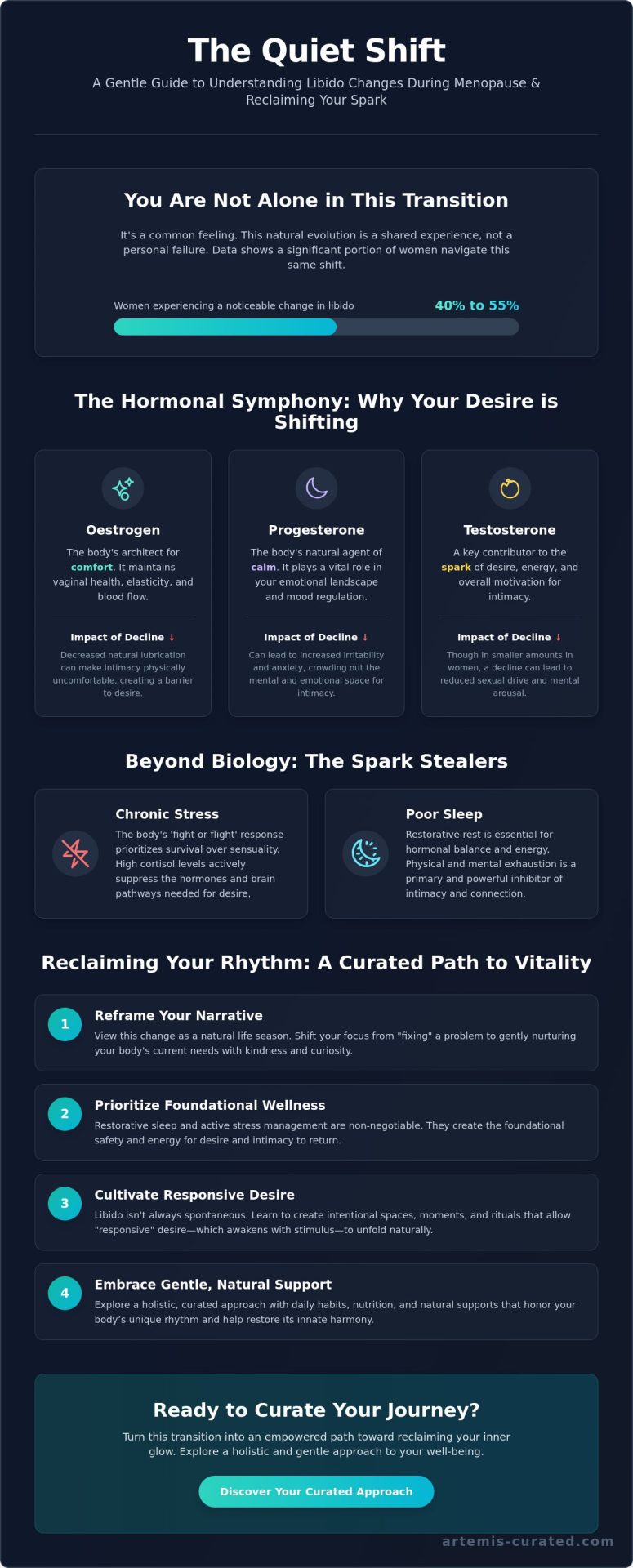
What if the quiet shift in your desire isn’t a sign that you’re broken, but rather a signal that your body is moving into a more contemplative season of self-connection? It’s a common feeling; recent data shows that between 40% and 55% of women experience a noticeable change in libido and menopause together. You might feel a sense of loss or even a strain in your most intimate relationships, wondering why the spark seems to have dimmed. It’s completely natural to feel confused when your body no longer responds with its usual rhythm.
You don’t have to settle for feeling disconnected from your own sensuality. This guide will help you understand the biological reasons behind these changes, including the latest insights from the 2024 International Consultation on Sexual Medicine. We’ll show you how to gently restore your vitality through intentional rituals and natural support that honors your body’s unique narrative. We will explore practical, non-invasive steps to help you feel empowered and vibrant again, turning this transition into a curated journey toward reclaiming your inner glow.
Key Takeaways
- Reframe your changing desire as a natural transition in your life’s narrative rather than a sign that something is broken.
- Understand the biological connection between libido and menopause, specifically how shifting hormones impact both your physical comfort and internal spark.
- Discover why prioritizing restorative rest and managing stress are essential first steps to inviting intimacy back into your daily routine.
- Learn the practical difference between spontaneous and responsive desire to help you intentionally create a space that feels inviting and sensual.
- Explore how a curated approach to wellness can gently support your body’s harmony and help you reclaim your sense of vitality.
The Quiet Shift: Understanding Libido Changes During Menopause
The transition into menopause often arrives with a quiet, subtle shift in how we experience our own bodies. It isn’t a medical failure or a sign that something is broken. Instead, it’s a natural evolution of your internal rhythm. When we speak about libido and menopause, we’re looking at much more than just physical desire. Libido is a complex narrative that includes your mental space for intimacy, your physical arousal, and your emotional willingness to connect. It’s an unfolding story that deserves a gentle, holistic perspective rather than a quick fix. By understanding that your drive is influenced by everything from hormone levels to your quality of sleep, you can start to treat yourself with the reverence you deserve.
Is Low Libido a “Normal” Part of Menopause?
Statistics from current health reports show that you’re certainly not alone in this experience. Approximately 55% of women going through this transition report a noticeable change in their sexual drive. For some, it feels like a temporary lull, while for others, it represents a more significant shift in how they relate to pleasure. This change is often discussed within the context of Understanding Sexual Dysfunction, but in the context of menopause, it’s frequently a result of the body reprioritizing its energy. Recognizing that this is a shared experience can help dissolve the isolation that often follows a drop in desire. You’re simply entering a new phase where desire might need to be rediscovered through different, more intentional rituals. It’s not about getting back to who you were, but rather discovering who you are becoming.
The Emotional Impact of Losing Your Drive
Losing that familiar spark can feel like losing a piece of your identity. Many women describe feeling frustrated or disconnected, as if their feminine essence has faded along with their hormones. This emotional weight is real and deserves to be acknowledged with kindness. Instead of greeting these changes with self-criticism, try to cultivate a friendly dialogue with your body. Acknowledging that you feel “less like yourself” is actually the first step toward reclaiming your vitality. By viewing your well-being as a curated collection of habits and supports, you can begin to shift the focus from what’s missing to what can be nurtured. It’s about moving away from the pressure of performance and toward a soulful appreciation for your body’s current needs. Healing begins when you stop fighting the change and start listening to the story your body is trying to tell.
The Hormonal Landscape: Why Your Desire Might Be Dwindling
When we look at the connection between libido and menopause, we’re really looking at a delicate chemical conversation happening inside you. It isn’t just in your head. Your body is navigating a significant shift in its internal chemistry. The hormonal trifecta of oestrogen, testosterone, and progesterone governs not just your fertility, but your very appetite for life and intimacy. When these levels begin to fluctuate, the narrative of your desire naturally changes too. Understanding this biological shift is the first step toward reclaiming your sense of self without feeling like you’ve lost your essence.
While oestrogen and testosterone often get the most attention, progesterone plays a vital role in your emotional landscape. Often called the body’s natural “calming” hormone, its decline can lead to increased irritability and anxiety. It’s hard to feel sensual when you’re feeling on edge or overwhelmed by the small details of daily life. This drop in progesterone often creates a mental fog that crowds out the space where desire usually lives. When these three hormones are out of sync, it creates a ripple effect that touches every part of your intimate life.
Oestrogen and the Physical Experience of Sex
Oestrogen acts as the body’s natural architect for comfort. It’s responsible for maintaining the health and elasticity of vaginal tissues while ensuring healthy blood flow to the pelvic region. When oestrogen levels drop, natural lubrication often decreases, which can make intimacy feel like a chore rather than a pleasure. Physical comfort is a non-negotiable prerequisite for mental desire. As noted in this guide to Sex After Menopause, addressing these physical changes is essential for maintaining a healthy connection. You can find more detail in our Oestrogen Guide, which explores how this specific hormone balances your overall vitality.
The Role of Testosterone in Female Desire
It’s a common misconception that testosterone is only for men. In reality, women need healthy testosterone levels to maintain their energy, muscle tone, and that initial “spark” of desire. During the perimenopause transition, these levels can dip significantly, which often results in a lack of motivation or a general feeling of being “flat.” Without that hormonal nudge, the spontaneous urge for intimacy might feel like a distant memory. Supporting your body through movement, strength training, and targeted nutrition can help maintain these levels. If you’re looking for a way to gently encourage this internal energy, you might consider exploring curated support designed to help you find your rhythm again. Reclaiming your spark starts with giving your body the foundational elements it needs to thrive.
Beyond Biology: How Stress and Sleep Steal Your Spark
Your body is a master of prioritization. When we talk about libido and menopause, we often focus on the decline of specific hormones, but we forget that desire is essentially a luxury state. Your brain only allocates energy to passion when it feels that the basics, like safety and rest, are fully covered. If you’re dealing with the common menopause brain fog or feeling physically drained, your body will naturally push intimacy to the bottom of the list to save energy for daily survival. It’s not that your desire is gone; it’s just being overshadowed by more urgent needs.
The Cortisol Connection: Why Stress is the Enemy of Desire
Cortisol is the hormone that keeps us alert and reactive. It’s great for meeting deadlines, but it’s a total mood killer for intimacy. When your cortisol levels are constantly high, they effectively mute the signals of arousal. It’s hard to feel sensual when your nervous system is stuck in a loop of fight-or-flight. You can’t just flip a switch from a stressful workday to a romantic evening. Taking twenty minutes to truly decompress, perhaps through a warm bath or quiet reading, is often more effective than any quick fix. Understanding how to manage this rhythm of inner harmony is a vital part of finding your spark again.
Research into Menopause and sexual health highlights that psychological factors and lifestyle stressors are just as influential as physical changes. If your mind is cluttered with a million to-do items, there’s no room for the expansive, playful energy that libido requires. Your body needs to feel a sense of ease before it can open up to the idea of pleasure.
Sleep: The Foundation of Sexual Vitality
It’s almost impossible to feel sexy when you’re exhausted. Many women find that night sweats and the resulting insomnia are the real thieves of their desire. If you haven’t had a solid night’s rest in weeks, your libido and menopause experience will likely be one of frustration. This is why we often suggest that The Art of Sleep is the necessary foundation for The Art of Passion. When you’re well-rested, you have the emotional resilience and physical energy to engage with your partner and yourself. A few nights of deep, restorative rest can do more for your sex drive than you might expect.
Try viewing your evening wind-down as a form of pre-intimacy self-care. It isn’t just about getting to bed; it’s about signaling to your body that the day’s demands are over. You might try:
- Dimming the lights an hour before sleep to encourage melatonin.
- Stepping away from digital screens to quiet the mind.
- Using calming scents like lavender or sandalwood to ground your senses.
By curating a restful environment, you’re essentially inviting your desire back into the room. You can find targeted support for these restorative rituals in our Full Curated collection.
Reclaiming Your Rhythm: Natural Ways to Support Your Libido
Reclaiming your spark isn’t about forcing a feeling or chasing a version of yourself from a decade ago. It’s about curating a lifestyle that makes desire feel welcome again. Many women find that the connection between libido and menopause creates a shift where desire no longer arrives like a sudden lightning bolt. If you’re waiting for that old spontaneous urge to strike, you might feel like something is missing. Instead, it’s helpful to embrace the concept of responsive desire. This is the understanding that desire often grows out of engagement, physical comfort, and emotional connection rather than preceding them. It’s a softer, more intentional way of experiencing intimacy that honors your body’s current pace.
This transition requires a deep well of patience and self-compassion. You aren’t a machine that needs a simple repair; you’re a complex individual navigating a significant life season. By shifting the focus from “fixing a problem” to “nurturing vitality,” you create space for a more soulful connection with yourself. It’s about listening to what your body needs today, whether that’s more rest, better nutrition, or simply a gentler touch.
Nutritional Support for Hormonal Harmony
Your body needs specific raw materials to maintain its internal balance and support healthy blood flow. Zinc is a foundational mineral for hormone production, while Magnesium plays a crucial role in quieting the nervous system so you can stay present in the moment. Many women also find that Maca, a root used for centuries in traditional wellness, provides a gentle boost to energy and stamina. These nutrients work together to support the physical foundations of desire. For a more detailed look at how to support your body during this time, you can explore our Best Supplements for Women guide, which focuses on harmony and long-term well-being.
Sensory Rituals and Reconnecting with Your Body
Sensory experiences are a powerful way to “wake up” your body and remind it of its capacity for pleasure. This doesn’t always have to be about sex. Non-sexual touch, like using a rich body oil or enjoying the texture of high-quality linens, helps ground you in your physical self. Gentle movement is also essential. Practices like yoga or daily walks improve circulation and help you feel more at home in your skin, which naturally boosts body image. By turning your bedroom into a sanctuary for relaxation and connection, you signal to your brain that the day’s demands are over and it’s safe to open up to the idea of passion. If you feel ready to invite this energy back into your life, you can find targeted support in our Full Curated collection.
Curating Your Vitality: The Artemis Approach to Passion
Menopause is often described through the lens of what is being lost, but we prefer to see it as a season of unfolding power. It’s a time when you can step into a more intentional version of yourself, moving away from the frantic pace of your younger years toward a life that is more deeply considered. When you address the intersection of libido and menopause, you aren’t just managing a list of symptoms. You’re choosing to nurture your body’s enduring capacity for pleasure and connection. We see our support as narrative tools, helping you write a new chapter of vitality that feels both soulful and grounded.
True restoration rarely happens in isolation. While it’s tempting to look for a single solution, your body thrives on synergy. This is why we believe in a foundational approach. Before you can truly reclaim your spark, your system needs to feel steady and supported. Establishing this baseline allows your natural energy to surface without being clouded by the daily fluctuations that often accompany this transition.
How Our Passion Blend Works
We designed The Art of Passion with a specific focus on the needs of mature women. This formula doesn’t rely on synthetic shortcuts. Instead, it uses ingredients that support healthy blood flow and a balanced mood. By addressing the physical and emotional aspects of desire together, it helps create the internal environment necessary for intimacy to feel natural again. Every element is chosen with intentionality, ensuring that you’re giving your body exactly what it needs to feel vibrant and awake. It’s about more than just a moment; it’s about sustaining the energy you need to fully engage with your life.
The Full Curated Collection for Total Balance
Your wellness journey is a personal story, and you are its primary curator. We’ve found that the best results come from addressing the whole self. For many women, the journey begins with The Art of Harmony, which provides the essential support needed to balance the fluctuating rhythms of menopause. When you pair this with restorative rest and targeted passion support, you create a comprehensive ritual for living well. Our Full Curated collection is designed to work in concert, covering everything from deep sleep to skin radiance.
You have the power to decide how this season of your life unfolds. By surrounding yourself with supportive rituals and high-quality nourishment, you’re making a definitive statement about your own value. Reclaiming your libido and menopause experience isn’t just about sex. It’s about feeling at home in your skin, confident in your body, and ready to embrace the beauty of your own narrative. You don’t have to rush the process. Take the time to listen to your body, choose your supports with purpose, and enjoy the journey back to your most sensual self.
Embrace Your Unfolding Vitality
Reclaiming your sense of self is a journey that deserves both time and intentionality. We’ve explored how the quiet shift in libido and menopause is shaped by a complex hormonal trifecta and the non-negotiable need for restorative rest. You now know that for the 55% of women experiencing this transition, desire often becomes responsive rather than spontaneous. It’s about creating a quiet space where your body feels safe, nourished, and truly at home. By prioritizing your sleep and managing the stress that mutes your internal spark, you can begin to write a new, more sensual chapter of your life.
Our collection is expertly curated for hormonal harmony, utilizing natural, high-quality ingredients to support your body’s unique rhythm. These formulas are designed by women, for women, ensuring every element serves a meaningful purpose in your wellness journey. You’re the curator of your own vitality, and you don’t have to navigate this season alone. Explore “The Art of Passion” and rediscover your spark today. Your body is ready for this vibrant, beautiful unfolding.
Frequently Asked Questions
Can menopause cause a total loss of libido?
Menopause can lead to a significant drop in sexual drive for about 40% of women, though it’s rarely a permanent “total loss.” While it might feel like your desire has vanished, it’s often in a state of dormancy due to shifting hormones. Your body is simply prioritizing other biological functions during this transition. With a gentle approach and the right support, you can rediscover your capacity for pleasure in a way that fits your current life stage.
How long does low libido last during menopause?
The timeline for these changes varies for every individual; however, many women find that symptoms are most intense during the perimenopause transition, which can last between 4 and 10 years. Once your body reaches a new hormonal baseline in post-menopause, your drive often returns in a different, more intentional form. Focusing on restorative rituals and targeted support can help you navigate this phase without feeling like you’ve lost your essence forever.
Are there natural supplements that actually help with menopause libido?
Specific nutrients like Maca, Zinc, and Magnesium have been shown to support the blood flow and mood necessary for healthy desire. Our Art of Passion blend is intentionally designed to address the unique connection between libido and menopause by providing these foundational elements. These natural supports work best when they’re part of a broader wellness routine that includes rest and self-care. They help create the internal environment your body needs to feel vibrant again.
Does HRT always fix sex drive issues?
Hormone Replacement Therapy isn’t a guaranteed fix for desire because libido is influenced by a mix of physical, mental, and emotional factors. While it can improve comfort by addressing vaginal dryness, it doesn’t always restore the mental “spark” or interest in intimacy. A 2024 study suggests that a biopsychosocial approach, which considers your lifestyle and stress levels, is often more effective than hormones alone. Desire is a complex narrative that requires a more holistic perspective.
What is “responsive desire” and how does it help in menopause?
Responsive desire is a shift where you don’t feel a spontaneous urge for sex until after physical touch or emotional connection has already started. Instead of waiting for a sudden lightning bolt of drive, you allow arousal to build slowly through sensory experiences and presence. This is a common and healthy way to experience intimacy during this season of life. It takes the pressure off “performing” and lets you focus on the actual pleasure of the moment.
How can I talk to my partner about my low libido without it being awkward?
Start the conversation in a neutral, relaxed setting outside of the bedroom to keep the atmosphere low-pressure. You might say, “I’ve been feeling a bit disconnected lately due to hormonal changes, and I’d love to find new ways for us to stay close.” Framing it as a shared journey rather than a personal failure helps reduce any tension. It’s about inviting your partner into your experience so you can curate a new, comfortable rhythm together.
Can stress from work make my menopause symptoms worse?
High stress levels definitely intensify symptoms because cortisol directly competes with your sex hormones, making the link between libido and menopause feel even more challenging. When your body stays in “survival mode” due to work pressure, it deprioritizes things like desire and deep sleep. Research indicates that women with high stress report 50% more severe hot flashes and mood swings. Managing your daily rhythm is essential for keeping your internal landscape calm and inviting.
Is it possible to have a better sex life after menopause than before?
Many women report that their sex lives actually improve after menopause because they feel more confident and free from concerns about pregnancy or periods. Once you understand your body’s new narrative, you can focus on what truly brings you pleasure without the distractions of your younger years. It’s a time of deep self-knowledge and intentional connection. With the right support and a gentle perspective, this season can become your most sensually fulfilling yet.