

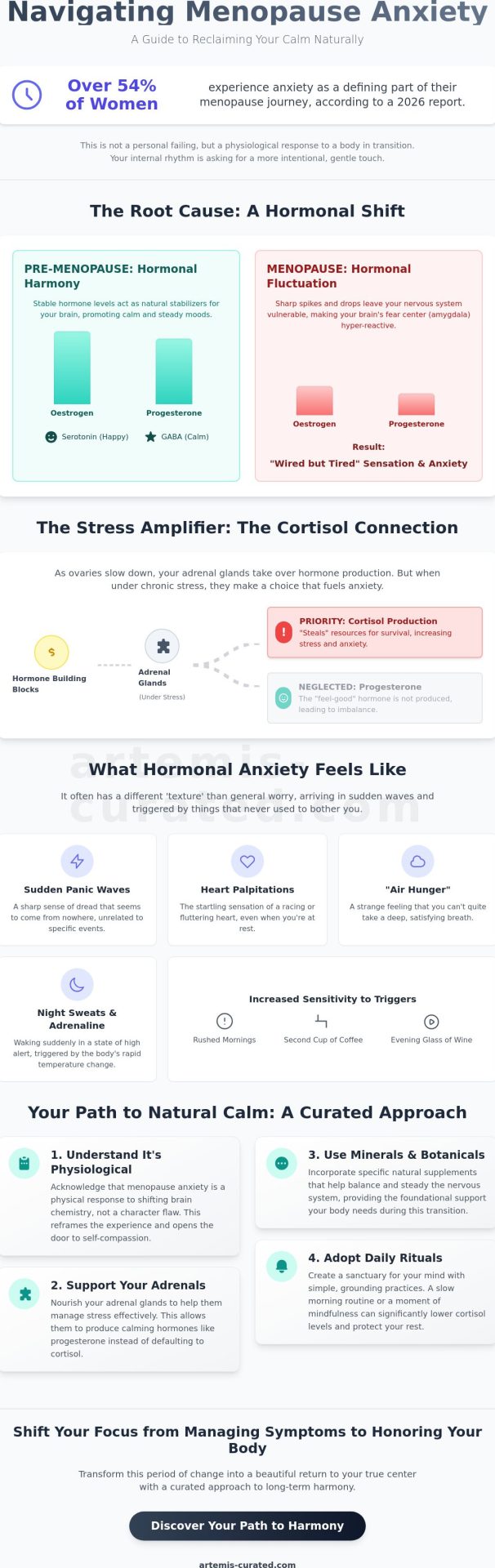
A 2026 report found that over 54% of women now experience anxiety as a defining part of their menopause journey. It often arrives as a sudden, sharp panic during a quiet afternoon or a restless rumination that disrupts the sanctuary of your sleep. If you are wondering how to manage menopause anxiety naturally, you are looking for a way to feel like yourself again. It is deeply unsettling to feel like a stranger in your own skin, but these shifts are simply a signal that your internal rhythm is asking for a more intentional, gentle touch.
You deserve a soulful approach to wellness that combines evidence-based botanical support with daily rituals that ground you. This guide offers a path toward reclaiming your emotional stability and improving your sleep through the art of harmony. We will explore how to calm your nervous system and build confidence in managing physical stress, helping you move through this transition with a sense of refined ease. By choosing a more mindful way of living, you can transform this period of change into a beautiful return to your true center.
Key Takeaways
- Understand that menopause anxiety is a physical response to shifting brain chemistry, not a personal failing, and learn how oestrogen affects your natural calm.
- Discover how to manage menopause anxiety naturally by using specific minerals and botanicals that help your nervous system stay balanced and steady.
- Learn the importance of adrenal health and how supporting these glands can help you maintain emotional stability as your body transitions.
- Adopt simple daily rituals, like a slow morning routine, to help lower your cortisol levels and protect the quality of your rest.
- Shift your focus from simply managing symptoms to honoring your body’s new narrative with a curated approach to long-term harmony.
Understanding the Shift: Why Anxiety Surfaces During Menopause
If you have recently found yourself gripped by a sudden sense of dread while doing something as simple as making tea, please know that this is not a personal failing. It is a physiological response to a body in transition. For many women, the emotional turbulence of this stage feels like losing a familiar version of themselves. This shift is often driven by the way your brain reacts to changing hormone levels. A deeper Understanding Menopause reveals that these fluctuations are not just about hot flushes; they fundamentally alter how we process stress.
Oestrogen and progesterone do much more than manage our reproductive cycles. They are essential for regulating neurotransmitters like serotonin, which keeps us happy, and GABA, which helps us feel calm. When these levels begin to swing during perimenopause, your brain loses its natural stabilizers. This period is often called a window of vulnerability. The sharp spikes and sudden drops in hormones can leave you feeling “wired but tired,” making it difficult to find your usual sense of peace. Learning how to manage menopause anxiety naturally starts with acknowledging that your nervous system is simply navigating a new landscape.
The physical sensations can be just as startling as the mental ones. You might experience heart palpitations that feel like a drum in your chest or a strange sensation of “air hunger” where you can’t quite take a deep enough breath. These are real, documented symptoms of hormonal shifts, not just products of an overactive imagination.
The Neurological Connection
Oestrogen acts as a protective buffer for the brain’s stress response system. When levels decline, the amygdala, which is the brain’s fear centre, can become hyper-reactive. Without that hormonal cushion, everyday tasks might suddenly feel overwhelming or threatening. Oestrogen acts as a vital foundation for serotonin production, ensuring that your mood remains steady even when external stressors arise. When this foundation shifts, your internal world can feel much louder and less predictable.
Identifying Your Anxiety Patterns
Hormonal anxiety often has a different “texture” than general worry. It can arrive in waves of panic that seem to come from nowhere, rather than being tied to a specific life event. Night sweats are a frequent culprit here. They don’t just disturb your rest; the sudden heat can trigger a spike in adrenaline that wakes you up in a state of high alert. You might also find that your tolerance for certain triggers has changed. Common habits like a second cup of coffee, a glass of wine in the evening, or a rushed morning routine can now send your cortisol levels soaring. Recognizing these patterns is the first step toward curating a lifestyle that supports your long-term harmony.
The Cortisol Connection: How Stress Hormones Impact Your Balance
Finding a sense of calm often feels like trying to catch a breeze with your bare hands. It is elusive because your body is undergoing a massive shift in how it manages energy. To understand how to manage menopause anxiety naturally, you have to look beyond the brain and focus on your adrenal glands. These small powerhouses are responsible for maintaining your rhythm of inner harmony, but they are often pushed to their limits during this transition. When your system is flooded with stress, it becomes nearly impossible to maintain emotional poise.
In your younger years, your ovaries did the heavy lifting for hormone production. As they begin to slow down, your adrenal glands take over the task of producing back-up hormones. It is a delicate handover. If you are constantly under pressure, your adrenals will always prioritize survival over balance. They will produce cortisol, the stress hormone, at the expense of everything else. This process effectively “steals” the building blocks your body needs to create progesterone, the very hormone that helps you feel relaxed and grounded.
This biological choice is a major reason why anxiety feels so physical and overwhelming right now. Research into Menopause and Mental Health shows that this hormonal imbalance is a primary driver of emotional distress. You can read more about this in our guide on Cortisol: Curating the Rhythm of Inner Harmony and Vitality. By supporting your adrenals, you give your body the resources it needs to stay level. If you are looking for a gentle way to start this process, The Art of Harmony is specifically designed to support this hormonal shift.
The Adrenal Handover
Adrenal health becomes the true foundation of your wellness once you reach your 50s. Many women try to “push through” the fatigue and worry, but this only increases the physical toll on the body. You might recognize this as the “tired but wired” feeling that hits at 10 PM. Your body is exhausted, yet your mind is racing because your cortisol levels are spiking when they should be dropping. This is a clear sign that your adrenals are struggling to manage the handover from your ovaries.
Restoring the Circadian Rhythm
Restoring your internal clock is essential for reducing those sudden spikes of panic. Your cortisol follows a natural cycle that is heavily influenced by light. Stepping outside for five minutes of morning sunlight helps set your rhythm for the day, while dimming the lights in the evening signals to your brain that it is safe to downshift. These small, natural adjustments help lower the morning cortisol spike that often causes “rushed” feelings. A stable rhythm creates a sense of predictability that your nervous system desperately craves during menopause.
Natural Remedies and Supplements for Menopause Anxiety
When you are exploring how to manage menopause anxiety naturally, it is helpful to view supplements as supportive companions rather than quick fixes. The goal is not to override your body’s signals, but to provide the raw materials it needs to find a new sense of equilibrium. By selecting high-quality, evidence-based botanicals, you can create a foundation of calm that feels both sustainable and gentle. These natural tools work with your biology to soften the edges of the stress response, allowing your true self to shine through the hormonal fog.
Think of adaptogens as biological thermostats for your nervous system. These unique herbs do not force your body in one direction; instead, they help it find a steady “temperature” regardless of the internal or external chaos. Ashwagandha is a standout in this category, known for its significant ability to lower serum cortisol levels. By reducing the physical markers of stress, it helps prevent that frantic feeling that often bubbles up during the day. Rhodiola works alongside it to support mental energy, ensuring you feel capable without feeling overstimulated. The synergy of ingredients found in The art of harmony is specifically designed to respect this delicate internal balance, using curated extracts that honor the body’s changing narrative.
Adaptogens: Nature’s Stress Buffers
Using adaptogens is about more than just dampening anxiety; it is about building resilience. When your hormones are in flux, your body’s ability to “adapt” to even minor stressors is compromised. High-quality botanical extracts act as a buffer, protecting your brain’s fear center from overreacting to daily tasks. This approach is one of the most effective natural ways to ease perimenopause anxiety because it addresses the root of the physiological shift. By choosing well-sourced herbs, you ensure that you are giving your system the purest form of support available.
Mineral Support for a Quiet Mind
Magnesium is often the missing piece in the puzzle of menopausal wellness. It is a mineral that our bodies use rapidly during times of stress, and a deficiency can make you feel jittery and restless. Magnesium Glycinate is the preferred form for those seeking a quiet mind, as it is highly absorbable and specifically targets muscle relaxation and mental calm, unlike the Citrate form which is often used for digestion. Magnesium serves as the quiet gatekeeper of the nervous system, deciding which signals of stress are allowed to pass and which are gently turned away.
To complement this mineral support, L-Theanine is an excellent addition for those who need to stay focused but want to feel at ease. It promotes a state of “relaxed alertness,” which means it calms the mind without causing the midday drowsiness that can sometimes follow other remedies. It is an ideal tool for maintaining your poise during a busy afternoon or before a presentation when you need your thoughts to remain clear and steady. By layering these natural elements, you can learn how to manage menopause anxiety naturally while feeling fully present in your life.
Creating a Sanctuary: Daily Rituals to Calm the Mind
Your home is much more than just a place to live; it is a canvas for your well-being. When you are exploring how to manage menopause anxiety naturally, the way you curate your immediate environment plays a significant role in how your nervous system behaves. By treating your daily habits as intentional rituals, you can create a sense of predictability that helps your mind feel safe and settled. This isn’t about adding more tasks to your to-do list, but about changing the quality of the moments you already have.
A slow morning is a powerful antidote to the cortisol spikes we discussed earlier. Instead of reaching for your phone the second you wake up, try giving yourself ten minutes of quiet. This small window of time prevents your body from entering a “fight or flight” state before you’ve even finished your first cup of tea. Use this time for gentle breathwork. By taking slow, deliberate breaths, you stimulate the Vagus nerve, which acts as a direct line to your brain’s “rest and digest” system. It is one of the most effective ways to exit a state of panic and return to your center.
As the day winds down, consider a digital sunset. The blue light from our screens can interfere with the delicate balance between oestrogen and melatonin, making it much harder for your mind to settle. Turning off your devices an hour before bed protects your evening rhythm. It signals to your body that the world is shrinking to just the walls of your room, allowing your internal clock to sync with the natural world outside.
The Art of the Evening Wind-Down
Focus on the senses to signal to your brain that the day is done. Soft textures, the gentle scent of essential oils, and low, warm lighting can transform a bedroom into a true sanctuary. Journaling is another beautiful way to offload the day’s anxieties, moving them from your mind onto the page so they don’t follow you into sleep. To deepen this experience, The art of sleep provides botanical support that aligns perfectly with a thoughtful night-time ritual.
Mindful Movement Over High-Intensity
While staying active is important, high-intensity workouts can sometimes backfire during menopause by further increasing your cortisol levels. Instead, prioritize mindful movement like walking in nature or restorative yoga. These activities support your hormonal health without placing extra stress on your system. For a deeper look at this balanced lifestyle, explore our guide on Navigating Menopause: A Curated Guide to Holistic Harmony.
If you are ready to begin your journey toward a more peaceful rhythm, you can explore our Full Curated collection for comprehensive support that honors your body’s new narrative.
Curating Your Wellness: The Artemis Approach to Menopause Support
The journey through menopause is often framed as a series of problems to be solved, but we invite you to view it as a conversation with your body. Moving away from the frantic desire to simply “fix” symptoms allows you to begin honouring your body’s new narrative. When you focus on how to manage menopause anxiety naturally, you are essentially choosing to listen to what your nervous system needs during this period of profound change. It is an opportunity to slow down and select the support that truly resonates with your lifestyle.
At Artemis, we believe that wellness is not a one-size-fits-all solution. Our Full Curated collection was created to address the interconnected nature of your well-being. We understand that a restless mind often leads to poor sleep, which in turn affects the radiance of your skin and your overall mood. By taking a holistic view, you can support your body through every facet of this transition. Every ingredient in our collection is intentionally selected for its purity and its ability to work in harmony with your natural biology, ensuring that you receive the highest quality support available.
This phase of life is not a decline, but a powerful transformation. There is a unique strength that comes from navigating these shifts with intention and grace. By curating your environment and your nutrition, you can find a sense of inner harmony that feels both enduring and authentic. You aren’t just getting back to your old self; you are becoming a more resilient, mindful version of who you are meant to be.
The Art of Harmony: Targeted Support
Our specific blend, The Art of Harmony, is designed to address the root causes of the anxiety that often surfaces during menopause. We focus on botanical purity and artisanal-level quality, ensuring that every extract is potent and effective. This blend works to steady your internal rhythm, providing the calm foundation you need to handle daily stressors with ease. We invite you to visit our shop to explore your own personalised wellness edit and discover the support that fits your unique story.
A Holistic Future
Wellness is a long-term commitment that extends far beyond the menopausal transition. As you move forward, the rituals and support systems you build now will continue to serve as the foundation for your health and vitality. Sharing this journey with a community of like-minded women can also provide a sense of connection and strength that makes the path feel much clearer. We would love to stay connected with you as you navigate this new phase of life. Please consider signing up for our newsletter to receive more curated wellness insights and stories delivered directly to your inbox.
Embracing a New Rhythm of Peace
Reclaiming your sense of self during menopause is a journey of small, intentional choices. We have looked at how supporting your adrenal health and embracing the power of light and breath can settle a racing mind. When you understand the science behind these shifts, the path to feeling like yourself again becomes much clearer. Learning how to manage menopause anxiety naturally allows you to move through the day with a newfound confidence, knowing you have the tools to stay grounded and present.
Artemis was founded by wellness experts Milly and Sarah with a clear mission: to provide women with a soulful, evidence-based alternative. Our targeted, high-quality botanical blends offer holistic, hormone-free support that respects your body’s unique story. If you feel called to return to a state of inner poise and emotional stability, we invite you to Explore The Art of Harmony for Menopause Support. You’re entering a season of life that holds immense beauty and potential, and we’re here to help you find your steady center once more. Trust in your body’s ability to find its way back to harmony.
Frequently Asked Questions
Can menopause cause sudden panic attacks out of nowhere?
Yes, menopause can trigger sudden panic attacks because the sharp decline in oestrogen affects the brain’s ability to regulate the fear centre. These episodes often feel very physical, involving a racing heart or a sudden sense of dread during everyday tasks. It is a physiological reaction to shifting brain chemistry, not a sign that you are losing control.
How long does menopause-related anxiety typically last?
The duration of menopausal anxiety varies for every woman, but it is often most intense during perimenopause when hormone levels are at their most erratic. Once your body reaches post-menopause and your hormones settle at a new, lower baseline, these symptoms usually begin to subside. Establishing supportive daily rituals early on can help you navigate this period with more ease and resilience.
Is there a specific vitamin that helps with menopause anxiety?
Vitamin B6 and B12 are particularly effective because they help your brain produce serotonin and GABA, which are essential for a calm mood. Magnesium is also a vital mineral that acts as a natural relaxant for both your muscles and your nervous system. Combining these with a balanced diet provides the raw materials your body needs to maintain emotional stability.
Can I manage menopause anxiety naturally without using HRT?
You can certainly learn how to manage menopause anxiety naturally by focusing on botanical support, mineral supplementation, and lifestyle rituals. Many women find that using adaptogens like Ashwagandha and prioritizing adrenal health allows them to find balance without Hormone Replacement Therapy. It is about curating a personal approach that honours your body’s unique needs and transition.
Why is my anxiety worse in the morning during perimenopause?
Morning anxiety is usually caused by your body’s natural cortisol cycle, which peaks shortly after you wake up to help you start the day. During perimenopause, this spike can become exaggerated, leading to a “rushed” or jittery feeling before you even get out of bed. Implementing a slow morning routine and avoiding immediate screen time can help soften this hormonal surge.
What are the best herbal teas for calming menopause jitters?
Chamomile, Lemon Balm, and Passionflower are wonderful choices for gently soothing the nervous system without making you feel drowsy. These herbs contain natural compounds that help lower stress levels and encourage a sense of quiet. Sipping a warm cup of tea can also serve as a grounding sensory ritual that signals to your mind it is safe to relax.
How does caffeine affect hormonal anxiety during the transition?
Caffeine is a stimulant that can trigger a larger cortisol spike during menopause than it did in your younger years. This can lead to increased heart palpitations and a heightened sense of panic, making it harder for your body to find its natural rhythm. Reducing your intake or switching to herbal alternatives often leads to a noticeable improvement in your daily calm.
What is the “cortisol steal” and how does it affect my mood?
The “cortisol steal” is a process where your body prioritizes making stress hormones over sex hormones like progesterone when you are under pressure. Since progesterone is your body’s natural “calm” hormone, this shift can leave you feeling more anxious and restless. Protecting your adrenal health helps ensure your body has the resources to maintain a more balanced emotional state.