


Your morning coffee shouldn’t feel like a survival tactic for getting through the haze of another restless night. If you’ve spent months feeling on edge or battling persistent brain fog, you’re not alone in seeking a more intentional way to live. Natural wellness standards shifted significantly in April 2026, when Indian regulators banned the use of leaves to ensure only the most potent root extracts are used. Understanding the benefits of Ashwagandha is about more than just following a trend; it’s about curating a personal sense of peace in a world that often feels too loud.
We know how draining it is when your body feels out of sync and your sleep patterns are constantly disrupted. This guide will show you exactly how this ancient adaptogen can help you lower cortisol, improve your sleep quality, and finally reclaim your hormonal balance. We’ll explore the latest 2026 clinical research, including findings from Frontiers in Reproductive Health, to help you move from a state of fatigue to one of quiet, steady vitality.
Key Takeaways
- Learn how this ancient root acts as a natural buffer for your nervous system by steadying your body’s response to stress. It’s an easy way to move out of “fight or flight” mode and back into a state of calm.
- Explore the specific benefits of Ashwagandha for women’s health, particularly how it supports the thyroid and metabolism during major hormonal shifts. This balance is key to overcoming that persistent midday fatigue and brain fog.
- Understand the importance of ritual and why taking this adaptogen consistently is the only way to see real, lasting results for your sleep. We’ve included the latest 2026 dosage guidelines to help you get started safely.
- Find out why the source of your supplements matters more than ever following the 2026 leaf ban. We’ll show you how to spot a high-quality root extract that’s actually pure, effective, and free from fillers.
The Ancient Roots of Modern Calm: What is Ashwagandha?
Ashwagandha isn’t a new discovery. It has served as a pillar of Ayurvedic medicine for over 3,000 years, used by ancient practitioners to help individuals find their footing during times of physical or mental strain. Historically, the raw root was ground into a fine powder and mixed with warm milk or honey. Today, our approach has evolved. We’ve moved beyond simple powders to high-potency extracts that offer more targeted support for a modern lifestyle. This transition is why many experts consider it a foundational piece in the best supplements for women. One of the primary benefits of Ashwagandha is its role as a master adaptogen, a term that describes how it helps your body resist and adapt to stressors without the erratic “crash” associated with modern stimulants.
To understand What is Ashwagandha? is to appreciate its history as a botanical that bridges the gap between ancient wisdom and 2026 science. While the world around us has become faster and more demanding, the biology of our stress response remains largely unchanged. This herb acts as a gentle guide, helping the body navigate the friction of daily life with a sense of quiet authority.
The Science of Adaptogens
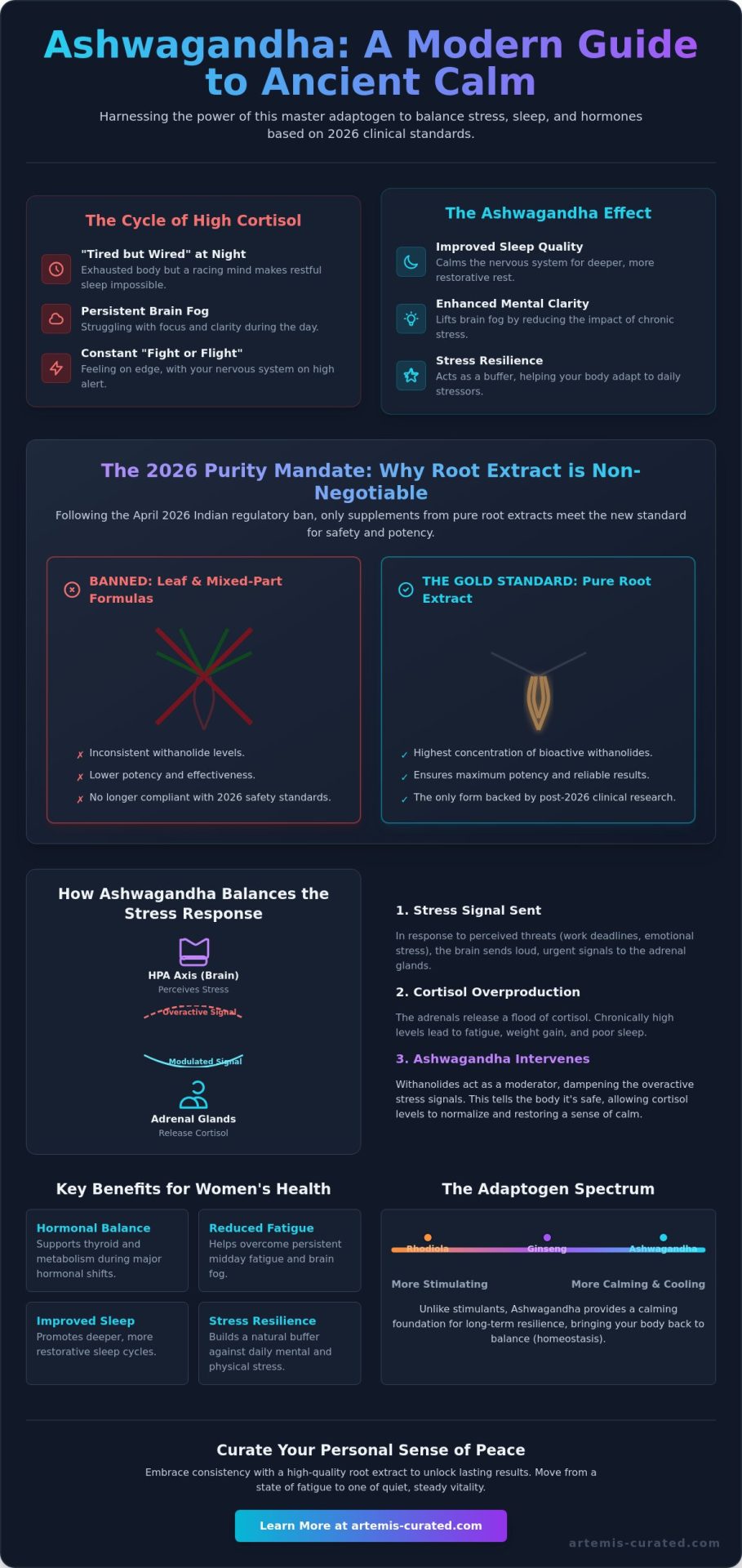
Adaptogens are unique because they don’t force your body in one single direction. While a stimulant like caffeine pushes your heart rate up regardless of what your system actually needs, an adaptogen works to bring you back to homeostasis. It’s about balance. If you’re feeling too wired, it helps you settle. If you’re exhausted, it helps you find a steady, sustainable stream of energy. Unlike Rhodiola, which is often more stimulating, or Ginseng, which can sometimes be too heating for certain temperaments, Ashwagandha is prized for its cooling and calming nature. It provides a long-term foundation for resilience rather than a temporary jolt.
Withanolides: The Active Heart of the Herb
The effectiveness of your supplement comes down to withanolides. These are the bioactive “messengers” that interact with our nervous system to signal a state of safety. In the past, you might have seen various parts of the plant used in supplements. However, as of April 2026, new regulations have shifted the industry to focus strictly on root extracts to ensure safety and potency. This is because the roots contain the most reliable concentration of these vital compounds. When the concentration is right, the herb can effectively communicate with your adrenal glands to lower cortisol. Withanolides are the bioactive “messengers” that interact with our nervous system to encourage a state of physiological harmony. Understanding these compounds is essential to seeing the true benefits of Ashwagandha in your daily ritual.
Understanding the Mechanism: How Ashwagandha Balances Your Stress Response
Your body operates on a delicate internal rhythm, governed by a constant conversation between your brain and your adrenal glands. Scientists call this the HPA axis. When life feels overwhelming, this communication line gets jammed. Your brain sends a signal that you’re in danger, and your adrenals respond by flooding your system with hormones. It’s a useful response if you’re escaping a physical threat, but in 2026, most of our “threats” are digital pings and endless to-do lists. This keeps your “fight or flight” response permanently switched on, making it nearly impossible to find a sense of cortisol and inner harmony.
The benefits of Ashwagandha lie in its ability to act as a gentle moderator for these loud stress signals. It doesn’t just mask the feeling of being overwhelmed; it actually works to dampen the overactive chemical messages traveling through your nervous system. By quieting this internal noise, the herb allows your body to remember what it feels like to be at rest. It’s about moving away from a state of constant reaction and back into a space of intentionality.
Taming the Cortisol Spike
When cortisol remains high for too long, it begins to deplete your vitality. You might notice you’re carrying extra weight around your midsection, or perhaps you’re struggling with skin that looks dull and tired. This leaden feeling is often described as being “tired but wired,” where you’re exhausted but your mind won’t stop racing at 2:00 AM. Recent research-supported health benefits indicate that consistent use of high-quality root extracts can lower serum cortisol levels significantly. In fact, various 2025 clinical reviews found that participants taking standardized root extracts saw cortisol reductions ranging from 22% to 30% over a 60 day period. Lowering this hormone is the first step in resolving that frantic, edge-of-burnout feeling.
Supporting the Nervous System
Beyond hormones, the benefits of Ashwagandha extend to your neurotransmitters. The herb is known to interact with GABA receptors, which are essentially the “brakes” of your nervous system. When these receptors are supported, you experience a natural sense of tranquility and a reduction in the brain fog that often accompanies chronic stress. A calmer internal environment isn’t just about feeling better; it’s about giving your brain the clarity it needs to focus on what truly matters. If you’re ready to start your own journey toward this kind of balance, you might choose to explore the Full Curated collection for a more holistic approach to daily wellness.
Beyond Stress: The Specific Benefits for Women’s Hormonal Health
Stress isn’t an isolated event. For women, it’s deeply entwined with the endocrine system, affecting everything from your mood to your metabolism. The benefits of Ashwagandha shine when we look at how it supports this complex dance of hormones through every stage of life. Research on Ashwagandha and the endocrine system suggests it helps stabilize the thyroid; this is essentially the engine of your energy and vitality. If you’ve been feeling out of balance, you might notice certain signs that your system is struggling under the weight of chronic stress:
- Persistent fatigue that doesn’t lift even after a full night’s sleep
- Feeling unusually cold in your hands and feet
- Unexplained changes in your weight or skin texture
- A general sense of mental fog or “heaviness” that clouds your day
Reclaiming your vitality starts with managing these internal signals. When your body finally feels safe and supported, your libido and energy levels naturally begin to return. It’s about creating space for your body to thrive rather than just survive. This is particularly vital when navigating menopause, a transition that requires a steady hand and a gentle, natural approach to wellness. By choosing supplements with the same intentionality you use to curate your living space, you invite a sense of order back into your biology.
Supporting Perimenopause and Menopause
The shift in oestrogen levels can often leave you feeling like a stranger in your own skin. One of the most appreciated benefits of Ashwagandha is its ability to reduce the intensity of hot flushes and night sweats by steadying the adrenal response. It helps manage the irritability and mood swings that often arrive uninvited during this time. Because it doesn’t contain hormones itself, it’s a soft, plant-based alternative for those seeking natural support. It works with your system to smooth out the sharp edges of hormonal fluctuations, making the transition feel more like an unfolding than a disruption.
Deepening the Quality of Rest
The Latin name for the plant, Withania somnifera, literally means “sleep-inducing.” It’s a beautiful nod to its long history as a remedy for restlessness and fragmented sleep. By lowering evening cortisol levels, it helps you fall asleep faster and stay in those restorative deep sleep stages longer. A 2026 study in Frontiers in Reproductive Health highlighted that root extracts improved sleep quality in menopausal women by 42% over a 12 week period. This isn’t about sedation; it’s about creating the right internal conditions for your body to repair itself. Better rest means you wake up with a clearer mind and a more resilient spirit for the day ahead.
Integrating Ashwagandha into Your Daily Ritual: Dosage and Safety
Adopting a new wellness practice is an act of patience. Unlike a cup of tea that offers immediate warmth, the benefits of Ashwagandha reveal themselves slowly as they integrate with your body’s natural rhythms. It isn’t a quick fix for a single bad day; it’s a foundational support that works best when taken consistently over several weeks. Most people begin to notice a shift in their internal volume, a quietening of the mental chatter, after about 30 to 60 days of daily use. Whether you choose to take it as part of your morning coffee ritual or as a way to settle in the evening, the goal is to create a steady, reliable presence in your system.
Research from early 2026 suggests that timing can influence the specific benefits of Ashwagandha you experience. If your main goal is building stress resilience to navigate a demanding workday, a morning dose helps support your HPA axis as you face the day’s first pings and pressures. Conversely, taking it an hour before bed can help signal to your brain that the day’s work is done. This evening ritual lowers cortisol levels that might otherwise keep you staring at the ceiling at midnight. To find the right fit for your lifestyle, you can shop the Full Curated collection and discover which blend aligns with your personal needs.
Finding Your Ideal Dosage
The standard recommendation in 2026 for high-potency root extracts is between 300mg and 600mg per day. It’s always wise to start at the lower end of that range. This “low and slow” approach allows you to observe the subtle changes in your mood and energy without overwhelming your system. There’s a significant difference between raw root powder and standardized extracts like KSM-66. While powder is traditional, standardized extracts ensure you’re getting a consistent concentration of withanolides in every serving. Keep a simple journal for the first month to track your progress; you might find that your focus feels sharper or that your reaction to a stressful email is much calmer than it was four weeks prior.
Safety and Considerations
While this herb is a gentle ally for many, it isn’t for everyone. Because it can stimulate the thyroid, anyone with a thyroid condition or an autoimmune issue should have a conversation with their GP before starting. It can also interact with certain medications, including sedatives or immunosuppressants. Safety is a vital part of any wellness narrative, so it’s best to avoid using ashwagandha during pregnancy or while breastfeeding, as there isn’t enough long-term data to guarantee safety for the little ones. Respecting these boundaries ensures that your journey toward vitality remains a safe and restorative one.
Curating Your Harmony: Why Quality and Sourcing Matter
Choosing a supplement is a deeply personal decision that should be made with the same intentionality you bring to any other part of your life. In a market often crowded with mass-produced options, the true benefits of Ashwagandha are only as reliable as the soil the herb grew in. Purity isn’t just a marketing term; it’s a commitment to your long-term health. Following the April 2026 ban on ashwagandha leaves in India, it has become even more vital to look for brands that offer full transparency. You want to ensure your extract is derived exclusively from the root, where the concentration of active compounds is most stable and safe.
When you explore the Artemis Curated shop, you’ll find that we prioritize a holistic wellness narrative over fleeting trends. We look for extracts that are organic, non-GMO, and rigorously tested for heavy metals. This level of detail ensures that what you’re putting into your body possesses a clear provenance and a high level of integrity. By focusing on quality over quantity, you can move away from the noise of over-supplementation and toward a more focused, meaningful routine that actually delivers results.
The Artemis Standard
Our approach is rooted in a profound respect for the history of the plant and the hand of the maker. We don’t believe in one-size-fits-all solutions. That’s why we’ve chosen specific, research-backed concentrations for our “Art of Harmony” and “Art of Sleep” collections. These blends are designed to respect the natural potency of the root while supporting ethical supply chains. By partnering with artisanal growers who value sustainable practices, we ensure that the journey from the field to your home is handled with care. It’s a professional standard that feels intimate because it honors the human element behind the science.
Your Next Steps Toward Balance
We invite you to view your daily supplement routine as a mindful practice rather than a chore. It’s a quiet moment in your day to check in with yourself and acknowledge your progress. For those seeking more comprehensive support, our curated bundles offer a cohesive way to address stress, sleep, and hormonal shifts simultaneously. This layered approach allows the different botanicals to work in tandem, creating a more robust sense of vitality. As you begin this journey, remember to listen closely to your body’s unfolding needs as you rediscover your natural rhythm.
Begin Your Journey Toward Vitality
Reclaiming your sense of calm doesn’t happen overnight, but it starts with one intentional choice. We’ve explored how this ancient root helps you manage the HPA axis and supports your thyroid to keep your energy levels steady throughout the day. By choosing high-quality root extracts, you’re giving your system the reliable support it needs to stay resilient against the pressures of 2026. The benefits of Ashwagandha are truly most powerful when they become a consistent, quiet part of your daily wellness narrative.
Founders Milly and Sarah have expertly curated each blend in our shop to ensure they meet the highest standards for ethical sourcing and high potency. Every product is designed specifically for women’s hormonal health, providing a natural bridge to the internal harmony you’ve been seeking. We invite you to Explore the Full Curated Collection for your wellness journey and discover a ritual that honors your body’s unique needs. You’re ready to move forward with a renewed sense of vitality and a clearer mind.
Frequently Asked Questions
How long does it take for ashwagandha to start working?
You’ll likely start noticing subtle shifts in your mood after about 30 days, but the most significant changes usually happen between weeks 8 and 12. It’s a slow acting herb that builds up in your system over time. Consistent use allows the active compounds to work with your body’s natural chemistry to create a more resilient and steady stress response.
Can I take ashwagandha every day, or should I cycle it?
Most people take ashwagandha daily to maintain a steady internal state, though some prefer to take a one week break every few months. There’s no clinical requirement to cycle it for safety, but listening to your body’s rhythm is always a good practice. If you find your stress levels are naturally lower during a holiday, you might choose to pause your routine then.
Is it better to take ashwagandha in the morning or at night?
It depends on your goals; take it in the morning for daytime resilience or an hour before bed to support deep rest. If you’re using it to combat a hectic work schedule, an early dose helps buffer your cortisol levels. For those focused on the sedative benefits of Ashwagandha, an evening ritual is much more effective for settling the mind before sleep.
Does ashwagandha interact with HRT (Hormone Replacement Therapy)?
You should always consult your GP before combining ashwagandha with Hormone Replacement Therapy. While many women use both, the herb can influence hormone levels, so professional guidance is necessary to ensure they work together safely. While we offer natural support like “The Art of Harmony,” please remember that we don’t sell or provide clinical advice on HRT.
Can ashwagandha help with perimenopause weight gain?
Yes, it can help by lowering cortisol, which is often responsible for stubborn midsection weight during perimenopause. High cortisol levels signal your body to store fat for “emergencies” that never actually come. By calming this signal, you make it easier for your metabolism to function normally and for your energy to return as your body moves out of survival mode.
What should I look for on a supplement label to ensure quality?
Look for “100% Root Extract” on the label to comply with the April 2026 safety regulations regarding leaf content. You should also check for a standardized withanolide percentage, typically between 2.5% and 5%. Reputable brands will also provide proof of third party testing for heavy metals and purity to ensure you’re getting a clean, effective product that respects the plant’s history.
Are there any foods I should avoid when taking ashwagandha?
There aren’t specific foods to avoid, but you should be cautious with alcohol or other sedatives. Because ashwagandha has a naturally calming effect on the nervous system, it can increase the drowsiness caused by these substances. Taking your supplement with a small amount of healthy fat, like a splash of milk or some almond butter, can actually help your body absorb the nutrients more effectively.
Can ashwagandha help with anxiety-related heart palpitations?
It can help by lowering the overall “noise” in your nervous system that leads to that fluttering feeling in your chest. One of the primary benefits of Ashwagandha is its ability to support GABA receptors, which act as a natural brake for your heart rate during stressful moments. It’s about creating a quieter internal environment so your body doesn’t overreact to every digital ping or deadline.