


Last Tuesday at 7:00 AM, Sarah stood by her window in the Cotswolds, watching the morning mist lift, yet her body felt heavy and rigid. Instead of her usual sun salutation, she found herself gripping the banister just to descend the stairs. It’s a quiet, frustrating theft of movement. You likely know this feeling well. It’s difficult when your spirit wants to move, but your knees and hips seem to have aged twenty years overnight. According to data from the British Menopause Society, roughly 70% of women experience these musculoskeletal aches during their transition. Many find that traditional options fall short, leading them to seek out effective herbal remedies for menopause joint pain that offer a more gentle, holistic path.
You can reclaim that sense of fluidity and comfort in your own home. This guide will show you how to soothe those sharp edges of discomfort and return to the hobbies you love, whether that’s a long walk or a quiet morning of gardening. We’ll look at the science behind specific herbs like turmeric and devil’s claw, while exploring the lifestyle shifts that help you move with ease once again. It’s time to feel empowered in your own skin.
Key Takeaways
- Understand why your joints feel different during menopause and the vital role oestrogen plays in keeping them cushioned and lubricated.
- Discover the most effective herbal remedies for menopause joint pain and learn why choosing high-quality, standardised extracts is essential for relief.
- Learn why movement is often the best medicine and find simple, low-impact ways to keep your body feeling supple and comfortable.
- Find out how to create a consistent daily ritual that turns supporting your health into a rewarding act of self-care.
- Reclaim your daily comfort by learning how to support your body naturally through this transition with confidence and ease.
Why Do My Joints Hurt? Understanding Menopause Joint Pain
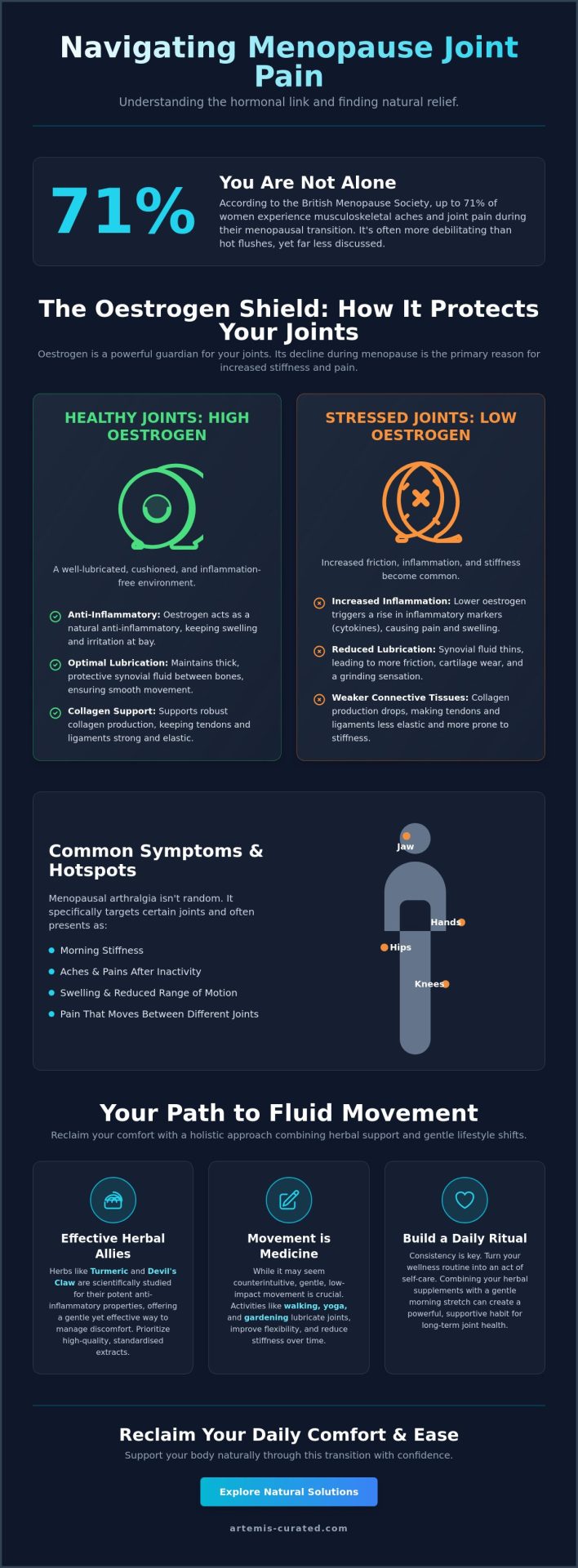
If you’ve been waking up feeling like your body belongs to someone decades older, you aren’t alone. That sharp ache in your knees or the persistent stiffness in your fingers isn’t just in your head. It isn’t a simple byproduct of getting old either. It’s a physiological shift. Understanding Menopause involves recognising that joint pain affects approximately 71% of women during this transition, according to data from the British Menopause Society. This symptom is often overshadowed by hot flushes in public conversation, yet it can be one of the most debilitating hurdles to daily life.
Think of your hormones, specifically oestrogen, as a protective buffer for your physical frame. Oestrogen helps regulate fluid levels in the body and keeps inflammation at bay. When these levels fluctuate during perimenopause, that natural cushioning thins. You might notice the “morning stiffness” phenomenon, where those first few steps out of bed feel heavy and restricted. This is why many women begin looking for herbal remedies for menopause joint pain to restore that lost sense of fluidity and ease.
Is it Menopause or Something Else?
It is vital to distinguish between standard osteoarthritis and what clinicians call menopausal arthralgia. While osteoarthritis is often caused by wear and tear over many years, menopausal arthralgia is specifically linked to the hormonal dip. It commonly targets the hands, knees, hips, and even the jaw. A study published in the journal Postreproductive Health found that joint pain is frequently the primary reason women seek medical advice during the menopausal transition. Always have a chat with your GP to rule out other inflammatory conditions, such as rheumatoid arthritis, before exploring new wellness routines.
The Emotional Impact of Physical Stiffness
When your body feels rigid, your world can feel smaller. Losing the ability to go for a brisk morning walk or spend an afternoon in the garden impacts your mental health and your sense of self. Menopausal arthralgia is technically defined as a temporary hormonal dip that increases joint sensitivity and pain. It doesn’t have to be your permanent reality. Finding ways to reclaim your rhythm is about more than just physical comfort; it’s about maintaining your connection to the activities that make you feel alive.
You can explore a range of supportive options in our curated shop to help bring movement back into your daily narrative and stay active on your own terms. Using herbal remedies for menopause joint pain can be a gentle, effective way to support your body through this change. Reclaiming your mobility allows you to move through your home and the world with the grace and intention you deserve.
How Oestrogen Acts as a Natural Shield for Your Joints
Think of oestrogen as more than just a reproductive hormone. It’s a silent guardian for your skeletal structure. In the years leading up to menopause, this hormone works hard to keep your joints supple. It acts as a powerful anti-inflammatory agent, dampening down the fires of irritation before they start. This protective barrier is why many women don’t experience significant stiffness until their levels begin to fluctuate.
One of its most vital roles is maintaining synovial fluid. This is the thick, yolk-like liquid that sits in the gaps between your bones. It provides essential lubrication. Without enough oestrogen, this fluid can thin out. This leads to increased friction and wear on the cartilage. Cartilage is the shock absorber of the body. When it thins, every step or movement can feel a little more laboured. Every joint depends on this slick cushioning to function without pain.
Oestrogen also supports collagen production. Collagen is the glue that holds your connective tissues together. When levels drop, tendons and ligaments lose their elasticity. A 2022 study in the journal Postreproductive Health noted that joint pain affects up to 70% of women during the menopausal transition. This makes finding effective herbal remedies for menopause joint pain a priority for those looking to maintain an active lifestyle.
The Oestrogen-Inflammation Connection
Lower levels of oestrogen often trigger a rise in inflammatory markers like cytokines. To understand this, imagine oestrogen is like the oil in an engine. It keeps all the moving parts sliding past each other without heat or grinding. When the oil runs low, things start to seize up and get hot. This is exactly what happens in your knees, hips, and fingers. You can learn more about this biological process in our guide on Understanding Oestrogen. Using herbal remedies for menopause joint pain can help address this internal heat naturally.
Why Progesterone Matters Too
Progesterone is the calming partner to oestrogen. It helps muscles relax and promotes deep, restorative sleep. When progesterone levels fall, sleep often becomes fragmented. Research shows that poor sleep quality can actually lower your pain threshold. This makes existing joint discomfort feel much more intense. Low progesterone can also lead to higher cortisol levels. Cortisol is the body’s stress hormone; high levels are known to aggravate systemic inflammation. If you’re feeling the physical strain of these shifts, you might find comfort in exploring our curated collection of wellness supports designed for this transition.
The Best Herbal Remedies for Menopause Joint Pain
Choosing the right support for your body requires a move toward intentionality. When exploring herbal remedies for menopause joint pain, the focus shifts from quick fixes to a slow, restorative process. Clinical research, including data published in the British Journal of Sports Medicine, suggests that certain botanicals offer a valid alternative to traditional anti-inflammatories. Quality remains the defining factor. You should prioritise standardised extracts, which guarantee a specific amount of the active compound, rather than simple ground powders that lack potency. This ensures the narrative of your healing is built on a foundation of efficacy.
Patience is a necessary companion in this journey. These plants work by gently altering biological pathways, a process that typically requires 4 to 8 weeks of consistent use to reach a therapeutic level in your system. It’s vital to check for interactions with other medications, especially if you take blood thinners or blood pressure treatments. Professional guidance helps ensure your natural path remains a safe one.
Top 5 Herbs for Joint Support
- Turmeric (Curcumin): This vibrant root is a master of inflammatory control. It works by inhibiting the NF-kB protein, a major trigger for joint swelling. Look for extracts containing 95% curcuminoids for the best results.
- Ginger: Known for its traditional warming qualities, ginger improves circulation to stiff areas. A study in Phytotherapy Research found it can reduce joint pain by up to 30% in many participants.
- Black Cohosh: While famous for hot flushes, this herb helps balance the hormonal shifts that lead to “menopause aches.” It offers a subtle, systemic support for the musculoskeletal system.
- Devil’s Claw: Native to Southern Africa, this herb contains harpagosides. These compounds are specifically effective for lower back and hip discomfort, often showing results comparable to conventional tablets in clinical trials.
- Rosehip: These small fruits are rich in galactolipids and Vitamin C. They protect the cartilage from oxidative stress, helping to maintain the integrity of the joint over time.
Phytoestrogens: Nature’s Hormone Mimics
Phytoestrogens are plant-based compounds that mimic oestrogen. Red clover and soy isoflavones are particularly skilled at binding to oestrogen receptors throughout the body. By doing so, they help “trick” the system into maintaining the production of synovial fluid. This fluid acts as a tactile lubricant, ensuring that joints glide smoothly rather than grinding. In the UK, many women find that a daily intake of 40 to 80mg of red clover provides a noticeable reduction in the dry, stiff sensation often felt in the mornings. You can find high-quality options through a curated selection of wellness supports that prioritise purity and provenance. These botanical mimics provide a gentle bridge, allowing your body to transition through hormonal shifts with greater ease and comfort.
Easy Lifestyle Changes to Help Your Joints Feel Better
While herbal remedies for menopause joint pain provide a wonderful foundation, they perform their best work when your daily environment supports them. Think of your body as a living space that requires intentional care to remain fluid and comfortable. Choosing the right herbs is a powerful first step, but the narrative of your recovery is written through your daily habits. Small, soulful shifts in how you eat and move can amplify the healing properties of your botanical choices.
Hydration plays a vital role that many overlook. Cartilage is approximately 80% water; it relies on this moisture to remain soft and resilient. When we’re dehydrated, these tissues lose their elastic quality, which often leads to increased friction and a dull ache in the knees or hips. Drinking filtered water throughout the day ensures your joints stay cushioned. It’s about creating a sense of internal flow that matches the grace you want to feel in your movements.
The Anti-Inflammatory Kitchen
The foods you welcome into your kitchen act as the silent partners to your herbal routine. Refined sugars and processed snacks are often the hidden architects of systemic inflammation. A report from the British Journal of Nutrition suggests that diets high in refined carbohydrates can increase inflammatory markers like C-reactive protein by 20% or more. To counter this, focus on Omega-3 rich foods like mackerel, sardines, or flaxseeds. These healthy fats help soothe the fire of inflammation from the inside out.
Try to eat the rainbow by filling your plate with deep purples, vibrant oranges, and rich greens. These colours represent a diverse range of antioxidants that protect your joint tissues from oxidative stress. Replacing your morning coffee with a warm cup of ginger or turmeric tea is another simple way to add an extra herbal boost to your day. These spices have been used for centuries to support mobility and offer a gentle, warming start to your morning ritual.
Movement That Doesn’t Hurt
Movement is medicine, but it doesn’t have to be strenuous to be effective. Synovial fluid acts as a natural lubricant for your joints, yet it doesn’t have its own pump. It relies entirely on movement to circulate and nourish the cartilage. This is the “use it or lose it” principle in action. If we remain sedentary, that fluid becomes stagnant, making our first steps in the morning feel stiff and weathered.
Low-impact activities like swimming, Pilates, or cycling are ideal for keeping the body moving without placing undue stress on sensitive areas. These practices encourage a full range of motion while respecting your body’s current boundaries. For more inspiration on creating a balanced lifestyle during this transition, you can explore our Navigating Menopause Guide. It offers a deeper look at how to harmonise your physical health with your personal sanctuary.
By treating your body with the same intentionality you bring to a well-curated home, you create the perfect conditions for lasting relief. If you’re ready to support your journey with high-quality botanical blends, explore our curated collection of wellness essentials designed for the discerning woman.
Creating Your Own Ritual for Menopause Support
Taking your daily supplements shouldn’t feel like another tedious task on a long to-do list. Instead, try to view it as a quiet moment of restoration in your busy day. When you choose herbal remedies for menopause joint pain, you’re making a gentle commitment to your future comfort. It’s a small, intentional act that signals your well-being is a priority. This shift in mindset transforms a routine into a ritual, making the process feel as nourishing as the ingredients themselves.
Consistency is the secret to success with natural botanicals. Unlike synthetic options that might offer a quick, temporary fix, herbs work with your body’s internal systems over time. Research often shows that it takes between 60 and 90 days of regular use to notice a significant change in joint mobility. It’s a slow, steady process of building up support. If you miss a day, don’t worry. Just return to your rhythm the next morning. The goal is long-term ease, not overnight perfection.
Why Curation Matters in Wellness
We created “The Art of Harmony” to take the guesswork out of your routine. The world of supplements is often noisy and confusing, filled with endless options that don’t always play well together. We focus on selecting ingredients that complement one another, ensuring every capsule or tincture serves a specific purpose. Our formulations are designed for the modern woman who values purity and effectiveness. We believe that by narrowing your focus to high-quality, intentional blends, you can achieve better results with fewer products.
Your Next Steps to Harmony
Starting a new health journey can feel overwhelming if you try to do everything at once. We suggest beginning with just one or two small changes to your daily life. This allows you to listen to your body and see how it responds to different herbal remedies for menopause joint pain. It’s about finding what feels right for your unique story. If you’re ready to explore a more mindful approach to your health, you can browse our collection at the Artemis Curated Shop for targeted support.
You’ve spent years caring for others and building your life. Now, it’s your turn to be supported. You deserve to move through your days with grace and physical freedom. By choosing quality ingredients and staying consistent, you’re reclaiming your ability to move with ease. Your body has a deep wisdom; sometimes it just needs the right natural tools to find its balance again.
Step Into a More Comfortable Tomorrow
Navigating the physical shifts of midlife requires a blend of patience and purposeful action. You’ve discovered how the decline in oestrogen impacts your joint health, yet you don’t have to let stiffness define your days. By incorporating targeted herbal remedies for menopause joint pain, you can provide your body with the botanical support it needs to maintain flexibility and ease. Data from the British Menopause Society shows that nearly 40% of women experience these symptoms, making it a common hurdle that deserves a thoughtful, natural response.
Milly and Sarah have expertly curated a selection of high-purity herbal extracts specifically for this season of life. These formulas are designed for women by women, ensuring that every drop supports your wellness journey with integrity and care. It’s about more than just managing symptoms; it’s about creating a daily ritual that celebrates your strength and restores your sense of balance. Take the next step toward a more fluid way of living today.
Explore The Art of Harmony for holistic menopause support
You have the power to reclaim your movement and enjoy a life that feels vibrant and free.
Frequently Asked Questions
Does menopause joint pain eventually go away?
Most women find that joint pain eases as they move into post-menopause and their hormone levels stabilise. A 2018 study published in Post Reproductive Health indicates that while symptoms can peak during perimenopause, they often settle within 2 to 5 years after the final period. Staying active and using herbal remedies for menopause joint pain helps maintain flexibility during this transition. It’s a natural shift that leads to more comfort.
Can I take herbal remedies for joint pain alongside HRT?
You can often combine natural support with Hormone Replacement Therapy, but it’s vital to speak with your GP or a pharmacist first. Some herbs like St John’s Wort can interfere with how the body processes HRT. According to the NHS, roughly 1 in 4 women in the UK use both prescribed and over-the-counter options. A professional can help you curate a safe routine that avoids any unwanted interactions.
How long does it take for turmeric to work for menopause joint pain?
You should expect to see a difference in about 4 to 8 weeks if you take it every day. Turmeric relies on building up curcumin levels in your system to lower inflammation. Research in the Journal of Medicinal Food shows that 1,000mg of curcumin daily significantly reduced joint stiffness in 8 weeks. It isn’t an instant fix, so consistency is key to seeing a real change in how you move.
Is magnesium good for menopause joint aches?
Magnesium is excellent for easing joint aches because it helps muscles relax and supports bone density. The UK government’s dietary guidelines suggest an intake of 270mg per day for women. Since about 10% of women in the UK don’t get enough magnesium from food alone, a supplement can fill that gap. It’s a simple, intentional way to care for your skeletal health during this season of life.
Are there any side effects to taking black cohosh for joints?
While black cohosh is generally safe, some people experience mild side effects like upset stomachs, rashes, or headaches. The European Medicines Agency notes that these symptoms occur in fewer than 1 in 1,000 cases. You should always choose a product with the Traditional Herbal Registration (THR) mark in the UK. This ensures the remedy meets specific safety standards and has a clear history of use.
What is the best time of day to take menopause supplements for joints?
Taking your supplements in the morning with breakfast is usually the best way to stay consistent. Several herbal remedies for menopause joint pain, like turmeric or ginger, are fat-soluble, so they absorb better when eaten with a meal containing healthy fats. Setting a morning ritual helps you remember your dose and ensures the nutrients are available to support your movement throughout the day.
Can dehydration make menopause joint pain worse?
Dehydration definitely makes joint pain feel worse because your cartilage is roughly 80% water. When you’re dehydrated, the lubrication in your joints thins out, leading to more friction and discomfort. A 2021 survey found that 60% of UK adults don’t drink the recommended 6 to 8 glasses of fluid daily. Keeping a glass of water nearby is a simple, soulful act of self-care that protects your mobility.