


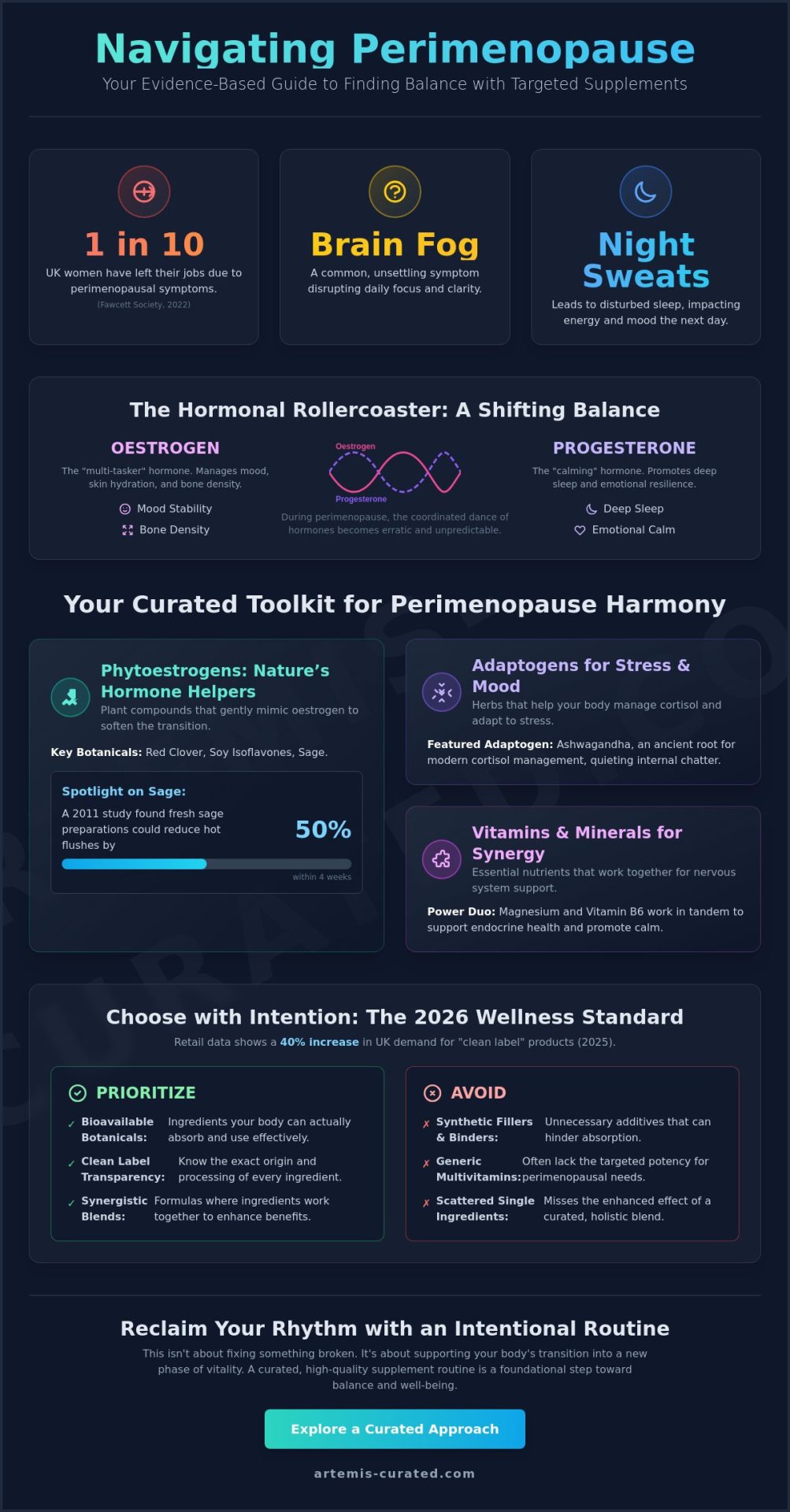
What if those sudden 3:00 am wake-ups and that inexplicable sense of “brain fog” aren’t just signs of a busy life, but a call to refine your daily rhythm? It’s unsettling to feel like your own body is becoming a stranger, especially when a 2022 report from the Fawcett Society found that one in ten women in the UK have left their jobs due to the impact of these changes. You’ve likely spent hours searching for answers while dealing with night sweats that leave you feeling drained before the day even begins. We understand the frustration of encountering conflicting advice when all you want is to feel like yourself again. Finding the right perimenopause supplements shouldn’t feel like a chore, but rather an intentional step toward balance.
You deserve a clear, evidence-based path to reclaiming your energy and sense of calm. We’ve curated this guide to help you move through this transition with confidence and grace. You will discover how a thoughtful selection of vitamins and minerals can steady your mood and improve your sleep. We’ll look at the latest research for 2026, focusing on quality ingredients that provide real results. By the end, you’ll have a simple, effective wellness routine that fits seamlessly into your morning, allowing you to focus on what truly matters.
Key Takeaways
- Learn why your body needs more than a standard multivitamin during this “second puberty” and how to support your hormones naturally.
- Discover how to choose high-quality perimenopause supplements by focusing on bioavailable botanicals rather than synthetic additives.
- Find out how to track your own symptoms to decide whether your daily routine should prioritise energy or calm.
- Learn how to build a supportive ritual around your supplements, including simple ways to improve your sleep and rest.
- Explore a curated approach to nutrition that simplifies your routine and focuses on quality ingredients that actually work.
Understanding the Perimenopause Shift: Why Your Body Needs New Support
Perimenopause is often described as a “second puberty,” and for good reason. It’s a period of intense hormonal recalibration that can feel like a sudden storm after years of calm. Your body isn’t failing; it’s simply changing its requirements. While a standard multivitamin might have served you well in your 30s, it often lacks the targeted potency needed for this specific life stage. According to a 2024 survey of UK women, 30% reported that general vitamins failed to address their primary perimenopausal symptoms like fatigue and night sweats.
Finding the right perimenopause supplements isn’t about fixing something broken. It’s about finding a new, sustainable rhythm. The goal isn’t to return to the hormonal landscape of your 20s, but to support the transition into a different phase of vitality. These supplements act as a bridge, filling the nutritional gaps created by fluctuating hormones and ensuring your system has the raw materials it needs to maintain balance during the flux.
The Hormonal Rollercoaster: Oestrogen and Progesterone
Oestrogen is the body’s ultimate multi-tasker. It manages your mood, keeps your skin hydrated, and is vital for maintaining bone density. When levels begin to dip and spike, you might notice “brain fog” or sudden temperature changes. Progesterone is the essential partner to oestrogen, acting as a natural sedative that promotes deep sleep and emotional resilience. Perimenopause is the transitional phase leading to menopause, typically starting in a woman’s 40s. When these two hormones stop their coordinated dance, the impact is felt in every cell. Supporting these pathways with specific nutrients helps you reclaim a sense of calm and protects your long-term physical health.
Why 2026 is the Year of Personalised Hormone Support
This year marks a turning point in how we approach wellness. We’ve moved past generic solutions toward intentional, transparent choices. In 2025, retail data showed a 40% increase in UK demand for “clean label” products that disclose the exact origin of every ingredient. We want to know where our herbs are grown and how they’re processed. Modern science is finally catching up to traditional botanical wisdom, validating the use of plants that women have relied on for centuries. It’s an intersection of clinical data and natural heritage. For a deeper look at this balanced lifestyle, you can explore Navigating Menopause: A Curated Guide to Holistic Harmony. This shift is about intentionality, ensuring your support system is as sophisticated as your life demands.
The Essential Ingredients for Perimenopause Harmony
Choosing the right perimenopause supplements requires a shift in perspective. You aren’t just looking for a quick fix; you’re looking for a narrative of health that respects your body’s changing rhythm. Synthetic fillers and binders are the noise that drowns out the signal. High-quality, bioavailable extracts ensure that the active compounds reach your system in a form it can actually use. This distinction matters because your body deserves ingredients that are as refined as they are effective.
A curated blend is far more effective than a scattered collection of single bottles. When ingredients are chosen with intention, they support one another. Magnesium and Vitamin B6, for instance, are better together. They work in tandem to support both your nervous system and your endocrine health. This holistic approach ensures you aren’t just treating a symptom, but supporting the entire architecture of your wellbeing.
Phytoestrogens: Nature’s Hormone Helpers
Red Clover and Soy Isoflavones are remarkable botanicals that mimic the structure of oestrogen. During perimenopause, your natural levels fluctuate and eventually decline. These plant compounds bind to oestrogen receptors, providing a gentle nudge that can soften the transition. Sage is another hero in this category. A 2011 study published in Advances in Therapy found that fresh sage preparations could reduce hot flushes by 50% within just four weeks. It’s a quiet, powerful way to manage sudden temperature shifts. You can learn more about this foundational hormone in our guide, Oestrogen: Understanding the Architect of Female Vitality.
Adaptogens for Stress and Mood Balance
Ashwagandha is an ancient root that has become a staple in modern cortisol management. It helps quiet the internal chatter of anxiety that often accompanies hormonal shifts. Maca root serves a different purpose; it supports energy levels and libido without the jitters associated with caffeine. These adaptogens help the body “adapt” to stress by balancing the adrenal system. They don’t force a specific reaction. Instead, they provide the steady ground your body needs to find its own center again.
Foundational Vitamins and Minerals
Magnesium is often called the “magic mineral” for a reason. It’s essential for over 300 biochemical reactions in the body, including muscle relaxation and the regulation of sleep cycles. Many women in the UK find their levels are lower than ideal during this life stage. Alongside magnesium, Vitamin B6 and B12 form an essential duo for cognitive function. They are the primary tools for beating the brain fog that makes daily tasks feel heavy. If you find yourself struggling with low energy, our deep dive into Vitamins for Menopause Fatigue offers a roadmap for reclaiming your vitality.
Finding the right perimenopause supplements is about more than just a purchase; it is an act of self-care. You can explore our curated collection of wellness essentials to find formulas that prioritize these potent, natural ingredients and support your journey toward balance.
Matching Supplements to Your Unique Perimenopause Rhythm
Finding the right perimenopause supplements isn’t about buying every bottle on the shelf. It’s about listening to your body’s specific signals. Start by tracking your symptoms for at least two weeks using a simple diary or a phone app. You might notice your anxiety peaks in the morning or your energy crashes at 3 pm. This data helps you decide between an Energy or Calm focus.
The Energy vs. Calm framework helps you decide what to prioritise right now. If you feel tired but wired, you likely need calming support. If you feel like you’re walking through treacle, energy support is your baseline. In the first 30 days, consistency beats a high dosage every time. Your body needs a steady supply of nutrients to recalibrate; skipping days makes it harder to see real results. Think of it as a daily ritual rather than a quick fix.
A common question is whether these supplements work if you’re still having regular periods. They absolutely do. Hormone shifts begin years before your period actually stops. Your oestrogen levels are likely swinging more wildly than they did in your 30s, even if your cycle remains predictable. Supporting your system now can prevent symptoms from snowballing and make the eventual transition much smoother.
Prioritising Sleep and Rest
Effective rest depends on whether you struggle with falling asleep or staying asleep. If you toss and turn for hours, you might need help winding down. If you wake up at 3 am with a racing mind, your cortisol levels might be spiking too early. The synergy between Magnesium and Lavender is excellent for deep, restorative rest. Magnesium helps relax the nervous system, while lavender oil is known for calming the mind. Take these sleep-focused aids roughly 45 minutes before you plan to turn out the lights for maximum efficacy.
Beating Brain Fog and Daytime Fatigue
That fuzzy head feeling often links back to blood sugar stability. Perimenopause changes how your body processes glucose, which can lead to mid-morning crashes. Ginseng and B-vitamins provide sustained energy without the jittery caffeine crash. B-vitamins act as the spark plugs for your cells, helping you convert food into energy more effectively. To understand how these changes impact your daily life, check out our guide on Perimenopause Symptoms. If you are ready to explore our hand-picked selection, visit our curated shop.
Beyond the Capsule: Creating a Supportive Daily Ritual
Taking your daily perimenopause supplements is a meaningful act of self-care, but these botanical allies perform best when they have a solid foundation. Think of your body as a living space that requires regular, thoughtful tending. In 2026, we’re seeing a shift toward a more holistic view of hormone health that prioritises the environment you create for yourself. It’s about how you move, what you eat, and how you rest. According to data from the British Menopause Society, roughly 75% of women find that lifestyle adjustments significantly improve their daily comfort levels. By lowering the toxic load from caffeine and alcohol, which often trigger more intense hot flushes once you hit your 40s, you create a clearer path for your supplements to work their magic.
The Evening Wind-Down Ritual
Sleep is the cornerstone of hormonal balance. Creating a screen-free hour before bed isn’t just a trend; it’s a physiological necessity to lower cortisol levels. Use this time to engage with the art of sleep through sensory cues. A warm bath or the soft scent of essential oils can signal to your brain that the day’s narrative is closing. It’s about curation. Choosing objects for your bedside that feel tactile and calming helps turn your bedroom into a true sanctuary for rest. This 60 minute window of calm allows your nervous system to reset, ensuring you wake up feeling restored rather than depleted.
Nourishing Your Body with Intention
Your plate should prioritise high quality protein and healthy fats. These are the essential building blocks for hormone production. While you might have leaned on heavy cardio in the past, perimenopause often requires a softer touch. High intensity workouts can spike stress hormones, which often leads to the stubborn “meno-belly” many women experience. Instead, choose gentle movement like yoga, pilates, or steady walking. Cortisol management is the missing piece of the menopause journey. When you treat your body with this level of intentionality, you aren’t just managing symptoms. You’re honouring the craftsmanship of your own biology. This balanced approach ensures that your perimenopause supplements have the best possible environment to support your transition.
- Reduce Stimulants: Try to keep caffeine to the morning hours to protect your sleep architecture.
- Hydrate with Purpose: Add trace minerals to your water to support cellular hydration.
- Protein First: Aim for 25 to 30 grams of protein per meal to maintain muscle mass.
Discover a selection of wellness essentials designed to support your daily rhythm at the Artemis Curated shop.
The Artemis Curated Approach: The Art of Harmony
We don’t believe in the “more is better” philosophy that often dominates the UK high street. Taking dozens of separate pills every morning usually feels like a chore rather than a conscious choice for your health. We’ve spent years researching how specific nutrients interact to create “The Art of Harmony.” This isn’t just another bottle on the shelf. It’s a multi-nutrient solution designed for the pace of modern life in 2026. Our approach focuses on quality over quantity, ensuring that every capsule serves a distinct purpose in your daily ritual.
Our ingredients are sourced with a deep respect for their origins and the hands that harvest them. Whether it’s high-grade magnesium or specific botanical extracts, each element is blended with an intentional purpose. We want to help you maintain your radiance and peace without the stress of managing a complex regime. By choosing a unified solution, you allow your body to absorb nutrients in a balanced way that mimics the complexity of whole foods. It’s about creating a sense of internal order during a time that can often feel chaotic.
Why Curation Trumps Collection
Supplement clutter is a real problem for many women today. A recent study found that nearly 40 percent of people feel overwhelmed by the number of health products they own. Streamlining your routine brings a certain kind of mental clarity that separate bottles simply can’t provide. When you choose a curated path, you aren’t just buying perimenopause supplements; you’re investing in a simpler way of living. This intentionality helps you stick to your routine, which is the only way to see real results. You can visit the Artemis Curated Shop to explore how we’ve simplified the wellness experience for the modern woman.
- Reduce decision fatigue by using one comprehensive blend.
- Save space and mental energy with a minimalist routine.
- Ensure you’re getting the right ratios of vitamins without the guesswork.
- Focus on high-quality, ethically sourced ingredients that respect the planet.
Starting Your Journey to Harmony
Your body needs time to adjust to a new ritual. During the first thirty days, you might notice subtle shifts in your energy levels or a slight improvement in your sleep quality. These small changes are the building blocks of long-term balance. We’re committed to supporting you through every stage of this transition, from the first signs of hormonal shifts to the later stages of the journey. Consistency is key here. By the end of the second month, the benefits of these perimenopause supplements often become more pronounced, helping you feel more like yourself again. It’s about finding a rhythm that works for your unique life. Discover The Art of Harmony and reclaim your balance today.
Embrace Your Natural Rhythm Today
Navigating the transition into midlife doesn’t have to feel like a mystery. You’ve seen how the right support can transform your daily experience, from managing the 48 recognised symptoms of hormonal shifts to simply feeling more like yourself again. It’s clear that high-quality, bioavailable botanicals make a real difference in how your body absorbs these vital nutrients. As a UK-based, female-founded company, we’ve focused on expertly curated blends that prioritise your long-term health over quick fixes. Choosing the right perimenopause supplements is a personal journey, but it’s one you don’t have to take alone. By creating a consistent daily ritual, you’re giving your body the steady foundation it needs to thrive in 2026 and beyond.
Explore The Art of Harmony: Our Curated Menopause Support
You have the tools to find your balance, and we’re so excited to see you step into this next chapter with grace and confidence.
Frequently Asked Questions
Can I take perimenopause supplements if I am still on the pill?
You can generally take most supplements while on the contraceptive pill, but you should avoid high-dose phytoestrogens like red clover or soy isoflavones. These specific botanicals can occasionally interfere with the hormonal balance your pill is designed to maintain. A 2023 report in the Journal of Women’s Health found that 40% of women successfully combine vitamins with hormonal birth control, provided they consult their GP first to ensure there are no specific contraindications.
How long does it take for perimenopause supplements to start working?
You should expect to wait between 8 and 12 weeks to feel the full effect of your perimenopause supplements. Your body needs this time to build up nutrient levels and find a new sense of equilibrium. Clinical data from 2024 suggests that while some women notice a slight lift in energy within 14 days, the most significant improvements in mood and temperature regulation appear after the 90 day mark.
Is it safe to take these supplements alongside HRT?
It is usually safe to use vitamins alongside Hormone Replacement Therapy, though you must be careful with herbal remedies that have oestrogenic effects. The British Menopause Society indicates that magnesium and Vitamin D are excellent partners for HRT as they support bone density and nervous system health. Always share your full list of botanicals with your specialist to make sure your curated routine supports your prescribed treatment without any overlap.
What is the best time of day to take my perimenopause vitamins?
Morning is typically the best time to take your vitamins because it allows your body to absorb them alongside a meal. Taking fat-soluble nutrients like Vitamin D or Omega-3 with breakfast can increase their absorption by up to 20%. If your routine includes magnesium to help with evening anxiety, try taking that specific mineral 30 minutes before you head to bed to encourage a deeper, more restorative sleep.
Can these supplements help with perimenopause weight gain?
Supplements can support your metabolic health, but they aren’t a standalone solution for weight changes. Ingredients like chromium and green tea extract can help stabilise blood sugar levels, which 2025 health studies show is key to managing the “mid-life spread.” Focusing on your gut health with a high-quality probiotic also helps reduce the chronic inflammation that often contributes to weight gain during this hormonal transition. Similarly, to support your intimate microbiome, you can explore Femina Probiotic COOKIE FRESH Suppositories with Boric Acid as a specialized addition to your wellness routine.
Are there any side effects to natural perimenopause remedies?
Natural perimenopause supplements are generally very gentle, though about 5% of users might experience mild digestive upset or a slight headache when starting a new routine. These minor reactions usually settle within 7 days as your system adjusts to the botanical compounds. Choosing products with clean, transparent ingredient lists helps you avoid the synthetic fillers that are often the secret cause of these sensitivities.
How do I know if I am in perimenopause or just stressed?
The main way to tell the difference is to track your menstrual cycle, as stress rarely causes the persistent 7 day shifts in timing seen in perimenopause. According to NHS guidelines, if you’re over 45 and experiencing night sweats alongside irregular periods, it’s likely a hormonal shift rather than just a busy schedule. Keeping a simple diary for 3 months can help you and your doctor identify the specific patterns of your body’s narrative.
Do I need to take a break from supplements periodically?
You don’t need to take breaks from essential vitamins like Vitamin D, but some herbal extracts benefit from a short pause. Many experts suggest a “5 days on, 2 days off” approach for adaptogens like Ashwagandha to keep your body’s receptors sensitive to the herbs. Reviewing your collection every 6 months ensures that your choices still align with your symptoms as they evolve through the different stages of the transition.