


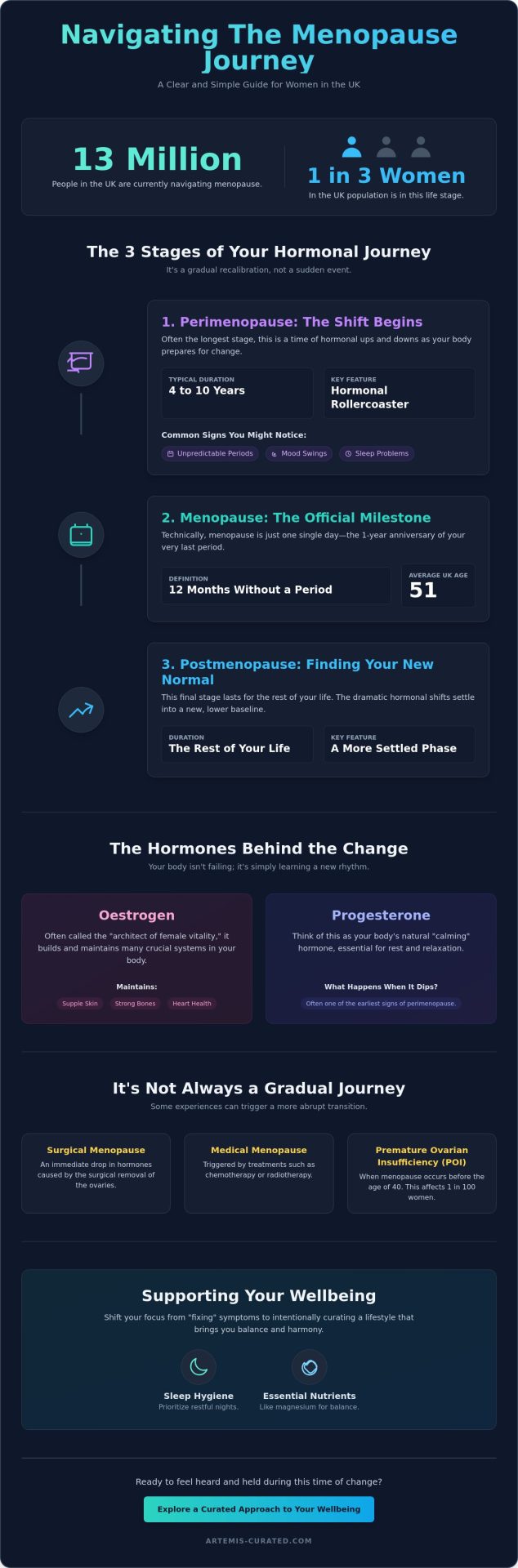
Did you know that there are currently 13 million people in the UK navigating the menopause? That is a staggering third of the female population. Yet, despite these numbers, the experience often feels like a solitary walk through a dense, confusing mist. Understanding the stages of menopause uk is the first step toward clearing that haze and reclaiming your sense of self. It is about moving away from the frantic search for answers and toward a more intentional, soulful way of caring for your body.
It is exhausting to feel like your symptoms are being dismissed or to worry about how long this transition might last. You deserve to feel heard and held during this time of change. This guide offers a clear, compassionate look at the three distinct phases of your hormonal journey, providing the clarity you need to feel in control once more. We will explore the subtle shifts of perimenopause, the transition of menopause itself, and the eventual calm of your postmenopausal years. By the end, you will have a practical map for managing your symptoms and a deeper appreciation for this natural recalibration of your rhythm.
Key Takeaways
- Gain clarity on your personal journey by understanding the stages of menopause uk, covering the full transition from the first subtle shifts to the years beyond.
- Discover why menopause is technically defined as just one single day and how to distinguish between the “chaotic” perimenopause phase and the more “settled” postmenopause stage.
- Learn why standard blood tests can often be unreliable for a diagnosis in the UK and what your body is actually telling you through its changing rhythm.
- Identify practical ways to support your wellbeing through every stage, focusing on the foundations of sleep hygiene and essential nutrients like magnesium.
- Shift your perspective from simply “fixing” symptoms to a more intentional approach of curating a lifestyle that brings balance and harmony to your daily life.
What Are the Stages of Menopause? A UK Perspective
Menopause is rarely a sudden arrival. Instead, it’s a gradual recalibration of your body’s natural rhythm that unfolds over several years. For many women in Britain, understanding menopause begins with recognizing that it isn’t a single event, but a three-stage continuum. While the average age for menopause in the UK is 51, the internal shifts often start much earlier, sometimes in your late 30s or early 40s. It is a deeply personal story, and understanding the stages of menopause uk helps you identify exactly where you are in your own timeline.
The way you enter this new phase can vary significantly. Most people experience a natural transition as the ovaries gradually produce less oestrogen over time. Others might find themselves here more abruptly. Surgical menopause occurs when the ovaries are removed, causing an immediate drop in hormones. Medical menopause can be triggered by treatments such as chemotherapy or radiotherapy. Regardless of how you arrive, the goal is the same: to navigate the change with a sense of grace and informed clarity.
Perimenopause: The Beginning of the Shift
This is often the longest part of the journey, lasting anywhere from 4 to 10 years. It’s characterized by a sense of unpredictability. Think of it as a hormonal rollercoaster where your oestrogen and progesterone levels don’t just drop; they fluctuate wildly from day to day. These spikes and dips are what cause the most familiar symptoms. You might notice your periods changing pace. They could become much heavier, lighter, or arrive at unpredictable intervals. It’s a time of chaotic change where your body is trying to find a new way to exist, requiring patience and a gentle approach to self-care.
Menopause and Postmenopause: Finding a New Baseline
In the UK, medical professionals use the 12-month rule to define menopause. Technically, menopause is just one day: the first anniversary of your very last period. It’s a quiet milestone that marks the end of your reproductive years. Once you’ve passed that 365-day mark, you are officially postmenopausal for the rest of your life. This is a more settled phase where the dramatic fluctuations of perimenopause finally begin to steady into a new baseline. While 51 is the average age for this milestone, it isn’t a universal rule. Premature Ovarian Insufficiency (POI) is the term used when menopause occurs before the age of 40. This affects approximately 1 in 100 women and requires a specific level of clinical attention and personal support.
The Hormonal Rhythm: What Is Actually Changing?
For years, your body has followed a predictable, silent rhythm. This internal choreography, led by oestrogen and progesterone, influenced everything from your mood to your bone strength. As you begin understanding the stages of menopause uk, it becomes clear that these changes are less about a sudden loss and more about a shift in this delicate music. The ovaries gradually produce fewer hormones; while this is a natural progression, the transition can feel anything but smooth. Your body isn’t failing; it is simply learning a new way to exist.
These shifts reach far beyond the reproductive system. Receptors for these hormones are found throughout the body, including the brain, skin, and cardiovascular system. This is why “brain fog” or sudden mood swings are just as common as the more famous hot flushes. According to the NHS guide to menopause, these symptoms are a direct result of your body adjusting to these lower levels. By understanding the stages of menopause uk, you can better appreciate why you might feel more forgetful or why your skin suddenly feels drier and less resilient.
The Role of Oestrogen in Your Body
Oestrogen is often called the architect of female vitality because it builds and maintains so many vital systems. It keeps your skin supple, your bones strong, and your heart healthy. When levels begin to drop, your body’s internal thermostat can become less reliable, leading to those sudden waves of heat. It also plays a quiet but crucial role in maintaining healthy cholesterol levels, acting as a protector for your long-term cardiovascular health.
Progesterone and the Calmness Factor
If oestrogen is the architect, progesterone is the body’s natural evening-time hormone, providing a much-needed sense of calm. Often, the “progesterone dip” is one of the earliest signs of perimenopause, occurring even before your oestrogen levels start to fall. This decline is a primary reason why many women suddenly struggle with broken sleep or a new, persistent sense of anxiety. Progesterone acts as a soothing presence that helps you unwind at the end of the day, and its absence can make even small stresses feel overwhelming.
Acknowledging these shifts is the first step toward finding your balance again. You might find that supporting your system with The art of harmony provides the gentle assistance your body needs to navigate this changing rhythm with more ease and a renewed sense of control.
Perimenopause vs. Postmenopause: Spotting the Signs
Perimenopause is often a season of cacophony, while postmenopause brings a quieter, more settled landscape. Part of understanding the stages of menopause uk is recognizing that these two phases require very different kinds of attention. In the early years, your body is in a state of high alert, reacting to the jagged spikes and drops in hormones. By the time you reach postmenopause, the storm has largely passed, leaving a new, steadier environment in its wake. It is a transition from a time of active change to a time of maintenance and new beginnings.
One common point of confusion in the UK is the role of clinical testing. You might expect a simple blood test to confirm where you are, but for many women, these results are notoriously unreliable. Because hormone levels can fluctuate wildly within a single day, a blood test often provides a misleading snapshot. This is why GPs usually diagnose perimenopause based on your symptoms and age rather than a lab result. It’s a shift that is now being reflected in the way we view menopause in UK health policy, emphasizing the importance of a woman’s lived experience over a single data point.
As you move through this timeline, you might notice a “symptom swap.” The intense night sweats and hot flushes that defined your early transition may begin to fade, only to be replaced by less discussed signs like joint aches, dry eyes, or a change in hair texture. By understanding the stages of menopause uk, you can prepare for this evolution rather than being caught off guard by it. Keeping a symptom journal is an excellent way to track these shifts. It gives you a clear narrative to share with your healthcare provider, ensuring you aren’t just reacting to the chaos but actively managing your long-term health.
Early Signs of Perimenopause
The first markers are often “silent” and easy to miss. You might find yourself waking up at 3 am for no reason or feeling a new, sharp edge of anxiety before a simple meeting. These cognitive and emotional shifts often arrive long before your periods become irregular. If you’re feeling a bit lost, our Perimenopause Symptoms Guide offers a deeper look at these subtle indicators.
Life in Postmenopause
Postmenopause is frequently described as a “second spring,” a time when the monthly cycle no longer dictates your energy. While the frantic fluctuations have stopped, this is the time to focus on the quiet work of protecting your bones and heart. Without the protective influence of oestrogen, your cardiovascular health and bone density require more intentional care. You might still navigate persistence in symptoms like dry skin or a lower libido, but these can be managed as part of your new, settled baseline.
Navigating the Transition: Practical Steps for Every Stage
While clinical support is a vital tool, the way you curate your daily life often has the most profound impact on your comfort. Understanding the stages of menopause uk is about more than just identifying symptoms. It’s about building a foundation that supports your body through every shift. Stress is a major factor here. When your cortisol levels spike, it can make hot flushes more intense and anxiety harder to manage. Finding ways to lower this internal tension is essential for a smoother transition.
Your plate and your pace also play a significant role. Magnesium is often called nature’s tranquiliser, helping to soothe the nervous system and support muscle health. Pairing this with healthy fats, such as those found in avocados or walnuts, provides the fuel your brain needs to maintain focus during bouts of brain fog. For your physical self, gentle movement is key. Walking or yoga doesn’t just clear the mind; it provides the weight-bearing activity necessary to keep your bones strong as oestrogen levels settle into a new baseline.
Managing the Night: Rest as a Ritual
Sleep is the cornerstone of hormonal balance, yet it’s often the first thing to suffer during this journey. Transform your bedroom into a cool, quiet retreat by choosing natural fabrics like linen or organic cotton that allow your skin to breathe. A consistent evening routine, perhaps involving a warm bath or a few pages of a book, tells your brain it’s time to wind down. This focus on Cortisol and Inner Harmony helps steady your internal rhythm before the lights go out, making it easier to navigate hormonal shifts.
Supplements for Hormonal Support
Sometimes, even the most mindful diet needs a little assistance to bridge the gap. Targeted vitamins can be a helpful addition to your routine, addressing specific needs like persistent fatigue or a loss of skin radiance. You can explore our guide to the Best Supplements for Women in 2026 to find options that align with your current stage. These supplements work best when they are integrated into a lifestyle that values rest and intentionality rather than being used as a quick fix.
Every choice you make, from the food you eat to the way you wind down, contributes to your overall sense of wellbeing. By understanding the stages of menopause uk, you can tailor these choices to exactly what your body needs right now. If you’re ready to start building your own supportive routine, you can find our full range of wellness essentials in The Full Curated collection.
Cultivating Harmony with Artemis Curated
Approaching your wellness with intentionality transforms the way you experience change. Rather than looking for a quick way to “fix” what is happening, we believe in the power of curating a lifestyle that honors your body’s evolving needs. This shift in perspective is a vital part of understanding the stages of menopause uk. It moves the conversation away from struggle and toward a soulful appreciation for your personal journey. Every selection we offer is made with a deep respect for quality and the history of the ingredients used; it’s about choosing what is deeply meaningful for your health.
This life stage is a unique opportunity for self-discovery. As the frantic pace of your earlier years begins to settle, you can find a new sense of calm and control. We don’t see menopause as an ending, but as a purposeful transition into a more refined version of yourself. By choosing support that reflects this philosophy, you aren’t just managing symptoms; you are investing in your own narrative of vitality. It’s a time to listen more closely to what your body requires and to respond with kindness and expertise.
The Art of Harmony: Menopause Support
The art of harmony is designed as a supportive companion for this specific transition. It isn’t just a supplement; it’s a daily ritual that acknowledges the complexity of your hormonal shifts. This blend works with your body to help you navigate the fluctuations of perimenopause and the eventual transition into a steady postmenopausal state. It provides a gentle anchor in your routine, helping you maintain a sense of balance when things feel unpredictable. You can find this essential part of your journey at the Artemis Curated Shop, where every piece is chosen for its ability to support a life lived well.
A Holistic Collection for Every Need
True balance often requires a broader, more cohesive approach. While menopause support is a priority, other areas of your life may need a gentle touch as well. We offer specialized support through “The art of sleep” for those restless nights and “The art of radiance” to maintain your natural glow from the inside out. For those who want a comprehensive way to support their health through every shift, “The Full Curated collection” brings these elements together. We invite you to explore our shop and find the path that feels most aligned with your own story of balance and harmony.
Embracing Your New Rhythm with Clarity
You have moved through the fog of confusion and into a place of quiet knowledge. By understanding the stages of menopause uk, you can now see that this journey is a natural recalibration rather than a loss of self. You’ve learned to distinguish between the chaotic surges of perimenopause and the more settled years of postmenopause. Most importantly, you now have the practical tools to support your own internal rhythm, from establishing restful rituals to the power of targeted nutrition.
At Artemis Curated, our UK-based wellness experts focus on natural, high-quality ingredients to support your hormonal health. We believe in a holistic approach that honors the unique story of your body. It’s about more than just managing symptoms; it’s about curating a life of balance and intention. Discover “The art of harmony” and our curated menopause support collection to find the gentle assistance your body deserves during this transition.
This is your time to step forward with a sense of calm and a deep appreciation for the wisdom your body is gaining. You aren’t just navigating a change; you are stepping into a more refined version of yourself.
Common Questions About the Menopause Journey
What are the first signs of perimenopause for UK women?
The earliest indicators are often cognitive and emotional rather than physical. You might experience broken sleep, a new sense of anxiety, or sudden “brain fog” long before your periods begin to change. These subtle shifts are your body’s first response to fluctuating hormone levels. It is a time when your internal rhythm starts to change, often in your early to mid-40s.
How long does the perimenopause stage typically last?
Perimenopause typically lasts between 4 and 10 years. It is a long, gradual transition where your body slowly finds its way to a new hormonal baseline. This duration varies for everyone, which is why tracking your symptoms over time can provide much-needed clarity during the process.
Can I still get pregnant during perimenopause?
Yes, it is still possible to conceive during the perimenopause stage. While your fertility decreases as ovulation becomes more irregular, you are not considered infertile until you have reached the 12-month milestone of menopause. If you wish to avoid pregnancy, it is important to continue using contraception during this time.
Is it menopause if I still have occasional periods?
If you are still having periods, even if they are infrequent or irregular, you are still in the perimenopause stage. Menopause is specifically defined as the point when you have gone 12 full months without any menstrual bleeding. Understanding the stages of menopause uk means recognizing that occasional periods are a sign that your body is still in transition.
What is the average age of menopause in the UK?
The average age for a woman to reach menopause in the UK is 51. However, many women start experiencing the first symptoms of perimenopause much earlier. Being aware of these stages helps you navigate the changes with a sense of control, regardless of when your personal journey begins.
Do I need a blood test to confirm I am in menopause?
Most women over the age of 45 do not need a blood test for a diagnosis. GPs in the UK typically diagnose menopause based on your age and the symptoms you describe, such as hot flushes or cycle changes. Blood tests are often unreliable because hormone levels can fluctuate wildly within a single day.
How can I support my body naturally during these stages?
You can support your body through mindful lifestyle choices and targeted wellness rituals. Focus on sleep hygiene, a diet rich in magnesium and healthy fats, and gentle movement like walking or yoga. Using a supportive blend like “The art of harmony” can also help you maintain a sense of balance as your hormones shift.
What happens to my body after I reach postmenopause?
Once you reach postmenopause, your hormone levels remain at a steady, lower level. While the intense fluctuations of perimenopause often fade, your focus should shift toward long-term maintenance. This is the time to protect your bone density and cardiovascular health through intentional self-care and a balanced lifestyle.