


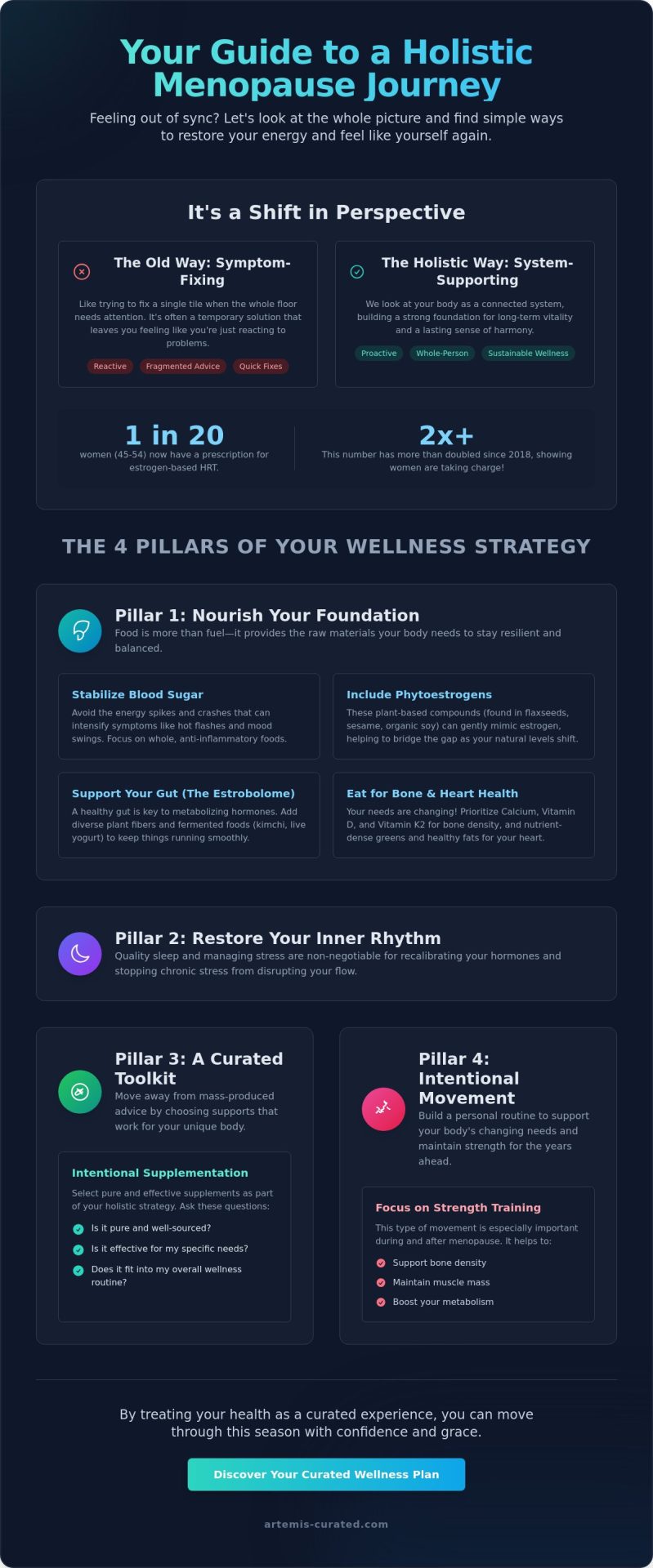
By February 2026, 1 in 20 women aged 45 to 54 had secured a prescription for estrogen-based HRT, a number that has more than doubled since 2018. It is completely natural to feel overwhelmed when your body’s rhythm begins to shift, especially when you’re facing a flood of fragmented health advice. You might be dealing with disrupted sleep or a new sense of anxiety, feeling like you’ve lost the quiet connection to your own physical sanctuary.
The secret to feeling like yourself again lies in a holistic approach to menopause management that looks at the whole picture. I’ll show you how to weave together nutrition, simple lifestyle rituals, and intentional supplementation into a seamless strategy for your vitality. We’re going to look at a clear, elegant framework for long-term wellness that helps you restore your energy and find a lasting sense of internal harmony. By treating your health as a curated experience rather than a list of problems to solve, you can move through this season with confidence and grace.
Key Takeaways
- Understand how a whole-person strategy helps you move past fragmented health advice to find a lasting sense of internal harmony.
- Explore the connection between your gut health and hormone levels to see how specific nutrition can act as a foundation for your well-being.
- Learn why quality sleep is essential for hormonal recalibration and how to stop chronic stress from disrupting your natural rhythm.
- Discover a clear framework for selecting pure and effective supplements as part of a holistic approach to menopause management.
- Build a personal wellness routine that includes intentional movement like strength training to support your body’s changing needs in 2026.
What is a Holistic Approach to Menopause Management?
Many women experience menopause as a sudden collection of disconnected problems. You might feel like you’re constantly reacting to new challenges, from rising anxiety to a sudden loss of energy. A holistic approach to menopause management changes this perspective. Instead of treating symptoms as isolated incidents, we look at the body as a beautifully complex system where every part influences the whole. It’s a strategy that addresses the mind, body, and spirit together.
This transition is not a decline. It is a shift in your biological architecture. While a purely clinical view focuses on the physiological end of menstruation, a holistic perspective sees the potential for a new kind of harmony. You can find more details on the biological basics by looking into What is Menopause? to understand the foundation of these changes. By combining medical knowledge with lifestyle rituals and intentional support, you create a path that feels personal and dignified.
The Shift from Symptom-Fixing to System-Supporting
Focusing only on “fixing” a hot flash or a mood swing is often a temporary solution. It’s like trying to repair a single tile when the entire floor needs attention. When you support the whole system, you build a foundation for sustainable vitality. This requires a level of intentionality in how you choose to nourish yourself and spend your energy. Holistic menopause management is the intentional synchronisation of internal biological rhythms. It moves you away from the frantic search for quick fixes and toward a more serene, long-term way of living well.
Why 2026 is the Year of the Empowered Menopause
In 2026, the conversation around women’s health has finally moved away from silence and toward deep empowerment. We’ve seen a massive shift in how we approach this life stage. Recent data shows that estrogen-based HRT use has more than doubled since 2018, and new non-hormonal treatments like Fezolinetant became widely available early this year. This tells us that women are no longer settling for “getting through it.”
Modern self-care is about moving away from mass-produced advice. It’s about selecting what works for your unique body. Women are reclaiming this time as a period of renewed purpose and clarity. By choosing a curated collection of supports that respect your history and your future, you turn a biological necessity into an opportunity for personal growth. This is the year we stop reacting and start choosing how we want to feel.
Nourishing the Architect: Nutrition and Gut Health
When we look at a holistic approach to menopause management, we must start with what we put on our plates. Your body is a complex, living structure, and nutrition provides the raw materials it needs to stay resilient. One of the most important foundations for hormonal peace is blood sugar stability. When your glucose levels spike and crash, it triggers a stress response that can make symptoms like hot flashes and mood swings feel much more intense. By choosing whole, anti-inflammatory foods, you aren’t just eating; you’re protecting your heart and bones for the years ahead.
Including phytoestrogens in your diet is another way to support your body’s changing needs. These plant-based compounds, found in flaxseeds, sesame, and organic soy, can gently mimic oestrogen. They help bridge the gap as your natural levels begin to shift. This isn’t about a restrictive diet. It’s about a soulful appreciation for foods that offer deep nourishment and help you maintain a steady, internal rhythm.
The Estrobolome: Your Gut’s Role in Hormonal Balance
There’s a fascinating part of your microbiome called the estrobolome. This is a specific collection of bacteria tasked with metabolising and recycling oestrogen. If your gut is out of balance, your body can’t manage these hormones effectively. This often leads to the “rollercoaster” effect of perimenopausal fluctuations. To support this system, try to include a variety of plant fibres and fermented foods like kimchi or live yoghurt. These simple additions help create the diversity your gut needs to keep your hormones moving smoothly. A healthy gut is a quiet, efficient engine for your overall well-being.
Eating for Bone Density and Heart Vitality
As oestrogen levels decrease, your body’s need for specific nutrients becomes more urgent. It’s no longer just about fuel; it’s about the quality of the “living” foods you select. For your bones, it’s a team effort between calcium, Vitamin D, and Vitamin K2. Without all three, your body can’t effectively direct calcium into your bone tissue. Focusing on nutrient-dense greens, seeds, and healthy fats helps protect your cardiovascular health too. Taking a moment to curate your meals with these essentials is a powerful act of self-care. If you’re looking for a way to support these dietary changes, exploring The art of harmony can help you find that missing piece in your daily rhythm.
Restoring the Inner Rhythm: Sleep and Stress Management
Finding a sense of calm is a cornerstone of a holistic approach to menopause management. When your life feels like a constant rush, your body pays the price in ways you might not expect. High stress levels don’t just make you feel frazzled; they actively disrupt your hormonal balance. This is often due to what experts call the “Cortisol Steal.” When your brain senses constant pressure, it prioritizes making cortisol, the stress hormone, at the expense of your remaining progesterone. This biological theft can lead to more intense night sweats and changes in how your body distributes weight, often centering it around the middle.
Your adrenal glands take on a much bigger role in producing hormones once your ovaries slow down. If these glands are constantly overworked by stress, they can’t support you effectively. Managing your daily pressure isn’t just a luxury; it’s a way to preserve your body’s limited resources. You can dive deeper into this balance by exploring our guide on the Cortisol Pillar.
The Cortisol Connection: Why Stress is the Missing Piece
Chronic stress creates a feedback loop that keeps your nervous system on high alert. This state of “survival mode” makes it nearly impossible for your body to find its natural rhythm. By actively lowering cortisol through intentional breaks and mindful moments, you give your endocrine system the space it needs to recalibrate. It’s about creating an internal environment where your body feels safe enough to rest and heal. This isn’t about escaping your life, but about choosing how you respond to it.
Curating a Sleep Ritual for Deep Rest
Sleep is the true sanctuary where your hormones do their most important work. During those quiet hours, your body regulates its temperature and repairs tissues. However, falling into a deep rest can be difficult when your internal thermostat is fluctuating. Temperature regulation is key here. Keeping your bedroom cool and choosing breathable fabrics can make a world of difference. It’s about removing the obstacles that keep you from drifting off naturally.
Moving beyond basic sleep hygiene means creating a soulful evening practice that signals safety to your brain. This might include using calming adaptogens like Ashwagandha or taking magnesium to soothe your muscles. These aren’t just supplements; they’re tools for a better night. If you’re struggling to find that stillness, The art of sleep offers a thoughtful way to support your transition into rest. A consistent ritual helps your nervous system step away from the noise of the day and enter a state of deep, restorative harmony.
A Curated Toolkit: Evaluating Natural Supplements and Remedies
Choosing the right support for your body shouldn’t feel like a chore. In a holistic approach to menopause management, we move away from the idea of just buying products and toward the concept of collecting with purpose. It’s about finding a few high-quality pieces that truly work together. When you evaluate a supplement, you should look for three things: purity, bioavailability, and synergy. Purity ensures you aren’t consuming unnecessary fillers; bioavailability means your body can actually use what you’re taking; and synergy is how different ingredients support one another to create a better result.
Botanical options often feel more integrated with our bodies than purely synthetic ones. For example, adaptogens like Ashwagandha have a long history of helping people balance their stress response. By calming the nervous system, these plants help you maintain your energy throughout the day without the jittery feeling of caffeine. If you’re dealing with menopause fatigue, targeted vitamins like B12 or methylated folate can help restore your daily vitality. It’s about giving your body the specific tools it needs to maintain its structural integrity and natural radiance.
Key Supplements for a Holistic Menopause Routine
- Magnesium: This mineral is essential for muscle relaxation and supporting a quiet mind before bed.
- Omega-3 Fatty Acids: These are excellent for clearing up “brain fog” and keeping your joints feeling comfortable.
- Marine Collagen: As oestrogen levels shift, collagen helps maintain the strength of your skin and hair, supporting your natural glow.
To see how these fit into a wider wellness plan, you can explore our Best Supplements for Women in 2026 guide.
Quality Over Quantity: The Art of Selection
It’s a common mistake to think that taking more supplements will lead to better health. In reality, your body can only process so much at once. We believe in the “hand of the maker,” which refers to the care and expertise that goes into a high-quality formulation. When you read a label, look for clean ingredients and avoid anything with excessive binders or artificial colours. A well-made supplement should feel like a natural extension of your daily ritual, not a complicated medical task. By choosing quality over quantity, you respect your body’s rhythm and ensure that every choice you make is a meaningful one. If you’re ready to start your journey, you can Shop the full collection to find exactly what your body is asking for.
Creating Your Personal Sanctuary of Wellness
Bringing everything we’ve discussed into a daily rhythm is where you’ll see the biggest shift. A holistic approach to menopause management isn’t about following a strict checklist. Instead, it’s about creating a lifestyle that feels like a natural extension of who you are. Regular movement is a big part of this. While high-intensity workouts might have worked in the past, many women in 2026 are finding that strength training is the real key. It helps protect your bones and keeps your muscles strong as your hormone levels change. It’s about moving with purpose and respecting what your body needs right now.
It’s also a good idea to keep an eye on your progress with tangible data. Blood tests are a great way to monitor your hormone levels and see how your body is responding to your new rituals. This information lets you refine your plan so it stays perfectly aligned with your needs. This isn’t about being obsessed with numbers, but about using them to build a more accurate picture of your health. Our collections are here to act as a supportive foundation, giving you the quality you deserve as you navigate this transition.
Building Your Rhythmic Roadmap
Creating a manageable rhythm doesn’t have to be complicated. You can start with a simple morning, afternoon, and evening framework. In the morning, focus on nourishing your system with blood-sugar-balancing foods. Your afternoon can be a time for gentle movement or a moment of deep breathing to manage cortisol. When evening arrives, your ritual should signal safety to your nervous system, preparing you for restorative sleep. Listen to the distinct voice of your body; it will tell you when you need more rest or a change in your routine. Take a slow, deliberate approach to these lifestyle changes, allowing each one to become a natural part of your day.
The Next Steps in Your Menopause Journey
Your journey toward internal harmony is a personal story that’s still being written. If you’re ready to begin your curation, the Full Curated collection offers a complete path to supporting your mind, body, and spirit. While these holistic practices are powerful, remember the value of professional guidance to ensure your plan is perfectly tailored to you. View this season of life not as a hurdle, but as a time of refined elegance and renewed vitality. By choosing to surround yourself with quality support and intentional rituals, you are reclaiming your health and finding a new, beautiful rhythm for the years ahead.
Embracing Your New Rhythm of Harmony
Reclaiming control over your body starts with a shift in perspective. Instead of chasing individual symptoms, you’re now looking at the whole system. We’ve explored how gut health and blood sugar stability form the foundation of your vitality. We also looked at why sleep and stress management are essential for letting your body recalibrate during this transition. A holistic approach to menopause management is about choosing what truly supports your unique biology and your specific needs.
Our co-founders, Milly and Sarah, have carefully curated every part of our collection to meet the specific requirements of the modern woman. Each product uses high-quality, synergistic ingredients that work with your body’s natural architecture rather than against it. It’s a way to simplify your wellness rhythm while ensuring you get the depth of support you deserve. You don’t have to feel overwhelmed by fragmented advice when you have a clear, elegant framework to follow.
Explore our Art of Harmony menopause support to begin your journey toward internal balance. You have the power to turn this transition into a time of refined elegance and renewed purpose. Your body is ready for its next beautiful chapter.
Frequently Asked Questions
What is the most effective holistic treatment for hot flushes?
Managing hot flushes holistically involves a combination of temperature regulation and supporting your body’s estrogen receptors with phytoestrogens. Foods like flaxseeds and sesame are excellent choices. Reducing stress through slow, deliberate breathing also helps calm the nervous system, which directly influences how your body handles temperature spikes. It’s about creating a calm internal environment where your body feels safe and balanced.
Can a holistic approach replace HRT entirely?
For many women, a holistic approach to menopause management provides enough support to manage symptoms without medication. However, it’s not always an “either-or” choice. In 2026, many choose to use lifestyle changes alongside HRT to create a more comprehensive plan. With the 2025 FDA removal of black box warnings on certain hormone therapies, the conversation has become much more personalized and focused on individual needs.
How long does it take to see results from a holistic menopause plan?
You should expect to see gradual changes within four to twelve weeks. Biological shifts like gut health improvements or hormonal recalibration take time to settle into a new pattern. It’s important to remember that true vitality isn’t built overnight. It’s about consistency and letting your body find its natural rhythm at its own pace through intentional daily rituals.
What are the best vitamins for menopause fatigue and brain fog?
B-vitamins, especially B12 and folate, are vital for restoring energy levels and supporting cognitive function. Omega-3 fatty acids are another essential tool for clearing brain fog and supporting joint comfort. Adding magnesium can also help by improving sleep quality, which is the foundation of daily vitality. These nutrients work together to help you feel more clear-headed and resilient throughout the day.
Is it safe to combine holistic supplements with conventional treatments?
Most holistic supports are safe to use with conventional treatments, but you should always check with your healthcare provider first. This ensures there are no interactions between specific botanicals and any prescriptions you might have. A curated approach means being intentional and safe with every choice you make. It’s about finding the perfect synergy between different types of care to support your whole self.
How does gut health specifically affect my menopause symptoms?
Your gut contains a specific group of bacteria called the estrobolome that helps recycle and manage oestrogen levels in your blood. When your gut is healthy, it keeps your hormone levels more stable and predictable. If it’s out of balance, you might experience more intense fluctuations in your mood and energy. Supporting your microbiome with diverse fibres is a key part of maintaining internal harmony.
What role does exercise play in a holistic menopause strategy?
Strength training is one of the most important forms of movement you can adopt during this life transition. It protects your bone density and helps manage insulin resistance, which often becomes a concern as oestrogen levels decrease. Moving your body shouldn’t feel like a chore; it should be a way to build a strong physical foundation. This type of movement supports your long-term health and keeps you feeling capable.
Can I start a holistic approach if I am already in post-menopause?
It is never too late to start supporting your body’s internal harmony and well-being. Post-menopause is a wonderful time for focusing on long-term wellness, heart health, and maintaining bone strength. A holistic plan helps you stay vibrant and energised well into the future. It’s about continuing to curate a life that feels balanced, dignified, and full of vitality as you move forward.