

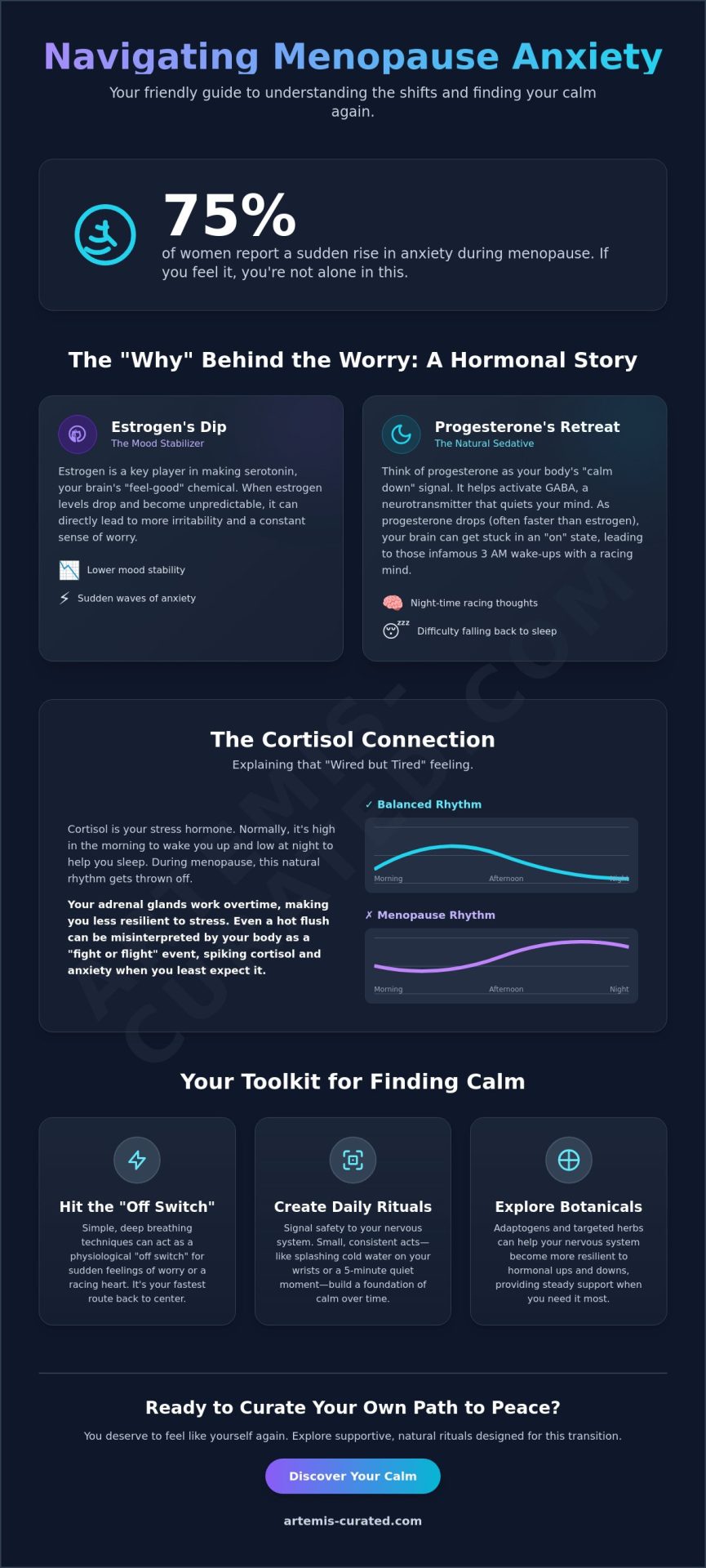
Did you know that 75% of women report feeling a sudden, sharp rise in anxiety during the transition into menopause? It often arrives uninvited, showing up as a racing heart in the middle of a quiet afternoon or a weight of worry that lingers long after the sun goes down. If you’re searching for how to calm menopause anxiety, you’re certainly not alone in this shift. It’s a deeply personal experience, yet it’s one shared by millions of women who are simply looking for a way to feel like themselves again.
We understand that feeling “wired but tired” is exhausting, especially when disrupted sleep makes every daytime stress feel twice as heavy. You deserve to find your way back to an emotional steady-ground. This guide shares soulful, evidence-based strategies and natural rituals designed to quiet your mind and balance your nervous system. We’ll explore how to create a simple, effective daily ritual using botanical support like the art of harmony to help you restore the inner peace you’ve been missing.
Key Takeaways
- Understand how shifting estrogen and progesterone levels affect your brain’s natural “feel-good” chemicals and disrupt your sleep.
- Learn exactly how to calm menopause anxiety by managing cortisol spikes that often leave you feeling “wired but tired” during the day.
- Discover simple breathing techniques and daily rituals that act as a physiological “off switch” for sudden feelings of worry or palpitations.
- Explore the role of adaptogens and targeted botanical support in helping your nervous system stay resilient during hormonal fluctuations.
- Find out how to curate your own path to peace by pairing “The art of harmony” with other rituals to meet your changing needs.
Why Does Menopause Cause Anxiety? Understanding the Hormonal Shift
Have you ever felt a low-level vibration in your chest that doesn’t seem to have a clear cause? It isn’t quite the same as the stress of a busy workday or a looming deadline. This is often described as the “internal hum” of menopause. It feels as though your nervous system has been turned up to a higher, more sensitive frequency. You might find yourself reacting more sharply to loud noises, bright lights, or minor daily annoyances that you used to handle with ease. Learning Understanding the Hormonal Shift is the first step in discovering how to calm menopause anxiety. This isn’t a flaw in your character; it’s a biological response to a changing internal landscape.
Your nervous system is simply more vulnerable during this time. The hormones that once acted as a buffer against stress are beginning to retreat, leaving your senses more exposed. This transition requires a new kind of gentleness toward yourself. When you understand the science behind the “doom” feelings or the sudden palpitations, they become less frightening. They are signals from a body that is working hard to find a new equilibrium.
The Oestrogen-Serotonin Connection
Oestrogen does much more than manage your cycle. It acts as a vital support system for serotonin, the neurotransmitter responsible for keeping your mood steady and bright. Oestrogen helps your brain produce serotonin and ensures the receptors for it stay sensitive. When oestrogen levels begin to decline, your serotonin levels often dip too. This chemical shift is a primary reason why lower oestrogen leads to increased irritability and a persistent sense of worry. During perimenopause, these levels don’t just drop; they can spike and crash unpredictably. These sharp hormonal movements can make your emotional stability feel fragile, leading to those sudden waves of anxiety that seem to arrive out of thin air.
Progesterone: The Missing Peace
If oestrogen is about energy and mood, progesterone is about stillness. It acts as the body’s natural evening sedative by stimulating GABA, the brain’s primary calming neurotransmitter. GABA is what tells your mind it’s safe to let go of the day and rest. As you move through the menopause transition, progesterone often drops much faster than oestrogen. This imbalance can lead to a state of high alert. It frequently manifests as night-time anxiety or those dreaded racing thoughts at 3 AM. Without enough progesterone to trigger that “calm” switch, your brain stays in a loop of worry, making it difficult to fall back into a deep, restorative sleep. If you are looking for ways to support this rhythm, exploring curated options at the Artemis shop can be a helpful part of your daily ritual.
The Cortisol Connection: Managing the Body’s Stress Rhythm
Have you ever felt completely drained by sunset, yet found yourself staring at the ceiling with a racing mind at 2 AM? This “wired but tired” state is one of the most frustrating parts of the menopause transition. It happens because your body’s relationship with cortisol, the primary stress hormone, has shifted. When you’re searching for how to calm menopause anxiety, it’s essential to look at your internal clock. In a balanced system, cortisol is high in the morning to wake you up and low at night so you can rest. During menopause, this rhythm often loses its way, leaving you with a surge of energy exactly when you need to be winding down.
High cortisol at night is a thief. It steals the deep, restorative rest your brain needs to regulate emotions the next day. Without that sleep, small stressors feel like mountains. This is why managing your stress rhythm is about more than just feeling less busy; it’s about protecting your nervous system’s ability to recover. Curating a lifestyle that respects your adrenal health is the foundation of long-term emotional steady-ground.
Why Cortisol Spikes During Menopause
As your ovaries naturally wind down, your adrenal glands step in to help produce hormones. It’s a heavy workload for these small glands, often leading to a state of exhaustion sometimes called adrenal fatigue. This shift makes you less resilient to everyday stress. Even a hot flush can trigger a cortisol spike. Your body misinterprets the heat as a “fight or flight” situation, sending your heart rate up and your anxiety levels through the roof. You can find helpful advice on Daily Rituals to Quiet the Mind to help signal to your brain that you are safe, even in the middle of a flush. Simple acts, like a few minutes of deep breathing or cold water on your wrists, tell your nervous system the emergency is over.
Restoring Your Inner Rhythm
We often talk about routines, but a routine can feel like just another chore on a long list. A rhythm is different. It’s a slow, deliberate flow that respects your changing energy levels throughout the day. Managing these hormonal spikes is often the “missing piece” in your wellness journey. By focusing on Cortisol: Curating the Rhythm of Inner Harmony, you can begin to guide your body back to its natural state of ease. If you’re looking for a simple way to start, a daily ritual with The art of harmony can help ground your nervous system before the day’s demands take hold. This isn’t about fixing a flaw. It’s about honoring your body’s new needs and giving yourself the grace to find a pace that feels sustainable and soulful.
Daily Rituals to Quiet the Mind and Calm the Senses
When you’re trying to figure out how to calm menopause anxiety, it’s easy to feel overwhelmed by advice that feels like just another set of chores. Instead of adding to your to-do list, think about creating intentional moments of sanctuary. These are small, deliberate acts that signal to your body that it’s okay to let go of the “fight or flight” mode we discussed earlier. By shifting your perspective from “tasks” to “rituals,” you begin to reclaim your sense of self in a world that often feels too loud and too fast.
One of the most effective tools you have is your breath. It acts as a physiological “off switch” for the nervous system. When palpitations or that sudden feeling of doom strike, a simple breathing pattern can physically lower your heart rate. Rhythmic movement, like a slow walk or gentle stretching, is often much more effective for an anxious mind than high-intensity exercise. While heavy workouts have their place, they can sometimes spike cortisol levels that are already struggling to find a balance. Choosing a slower pace allows your body to move without feeling under attack.
Creating a Sanctuary for the Senses
Your environment plays a massive role in how your nervous system processes stress. Reducing digital noise is a great place to start. The blue light from screens and the constant “scrolling anxiety” can be particularly disruptive during menopause; they interfere with the delicate hormones needed for rest. Try to view your home as a space for restoration rather than a place for endless decision-making. Soft lighting and familiar, calming scents can lower immediate stress markers. By curating a space that feels quiet and predictable, you reduce the sensory overload that often feeds into daytime worry.
The 5-Minute Morning and Evening Anchor
Establishing anchors at both ends of the day helps steady your emotional ground. In the morning, try to get five or ten minutes of natural sunlight. This helps set your circadian clock, which is vital for managing the cortisol rhythms we explored in the previous section. If you feel a wave of anxiety rising, techniques like box breathing or the 4-7-8 method can be used anywhere to bring you back to the present moment. Before bed, a simple “brain dump” in a journal can clear the mental clutter that often leads to those 3 AM racing thoughts. It’s a way of telling your mind that the day’s work is done and it’s safe to rest. For those looking to deepen this evening ritual, exploring the art of sleep can offer further support in finding that elusive deep rest.
Nourishing the Nervous System: Targeted Botanical Support
While rituals and environment set the stage for peace, sometimes your nervous system needs deeper, internal nourishment to find its way back to a state of ease. When you’re looking for how to calm menopause anxiety, the “The Art of Harmony” approach is about looking at the whole woman. It isn’t just about masking a single symptom or chasing a fleeting feeling. It’s about providing the specific building blocks your body needs to manufacture its own calm. This transition is a time of profound change, and your biology requires a different kind of support than it did a decade ago.
Think of your nervous system as a delicate instrument that has been slightly detuned by hormonal shifts. To bring it back into tune, we look to botanicals and nutrients that have been used for centuries to restore balance. These aren’t quick fixes, but rather intentional selections that respect the history and wisdom of the body. By feeding your system what it lacks, you can move away from that “internal hum” of worry and back toward a centered, steady version of yourself.
The Power of Adaptogens
Adaptogens are a unique class of botanicals that help your body “adapt” to various stressors. They act as a gentle guide for your HPA axis, which is the control center for your stress response. Ashwagandha is a particularly beautiful example. It doesn’t force a physiological change; instead, it helps level out the sharp highs and lows of your cortisol response. This steadying effect is a cornerstone of Navigating Menopause: A Curated Guide to Holistic Harmony. By smoothing those hormonal spikes, adaptogens allow you to feel more grounded throughout the day, making you less reactive to the small stresses that used to feel overwhelming.
Essential Nutrients for Emotional Balance
Your nervous system also requires specific fuel to function at its best. The B-vitamin complex is essential for mood regulation and the production of energy within your cells. Without these vitamins, your brain struggles to produce the “feel-good” neurotransmitters, like serotonin, that keep your outlook bright. Magnesium is another vital piece of the puzzle, frequently referred to as “nature’s tranquiliser” because of its ability to relax both muscles and the mind. However, the form you choose is very important. Magnesium glycinate is generally the preferred choice for those seeking how to calm menopause anxiety because it’s highly absorbable and particularly gentle on the digestive system. A curated blend of these nutrients is often more effective than taking isolated vitamins. These elements are designed to work in synergy, supporting each other’s absorption and function to create a more comprehensive sense of wellbeing.
If you’re ready to begin your own daily ritual of restoration, you can find The art of harmony in our collection to support your journey back to balance.
Curating Your Personal Path to Calm
Your journey through the menopause transition isn’t a straight line. It’s an evolving process where your needs might shift from one month to the next. As you continue to learn how to calm menopause anxiety, it’s helpful to stay open to adjusting your rituals. You’re moving away from simply managing symptoms and toward curating a life of genuine vitality. This isn’t about a quick fix. It’s about building a sustainable foundation for your long-term health. You are the architect of your own well-being, and every intentional choice you make brings you closer to your center.
We’ve seen how closely your daytime stress and night-time rest are connected. Because of this, using “The art of harmony” alongside “The art of sleep” can offer a more complete sense of care. One supports your emotional steady-ground during the day, while the other helps you find the deep rest needed for your brain to recover. When these two areas of your life work in harmony, the path to feeling like yourself again becomes much clearer. By addressing the synergy between your waking hours and your rest, you create a comprehensive approach to your health.
Selecting Your Support
Choosing the right support starts with listening to what your body is telling you today. If your primary struggle is daytime worry and feeling easily overwhelmed, you might start with botanical blends that focus on emotional balance. If fatigue and disrupted sleep are what weigh you down most, prioritizing rest is often the best first step. You can explore these targeted collections at the Artemis Curated Shop to find what resonates with your current needs. Remember that consistency is key. Botanical support takes time to bloom within your system. It’s a slow, steady process of nourishment that yields the most beautiful results when practiced with patience.
When to Seek Further Guidance
Natural rituals and curated support are powerful allies, but they are part of a larger toolkit. It’s important to recognize when anxiety feels too heavy to manage with lifestyle changes alone. Seeking clinical support or talking therapies like Cognitive Behavioural Therapy (CBT) is an act of wisdom, not a failure of your personal rituals. We believe in a collaborative approach where natural support and professional medical advice work together to support you. There is a unique beauty in this stage of life when it’s met with intention and the right guidance. By honoring both your biological needs and your emotional health, you can move through this transition with a renewed sense of peace and purpose.
Embracing Your Journey to Lasting Peace
Finding your way back to a sense of stillness is a slow and intentional process. Throughout this guide, we’ve explored how the dance of oestrogen and progesterone shapes your mood, and how cortisol can disrupt your natural rhythm. By choosing rituals that signal safety to your nervous system and using targeted botanical support, you can quiet that internal hum. This transition is a unique opportunity to listen more closely to what your body truly needs. Understanding how to calm menopause anxiety is the first step toward reclaiming your vitality and your inner harmony.
Expertly curated by co-founders Milly and Sarah, our collection focuses on holistic harmony and botanical integrity. It’s designed for the discerning woman who seeks a natural balance without compromise. If you’re ready to find your emotional steady-ground, we invite you to Explore The Art of Harmony: Our Curated Collection for Menopause Support. You have the tools and the knowledge to rediscover your peace. Trust in the process and give yourself the grace to find a rhythm that feels entirely your own.
Frequently Asked Questions
Is it normal to have sudden anxiety during perimenopause?
Yes, sudden anxiety is very common. Research shows that 75% of women experience anxiety during perimenopause. These feelings are usually triggered by sharp fluctuations in oestrogen and progesterone. These hormones act as a buffer for your nervous system. When they drop or spike, your body can feel like it’s on high alert without a clear reason. It’s a natural biological response to this transition.
How long does menopause anxiety usually last?
The duration of these feelings is different for everyone. However, research suggests the risk of anxiety is highest in the four years surrounding your final period. While perimenopause can last several years, most women find that their mood stabilizes once their hormones find a new equilibrium post-menopause. Using daily rituals can help you navigate this window with more ease and less disruption.
Can magnesium really help with menopause-related panic feelings?
Yes, magnesium is a powerful tool for calming the mind. It helps regulate the nervous system and supports the production of GABA, which is your brain’s natural “calm” chemical. Magnesium glycinate is a particularly good choice because it’s easy on the stomach and very effective for relaxation. It’s one of the most reliable ways to quiet those sudden panic feelings or heart palpitations.
What is the best time of day to take supplements for anxiety?
The timing depends on what you’re trying to achieve. If you’re looking for how to calm menopause anxiety during the day, taking adaptogens like Ashwagandha in the morning can help balance your cortisol levels. If your anxiety peaks at night or prevents sleep, taking calming nutrients like magnesium in the evening is more effective. Consistency is more important than the exact hour you choose.
Will HRT solve my menopause anxiety, or do I need natural support too?
HRT can be very effective for many women, but it isn’t always a complete solution on its own. Many people find that even with hormone therapy, they still benefit from natural rituals and botanical support to manage their daily stress response. A holistic approach that includes both medical guidance and natural support often provides the most comprehensive sense of well-being during this change.
How can I tell the difference between menopause anxiety and general stress?
Menopause anxiety often feels more physical and less logical than general stress. You might feel a sense of doom or a racing heart even when your life is relatively quiet. General stress is usually tied to a specific external event, like a busy week at work. If you feel “wired but tired” for no obvious reason, it’s likely linked to your changing hormones.
Can diet changes help reduce my feelings of worry?
Diet plays a huge role in how you feel. Cutting back on caffeine and refined sugar can significantly reduce the physical symptoms of worry. These substances can cause energy crashes and heart palpitations that your brain misinterprets as anxiety. Eating whole, nutrient-dense foods helps keep your blood sugar steady, which provides a more stable foundation for your mood and your nervous system.
What is the fastest way to calm a menopause-related anxiety spike?
The fastest way to calm a spike is to use your breath. Controlled breathing techniques, like the 4-7-8 method, act as a physical “off switch” for your “fight or flight” response. By slowing your exhale, you tell your brain that you are safe. This is a simple, effective tool for anyone learning how to calm menopause anxiety when it feels like a sudden wave.