


What if that sudden, mid-sentence blank isn’t a sign of a fading mind, but a signal that your body is asking for a more intentional rhythm? It’s incredibly draining to lose your confidence at work because the right word feels just out of reach. You might even worry about your long-term memory. Finding a supportive perimenopause brain fog treatment starts with understanding that this is a neurological transition rather than a permanent decline. Approximately 60% of women report these moments of mental static. You’re in good company.
Reclaiming your focus is about more than just clearing the mists; it’s about honoring the shift happening within your own story. This guide will show you exactly why your focus feels fleeting and how to reclaim your clarity through simple, elegant lifestyle rituals. We’ll look at how to harmonize your hormones naturally so you can feel like your sharp, vibrant self again.
Key Takeaways
- Understand the “cotton wool” feeling and why your brain isn’t broken, just transitioning to a new rhythm.
- Learn how estrogen regulates your brain’s energy and why fluctuating levels can feel like a mental “brownout.”
- Discover why a holistic perimenopause brain fog treatment involving nutrition and simple rituals is your best path to clarity.
- See how sleep and movement work together to clean and protect your brain, keeping your focus sharp.
- Find out how curating a supportive daily routine can help you reclaim your confidence at work and at home.
Understanding the Cotton Wool Feeling: What is Perimenopause Brain Fog?
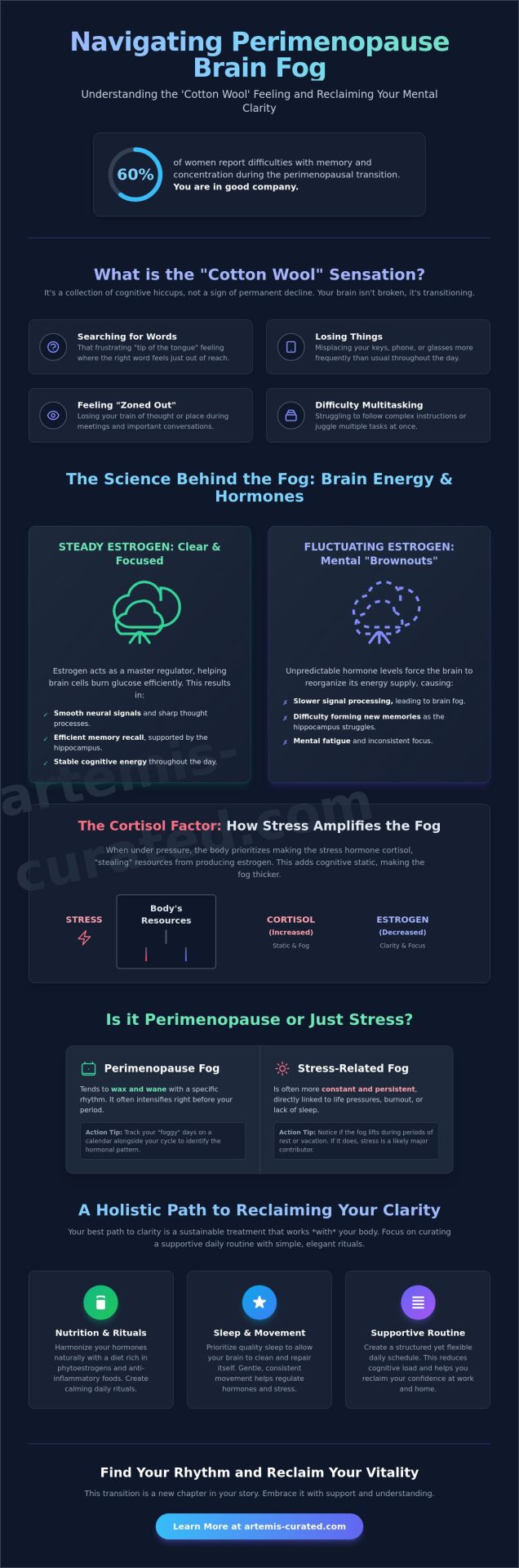
Have you ever walked into a room and felt like the reason you went there just evaporated? It’s that “cotton wool” sensation, where it feels like your thoughts are trying to push through a thick mist. This isn’t a single medical condition. Instead, it’s a collection of cognitive hiccups. Professionals often refer to it as Understanding Brain Fog, and it’s one of the most common experiences for women in their 40s and 50s. Recent data suggests approximately 60% of women report these difficulties with memory and concentration during this time.
While you might be searching for an effective perimenopause brain fog treatment, the first step is simply recognizing that your brain isn’t broken. It’s just adapting. You aren’t losing your intelligence; you’re experiencing a physiological shift. It’s a temporary phase, much like the changing seasons, rather than a permanent decline. You’re in good company, and your mind will feel sharp again.
Common signs that the fog has rolled in include:
- Searching for a word that’s right on the tip of your tongue;
- Losing your keys, phone, or glasses multiple times a day;
- Feeling “zoned out” or losing your place during important meetings;
- Difficulty following complex instructions or multi-tasking.
Is it Perimenopause or Just Stress?
Life is busy, and it’s easy to blame burnout or a lack of sleep. However, hormone-driven changes usually have a specific rhythm. If you notice your focus dips right before your period, it’s likely tied to your hormones. Start tracking these “foggy” days on a calendar alongside your cycle. When you see a pattern, it becomes much easier to manage. Stress is often constant, but perimenopause brain fog tends to wax and wane. Identifying this pattern is a powerful part of your perimenopause brain fog treatment plan.
The Impact on Daily Vitality
This fog does more than just make you forgetful. It can chip away at your professional confidence. You might find yourself staying quiet in social situations because you’re afraid of losing your train of thought. You aren’t alone in this. Reclaiming your mental space is a key part of navigating menopause. By approaching this transition with a holistic mindset, you can find a rhythm that feels like a natural extension of your self-care. It’s about finding harmony in your daily life and trusting that your clarity will return as your body finds its new balance.
The Science of the Fog: Why Your Brain Feels Different Right Now
To understand why your focus feels fleeting, we have to look at the energy source of the brain. Estrogen is far more than a reproductive hormone; it’s a master regulator of brain energy. Think of it as the conductor of a complex orchestra, ensuring every section plays in time. When estrogen levels are steady, your brain cells burn glucose efficiently. This keeps your thoughts moving at a brisk, clear pace. However, during perimenopause, those levels begin to fluctuate. These swings create what feel like mental “power surges” or “brownouts.” One moment you’re sharp; the next, the lights seem to dim on your short-term memory.
The hippocampus, which is your brain’s primary memory center, is particularly sensitive to these shifts. It’s packed with estrogen receptors. When the hormone supply becomes unpredictable, the hippocampus struggles to record new information or retrieve old files. This decline in estrogen essentially forces the brain to undergo a metabolic reorganization, searching for new ways to fuel its daily operations. Understanding this biological shift is the first step in finding a sustainable perimenopause brain fog treatment that works with your body, not against it.
The Oestrogen-Brain Connection
Estrogen keeps your neurons firing efficiently. It helps maintain the connections between brain cells, ensuring that signals travel smoothly from one point to another. When levels drop, those signals can feel slower or less fluid, leading to that frustrating “tip of the tongue” feeling. This is why we often refer to it as an understanding of oestrogen as an architect of your overall vitality. It builds the foundation for how you think and feel every single day.
The Cortisol Factor: How Stress Amplifies the Fog
Stress makes the fog much thicker. When you’re under pressure, your body prioritizes the production of cortisol over sex hormones like estrogen and progesterone. This is often called the “cortisol steal.” High levels of cortisol act like static on a radio, making it nearly impossible to hear your own thoughts clearly. If you’re feeling the effects of these hormonal brownouts, exploring the Full Curated collection can help you begin to restore that lost sense of balance. You can read more about managing this rhythm in our guide to the cortisol connection.
Natural Strategies and Treatments to Reclaim Your Focus
Reclaiming your mental clarity is rarely about finding a single, quick fix. Instead, think of a perimenopause brain fog treatment as a multi-layered ritual involving nutrition, intentional hydration, and thoughtful supplementation. While many women consider medical interventions, natural strategies offer a gentle and highly effective way to clear the mists. These methods work by supporting your body’s inherent ability to find balance during a time of significant change.
Research consistently points to the Mediterranean diet as a gold standard for cognitive health. By focusing on whole foods, healthy fats, and lean proteins, you provide your brain with the stable energy it craves. It’s also vital to look at your hydration. Even mild dehydration can mimic the symptoms of brain fog, making it harder to find your words or stay on task. A simple glass of water can sometimes be the most immediate perimenopause brain fog treatment available to you.
Feeding the Brain: Key Nutrients
Your brain cells require specific building blocks to function at their best. Omega-3 fatty acids, found in walnuts and oily fish, act as a form of cognitive lubrication. They support the health of your cell membranes, allowing signals to travel more freely. B vitamins, particularly B12 and Folate, are the quiet workers behind your energy metabolism. Without them, your brain can feel like it’s running on a low battery. Adding a vibrant array of antioxidant-rich foods, such as blueberries and dark leafy greens, helps protect your neurons from the oxidative stress that often increases during hormonal shifts.
Targeted Supplementation for Clarity
Specific botanicals have been used for generations to help women navigate these transitions. These plants work with your system to encourage a steadier internal environment. Magnesium is another essential element to consider. It helps calm the nervous system and reduces the “noise” of cortisol, which allows for clearer, more intentional thought. When your nervous system is at ease, your focus naturally follows. If you are looking for a structured way to support your system, you might explore The Art of Harmony for curated menopause support. This approach focuses on quality and intentionality, helping you build a daily rhythm that supports your long-term mental vitality.
Curating a Lifestyle that Supports Cognitive Clarity
Living with intentionality is a powerful perimenopause brain fog treatment. It’s about choosing habits that protect your mental energy. Instead of rushing through a chaotic day, we can curate our environment and our schedule to support the brain. This means moving away from the “always-on” culture and embracing a rhythm that respects our changing physiology. When we treat our daily routine as a series of mindful choices, we create the space for clarity to return naturally.
The Power of Deep Rest
Sleep is your brain’s ultimate cleaning ritual. While you rest, your glymphatic system actively flushes out metabolic waste that builds up during the day. This process is essential for waking up with a clear mind. If night sweats are disrupting this process, try curating a cooler sleep sanctuary with breathable cotton linens and a steady evening wind-down. For those seeking extra support, exploring the best supplements for women can provide the foundation needed for deeper, more restorative rest. Quality sleep is the bedrock of cognitive health.
Mindful Movement and Mental Rhythms
Movement is essential, but it doesn’t have to be frantic. Even a 10-minute walk boosts BDNF, a protein that acts like a tonic for your brain, supporting its ability to adapt and stay plastic. High-intensity workouts can sometimes spike cortisol, which adds to the mental static we discussed earlier. Choosing a slow, deliberate nature walk instead helps reduce “directed attention fatigue.” This allows your mind to soften and reset in a way that intense exercise cannot. It’s about finding a pace that feels restorative rather than draining.
Managing your professional life during this transition requires a change in strategy. Multitasking is often the enemy of clarity, especially when your hormones are in flux. Try these simple workplace shifts to keep your confidence high:
- Single-tasking: Focus on one task at a time to avoid fragmenting your attention.
- External brains: Use a journal or digital list to hold information so your mind doesn’t have to carry the weight.
- Scheduled focus blocks: Work in short, dedicated bursts followed by five minutes of stillness.
Finally, your brain needs “white space.” These are the quiet moments between tasks where you do absolutely nothing. It’s not wasted time. It is a necessary pause that allows your cognitive resources to replenish. By weaving these gaps into your day, you create a sustainable perimenopause brain fog treatment that feels like a natural extension of your life. If you’re ready to bring more balance to your daily routine, you can explore the Full Curated collection to find the right support for your journey.
Finding Your Rhythm: How Artemis Curated Supports Your Mental Vitality
At Artemis Curated, we believe wellness is a narrative you build through intentional choices. It isn’t about simply buying a product; it’s about choosing a perimenopause brain fog treatment that aligns with a more reverent way of living. We move away from the frantic energy of mass production. Instead, we focus on the soul of the ingredients and the history of the plants we use. By curating your approach to health, you stop being a passive consumer and become the author of your own vitality. This shift in perspective is often the first step toward clearing the mental mists.
Our philosophy is rooted in the idea that your home and your body should be sanctuaries. When you pair The Art of Harmony with The Art of Sleep, you create a powerful synergy that addresses cognitive static from two sides. Harmony works to steady the daytime “power surges” we discussed earlier, while Sleep ensures your glymphatic system has the time it needs to refresh your mind overnight. Together, these collections provide a foundation of quality and intention. They help you build a daily rhythm that supports your brain’s natural ability to adapt and thrive during this transition.
The Art of Harmony: A Balanced Approach
This specific blend is designed to act as a gentle anchor during the hormonal fluctuations of perimenopause. It’s a thoughtful perimenopause brain fog treatment that focuses on creating a sense of inner calm. When your nervous system feels settled, your outward focus naturally begins to sharpen. We put artisanal care into the sourcing of every botanical, ensuring that the human element remains at the heart of what we do. This isn’t a rushed solution. It’s a sophisticated way to support your body as it finds a new, more stable center.
Your Personal Wellness Sanctuary
We encourage you to see your supplement routine as a quiet moment of self-care. It’s a chance to pause and honor the journey your body is on. Reclaiming your mental clarity isn’t an overnight fix; it is an unfolding process that requires patience and respect for your own story. By 2030, over 1.2 billion women worldwide will be moving through this same transition. You aren’t alone in this. As you begin to integrate these rituals into your life, you’ll rediscover that inner sharpness and confidence that felt so fleeting.
You have the power to reclaim your focus and move through the day with elegance. It starts with understanding the science of your shift and ends with surrounding yourself with support that possesses a distinct voice and purpose. If you’re ready to begin this chapter of your wellness journey, you can Explore the Full Curated Collection to find the pieces that speak to your needs. Trust the process, and trust the wisdom of your own body.
Step Into a Clearer Chapter
The mental static you’ve been feeling is a signal, not a permanent change. It’s an invitation to refine your daily habits and support your brain through this neurological shift. By prioritizing deep rest, steady nutrition, and mindful movement, you create the environment your mind needs to stay sharp. Finding a natural perimenopause brain fog treatment is about more than just a quick fix; it’s about curating a life that respects your body’s new rhythm.
Everything we offer at Artemis Curated is expertly curated for hormonal balance. Our products are designed by women, for women, with a deep focus on holistic rhythm and vitality. You don’t have to navigate this transition alone. We believe that by choosing quality and intentionality, you can reclaim your confidence and your focus.
Rediscover your mental clarity with The Art of Harmony.
Trust that your focus will return as you find your new balance. You’re entering a season of renewed wisdom and strength, and we’re here to help you clear the path forward. Your clarity is waiting to be rediscovered.
Frequently Asked Questions
Is perimenopause brain fog permanent?
No, this cognitive shift is a temporary transitional phase rather than a permanent decline in your intelligence. Your brain is currently adapting to lower estrogen levels, a process that involves a significant metabolic reorganization. Scientific discussions from 2025 emphasize that while the brain is remodeling itself during this time, it doesn’t lead to long-term cognitive decline. Once your hormones reach a new, stable baseline, most women find their mental clarity and focus return.
Can supplements really help with cognitive focus during menopause?
Yes, targeted supplements provide the specific building blocks your brain needs to maintain focus when estrogen fluctuates. Ingredients like magnesium and specific botanicals help calm the nervous system, which reduces the mental “static” caused by high cortisol. When you choose a high-quality perimenopause brain fog treatment, you’re supporting your body’s ability to fire neurons more efficiently. This intentional approach to wellness helps bridge the energy gap created by changing hormones.
How long does it take for natural treatments for brain fog to work?
You should typically expect to see a noticeable difference within four to twelve weeks of starting a consistent routine. Natural rituals work by gently shifting your internal environment, which takes more time than a pharmaceutical quick fix. Your body needs this window to absorb nutrients and for your nervous system to settle into a new, steadier rhythm. Consistency is the most important element of any successful perimenopause brain fog treatment plan.
What is the best vitamin for menopause brain fog?
B-vitamins, particularly B12 and Folate, are essential for maintaining your brain’s energy metabolism and cognitive health. They act as the quiet workers that keep your mental “battery” charged throughout the day. Omega-3 fatty acids are also vital, providing the structural support needed for healthy cell membranes and fluid communication between neurons. While there isn’t one magic pill, a curated blend of these nutrients often provides the most significant improvement in sharpness.
Do I need HRT to get rid of brain fog?
HRT isn’t the only path to reclaiming your focus, and many women find relief through non-hormonal alternatives. While the FDA recently updated labeling for several HRT products in February 2026 to reflect a reassessed risk profile, natural lifestyle rituals remain a highly effective choice. It’s about finding the strategy that fits your personal story. For many, supporting the body’s own rhythms through nutrition, rest, and botanicals is a powerful way to clear the mists.
Why is my brain fog worse in the morning?
Morning fog is often the result of disrupted sleep cycles or a sharp spike in cortisol as you wake up. If your glymphatic system didn’t have enough time to “clean” your brain overnight, you’ll likely wake up feeling heavy and unfocused. Night sweats or general restlessness can easily interrupt these essential deep rest cycles. Starting your day with a slow, deliberate ritual can help lower that morning cortisol and clear the cobwebs more effectively.
Can diet changes improve mental clarity during perimenopause?
Dietary shifts are a foundational part of clearing the mental mist and supporting brain health. Shifting toward a Mediterranean-style way of eating provides your brain with steady, reliable fuel rather than the energy crashes associated with processed sugars. Focus on healthy fats from nuts, lean proteins, and plenty of antioxidant-rich leafy greens. These foods protect your neurons from oxidative stress and support the intricate narrative of your overall cognitive vitality.
What happens if I ignore my brain fog symptoms?
Ignoring these signals often leads to increased stress and a further loss of professional and social confidence. While brain fog isn’t typically linked to long-term dementia, the frustration of “zoning out” can significantly impact your daily quality of life. Acknowledging these symptoms early allows you to begin a curated journey toward balance. Addressing the fog through lifestyle changes helps you maintain your sense of self and your mental sharpness throughout the entire transition.