


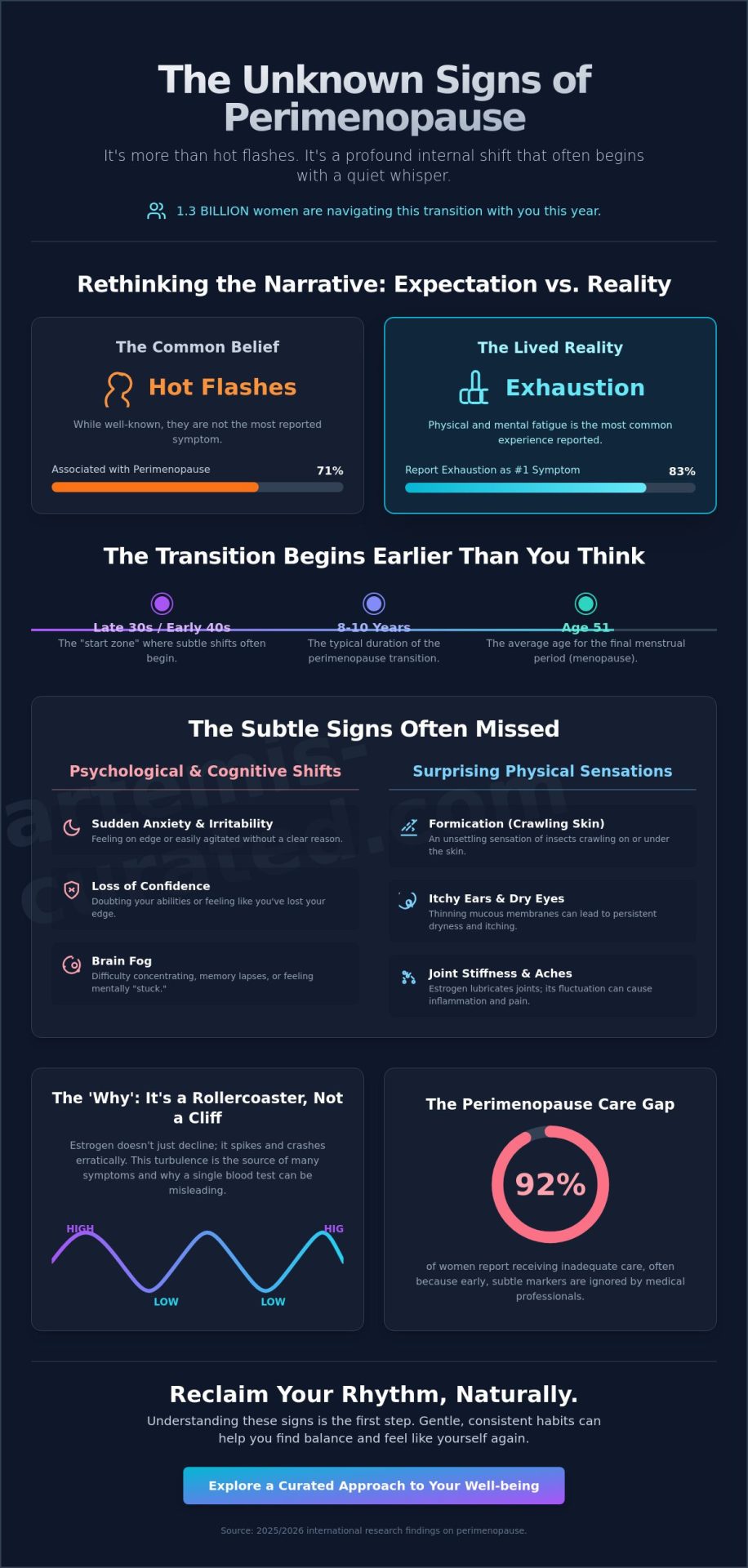
Did you know that while 71% of women associate hot flashes with perimenopause, a massive 83% in a 2026 international study report that physical and mental exhaustion is actually their most common experience? It’s incredibly common to feel like you’re losing your personality or your confidence when you don’t recognize the person looking back at you in the mirror. These are the unknown signs you could be in perimenopause, and they often arrive as a quiet whisper long before the loud symptoms take hold. You aren’t losing your mind. You’re simply moving through a profound internal shift that 1.3 billion women are sharing with you this year.
I understand how unsettling it feels when unexplained anxiety or a sudden loss of confidence replaces your usual steady rhythm. This guide will help you identify these subtle shifts and explain the science behind why your body feels so different right now. We’ll look at why 2026 research is finally calling for updated diagnostic criteria and share practical, natural ways to help you feel like yourself again. From understanding cognitive changes to embracing the art of harmony, you’ll find the clarity you need to navigate this season with grace.
Key Takeaways
- Identify the unknown signs you could be in perimenopause to understand why you feel different even when your cycles are regular.
- Recognize how shifting hormones cause surprising physical changes like itchy ears or the strange sensation of something crawling on your skin.
- Uncover the science behind sudden irritability and why even the most confident women can feel like they’re losing their edge.
- Learn how simple habits like balancing your blood sugar and choosing gentle movement can help you find your rhythm again.
- Discover why this phase is often about erratic estrogen highs rather than just lows and how your calming hormones play a vital role.
Beyond Hot Flushes: Understanding the Subtle Start of Perimenopause
Perimenopause isn’t a sudden event that arrives with a single missed period. It’s a slow, intentional unfolding that often begins long before you expect it. Think of it as a transition phase where oestrogen begins an erratic dance. Instead of a steady, predictable decline, your hormones often spike and crash like a rollercoaster. This hormonal turbulence is exactly why you might feel completely off balance even while your monthly cycle remains perfectly regular. If you’ve found yourself searching for the unknown signs you could be in perimenopause, it’s likely because your body is sending you signals that don’t fit the traditional narrative of hot flushes and night sweats.
Feeling different is a legitimate medical indicator of these internal shifts. You aren’t imagining the sudden irritability or the way your favorite clothes feel different against your skin. This stage is less about the end of something and more about a complex biological recalibration. For a deeper look at the science behind these stages, Understanding Perimenopause provides a clear foundation for how these shifts impact your daily life. It’s a time that requires a curated approach to self-care, focusing on what your body actually needs rather than what society tells you to expect.
When does the transition actually begin?
Most women are surprised to learn that perimenopause can start 8 to 10 years before their periods actually stop. While the average age for menopause is 51, the “start zone” for the transition frequently lands in the late 30s or early 40s. This is often the source of immense frustration. You might visit a GP only to be told your blood tests are “normal” because your hormone levels happened to be at a high point the moment the needle went in. Those tests are just a snapshot; they don’t capture the daily highs and lows that define this journey. A 2026 report states that 92% of women don’t receive adequate perimenopause care, often because these early markers are ignored.
Why the ‘unknown’ signs are often missed
We’ve been conditioned to wait for the heat. Because society focuses almost exclusively on hot flushes, we tend to miss the quieter, more subtle cues our bodies are giving us. High-stress lifestyles also play a major role in masking these changes. We often blame our fatigue or brain fog on a busy career or family life, not realizing that the unknown signs you could be in perimenopause are already present. Research from 2025 indicates that nearly 70% of women believe there’s a significant need for more public education on this topic. Perimenopause is a holistic shift affecting every system in the body, not just the ovaries. If you’re looking to regain your sense of balance, exploring the Full Curated collection can be a gentle step toward supporting your body’s natural rhythm during this time.
The Surprising Physical Signs: From Itchy Ears to Joint Stiffness
While the world often focuses on the heat of a hot flush, your body might be whispering its changes through much stranger sensations. Have you ever felt a phantom tickle on your arm, like small insects are crawling just beneath the surface of your skin? This sensation is called formication. It is one of the more unsettling and unknown signs you could be in perimenopause. It happens because your nervous system is reacting to the erratic spikes and dips in oestrogen. This isn’t just in your head; it’s a direct result of your body’s primary chemical messengers shifting their rhythm.
You might also notice your ears or eyes feel persistently itchy or dry. It’s easy to blame seasonal allergies, but the real culprit is often the thinning of mucous membranes as oestrogen levels fluctuate. Some women even experience “burning mouth syndrome,” where the tongue or roof of the mouth feels scalded, or they notice a sudden metallic taste when eating. These changes can make even your favorite meals feel unfamiliar. If you find your body reacting in these new, confusing ways, exploring The art of radiance can offer a gentle way to support your skin and tissues from the inside out.
The ‘Aching’ Truth: Joints and Muscles
Morning stiffness is often dismissed as just “getting older,” but for many women in their early 40s, it’s a hallmark of hormonal change. Oestrogen acts as a lubricant for both joints and sensory tissues. When it drops, inflammation can flare up in unexpected places. You might wake up with creaky knees or develop sharp heel pain, known as plantar fasciitis, that makes those first few steps out of bed feel like a chore. A 2026 international study highlighted that physical exhaustion affects 83% of women in this phase, and much of that fatigue stems from the body working harder to manage this systemic inflammation.
Sensory Shifts: Smell, Taste, and Touch
Your world might literally start to smell and taste different. That signature perfume you’ve worn for a decade could suddenly smell “off” or even slightly metallic. This happens because your olfactory senses are closely tied to your hormonal health. You might also notice a change in your own body odour, which can feel like a blow to your confidence. These sensory shifts are part of the broader narrative of the unknown signs you could be in perimenopause. They remind us that this transition is a total body experience, requiring us to curate a new way of living that honors our changing needs.
The Psychological Shift: Why You Might Feel Like a Different Person
The most unsettling part of this transition isn’t always the physical changes. It’s the moment you realize you don’t feel like yourself anymore. You might find yourself experiencing “perimenopausal rage,” a sudden, white-hot irritability that feels almost impossible to control. It isn’t just being grumpy; it’s a visceral reaction to things that never used to bother you. This emotional turbulence is one of the unknown signs you could be in perimenopause that women often keep to themselves, fearing they’re simply becoming “difficult.”
For high-functioning women, this phase often brings a surprising loss of confidence. You might have led boardrooms or managed complex households for decades, yet suddenly find yourself gripped by imposter syndrome. Tasks that were once second nature now feel daunting. This can lead to a new, unexpected social anxiety. You might start declining invitations or feeling a sense of dread about events you used to love. There’s also a “flat” feeling that many describe; it isn’t exactly depression, but a lack of joy and motivation that makes life feel like it’s lost its color. Understanding these shifts is the first step toward reclaiming your sense of self and finding The art of harmony in your daily life.
Brain Fog and the ‘Where Are My Keys?’ Moment
If you’ve ever stood in the kitchen wondering why you’re there or struggled to find a simple word mid-sentence, you’re not alone. Your brain is packed with oestrogen receptors, particularly in the memory center known as the hippocampus. When oestrogen levels fluctuate, your cognitive processing can feel sluggish. It’s a frightening experience that leads many women to worry about early-onset dementia. Rest assured, this is a temporary biological shift, not a permanent decline. It’s simply your brain learning to operate in a new hormonal environment.
The Cortisol Connection: Stress and Sleep
During perimenopause, your body becomes significantly less resilient to stress. Your adrenal system has to work harder to compensate for fluctuating hormones, which often leads to a spike in cortisol. This is why you might wake up at 3 AM with a racing heart and a crushing sense of dread for no apparent reason. Your body is stuck in a “fight or flight” loop that makes daily life feel overwhelming. You can learn how cortisol affects your inner harmony to better manage these midnight wake-up calls. Recognizing these patterns helps you move away from self-blame and toward a more intentional, curated approach to your mental well-being.
Navigating the ‘Why’: How Oestrogen Fluctuations Shape Your Experience
Most of us are taught that hormones simply “drop” as we age, but the reality of perimenopause is far more chaotic. It is often a state of oestrogen dominance, where your levels spike to erratic highs rather than just fading away. These surges are responsible for many of the unknown signs you could be in perimenopause, such as sudden breast tenderness or unexpectedly heavy cycles. I like to think of oestrogen as the architect of female vitality, a powerful hormone that governs over 400 functions in the body. When this architect starts changing the blueprints without warning, every system feels the impact.
Your body is a finely tuned ecosystem, and when your ovaries begin to slow down, your thyroid and adrenal glands try to pick up the slack. This extra burden is why you might feel a level of exhaustion that sleep cannot fix. It’s a systemic recalibration where your primary stress-management tools are working overtime. If you’re looking for a way to support this delicate internal balance, you can explore the Full Curated collection to find gentle, natural rituals that honor your body’s changing needs.
The Oestrogen-Progesterone Dance
Progesterone is often called the “calming” hormone, and it’s usually the first to decline. This creates a widening gap between your oestrogen and progesterone levels. While oestrogen is still spiking high, your natural “chill” hormone is nowhere to be found, which is exactly why anxiety and irritability become so prevalent. This imbalance is the hidden engine behind the most common symptoms. For a deeper look at how these mechanics work, you should read our guide on the role of oestrogen.
Tracking Your Unique Narrative
Because your experience is so personal, a standard period tracker often isn’t enough. I recommend keeping a detailed symptom diary that captures your unique narrative. Instead of just marking the days you bleed, look for patterns in your mood, the quality of your sleep, and those strange physical “glitches” like itchy skin or joint stiffness. This data is incredibly valuable. When you have a clear record of the unknown signs you could be in perimenopause, you’re much better prepared for a productive conversation with your healthcare provider. You aren’t just presenting a list of complaints; you’re sharing the story of your body’s transition.
Reclaiming Your Rhythm: Gentle Steps Toward Hormonal Harmony
Regaining your sense of balance doesn’t have to feel like a battle. It starts with a simple shift in how you nourish yourself. Blood sugar stability is the foundation of hormonal health. When your glucose levels spike and crash, they take your mood and energy with them. If you’ve been struggling with the unknown signs you could be in perimenopause, such as that sudden afternoon slump or late-night anxiety, focusing on protein-rich meals and fiber can be a game-changer. It’s about creating a steady internal environment where your hormones don’t have to fight for attention.
Movement should also feel like a kindness, not a punishment. Many women try to “work off” their symptoms with high-intensity gym sessions, but this can actually backfire by spiking cortisol. Instead, lean into joyful movement. A long walk in nature or a gentle yoga flow supports your joints and nervous system without adding to your stress load. It’s a more intentional way to stay active that respects the transition your body is making. This approach helps lower the systemic inflammation that often leads to the joint stiffness we explored earlier.
Nurturing Your Sanctuary: Lifestyle Shifts
Your evening rhythm is just as important as your morning one. Sleep hygiene is vital during this phase, especially since a 2026 international study found that physical and mental exhaustion affects 83% of women. Try turning off screens an hour before bed and creating a cool, dark environment to help your body enter a deep rest state. You might also find that saying “no” is your most powerful health tool. Setting boundaries isn’t just about time management; it’s about protecting your nervous system so you have the space to heal. You can Discover the Art of Harmony in our shop to find rituals that support this restful transition.
The Role of Targeted Support
While a generic multivitamin is fine for general health, your body currently requires something more specific. Nutrients like Magnesium and Ashwagandha are essential for a frayed nervous system. Magnesium helps soothe those “creaky” joints and restless legs, while Ashwagandha supports your adrenals as they try to balance those erratic oestrogen spikes. Our “Art of Harmony” collection is designed to provide this targeted support, helping you manage the unknown signs you could be in perimenopause with more ease. This phase isn’t just an ending. It’s the beginning of a more intentional, soulful way of living where you finally prioritize your own well-being and inner peace.
Embracing Your Next Chapter with Clarity
Understanding the transition your body is making allows you to move forward with confidence rather than confusion. We’ve explored how a shift in hormones affects everything from your sensory perception to your emotional resilience. Recognizing the unknown signs you could be in perimenopause is the first step toward reclaiming your daily rhythm. A 2026 international study found that exhaustion affects 83% of women in this phase; knowing the “why” behind that fatigue changes everything. By focusing on blood sugar balance and gentle movement, you can support your nervous system through these erratic biological changes.
Your well-being deserves a thoughtful approach that fits into your current life. Our expertly curated botanical blends focus on holistic hormonal harmony, specifically designed for the modern woman’s lifestyle. If you’re ready to find your center again, explore ‘The Art of Harmony’ and discover natural support for your transition. This phase of life is a powerful opportunity to listen to your body’s needs and create a more intentional way of living. You aren’t losing yourself; you’re simply evolving into a more resonant version of who you are.
Frequently Asked Questions
Can you be in perimenopause and still have regular periods?
Yes, you can definitely have regular cycles while experiencing the unknown signs you could be in perimenopause. During this transition, your oestrogen levels often spike and crash erratically even if your monthly period arrives exactly on time. Many women find that their periods are the last thing to change, while psychological and physical symptoms like fatigue or irritability start years earlier.
Is 38 too young to start perimenopause?
No, age 38 is not too young for the transition to begin. While the average age for menopause is 51, the perimenopausal phase can start 8 to 10 years prior. Many women in their late 30s begin noticing subtle shifts in their sleep or mood. According to a 2025 AARP survey, nearly 70% of adult women believe there is a need for more public education on these early signs because they start so much sooner than expected.
Why do I have itchy ears and skin crawling in my 40s?
These sensations are often caused by declining oestrogen levels affecting your nervous system and skin tissues. The feeling of insects crawling on your skin is called formication, and it’s a known neurological response to hormonal shifts. Oestrogen also helps keep your mucous membranes hydrated. When it drops, you might experience dry, itchy ears or eyes that feel persistently irritated despite using drops or creams.
What is the difference between perimenopause and menopause?
Perimenopause is the long transition phase that leads up to the end of your reproductive years, lasting anywhere from 4 to 10 years. Menopause itself is actually just a single point in time. You reach menopause once you have gone exactly 12 consecutive months without a period. Everything before that 12-month mark is considered perimenopause, even if your symptoms are intense and your periods are widely spaced.
Can perimenopause cause sudden heart palpitations and anxiety?
Yes, sudden heart palpitations and a sense of dread are very common during this time. As your ovaries produce less oestrogen, your adrenal glands try to pick up the slack, which can lead to spikes in cortisol and adrenaline. This often happens at 3 AM or during high-stress moments. It’s your body’s way of reacting to the internal hormonal rollercoaster rather than a sign of a heart condition.
How long do perimenopause symptoms typically last?
The duration varies for everyone, but symptoms typically last between 4 and 8 years on average. Some women may experience a shorter transition, while for others, the shift can span a full decade. A 2026 report states that 92% of women do not receive adequate perimenopause care during this window, making it important to track your own patterns and advocate for your health needs.
Are there natural ways to manage perimenopause brain fog?
You can manage brain fog by focusing on blood sugar balance and targeted nutrients like Magnesium. Keeping your glucose levels steady prevents the energy crashes that make cognitive tasks feel impossible. Adding adaptogens like Ashwagandha can also help your brain handle stress more effectively. These are some of the unknown signs you could be in perimenopause that respond well to a curated, holistic approach to daily wellness.