


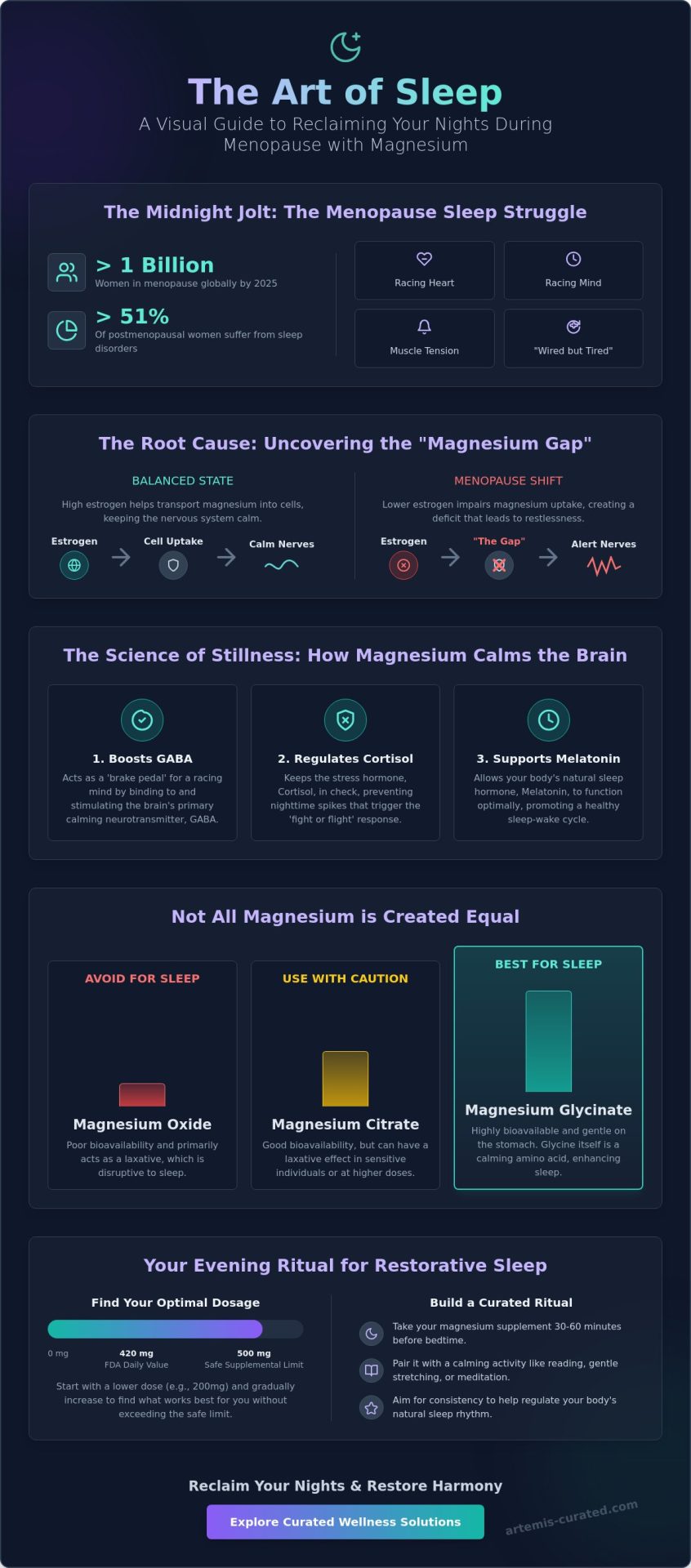
Did you know that over a billion women reached menopause by 2025, accounting for roughly 12% of the entire global population? It’s a staggering number, yet when you’re staring at the ceiling at 3 AM with a racing heart, the experience feels deeply personal. A 2023 review found that over 51% of postmenopausal women suffer from sleep disorders, often leaving them groggy from traditional aids. Finding the best magnesium for menopause sleep is about more than just grabbing any bottle off a shelf; it’s about understanding the unique narrative of your own body’s needs.
We agree that your rest is sacred and that waking up with muscle tension or a racing heart is exhausting. This guide reveals which specific forms of magnesium actually work to quiet your nervous system, helping you achieve the art of harmony and the art of sleep. You’ll discover how to meet the 420 mg daily value set by the FDA while staying within the safe 500 mg supplemental limit established in 2025. We’re moving away from the frantic search for a quick fix toward a curated ritual that lets you drift off naturally and wake up with quiet clarity.
Key Takeaways
- Understand how shifting hormones create a “magnesium gap” that often leaves you wide awake and restless at night.
- Learn how magnesium supports GABA, which acts like a natural brake pedal for a racing menopause brain.
- Discover why Magnesium Glycinate is the best magnesium for menopause sleep compared to other common forms like Citrate or Oxide.
- Find out the best time of night to take your supplement and how to find an ideal dosage for a refreshed morning.
- See how a curated ritual using “The Art of Sleep” helps you reclaim your nights without the heavy feel of traditional aids.
Why Magnesium is the Secret to Reclaiming Your Sleep During Menopause
It usually starts with a sudden, unprompted jolt at 3 AM. Your heart is racing; your mind is already composing tomorrow’s to-do list, and the room feels several degrees too warm. This isn’t just a lack of willpower or a busy mind. It’s often a physiological response to the profound chemical shifts described in this overview of Why Magnesium is the Secret to Reclaiming Your Sleep During Menopause. During this transition, falling levels of oestrogen and progesterone change how your body retains essential minerals. Magnesium acts as a quiet, authoritative guide for your nervous system, helping to soften the sharp edges of the day so you can actually drift off.
Magnesium isn’t a sedative that forces your body into a “drugged” state of unconsciousness. Instead, it’s a vital nervous system relaxant that helps your muscles let go and your brain stop looping. It works by regulating neurotransmitters that send signals throughout the brain and body. Finding the best magnesium for menopause sleep is about closing the distance between your body’s current state of alert and the peaceful, restorative rhythm it deserves. When your mineral levels are balanced, that 3 AM wake-up call becomes less of a shouting alarm and more of a distant, manageable whisper.
The “Wired but Tired” Phenomenon
You feel like a battery that’s been drained but won’t stop buzzing. This specific state of exhaustion happens when your stress response stays active even when you’re physically spent. Magnesium helps regulate this “fight or flight” system by keeping cortisol, the stress hormone, in check. Without enough of it, your body remains on high alert, even in the sanctuary of your bedroom. The Magnesium Gap is the invisible hurdle to menopause rest, representing the deficit between what your body needs to stay calm and what it’s currently holding onto.
How Hormones and Minerals Work Together
Oestrogen helps your body transport magnesium into your cells; as those hormone levels drop, your magnesium stores often follow suit. This loss makes it significantly harder to stay asleep through the night. Your usual diet, while healthy, might not keep up with these new, intense demands of midlife. Research indicates that almost 1 in 3 postmenopausal women face bone density issues, a process where magnesium plays a supporting role alongside calcium. For a deeper look at these shifts, see our guide on Navigating Menopause. It’s a conversation about returning to a state of harmony through intentional, soulful support rather than just managing symptoms.
Choosing to supplement is an act of curation for your well-being. By addressing the mineral gap, you’re not just buying a product; you’re investing in a more peaceful narrative for your evenings. You can explore our full range of support at the Artemis Curated shop, where we prioritize bioavailable ingredients that respect the body’s natural processes.
The Science of Stillness: How Magnesium Calms the Menopause Brain
Understanding the architecture of a restful night requires a look at how our internal chemistry shifts during midlife. At the heart of this transition is GABA, a neurotransmitter that serves as your brain’s natural brake pedal. When the world feels too loud or your thoughts move too fast, GABA is what slows the momentum. Magnesium plays a pivotal role here by binding to and stimulating GABA receptors. This interaction is a cornerstone of The Science of Stillness: How Magnesium Calms the Menopause Brain, helping to ease the transitions between wakefulness and deep, restorative rest.
Beyond GABA, there’s the critical matter of cortisol. In a balanced state, cortisol levels should drop in the evening, allowing you to settle. However, during menopause, hormonal fluctuations often trigger inappropriate cortisol spikes, leading to that jagged, wide-awake feeling at midnight. Magnesium acts as a gentle regulator, keeping these stress hormones from overwhelming your system. It’s a key reason why finding the best magnesium for menopause sleep is so transformative. It doesn’t just mask the exhaustion; it addresses the chemical noise that keeps you from finding your center. When your mineral levels are optimized, your body’s natural sleep clock, governed by melatonin, can finally take the lead without interference.
Quietening the Internal Monologue
The mental fog and racing thoughts often described as “menopause brain” aren’t just frustrating; they’re a barrier to intimacy with one’s own sense of peace. By supporting healthy neurotransmitter function, magnesium helps quiet the evening anxiety that can make your bed feel like a place of work rather than a sanctuary. This process is part of Cortisol: Curating the Rhythm of Inner Harmony, where we explore how managing your body’s stress response creates a more intentional daily narrative. Once the mind is still, the physical body follows, releasing the muscle tension and restless leg sensations that often disrupt a deep slumber.
Temperature Regulation and Night Sweats
Recent clinical data from early 2026 suggests a fascinating link between mineral intake and the body’s thermoregulation. Magnesium helps the vascular system respond more efficiently to temperature shifts, which may reduce the intensity of night sweats and hot flushes. A cooler body is a prerequisite for reaching the deeper stages of sleep where true repair happens. If physical tension is also interrupting your night, magnesium’s ability to relax muscle fibers provides the tactile relief needed to stay asleep. For those seeking a more soulful approach to their evening routine, our deep sleep support offers a purposeful way to invite this stillness back into your life.
Glycinate, Citrate, or Oxide? Finding the Best Magnesium for Menopause Sleep
Walking into a wellness store can feel overwhelming. Rows of identical looking bottles promise rest, yet they all contain different versions of the same mineral. To find the best magnesium for menopause sleep, we have to look at the narrative of the ingredient itself. Not every form is designed to reach your brain or calm your heart. Some are simply designed to move through your digestive tract as quickly as possible. This is the bioavailability factor; it’s the difference between a supplement that actually enters your bloodstream and one that just passes straight through you.
Magnesium oxide is the most common form found in budget multivitamins. It’s inexpensive to produce, but your body only absorbs about 4% of it. The rest stays in your gut, where it often acts as a harsh laxative. If you’re trying to avoid a 3 AM wake-up call, the last thing you want is digestive upset. When we curate our evening routine, we look for forms that respect the body’s delicate balance. We prioritize quality over the mass-produced noise of high-street fillers.
Why Magnesium Glycinate Wins for Sleep
Magnesium glycinate is the gold standard for midlife rest. It’s magnesium bound to glycine, an amino acid that has its own calming effect on the brain. Glycine helps lower your core body temperature, which is a vital signal for your brain to enter deep sleep. It’s incredibly gentle on the stomach, avoiding the “citrate effect” of loose stools. When you read a label, look for “bisglycinate” or “chelated” versions. These terms signal a higher level of craftsmanship in the supplement’s creation, ensuring the mineral is protected until it can be properly absorbed.
A Quick Comparison of Magnesium Forms
Think of your magnesium choice as a purposeful tool for a specific need. Here’s how the most common forms compare:
- Magnesium Glycinate: Best for sleep, anxiety, and long-term mineral replenishment. It’s the primary choice for those seeking the art of sleep.
- Magnesium Citrate: Highly bioavailable but has a natural laxative effect. It’s better for digestion than for deep rest.
- Magnesium Malate: Often used for muscle pain and energy. It’s best taken in the morning rather than before bed.
For a truly tactile evening ritual, you might also consider topical magnesium. Flakes or sprays used in a warm bath allow the mineral to be absorbed through the skin, bypassing the digestive system entirely. It’s a beautiful, sensory addition to a mindful night. You can find these high-quality, bioavailable options in our Full Curated collection, where each piece is selected for its ability to support your personal story of wellness.
Building Your Evening Ritual: How to Take Magnesium for Maximum Rest
Creating a restful evening isn’t just about swallowing a pill and hoping for the best. It’s about intentionality. Think of your evening as a slow unfolding, where each action signals to your body that the day’s demands are over. Timing is crucial. To get the most from the best magnesium for menopause sleep, you should aim to take it about 30 to 60 minutes before you intend to close your eyes. This window allows the mineral to begin its quiet work of calming the nervous system and lowering your core temperature, preparing you for a deeper state of stillness.
Finding your “sweet spot” with dosage is a personal journey that requires a bit of patience. While the FDA Daily Value for magnesium is 420 mg for adults as of early 2026, the Council for Responsible Nutrition updated the safe upper limit for supplements to 500 mg per day in May 2025. It’s wise to start low, perhaps around 150 mg, and slowly increase over a week. This “low and slow” approach helps your digestive system adjust and ensures you wake up feeling refreshed rather than heavy or groggy. Your bedroom should be a true sanctuary of stillness, free from the blue light of phones and the hum of unfinished business. By curating your environment, you give the magnesium the space it needs to work effectively.
The 30-Minute Wind-Down
A successful ritual follows a simple, rhythmic sequence that encourages the brain to let go. First, dim the lights to encourage natural melatonin production; bright overheads are too jarring for a body trying to find peace. Next, take your magnesium with a small glass of water. Use enough to hydrate, but not so much that you’re woken by a full bladder in the middle of the night. Finally, engage in a tactile, screen-free activity like reading a physical book or gentle stretching. These steps allow the magnesium to integrate with your body’s natural rhythms, turning sleep from a nightly struggle into a soft, inevitable transition.
Food vs. Supplements
While we focus on curation through supplements, your diet remains the foundation of your health. Incorporating magnesium-rich snacks in the evening, such as a small bowl of pumpkin seeds or a handful of almonds, can provide a steady baseline of minerals. However, by 2026, many women find that even a balanced diet lacks the specific concentration needed to override the hormonal shifts of menopause. A targeted supplement fills that gap with precision, offering a reliable dose that food alone often misses. Don’t worry about being perfect every single night. Consistency is what builds long-term harmony. If you’re ready to begin your own evening ritual, you can explore our deep sleep support to find the right addition for your nightstand.
Curating Your Harmony: Why Artemis Curated is the Choice for Mindful Support
Choosing a supplement is a deeply personal decision. In a market often defined by frantic energy and mass-produced fillers, we believe your wellness journey deserves a more soulful approach. At Artemis Curated, we don’t just provide products; we offer a bridge between the functional reality of your body’s needs and the serene atmosphere of your home. As a UK-based, female-founded business, we understand that finding the best magnesium for menopause sleep is about reclaiming your narrative from the noise of hormonal change. It’s a conversation between you and a knowledgeable guide who values quality over quantity.
Our philosophy is rooted in intentionality. We reject the idea of “more is better” in favor of the carefully selected. Every ingredient in our collection is chosen for its provenance and its ability to work in harmony with your biology. By focusing on high-quality, bioavailable forms like magnesium bisglycinate, we ensure that your body actually receives the support it requires. We’ve moved away from the idea of mere consumption toward the concept of collecting with purpose. This ensures that what you invite into your evening ritual possesses a distinct voice and a clear, scientific purpose without any unnecessary additives.
The Art of Sleep: More Than Just Magnesium
Our signature blend, The Art of Sleep, is designed to be a comprehensive answer to the restlessness we’ve discussed in this guide. It’s not a quick-fix sedative that leaves you feeling drugged or heavy the next morning. Instead, it’s a synergistic approach to deep rest that respects the hand of the maker. By combining the best magnesium for menopause sleep with other intentional, plant-based ingredients, we help you cultivate an inner harmony that lasts until the sun rises. We invite you to explore our shop to begin building your own personalized collection of support that feels as good as it works.
A Holistic Journey
Sleep is a vital piece of the puzzle, but it’s rarely the only one. Menopause is a transition that touches every part of your life, from the glow of your skin to your inner vitality. This is why we also offer The Art of Harmony, which works alongside our sleep support to manage the daily shifts in mood and energy. You can find these and the rest of our offerings in the Full Curated collection, which provides a total approach to wellness. You deserve a night of rest that feels like a true sanctuary, free from 3 AM heart racing and the tension of the day. It’s time to embrace a night that is as restorative as it is peaceful.
Step Into a More Restful Narrative
We’ve explored how the “Magnesium Gap” impacts over 51% of postmenopausal women, often leading to those jagged 3 AM wake-ups. By choosing magnesium glycinate, you’re opting for a form that respects your body’s need for gentle, effective absorption. It’s about more than just a supplement; it’s about building a consistent evening ritual that signals your brain it’s finally time to let go. Finding the best magnesium for menopause sleep is the first step toward waking up with quiet clarity rather than the grogginess often caused by traditional aids.
At Artemis Curated, we offer UK-made supplements specifically designed for the female hormonal journey. Every blend is free from unnecessary fillers and synthetic binders, ensuring you only receive what your body needs to find its center. We believe your rest should feel like a sanctuary, not a struggle. You deserve a night that restores your spirit and prepares you for the unfolding beauty of the day ahead.
Discover “The Art of Sleep” and reclaim your nights
You’ve navigated the complexities of the day; let us help you find the quiet harmony of a truly restorative night.
Frequently Asked Questions
Can I take magnesium every night for menopause sleep?
Yes, taking magnesium every night is generally safe for healthy adults and is often recommended to maintain consistent mineral levels. Since menopause can deplete your natural stores, a nightly ritual helps bridge the “magnesium gap” we discussed earlier. It’s best to stay within the 500 mg supplemental limit established by the Council for Responsible Nutrition in May 2025 to ensure long-term harmony without digestive upset.
How long does it take for magnesium to start helping with sleep?
You might notice a subtle sense of relaxation on the very first night, but for most women, it takes about two to four weeks of consistent use to see a significant shift in sleep quality. This period allows your cellular levels to replenish. Finding the best magnesium for menopause sleep involves patience, as your body slowly shifts from a state of “wired but tired” to a more natural, restful rhythm.
Will magnesium help with my menopause night sweats?
Magnesium can indeed help manage night sweats by supporting your body’s thermoregulation system. Clinical data from early 2026 suggests that magnesium helps the vascular system respond more effectively to temperature changes. While it isn’t a total cure for hot flushes, a cooler body temperature is a prerequisite for the deep, restorative sleep that 51% of postmenopausal women currently miss out on.
What happens if I take too much magnesium?
The most common sign of taking too much magnesium is digestive upset, specifically loose stools or diarrhea. This is particularly common with cheaper forms like magnesium oxide or high doses of citrate. To avoid this, stick to the 500 mg safe upper limit set in 2025. If you experience nausea or extreme lethargy, it’s a sign to lower your dose and consult a professional to ensure your levels stay balanced.
Can I take magnesium if I am on HRT?
Magnesium is generally safe to take alongside Hormone Replacement Therapy and can often complement its effects by supporting the nervous system. While we don’t sell HRT ourselves, we recognize that many women use a combination of approaches to find balance. It’s always a soulful practice to check with your doctor if you’re on specific medications, but for most, magnesium is a gentle, natural addition to a wellness collection.
Is magnesium glycinate better than citrate for anxiety?
Magnesium glycinate is widely considered superior for anxiety because it’s bound to glycine, an amino acid with its own calming properties. While citrate is effective for digestion, it can sometimes cause a “laxative effect” that isn’t ideal when you’re trying to still a racing mind. For those seeking the best magnesium for menopause sleep and evening calm, glycinate offers a more intentional and gentle experience for the nervous system.
Should I take magnesium with food or on an empty stomach?
It’s generally best to take magnesium with a small snack or a light meal to improve absorption and prevent any potential stomach upset. A few almonds or pumpkin seeds can be a perfect part of your 30-minute wind-down ritual. However, magnesium glycinate is so gentle that many women find they can take it on an empty stomach without any issues at all, making it a flexible choice for your evening.
What is the best dosage of magnesium for menopause sleep in 2026?
For most women in 2026, a supplemental dose between 300 mg and 400 mg is the ideal sweet spot for improving sleep. This fits within the FDA’s 420 mg Daily Value while staying under the 500 mg safe supplemental limit. Starting with a lower dose of 150 mg and slowly increasing allows you to curate a dosage that feels right for your unique body narrative and avoids overwhelming your system.