


What if that stubborn morning stiffness isn’t just a sign of getting older, but a signal that your joints are essentially thirsty for hormonal balance? In 2026, approximately 4.37 million women in the UK are navigating this life stage; research shows that up to 90% of us will experience symptoms like these. It’s draining when you have to give up your morning walk or favorite yoga flow because your body feels heavy and unyielding. You’re likely looking for a way to feel like yourself again without the confusion of endless shop shelves. Finding the right supplements for menopause joint pain UK doesn’t have to be a guessing game.
I understand how it feels to want your mobility back so you can focus on the things that actually matter. You deserve a routine that feels like a quiet act of self-care rather than a clinical chore. In this guide, you’ll discover how to soothe those aches with a curated approach to inflammation and joint lubrication. We’ll explore the most trusted UK brands for 2026, explain why certain ingredients are essential, and show you how to build a simple, high-quality supplement routine that helps you move freely through your day.
Key Takeaways
- Understand why lower oestrogen levels make your joints feel less lubricated and how this hormonal shift leads to that familiar morning stiffness.
- Find out which supplements for menopause joint pain UK, like Omega-3s and Vitamin D3, are the most reliable choices for easing daily discomfort.
- Learn how managing stress and getting better sleep can actually reduce the inflammation that makes your joints feel sensitive.
- Get a simple daily plan that uses hydration and Mediterranean-style eating to keep your body feeling more fluid and flexible.
- Explore how a curated approach to menopause support can help you find long-term balance rather than just chasing temporary fixes.
Why Does Menopause Cause Joint Pain? The Oestrogen Link
Waking up with stiff fingers or aching knees can feel like a betrayal by your own body. It isn’t just the natural passage of time. For many of the 4.37 million women in the UK currently navigating midlife, this discomfort has a specific name: menalgia. Unlike traditional inflammatory arthritis, menopausal joint pain is often a non-inflammatory aching caused by the shifting landscape of your hormones. It’s a deep, systemic change that affects how your body moves and feels every single day.
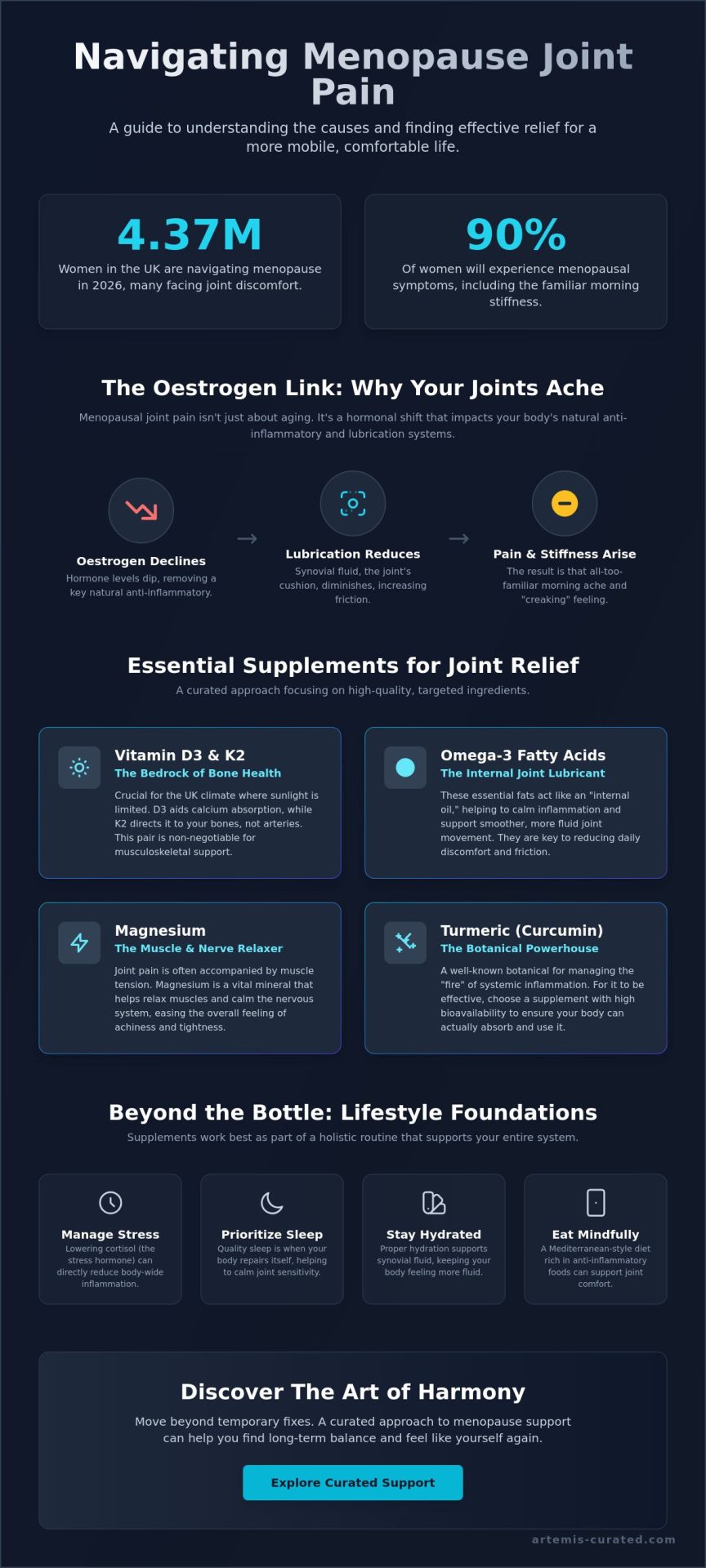
Oestrogen does far more than manage your cycle; it’s a powerful natural anti-inflammatory and a key regulator of your body’s fluid levels. When oestrogen levels begin to dip, your joints lose their primary protector. This hormonal shift often coincides with a sharp decline in collagen production. Because collagen is the building block for your tendons and ligaments, the structures supporting your joints become less resilient. For women across the UK, these changes usually manifest in “hot spots” like the hands, knees, and hips, making once-simple tasks feel surprisingly difficult. It’s why finding the right supplements for menopause joint pain UK becomes a priority for maintaining an active, soulful lifestyle.
The Role of Oestrogen in Joint Lubrication
Your joints are home to specialized oestrogen receptors that wait for signals to keep everything running smoothly. When these signals fade, the production of synovial fluid, the thick liquid that cushions your bones, begins to slow down. You might notice a “creaking” sensation or a feeling of internal dryness that wasn’t there before. Oestrogen is biologically essential for maintaining the volume and quality of synovial fluid that cushions every movement. Without this natural lubricant, the friction between your joints increases, leading to that characteristic “heavy” feeling in your limbs.
Distinguishing Menopause Pain from Osteoarthritis
It can be confusing to tell if your discomfort is hormonal or mechanical. A key indicator is when the pain occurs. Menopausal joint pain often presents as “morning stiffness” that eases slightly once you start moving and your body warms up. If your Menopause symptoms include night sweats or mood shifts, the joint pain is likely part of that same hormonal narrative. While mechanical wear usually gets worse with heavy activity, hormonal aches are more persistent and widespread. If you notice swelling, redness, or heat in a specific joint, it’s a good idea to consult a UK GP. However, for the general “all-over” ache that many of us feel, focusing on high-quality nutritional support and intentional lifestyle shifts is often the most effective path forward. You can explore targeted options in our Full Curated collection to see how purposeful supplementation fits into your daily routine.
The Best Supplements for Menopause Joint Pain in the UK
Selecting the right supplements for menopause joint pain UK is about more than just filling a cupboard with plastic bottles. It’s an intentional process of finding high-quality ingredients that actually speak to your body’s needs. In 2026, with the UK nutritional supplement market valued at approximately 18.7 billion dollars, the choices can feel overwhelming. However, focusing on a few key essentials can make a world of difference in how you move. Here are the foundational elements to consider:
- Vitamin D3 and K2: The bedrock of joint and bone health in the British climate.
- Omega-3 Fatty Acids: These act as an “internal oil” to help joints move more smoothly.
- Magnesium: A vital mineral for relaxing the muscle tension that often accompanies joint aches.
- Turmeric: A botanical powerhouse for managing the “fire” of systemic inflammation.
The UK Vitamin D Factor
Living in the UK means our relationship with the sun is complicated. Between October and March, the sunlight isn’t strong enough for our skin to produce Vitamin D. For menopausal women, this deficiency is a major contributor to musculoskeletal pain. D3 is vital, but it works best when paired with K2, which ensures calcium reaches your bones instead of your arteries. You don’t have to guess your levels; a simple blood test through your UK GP or a private kit can give you the data you need. Keeping these levels optimized is a non-negotiable step for anyone looking for effective supplements for menopause joint pain UK.
Botanicals and Anti-Inflammatories
Turmeric is a favorite for a reason, but it’s only as good as its absorption rate. Look for formulations that include black pepper extract, which can increase the bioavailability of curcumin by 2,000%. This helps dampen the inflammation that NIH research identifies as a core part of the link between menopause and joint pain. For structural support, glucosamine and chondroitin are often recommended to help maintain the cartilage itself. Just be aware of UK regulations; the MHRA classifies products with more than 1178mg of glucosamine as medicines. If you’re looking for a way to bring your body back into a state of balance, The art of harmony offers a thoughtfully curated way to support your system through these changes.
Beyond the Bottle: Why Cortisol and Sleep Matter for Your Joints
While finding the right supplements for menopause joint pain UK is a huge step, it’s only one piece of the puzzle. Your body isn’t a collection of separate parts; it’s a connected system where your mind and your mobility are deeply linked. If you’re constantly stressed, your body stays in a state of high alert. This is where cortisol, our primary stress hormone, comes into play. When cortisol levels remain high for too long, it triggers systemic inflammation that can make your joints feel like they’re on fire. Using high-quality supplements for menopause joint pain UK works best when you also address the underlying stress that drives this inflammation.
High cortisol also creates a bit of a biological theft. When your system is focused on managing stress, it effectively steals the nutrients and energy that should be going toward repairing your joint tissues and cartilage. This means even the best supplement routine can struggle to keep up if your stress levels are through the roof. Understanding the rhythm of your inner harmony is essential for long-term vitality. Taking a moment to breathe and reset isn’t just good for your mood; it’s a physical necessity for your joints.
Managing the Stress-Pain Loop
Breaking this cycle requires more than just willpower. It’s about creating a lifestyle that feels more like a sanctuary and less like a race. In the UK, where work-life balance can often feel skewed, taking ten minutes for intentional breathing or using adaptogens can be life-changing. Adaptogens like Ashwagandha help your body stay resilient against stressors, preventing that cortisol spike from wreaking havoc on your knees and hips. It’s about telling your nervous system that it’s safe to rest and repair. When you lower your cortisol, you allow your body to actually use the nutrients you’re providing through your diet and supplements.
Restorative Sleep as Joint Therapy
Sleep is when the real magic happens. During deep sleep, your body releases growth hormones that are essential for tissue repair and growth. If you’re tossing and turning, you’re missing out on this vital recovery window. This creates a frustrating Pain-Sleep Cycle. Your joints hurt, so you can’t sleep; because you didn’t sleep, your joints feel twice as sensitive the next day. Research suggests that sleep deprivation can actually lower your pain threshold, making existing aches feel much more intense.
Joint pain often peaks at night because our oestrogen levels are at their lowest point in the 24-hour cycle. Creating a curated evening routine, perhaps a warm bath with magnesium salts or some light stretching, can signal to your body that it’s time to heal. For those who find that rest remains elusive, The art of sleep provides a gentle, supportive way to reclaim those restorative hours. When you prioritize rest, you’re giving your supplements the best possible environment to work their wonders and help you wake up feeling refreshed.
Creating Your Daily Routine for Joint Comfort
Building a daily rhythm for your health is about more than just remembering a pill; it’s about creating a sequence of habits that support your body from the moment you wake up. When you start taking supplements for menopause joint pain UK, it’s helpful to remember that natural support takes time to build up in your system. Most women find that it takes between 8 and 12 weeks of consistent use to feel the full benefits of reduced inflammation and improved mobility. Patience is a key part of the process.
Your morning should begin with hydration and gentle movement. After a night of rest, your joints can feel particularly stiff because the synovial fluid hasn’t had a chance to circulate. Drinking a large glass of water and doing some light stretching helps “wake up” this natural lubricant. Think of it as preparing your body for the day ahead with intention and care. By the time you reach for your midday meal, you can further support this process with nutrition that fights inflammation from the inside out.
Movement That Heals
The old saying “motion is lotion” is particularly true during menopause. Engaging in low-impact activities like swimming, Pilates, or a brisk walk through a local park helps keep your joints flexible without causing unnecessary stress. These activities encourage blood flow to the cartilage and surrounding tissues. It’s important to listen to your body and avoid overtraining. Pushing yourself too hard can actually spike your cortisol levels, which we’ve seen can lead to more systemic inflammation. Aim for consistency rather than intensity to keep your joints happy.
The Anti-Inflammatory Kitchen
What you put on your plate is just as important as the supplements you choose. In the UK, we have access to wonderful seasonal foods that naturally dampen inflammation. Focus on adding more of these to your diet:
- Oily fish: Mackerel and sardines are packed with Omega-3s.
- Leafy greens: Kale and spinach provide essential minerals for bone health.
- Berries: Blackberries and blueberries are rich in antioxidants.
Try to reduce pro-inflammatory triggers like refined sugars and excessive caffeine, which can often make joint sensitivity worse. A simple swap, like choosing a handful of walnuts instead of a sugary biscuit during your afternoon tea break, can make a noticeable difference over time. As you settle into your evening, consider a magnesium-rich ritual, such as a warm bath or a quiet moment of reflection, to help your nervous system unwind. To find a routine that fits your lifestyle, you can explore the Full Curated collection for a more personalized approach to your wellness journey.
Discovering The Art of Harmony: Curated Support for Your Journey
At Artemis Curated, we believe that wellness shouldn’t feel like a frantic race to the checkout. It’s about finding a sense of quiet authority over your own health. Instead of filling your life with mass-produced solutions that promise the world, we focus on the power of intentionality. When you choose supplements for menopause joint pain UK, you’re not just buying a product; you’re selecting a partner for your journey. We value the narrative behind every ingredient and the storied history of the makers who bring them to life.
A cluttered cabinet can often mirror a cluttered mind. Many people find themselves overwhelmed by dozens of half-empty bottles that don’t quite deliver. We’ve moved away from that approach in favor of a purposeful, minimal collection. By focusing on high-quality, effective formulations, you can reduce the noise and focus on what truly works for your body. It’s about quality over quantity and soul over fleeting trends. This philosophy allows you to reclaim your mobility and move through your days with a renewed sense of ease and grace.
The Artemis Approach to Menopause
We see menopause as a significant chapter in a larger personal story. The art of harmony stands as a central pillar of our collection, specifically designed to support your system through these hormonal shifts. Every formulation is created with a deep respect for the “maker’s hand,” highlighting the human element and the careful selection of ingredients. If you’re looking for a comprehensive way to support your body, the Full Curated collection offers a cohesive path toward total wellness. It’s about bringing every aspect of your health into a beautiful, functional balance.
Start Your Journey to Harmony
Your body deserves to feel like a sanctuary again. While the challenges of menopause joint pain are real, they don’t have to define your daily experience. By combining the right supplements for menopause joint pain UK with mindful lifestyle adjustments, you can rediscover the joy of moving freely. We invite you to take a slow, deliberate look at our offerings and find the support that resonates with your unique needs. There is a profound beauty in a body that feels balanced and supported. When you’re ready to begin, you can Explore the Curated Shop for Menopause Support to find your next step toward vitality.
Reclaiming Your Natural Rhythm
Moving freely again starts with the understanding that your body isn’t broken; it’s simply asking for a more intentional kind of support. We’ve explored how shifting oestrogen levels impact your joint lubrication and why managing your cortisol is just as vital as the nutrients you choose each morning. Consistency is your greatest ally here. It’s important to remember that most women see the best results after 8 to 12 weeks of a steady, thoughtful routine.
Finding the right supplements for menopause joint pain UK shouldn’t feel like another chore on your list. It’s an opportunity to listen to what your body needs and respond with genuine care. As a UK-based wellness brand, we focus on holistic hormonal harmony through expertly curated formulations that prioritize quality over a cluttered cabinet. You can begin this next chapter of your wellness story today by choosing support that respects your body’s unique narrative. Find your inner balance with The Art of Harmony. You deserve to feel comfortable and vibrant in your own skin once more.
Frequently Asked Questions
How long does it take for menopause supplements to help with joint pain?
Most women notice a difference within 8 to 12 weeks of consistent daily use. Natural compounds need this window of time to build up to therapeutic levels in your system and begin dampening systemic inflammation. A 2024 study on nutritional interventions showed that skipping even two days a week can significantly delay the onset of relief; so staying steady with your routine is the best way to see progress.
Can I take joint supplements alongside HRT in the UK?
Yes, you can generally take supplements alongside Hormone Replacement Therapy to support different aspects of your health. While HRT focuses on systemic hormone levels, targeted nutrients like Omega-3s or Vitamin D3 work specifically on the physical structures and inflammatory markers in the joints. It’s always a good idea to have a quick chat with your UK pharmacist or GP to double check for any specific interactions with your prescribed medication.
What is the best type of collagen for menopause joint pain?
Type II hydrolyzed collagen is widely considered the most effective choice for supporting joint tissue and cartilage. Unlike Type I or III which focus more on skin and hair, Type II specifically targets the connective tissues in your knees, hips, and hands. Research from 2025 indicates that the “hydrolyzed” form is much easier for your gut to absorb, ensuring more of the protein actually reaches your joints where it’s needed most.
Is Vitamin D or Magnesium better for achy joints during menopause?
Neither is better because they perform two completely different but essential jobs for your mobility. Vitamin D3 is vital for bone density and immune regulation, while Magnesium focuses on relaxing the muscles that tighten up around sore joints. Since roughly 60% of UK adults are estimated to have low magnesium levels, using both together often provides the most comprehensive relief for that deep, all-over aching feeling.
Why is my joint pain worse in the morning during perimenopause?
Morning stiffness happens because your joints lose their natural lubrication and essentially “dry out” while you sleep. Your oestrogen levels are often at their lowest point in the early hours; without movement to circulate the synovial fluid, your joints can feel heavy and “gelled.” This is why many women find that their discomfort eases after about 20 minutes of light movement or a warm shower once they’re out of bed.
Are there any side effects to taking natural anti-inflammatories like Turmeric?
Turmeric is very safe for most people, though it can cause mild digestive upset if taken in extremely high doses on an empty stomach. Because it has mild blood-thinning properties, it isn’t recommended for anyone already taking anticoagulant medications. When you’re choosing supplements for menopause joint pain UK, always stick to the suggested daily dose to avoid any unwanted stomach sensitivity or interactions with other health conditions.
How much Omega-3 should a menopausal woman take for joint health?
You should aim for a minimum of 1,000mg of combined EPA and DHA every day to see a real impact on joint stiffness. This specific dosage is recognized by many nutritional experts as the threshold required to effectively lower inflammatory markers in the body. For those of us in the UK, it’s particularly important to source high-quality, purified oils to ensure you’re getting the clean nutrients your body deserves without any heavy metal contaminants.
Can dehydration make menopausal joint pain feel worse?
Yes, even slight dehydration makes joint pain feel significantly more intense because your joint fluid is roughly 80% water. When you’re dehydrated, the synovial fluid that cushions your bones becomes thinner and less effective at absorbing shocks. Drinking roughly 2 litres of water a day is one of the easiest and most effective ways to support your supplement routine and keep your joints moving smoothly.