


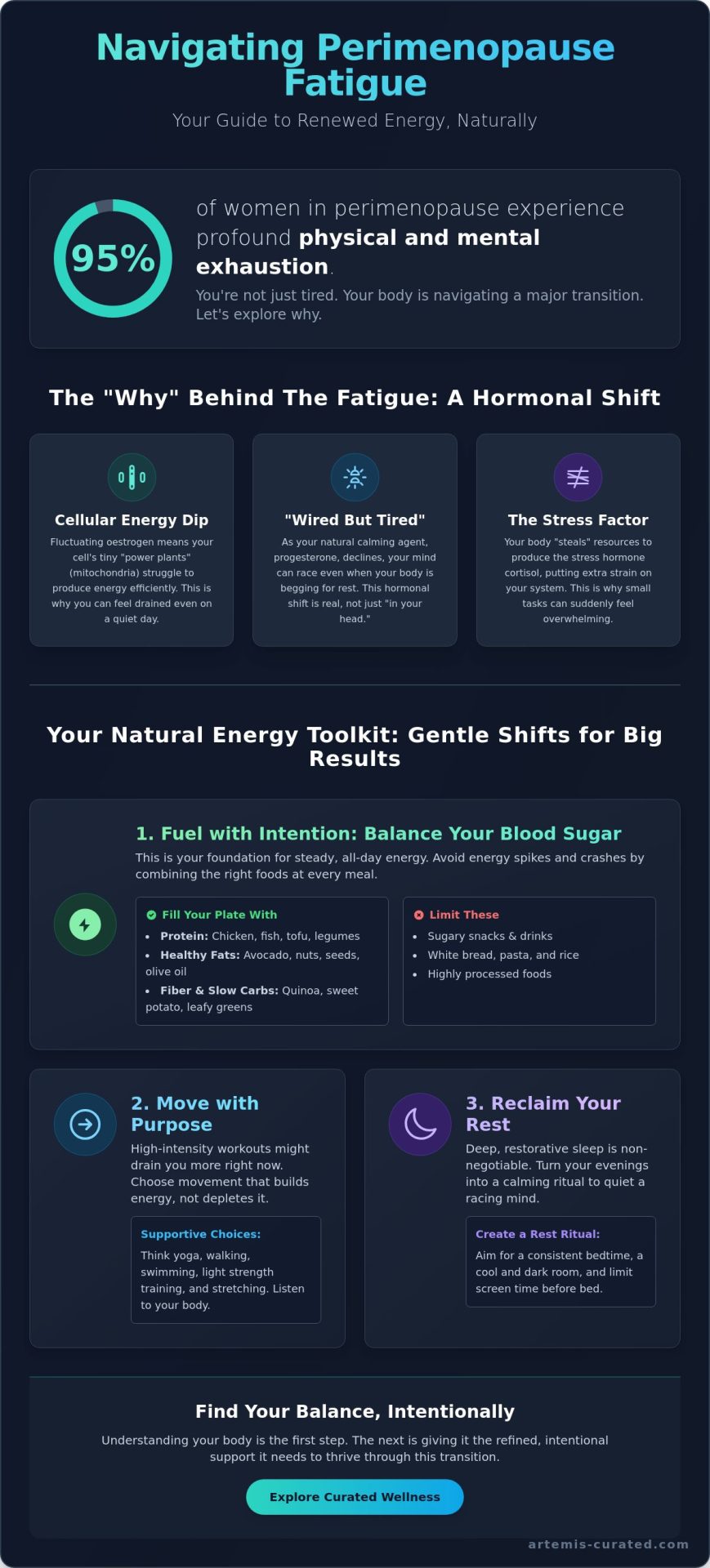
Did you know that 95% of women in perimenopause experience profound physical and mental exhaustion? It is a staggering number that confirms what you feel every morning when the alarm rings and the fog refuses to lift. You aren’t just tired; your body is simply navigating a significant transition. Understanding how to increase energy during perimenopause naturally isn’t about finding a quick fix or relying on a frantic caffeine habit. It’s about a quiet, intentional return to your own rhythm.
It is exhausting to wake up feeling unrefreshed despite a full night’s sleep, or to watch your usual to-do list turn into a mountain of work. We understand how difficult it is when brain fog makes even simple tasks feel like a chore. This guide is here to help you feel like yourself again through gentle, effective shifts that honor your body’s changing needs. We will explore how the careful selection of refined nutrition, rhythmic movement, and better sleep can restore your mental clarity and give you back a sense of steady, enduring vitality.
Key Takeaways
- Learn why perimenopause fatigue is a physical shift in your cells and how to work with your changing hormones instead of against them.
- Discover how to increase energy during perimenopause naturally by focusing on blood sugar balance as your primary foundation for daily vitality.
- Shift your perspective on sleep by turning it into a restorative ritual that helps quiet racing thoughts and manage night sweats.
- Find out why high-intensity workouts might be making you more tired and how to choose movement that supports your energy rather than draining it.
- Explore the philosophy of curated wellness and how to select quality supplements that provide the specific support your body needs right now.
Why Perimenopause Saps Your Energy: The Hormonal Shift
Fatigue in midlife is rarely just about a late night or a busy week. It is a multi-layered physiological shift where your body is essentially rewriting its own operating manual. When we look at how to increase energy during perimenopause naturally, we have to start with the mitochondria. These are the tiny power plants inside your cells. Oestrogen acts like a vital spark for these plants, helping them turn fuel into the vitality you feel throughout the day. As your levels fluctuate, your cells can struggle to produce energy as efficiently as they once did. This cellular change is a core part of Understanding Perimenopause and why you might feel drained even on quiet days.
Then there is progesterone, often thought of as the body’s natural calming agent. As it begins to decline, many women experience a frustrating “wired but tired” sensation. You are physically exhausted, yet your mind is racing and won’t let you rest. This isn’t just in your head; it is a direct result of your changing chemistry. It is also a good idea to have your thyroid function checked by a professional. Thyroid issues can often mimic perimenopause fatigue, and ensuring your metabolism has the right support is a key step in learning how to increase energy during perimenopause naturally.
The Oestrogen and Progesterone Rollercoaster
Oestrogen is a key player in how your brain uses glucose for fuel. When these levels drop, your brain’s metabolism can dip, leading to that heavy, foggy feeling that makes work so difficult. At the same time, the loss of progesterone can trigger a rise in anxiety and disrupt the deep, restorative sleep you need for recovery. These shifting levels create a significant energy gap that defines the midlife experience.
The Cortisol Factor: Why Stress Feels Heavier Now
As your ovaries begin to wind down their hormone production, your adrenal glands are asked to step up and fill the void. This puts extra pressure on your stress response system. If you are constantly under pressure, your body “steals” the raw materials needed for hormonal balance to produce cortisol instead. This is why small tasks that used to be easy now feel completely overwhelming. When your adrenals are overworked, your overall energy reserves are the first thing to disappear.
Understanding these shifts allows us to move away from the idea of “fixing” ourselves. Instead, we can focus on selection and intentionality. By choosing habits that support these internal systems, we can bridge the energy gap and find a sense of balance again. It is about creating a lifestyle that respects the hand of nature while giving your body the refined support it deserves.
Fueling Your Body with Intention: The Nutritional Foundation
When you’re looking for how to increase energy during perimenopause naturally, the food you eat is your best starting point. It’s time to stop thinking about restrictive diets and start thinking about giving your body what it needs to stay steady. In midlife, your body requires a bit more care to keep everything running smoothly. This isn’t about cutting things out; it’s about picking ingredients that help you feel stable and strong throughout the day. It’s a simple way to respect what your body is going through right now.
Keeping your blood sugar level is the most important thing for your daily energy. If you eat a lot of white bread or sugary snacks, your energy will spike and then crash quickly. This is why you might feel like you need a nap by mid-afternoon. To stay on track, try to have some protein, healthy fat, and fiber at every meal. This combination slows down how fast your body absorbs sugar, giving you a steady stream of power instead of a quick burst. Swapping out things like white rice for sweet potatoes or quinoa can really help your metabolism stay in a good groove.
Try to get plenty of variety and color on your plate. Different vegetables help your body process oestrogen more effectively, which is key for your overall balance. You also need healthy fats from things like avocados, seeds, and oily fish. These fats are the building blocks your body uses to make hormones and keep your brain clear. If you feel like your daily meals aren’t quite enough, looking at a curated collection of wellness essentials can be a great way to give your body the extra support it needs.
Blood Sugar Balance for Steady Vitality
The secret to beating that afternoon slump is consistency. When you pair slow-release carbs with good protein, you avoid the big insulin spikes that leave you feeling drained. Think of it as keeping your energy on an even keel all day long. Simple changes, like switching to sourdough or whole grains, can make a huge difference in how you feel by the time evening rolls around.
Essential Nutrients for Mitochondrial Health
Your cells need specific nutrients to work their best. Magnesium is a major player because it helps you stay calm while also supporting your energy levels. B vitamins are also key because they help turn your meals into fuel your body can actually use. In the UK, it’s very common for women to be low in Vitamin D and Iron. These deficiencies are a major reason for managing perimenopause symptoms like constant tiredness. Making sure you’re getting enough of these is a simple part of learning how to increase energy during perimenopause naturally.
Reclaiming the Art of Restful Sleep
Sleep often feels like a lost art during midlife. Many of us find ourselves staring at the ceiling at 3 AM, our minds racing with tomorrow’s to-do list while a sudden wave of heat makes rest impossible. It’s a struggle. It is frustrating to know that the very thing you need to feel human is the one thing that feels out of reach. When you are researching how to increase energy during perimenopause naturally, you have to start with the quality of your rest. Sleep isn’t just a box to tick at the end of the day. It is a vital recovery ritual that determines your vitality for the next twelve hours. For more natural ways to boost energy, focusing on the architecture of your night is the best place to begin.
Small habits have a big impact on your temperature regulation. While an evening glass of wine might feel like it helps you unwind, it actually fragments your REM sleep and can trigger night sweats. It raises your core body temperature, making it harder for your system to settle into deep, restorative cycles. On the other hand, spending just ten minutes in morning sunlight helps reset your internal clock. This simple act tells your brain exactly when to start producing melatonin later that evening, making it one of the most effective ways to learn how to increase energy during perimenopause naturally.
Creating a Sanctuary for Deep Rest
Your bedroom should be a retreat from the noise of the world. To encourage deep rest, keep the space cool, dark, and as quiet as possible. A digital sunset at least 60 minutes before bed is essential. By putting away phones and tablets, you lower your cortisol and allow your nervous system to soften. Choosing bedding made from natural fibres like linen or cotton also makes a significant difference. These materials are breathable and help wick away moisture, keeping you comfortable even when your internal thermostat is fluctuating.
The Role of Natural Calmers and Rituals
Rituals help bridge the gap between a busy day and a quiet night. A warm bath with Epsom salts is a wonderful way to absorb magnesium, a mineral that helps muscles relax and settles the mind. You might also find comfort in traditional herbs. Chamomile and Ashwagandha are gentle botanicals that support the nervous system without the grogginess of stronger aids. For those seeking a more structured evening routine, The art of sleep offers a thoughtful way to invite deeper rest into your life. By choosing quality over quantity in your evening habits, you give your body the space it needs to truly renew itself.
Movement and Stress Management for Sustainable Vitality
There is a common misconception that the answer to midlife fatigue is simply to move more and push harder. However, when you are looking for how to increase energy during perimenopause naturally, the old “no pain, no gain” philosophy can actually work against you. High-intensity interval training or long, grueling runs can spike your cortisol levels. When your adrenals are already under pressure from hormonal shifts, this extra stress can leave you feeling more depleted than before you started. Instead, we should focus on joyful movement that builds your internal reserves without draining them.
Daily micro-breaks are just as important as your scheduled activity. Taking two minutes to simply breathe or look out a window allows your nervous system to step out of “fight or flight” mode. This intentionality is a key part of how to increase energy during perimenopause naturally because it prevents the slow leak of vitality that happens when we are constantly “on.” It’s about selecting the right rhythm for your body’s current season, moving away from frantic exertion toward a more sustainable and reverent approach to your physical health.
Rethinking Exercise: Building Strength, Not Stress
Resistance training is a beautiful way to support your metabolism and bone density during this transition. You don’t need to lift heavy weights to see a benefit; even using your own body weight in Pilates or yoga can create a strong, resilient frame. Walking is another restorative option that clears the mind while keeping the body in motion. In this stage of life, rest days are not a sign of laziness. They are a vital part of the training process that allows your muscles and hormones to recover and rebuild.
Managing the Mental Load: The Power of No
Midlife often places us in the “sandwich generation,” where we are caring for both children and aging parents. This emotional energy drain is significant. Protecting your spark requires the grace to set boundaries and the courage to say no. You can reset a stressed nervous system in just two minutes through simple breathwork, focusing on an exhale that is longer than the inhale. If you find that the mental load is affecting your daily balance, you might find support in The art of harmony, which is designed to help you navigate these shifts with more ease.
- Identify one recurring task that drains you and delegate it to someone else.
- Practice saying “let me check my schedule” before committing to any new requests.
- Schedule ten minutes of “nothing time” in your diary every day to simply be.
Curating Your Personal Energy Toolkit
Building a personal toolkit for vitality isn’t about filling your cupboard with every supplement you find on a shelf. It is about a more intentional process of selection. When you are looking for how to increase energy during perimenopause naturally, the quality of what you put into your body is just as important as the habits you keep. Natural supplements should be viewed as a sophisticated bridge that helps close the gap between your daily nutrition and the increased demands of your changing hormones. By choosing targeted botanicals, you aren’t trying to force your body into a different state. Instead, you are providing it with the refined tools it needs to work in harmony with its own natural processes.
This approach requires a shift away from the “quick fix” mentality that is so common in traditional retail. True vitality in midlife is a slow and deliberate journey. It’s about looking at your wellness through a long-term lens and understanding that your body deserves a higher standard of care. By focusing on a few high-quality, well-researched ingredients rather than a cluttered collection of mass-produced options, you respect the unique narrative of your own health. It is a fundamental philosophy for living well that values soul and substance over fleeting trends.
Targeted Support with The Art of Harmony
For many women, The art of harmony serves as the cornerstone of their daily routine. This foundational menopause support is crafted with ingredients specifically chosen to encourage hormonal balance and provide a steady stream of energy. It isn’t just about the physical benefit; it’s about the ritual itself. Taking a moment each day to nourish your system becomes an act of self-care that reinforces your commitment to your own well-being. This consistency is one of the most effective ways to learn how to increase energy during perimenopause naturally while staying grounded in your own body.
Finding Your Rhythm with Holistic Collections
Energy doesn’t exist in a vacuum. It is deeply connected to how well you sleep and how vibrant you feel in your own skin. This is why many find that the Full Curated collection offers the most comprehensive path forward. When you support your sleep cycles and your cellular radiance alongside your hormonal health, you create a holistic environment where vitality can truly thrive. Each element of the collection works together to ensure you don’t just survive the day, but move through it with a sense of grace and control. If you are ready to reclaim your spark, we invite you to explore the shop and start your journey to vitality today.
Embracing Your New Rhythm
Reclaiming your spark is not about a single quick fix. It is about a collection of gentle, intentional shifts that honor your body’s evolving needs. By stabilizing your blood sugar and creating a sanctuary for deep rest, you begin to bridge the energy gap that midlife often brings. Learning how to increase energy during perimenopause naturally is a slow, beautiful process of returning to your own center. It is about choosing quality over quantity and listening to what your body truly requires to thrive.
At Artemis Curated, we provide expertly curated supplement collections designed for holistic hormonal harmony. We are a UK-based wellness brand for the discerning woman who values soul and intentionality in her self-care. You don’t have to navigate this transition alone. With the right support, you can find a steady sense of vitality and feel in control of your body once again. It’s time to treat your wellness as a meaningful story rather than a list of symptoms.
Ready to start? Discover The Art of Harmony: Your Natural Companion Through Perimenopause and begin your journey toward lasting vitality today.
Common Questions About Perimenopause Energy
Why am I so tired during perimenopause even when I sleep?
Fluctuating oestrogen levels often disrupt your body’s internal thermostat and deep sleep architecture. You might be in bed for the right amount of time, but your brain isn’t reaching the restorative stages it needs for true recovery. This results in waking up feeling unrefreshed, as your system hasn’t had the chance to fully repair itself overnight due to subtle night sweats or hormonal shifts.
Can I increase my energy levels without taking HRT?
You can absolutely learn how to increase energy during perimenopause naturally by focusing on the foundations of your health. While HRT is a choice for some, many women find that balancing blood sugar and supporting their adrenal health makes a massive difference. It is about a quiet, intentional return to lifestyle habits that respect your body’s changing needs and cellular rhythm.
What are the best vitamins to take for perimenopause fatigue?
Magnesium is often the most helpful mineral because it supports both cellular energy production and a calm mind. B vitamins are also vital for converting the food you eat into usable power. In the UK, checking your Vitamin D and Iron levels is a smart move. These deficiencies are common and can make you feel incredibly sluggish if they aren’t addressed with quality support.
Does caffeine actually make perimenopause tiredness worse?
It can, especially if you’re using it to mask underlying exhaustion. Caffeine triggers the release of cortisol, which can worsen hot flashes and anxiety in midlife. This often leads to a cycle of spikes and crashes that leaves you feeling more drained by the afternoon. Reducing your reliance on it helps your body find its own steady, natural rhythm without the nervous system jitters.
How long does the fatigue phase of perimenopause usually last?
There isn’t a fixed timeline, as the transition itself can span anywhere from four to ten years. However, the most intense exhaustion usually happens when your hormone levels are fluctuating most wildly. Most women find that as they implement better nutritional foundations and sleep rituals, the severity of this fatigue begins to lift and becomes much more manageable.
Is it normal to feel “wired but tired” in my 40s?
This is a classic sign of declining progesterone, which usually acts as your body’s natural sedative. Without enough of it, your nervous system can stay on high alert even when you’re physically spent. It’s a frustrating sensation that makes it hard to switch off. Focusing on calming botanicals and evening wind-downs can help soothe this restless feeling and encourage better rest.
What kind of exercise is best for energy during menopause?
Strength training and restorative movement like walking or yoga are the gold standard for midlife. These build muscle and protect your bones without causing the massive cortisol spikes associated with high-intensity cardio. The goal is to feel energized after your workout. If you feel completely wiped out for the rest of the day, it’s a sign you might need to dial back the intensity.
How does stress affect my energy during the hormonal transition?
Stress is a major energy drain because your adrenal glands are working overtime to support your hormones as your ovaries wind down. When you’re constantly pushed to the limit, your body focuses on survival rather than vitality. Discovering how to increase energy during perimenopause naturally requires you to protect your peace and say no to demands that don’t serve your long-term well-being.