


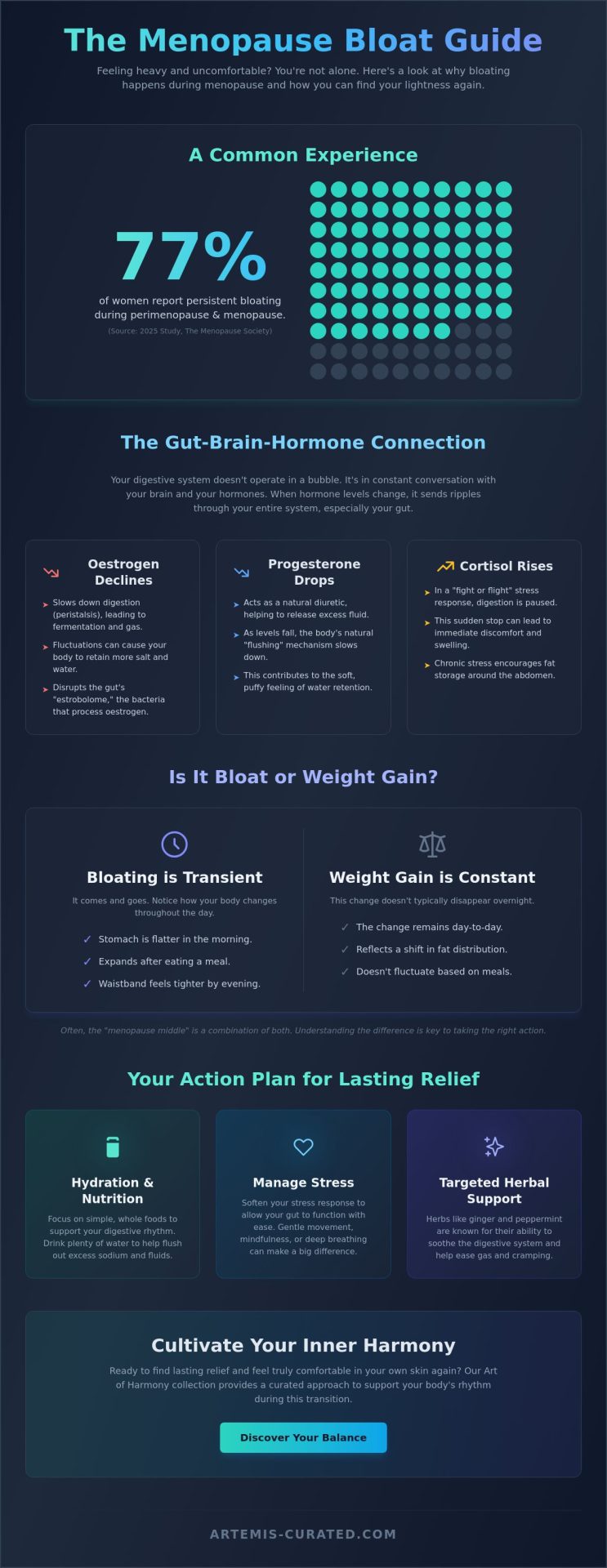
A 2025 study found that a staggering 77% of women experience persistent bloating as they move through perimenopause and menopause. It is a quiet, uncomfortable reality that often arrives uninvited, making your favorite clothes feel suddenly restrictive and your body feel like a stranger. If you have noticed your stomach feels heavy despite no change in your habits, you aren’t alone. Learning how to reduce bloating during menopause is about more than just a flatter silhouette; it is about restoring a sense of sanctuary and ease within your own skin. A sense of lightness. A return to comfort.
It’s exhausting to navigate social plans when you’re worried about how your clothes fit or how your body will react to a simple meal. You likely feel as though your digestive system has lost its natural, graceful rhythm. This guide promises to reveal the “why” behind these changes and offer practical, natural ways to soothe your system. We will explore how a curated daily routine and our Art of Harmony support can help you find lasting relief, allowing you to feel comfortable and truly yourself again.
Key Takeaways
- Understand why hormonal shifts like declining oestrogen slow down your digestion and cause that heavy, swollen feeling.
- Discover simple, natural strategies for how to reduce bloating during menopause by focusing on hydration and plant-based nutrition.
- Learn about the “gut-brain-hormone” axis and why managing your stress is just as important as what you put on your plate.
- Explore how targeted herbal supports like ginger and peppermint can soothe your digestive system and help you feel light again.
- Find out how the Art of Harmony collection provides a curated approach to balancing your body’s rhythm during this transition.
What is Menopause Bloating and Why is it Happening Now?
Bloating is more than just a physical fullness. It is a sensory experience of tightness, a feeling that your skin is being stretched from within. For many, this sensation is most acute during Menopause and the years leading up to it. It often feels like your internal rhythm has been disrupted, leaving you with a stomach that feels heavy and clothes that no longer drape with ease. Understanding why this happens is the first step in learning how to reduce bloating during menopause.
This discomfort isn’t a rare occurrence. In fact, a 2025 study presented by The Menopause Society revealed that 77% of menopausal women struggle with bloating. It typically peaks during perimenopause when hormones are at their most erratic. You might experience “gas bloat,” which is a buildup of air in the digestive tract, or “water retention,” where your cells hold onto fluids. Both contribute to that sudden, uncomfortable swelling that seems to appear out of nowhere. A heavy, uninvited guest.
The Role of Oestrogen and Progesterone
Your hormones act as the quiet conductors of your body’s fluid balance. Oestrogen, when it fluctuates or remains high relative to other hormones, encourages your body to retain salt and water. This creates a soft, puffy feeling. Progesterone usually acts as a natural diuretic, helping your body release excess fluid. As progesterone levels drop during this transition, that natural “flushing” mechanism slows down. These hormonal waves are unpredictable, which is why you might feel perfectly light one morning and significantly swollen by the afternoon. It’s a shift in your internal chemistry, not a failure of willpower.
Is it Bloat or Weight Gain?
It’s easy to confuse bloating with the weight changes that often accompany this stage of life. A simple way to tell the difference is to observe how your body changes throughout the day. Bloating is transient. If your stomach is flat in the morning but expands after lunch, or if your waistband feels tighter in the evening, you’re likely dealing with bloat. Weight gain is constant; it doesn’t disappear when you wake up. The “menopause middle” is frequently a combination of both, where a shift in fat distribution meets hormonal fluid retention. Both are manageable once you understand the underlying signals your body is sending. Learning how to reduce bloating during menopause starts with recognizing these subtle shifts and responding with intentionality.
The Hormonal Connection: Oestrogen, Cortisol, and Your Gut
Your body operates as a series of interconnected dialogues. The “gut-brain-hormone” axis is perhaps the most profound of these conversations. When we look at the causes of menopause bloating, we see that it isn’t just about the food you eat. It’s about how your nervous system and your hormones influence your digestive rhythm. This connection is why many women feel a sense of heaviness that seems untethered to their diet. It’s a subtle shift in the body’s internal communication.
Oestrogen plays a quiet, essential role in keeping your digestive tract moving. It helps regulate “peristalsis,” which are the wave-like muscle contractions that move food through your system. As oestrogen levels decline, this movement can become sluggish. Food stays in the gut longer, leading to fermentation and the uncomfortable buildup of gas. Understanding this physical slowdown is a key part of learning how to reduce bloating during menopause. When the natural pace of your digestion changes, the sensation of swelling often follows.
Why Stress Makes Bloating Worse
When you’re under pressure, your body enters a “fight or flight” state. In this mode, energy is diverted away from digestion and toward your muscles and heart. This pause in digestive activity can lead to immediate discomfort and swelling. Cortisol, the hormone associated with this response, also encourages the body to store fat around the abdomen. We invite you to view Cortisol as a rhythm to be curated rather than a foe to be fought. By softening your stress response, you create a sanctuary where your gut can function with ease. It’s about finding peace in the middle of change.
The Gut Microbiome Shift
The transition into menopause also brings a shift in your gut’s microbial landscape. There is a specific group of bacteria known as the “estrobolome” that is responsible for metabolizing and clearing oestrogen. When your hormones shift, this delicate balance can be disrupted. A lack of diversity in these “good” bacteria often leads to a sluggish gut and increased gas production. Exploring how to reduce bloating during menopause often leads back to these microscopic helpers. Cultivating a diverse internal environment is essential for long-term comfort. If you’re looking for a gentle way to bring your system back into balance, exploring our menopause support collection can be a beautiful step toward inner harmony.
Practical Ways to Reduce Bloating Every Day
Finding relief is often found in the quiet moments between the rush of daily life. How to reduce bloating during menopause isn’t just about removing things from your plate; it’s about adding a sense of intentionality to how you nourish yourself. We often eat while distracted, which keeps our bodies in a state of high alert. By creating a “rest and digest” environment during meals, you signal to your nervous system that it is safe to focus on processing food. It’s a simple, elegant shift that can yield profound results for your comfort.
Hydration is another essential element, but it goes beyond simply drinking glasses of water. You can “eat” your water by choosing plants with high moisture content, such as cucumbers, celery, and melon. These foods provide hydration alongside minerals that help balance your body’s fluid levels. When you approach movement, think of it as a way to encourage your body’s natural flow. A slow, deliberate walk or a few minutes of gentle stretching can help move gas through your system more effectively than a strenuous workout.
Gentle Dietary Adjustments
Instead of three large meals, try smaller, more frequent nourishment throughout the day. This prevents your digestive system from becoming overwhelmed. You might also notice that certain “bloat triggers” like salt, caffeine, or even raw cruciferous vegetables like kale feel more disruptive than they used to. Adding “bitter” foods such as arugula or dandelion greens before a meal can help kickstart your digestion. These small, curated choices help your body process nourishment with much greater ease.
Movement and Nervous System Care
Your nervous system and your gut are deeply connected. Simple tools like box breathing, where you inhale, hold, exhale, and hold for four counts each, can lower your cortisol levels in just two minutes. This reset is particularly effective right before you sit down to eat. Consistency in your sleep also plays a vital role. Quality rest helps regulate the hormones that control hunger and fluid retention. If you find your evenings are restless, exploring The art of sleep can be a transformative part of your daily rhythm. When you prioritize rest, you give your body the space it needs to restore its natural balance and reduce the physical heaviness of bloat.
Natural Supplements and Targeted Support
When you look for ways to support your body through hormonal changes, the goal is to find balance rather than a quick fix. Supplements should feel like a thoughtful addition to your daily rhythm, not a cluttered collection of bottles. Finding the right path for how to reduce bloating during menopause often involves looking at what your body needs to maintain its natural equilibrium. It is about choosing ingredients that work in quiet partnership with your system. We believe that choosing the right supplements is always a matter of quality over quantity. A few well-selected, high-quality ingredients are far more effective than a scattered approach.
A high-quality multivitamin can also play a vital role in filling the nutritional gaps that often appear as oestrogen levels shift. These gaps can sometimes lead to a sluggish metabolism or increased water retention. By providing your body with a consistent foundation of vitamins and minerals, you help it navigate these “hormonal waves” with greater resilience. It is a way of ensuring your internal environment remains stable and supported, even when things feel unpredictable on the outside.
Magnesium and Mineral Balance
Magnesium is a quiet hero when it comes to digestive comfort. It helps your body flush out excess sodium, which is often the culprit behind that uncomfortable, puffy feeling. Beyond fluid balance, magnesium has a naturally calming effect on the muscles of the digestive tract. When these muscles are relaxed, food moves through more smoothly, reducing the chance of gas buildup. We recommend looking for bioavailable forms of minerals, such as magnesium glycinate or citrate, which are easier for your body to absorb and use effectively. This mineral also supports better rest, creating a double benefit for your overall well-being.
Botanical Allies for Digestive Ease
Traditional herbs have been used for centuries to soothe the gut lining and encourage healthy digestion. Ginger, peppermint, and fennel are particularly effective at calming the digestive system. Ginger provides a warming presence that helps speed up the movement of food, while peppermint and fennel help relax the muscles that can cause painful cramping and swelling. When you take these herbal supports, try to view it as a ritual. Taking a moment to breathe and focus on the act of nourishment can lower your stress levels, making the supplements even more effective. If you’re ready to find your own internal rhythm, you can explore our Full Curated collection for a complete approach to harmony. These botanical allies work with your body’s natural processes to bring a sense of lightness back to your day.
Cultivating Harmony: The Artemis Approach to Menopause
We believe that your body is a sanctuary, a place where history and vitality meet. Moving through menopause shouldn’t feel like a constant battle with your own skin. Instead, it can be a time of intentional selection, where you choose the rituals and supports that truly serve your well-being. Our approach, centered on “The Art of Harmony,” is designed to help you reclaim that sense of lightness. When you explore how to reduce bloating during menopause, you aren’t just looking for a temporary fix. You’re seeking a way to bring your internal systems back into a graceful, predictable rhythm.
Our menopause support collection is crafted with this philosophy in mind. We prioritize quiet authority and high-quality, bioavailable ingredients that target the root causes of digestive heaviness. By supporting your body’s natural ability to balance oestrogen and manage fluid, these supports help you feel like yourself again. This stage of life isn’t an ending; it is a transition toward a new, refined kind of energy. It’s an invitation to listen more closely to what your body is asking for.
Why Harmony Matters
The act of “curating” your health is a deeply personal process. It moves away from the noise of mass-produced solutions and toward a soulful appreciation for what your body needs right now. “The Art of Harmony” supports your system by encouraging natural balance, helping to smooth out the erratic hormonal shifts that lead to discomfort. For those who wish to explore this journey more deeply, our Navigating Menopause guide offers a comprehensive look at holistic well-being. It is a resource for those who value quality and depth in their self-care routines.
Your Next Steps to Feeling Lighter
If you’re ready to start your journey toward comfort, here is a simple plan for your next 24 hours:
- Nourish with water: Include one water-rich plant, like a crisp cucumber or a slice of melon, in your next meal to support gentle hydration.
- Find your breath: Before you sit down to dinner, take two minutes for box breathing to signal your nervous system to enter a “rest and digest” state.
- Select your support: Choose one targeted ritual, perhaps from our Art of Harmony collection, to begin restoring your internal balance.
While these steps offer a beautiful starting point for how to reduce bloating during menopause, it’s always wise to listen to your body’s unique signals. If your symptoms feel persistent or unusual, we encourage you to check with your GP to ensure everything is as it should be. It’s about taking care of your sanctuary with both intuition and wisdom. We’re here to guide you as you find your way back to a body that feels light, comfortable, and entirely your own.
Embracing a Lighter Path Forward
Reclaiming your comfort is a journey of small, intentional choices. We’ve explored why these shifts happen, from the physical slowing of your digestion to the hidden impact of stress on your gut. You now have the tools to manage these changes through gentle movement, mindful eating, and the right mineral support. Understanding how to reduce bloating during menopause allows you to move away from frustration and toward a lasting sense of ease. It’s about restoring the sanctuary of your own body so you can feel at home in your favorite clothes once again.
Our collection is designed by women for women, focusing on holistic hormonal harmony through expertly curated botanical ingredients. We’ve selected each element for its ability to work in quiet partnership with your system, honoring the unique narrative of your wellness journey. Ready to find your balance? Shop The Art of Harmony collection for curated menopause support. You deserve to feel comfortable, light, and truly vibrant in every stage of life. It’s time to return to a rhythm that feels natural, effortless, and entirely your own.
Frequently Asked Questions
How long does menopause bloating usually last?
Menopause bloating often lasts throughout the transition period, typically peaking during perimenopause when hormone fluctuations are most intense. For many women, the sensation settles once they reach post-menopause and their hormone levels become more stable. However, the duration is unique to every individual. Focusing on daily rituals and consistent support can help manage these symptoms until your body finds its new, natural rhythm.
Is it normal to suddenly feel bloated in perimenopause?
It is completely normal to experience sudden bloating during perimenopause. A 2025 study presented at the Annual Meeting of The Menopause Society found that 77% of menopausal women reported bloating as a primary symptom. These changes are usually triggered by erratic shifts in oestrogen and progesterone. These hormones directly influence how your body retains water and how quickly your digestive system processes food.
Can magnesium supplements really help with bloating?
Magnesium can be very helpful for reducing water retention by helping your body flush out excess sodium. It also works to relax the muscles in your digestive tract, which allows food and gas to move through more gracefully. Choosing a bioavailable form ensures your system can absorb the mineral effectively. This is a key part of learning how to reduce bloating during menopause naturally and effectively.
Does HRT make bloating better or worse?
The impact of Hormone Replacement Therapy (HRT) on bloating varies significantly from person to person. Some find it helps balance their system; others may experience temporary fluid retention when they first begin treatment. Since we don’t offer HRT or clinical consultations, it’s best to discuss this path with your GP. They can help you understand how different options might affect your body’s unique chemistry.
What are the best foods to eat to reduce menopause bloat?
Water-rich plants like cucumbers, celery, and melon are excellent for hydrating your cells without causing a feeling of heaviness. Adding “bitter” foods like arugula or dandelion greens before a meal can also kickstart your natural digestion. These small, curated additions to your plate can make a noticeable difference. Learning how to reduce bloating during menopause often starts with these simple, gentle dietary shifts that prioritize ease.
When should I be worried about bloating during menopause?
You should speak with a doctor if your bloating is persistent, painful, or accompanied by changes in bowel habits or unexpected vaginal bleeding. While bloating is a common part of the menopause transition, it’s important to rule out other underlying issues if the discomfort feels unusual or severe. Always listen to your body’s signals. A GP can provide the necessary clinical check-up to ensure your peace of mind.
How can I tell the difference between bloating and belly fat?
The main difference is that bloating fluctuates throughout the day, while belly fat remains constant. If you wake up with a relatively flat stomach but feel tight and swollen by evening, you’re likely dealing with bloat. Belly fat doesn’t change based on what you’ve eaten or the time of day. Recognizing this distinction helps you choose the right approach for your comfort and understand your body’s changing narrative.