


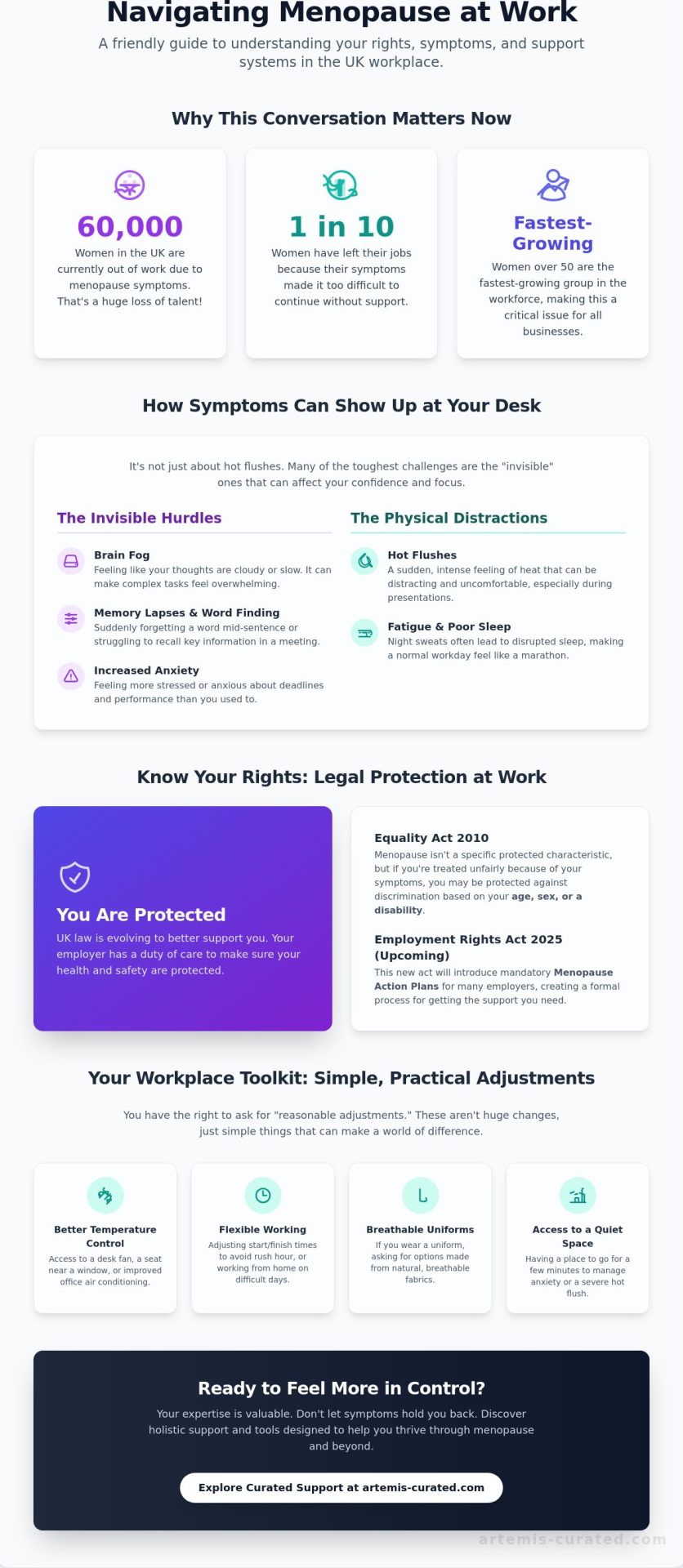
An estimated 60,000 women in the UK are currently unemployed due to menopause symptoms, a loss of talent that reflects a deeply personal struggle within our professional spaces. This figure is more than just a statistic; it’s a collection of stories about brilliant minds clouded by brain fog and long days made heavy by fatigue. If you’ve ever felt the sudden, sharp heat of a flush while leading a meeting, you know that managing menopause at work uk requires more than just resilience. It requires a thoughtful approach to your environment and your rights. You deserve to feel composed and capable, even when your internal rhythm feels out of sync.
It’s natural to feel anxious about your performance when your body is changing, but you aren’t alone in this transition. This guide will help you understand your legal protections under the Equality Act 2010 and the new Employment Rights Act 2025, which introduces mandatory Menopause Action Plans for many employers. We’ll also share gentle, holistic strategies to support your focus and energy, including our own Art of Harmony. You’ll discover how to advocate for your needs and use the latest UK regulations to create a workspace that respects your journey and your career.
Key Takeaways
- Understand why your presence in the workforce is so vital. You’ll see how the current work environment is shifting to better support your career growth.
- Learn to identify how invisible symptoms like brain fog affect your focus. Discover ways to regain your composure during stressful tasks.
- Get clear on your legal rights under the Equality Act 2010. Find out which simple, practical adjustments help with managing menopause at work uk.
- Build a desk-side wellness routine using specific micronutrients. These help support your cognitive function and keep your energy levels steady throughout the afternoon.
- Discover how The Art of Harmony acts as a daily partner in maintaining your professional performance and hormonal balance.
Managing Menopause at Work in the UK: Why It Matters Now
The British professional landscape is undergoing a quiet but profound transformation. Women over 50 now represent the fastest-growing demographic in our workforce. This means that at any given moment, roughly 13 million people in the UK are navigating the transition of perimenopause or menopause. It’s no longer a private matter to be whispered about in corridors. It has become a vital pillar of professional longevity and workplace culture. Managing menopause at work uk is about more than just surviving the day; it’s about ensuring that years of expertise and leadership aren’t lost to symptoms that can be thoughtfully supported.
For too long, the silence surrounding these changes led to a talent drain. Statistics show that 1 in 10 women have left their roles because of menopause symptoms, and an estimated 60,000 women are currently out of work for this very reason. This loss of experience is preventable. We’re seeing a shift toward transparency, supported by this Menopause in the workplace overview, which highlights how social and legal expectations are evolving. When we address these needs early, we preserve not just a career, but the confidence and sense of self that define a professional’s identity.
The Three Stages of the Journey
Understanding the timeline is the first step toward effective management. Perimenopause often begins in a woman’s 40s, sometimes even earlier, bringing subtle shifts in mood and focus that many employers fail to recognise. Then comes menopause, followed by the long-term postmenopausal phase. Each stage carries different needs. It’s also vital to acknowledge “medical menopause,” which can occur suddenly due to surgery or treatment. These transitions require a high level of sensitivity from managers, as the sudden onset of symptoms can be particularly jarring in a fast-paced work environment.
Breaking the Stigma in Professional Circles
The days of feeling “embarrassed” by a hot flush in the boardroom are beginning to fade. Modern UK companies are increasingly adopting “Menopause Ambassadors” to foster open dialogue. These advocates help normalise the conversation, making it easier for employees to speak up without fear of being judged as less capable. When you can talk openly with your colleagues about why you might need a desk fan or a brief break, the associated anxiety often dissolves. This openness creates a culture of mutual respect, where the human element of work is celebrated rather than hidden. You can explore our curated collection of support tools to help you maintain your poise and presence throughout these conversations.
Understanding the Impact: How Symptoms Show Up at Your Desk
While many conversations focus on the physical environment of an office, the most significant challenges often happen within. Managing menopause at work uk involves acknowledging the internal shifts that can suddenly disrupt a previously effortless routine. You might find yourself mid-sentence in a high-stakes meeting, only for a common word to vanish from your mind. This isn’t a reflection of your professional capability; it’s a physiological response to fluctuating hormones. These “invisible” symptoms, like memory lapses and word-finding difficulties, create a unique kind of pressure that can be far more taxing than a simple hot flush.
Physical discomfort still plays its part, of course. A sudden surge in temperature isn’t just a physical sensation; it’s a distraction that pulls your attention away from the task at hand. When these invisible challenges arise, following the Acas guidance on menopause can help you frame a conversation with your employer about why your concentration might be dipping. It’s often the cumulative effect of poor sleep and daily fatigue that makes a standard eight-hour day feel like a marathon. When you haven’t slept well, your resilience to typical workplace stressors naturally diminishes.
The Brain Fog Factor
Cognitive changes are one of the most reported hurdles for women in professional roles. This “fog” can make complex data or intricate project plans feel overwhelming. If you’re preparing for a presentation, try using shorter bullet points or visual cues to anchor your thoughts. Estrogen levels directly influence neurotransmitters related to focus. By understanding this link, you can stop blaming yourself for a temporary dip in cognitive speed and start looking for supportive tools instead.
The Cortisol Connection and Work Stress
During the menopausal transition, your body becomes more sensitive to cortisol, the primary stress hormone. This means a deadline that used to feel manageable might now trigger a heightened sense of anxiety. You may also notice a significant “afternoon slump” where your energy and mood take a sharp dive around 3:00 PM. This is often linked to hormonal dips and how your body processes sugar and stress throughout the day. You can learn more about managing these internal rhythms in Artemis Curated’s guide on cortisol. To help steady these daily fluctuations and maintain your professional poise, you might consider the gentle support found in The Art of Harmony.
Your Rights and Adjustments: Navigating the UK Workplace Landscape
Understanding your legal standing is a powerful tool for managing menopause at work uk. While the law can sometimes feel cold or complex, its purpose is to ensure you can continue your professional journey with dignity and support. The Equality Act 2010 serves as the primary framework here. Although menopause itself isn’t listed as a specific protected characteristic, the symptoms you experience may fall under the categories of age, sex, or disability discrimination if they aren’t handled correctly by an employer. This legal safety net is designed to encourage businesses to be proactive rather than reactive.
The conversation around policy is shifting toward a more inclusive future. The UK Government response on menopause at work underscores the economic importance of keeping experienced women in their roles. It’s not just about being a “nice” employer; it’s about retaining the talent and leadership that drive a business forward. To make this work for you, start by documenting how your symptoms affect your specific tasks. Keeping a simple diary of when brain fog or fatigue hits can help you present a clear case for “reasonable adjustments” that actually make a difference to your daily output.
Requesting Practical Workplace Adjustments
Adjustments don’t need to be grand gestures to be effective. Sometimes, it’s as simple as moving your desk closer to a window for better airflow or having a small fan nearby. If sleep-deprived nights are making early starts a struggle, requesting flexible working hours can change your entire outlook on the week. Many modern offices now incorporate “quiet rooms.” These are spaces where you can step away for ten minutes to manage a sudden flush or a moment of anxiety in private, allowing you to return to your desk feeling composed. If you’re working from home, these adjustments are often easier to control, but you should still communicate your needs to your team.
Having the Conversation with Confidence
Approaching a manager can feel daunting, especially if they are younger or haven’t experienced these changes themselves. The key is to lead with solutions. Instead of saying “I’m struggling to focus,” try: “I’ve noticed my concentration is best in the morning, so I’d like to block that time for deep work.” This keeps the focus on your performance and how the company benefits from supporting you. If the internal conversation feels stuck, don’t hesitate to ask for an Occupational Health assessment. They provide an objective perspective that helps both you and your employer find a sustainable path forward. For additional support in maintaining your daily rhythm, you can explore the options in our curated collection.
A Holistic Toolkit for the Working Day: Nutrition and Supplements
While workplace policies and legal rights offer an essential safety net, your personal wellness routine is what carries you through the actual hours of the day. Managing menopause at work uk often starts with what you keep in your desk drawer or bring in your lunch bag. By focusing on nutrition and targeted micronutrients, you create a foundation for steady focus and calm. This proactive approach allows you to take control of your internal environment, ensuring that your energy levels remain as consistent as your professional reputation.
Hydration and blood sugar balance are your two most effective allies against brain fog. When your blood sugar spikes and then crashes, your cognitive clarity often goes with it. Natural supplements can provide a gentle, steady layer of support, especially for those who prefer not to use HRT or are looking for ways to complement their existing routine. These small, intentional choices throughout the day help you maintain your composure even when your schedule becomes demanding.
Fuelling Focus: The Menopause Work Diet
Choosing foods that release energy slowly is vital for avoiding the dreaded 3 PM slump. High-sugar snacks might give a temporary lift, but the following crash often brings on a wave of brain fog. Instead, focus on snacks that combine protein and healthy fats, such as a handful of walnuts or a piece of fruit with almond butter. For lunch, try to incorporate phytoestrogens, which are plant compounds that can help mimic the effects of estrogen in a gentle way. Good sources include:
- Flaxseeds sprinkled over salads or yogurt
- Soy-based proteins like edamame or tofu
- Lentils and chickpeas in hearty soups or stews
To help settle any work-related jitters before a big meeting, try including magnesium-rich foods like pumpkin seeds or dark leafy greens in your meals.
Curating Your Supplement Support
Natural botanicals have been used for centuries to support the body through hormonal transitions. Sage and Red Clover are particularly useful for managing those sudden flushes that can feel so disruptive during presentations. B vitamins are the true workhorses of professional energy; they help your body convert food into fuel and support a healthy nervous system during high-pressure weeks. For a broader view of how to support your body, you can explore our Best Supplements for Women in 2026.
Finding the right balance doesn’t have to be a complicated process. Our targeted support, The Art of Harmony, is specifically designed to help you maintain your professional poise by providing the steady foundation your body needs. You can view our entire range of supportive blends in the Artemis Curated shop to find the right fit for your daily rhythm.
Cultivating Harmony: How Artemis Curated Supports Your Career
Managing menopause at work uk doesn’t have to be a solo endeavour. While legal rights and office adjustments provide the necessary framework, your personal rituals are what truly define your daily experience. At Artemis Curated, we see ourselves as a quiet partner in your professional journey. We believe that this stage of life should be a time of refinement and growth, not a period of withdrawal. By choosing supportive tools that respect your body’s changing needs, you can move away from the exhausting cycle of just “getting through” the day and return to the state of leadership you’ve worked so hard to achieve.
The difference between a day spent in a fog and one spent in a state of flow often comes down to the quality of your rest. Professional performance truly begins the night before. When you use The Art of Sleep to find a deeper, more restorative rest, you wake up with the cognitive reserves necessary to handle complex decisions and long meetings. This foundation of wellness allows you to approach your career with a sense of calm authority rather than constant fatigue. It’s about moving from a state of survival to one where you are thriving in your chosen field.
The Art of Harmony: Your Daily Companion
Finding stability in a fast-paced environment requires a reliable anchor. The Art of Harmony is designed to be exactly that. It’s a blend that fits seamlessly into your morning routine, providing the micronutrients needed to support mood and cognitive clarity during those high-stakes hours. By incorporating this into your breakfast or your early morning desk ritual, you’re making a conscious choice to prioritise your focus. It’s a small act of self-care that pays dividends in the boardroom, helping you maintain your composure when things get hectic.
- Supports emotional balance during high-pressure deadlines.
- Helps clear the “invisible” hurdles of brain fog and word-finding issues.
- Encourages a consistent internal rhythm throughout the working week.
Next Steps for Your Wellness
If you’re ready to embrace a more supportive approach to your professional life, we invite you to explore the Full Curated Collection. Each blend is created with the same respect for quality and intentionality that you bring to your own work. Remember that menopause is a new chapter in your story, not an ending. It’s an opportunity to curate a life and a career that feels more aligned with who you are today. For a deeper look at this transition, our Navigating Menopause: A Curated Guide offers more insights into finding your own sense of holistic harmony.
Stepping Forward with Poise and Purpose
You now possess a comprehensive toolkit to navigate this transition with grace. By understanding your legal rights and implementing practical workplace adjustments, you’ve taken the first steps toward reclaiming your professional narrative. Managing menopause at work uk is about more than just finding a desk fan; it’s about honoring your body’s needs while continuing to lead with excellence. You’ve explored how simple shifts in nutrition and a dedicated wellness routine can steady your focus and preserve your energy.
At Artemis Curated, we’re proud to be a UK-founded brand created by women, for women. Our refined, high-quality supplement blends offer targeted botanical support for those moments when brain fog or fatigue feel overwhelming. We invite you to explore The Art of Harmony for workplace balance and find the support that fits your unique rhythm. This stage of life isn’t a pause in your career. It’s an opportunity to move forward with a deeper sense of self and a renewed commitment to your professional success. You have so much more to achieve.
Frequently Asked Questions
Is menopause considered a disability in the UK workplace?
Menopause symptoms can be legally classified as a disability under the Equality Act 2010 if they have a long-term and substantial impact on your daily activities. This includes physical or mental challenges that last, or are expected to last, for 12 months or more. If your symptoms meet this threshold, your employer has a legal duty to provide reasonable adjustments to support you in your role.
How do I tell my boss I have menopause brain fog?
It’s best to approach the conversation by focusing on your commitment to your work and the specific solutions you need. You might say, “I’m experiencing some temporary cognitive symptoms that affect my focus in the afternoons. I’d like to schedule my most complex tasks for the morning when I’m sharpest.” This keeps the focus on your professional performance while being honest about your current needs.
Can I request flexible working for menopause symptoms in the UK?
Yes, you have the right to request flexible working to help with managing menopause at work uk. Under current legislation, employees can ask for changes to their hours, days, or place of work. Whether it’s starting later after a poor night’s sleep or working from home on days when symptoms are high, these adjustments can help you maintain your career without compromising your wellness.
What are the best natural supplements for menopause fatigue at work?
B vitamins and magnesium are excellent for supporting energy levels and reducing jitters during the workday. For those seeking a refined approach, our Art of Harmony provides targeted botanical support to help maintain cognitive clarity throughout the day. Pairing these with a steady sleep routine, perhaps supported by The Art of Sleep, ensures you have the resilience needed for a busy professional schedule.
What should a UK menopause workplace policy include?
A robust policy should include practical steps like manager training, environmental assessments, and clear pathways for requesting adjustments. It should identify “Menopause Ambassadors” who can offer peer support and outline how the company handles flexible working requests. High-quality policies also mention the new requirements for Menopause Action Plans, ensuring the company remains compliant with the latest UK employment laws and regulations.
How can I manage hot flushes during a long meeting?
Preparation is key to maintaining your poise when a flush occurs in a professional setting. Wear breathable, natural layers and keep a glass of iced water nearby to help regulate your temperature quickly. If you’re in an office, try to sit near a window or door for better airflow. A small, quiet desk fan can also be a discreet way to stay cool without disrupting the flow of the conversation.
Are there specific UK laws protecting menopausal women from dismissal?
While there isn’t a single “menopause law,” you are protected under the Equality Act 2010 and the Health and Safety at Work Act 1974. These laws prevent unfair dismissal based on age, sex, or disability. Additionally, the Employment Rights Act 2025 now encourages larger employers to publish proactive action plans, making it much harder for businesses to ignore the needs of menopausal staff or dismiss them without cause.