

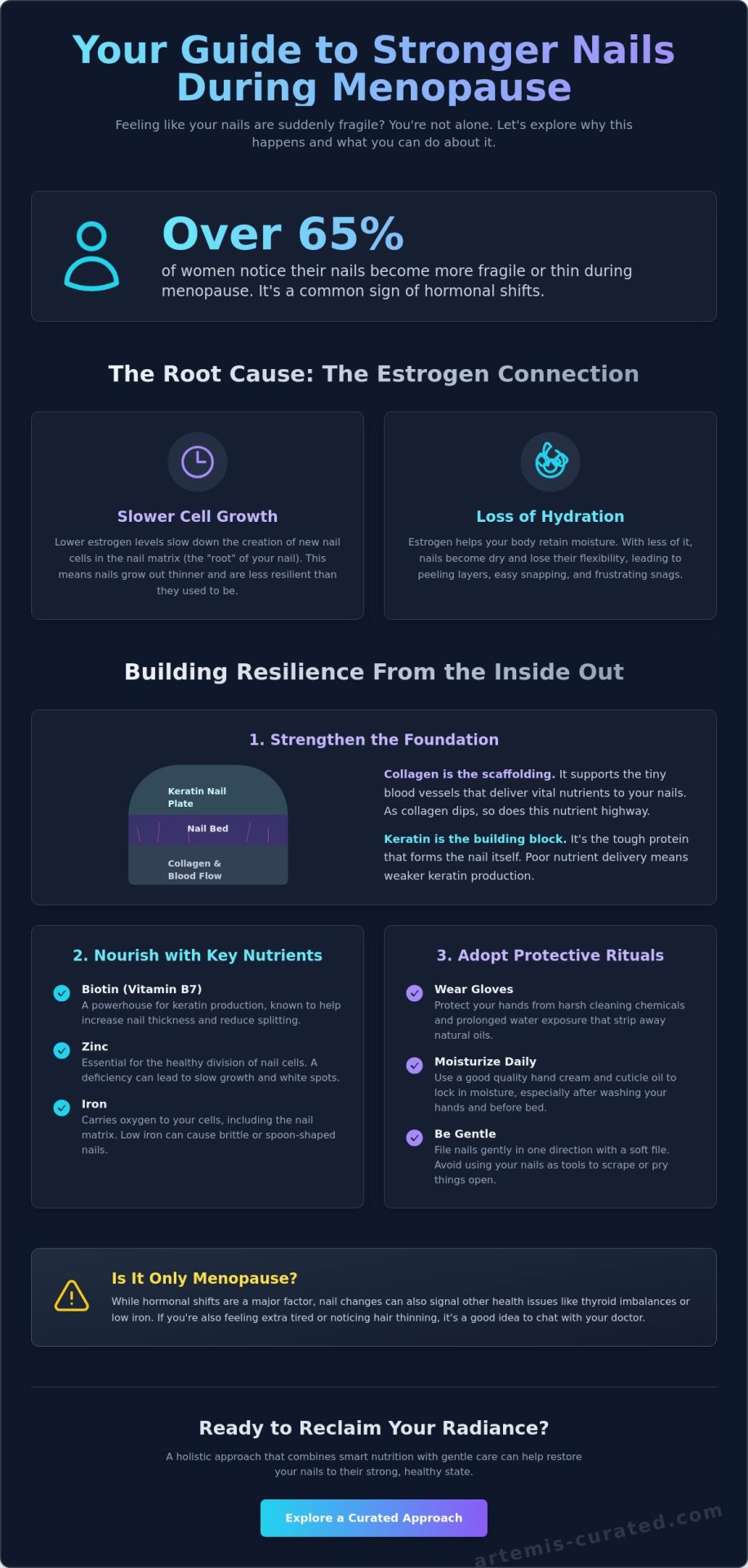
Did you know that over 65% of women notice their nails becoming fragile or thin as they move through menopause? It’s a quiet shift that often goes unmentioned, yet the frustration of a nail snagging on a soft knit sweater or the sight of constant peeling can feel deeply personal. If you’ve been searching for how to strengthen brittle nails during menopause, you’re not alone in wanting to reclaim that sense of polished confidence. This change isn’t just about surface beauty. It’s a reflection of internal hormonal shifts, specifically the decline in estrogen, that affect your body’s ability to hold onto moisture and produce the keratin your nails need to stay resilient.
It’s completely normal to feel overwhelmed by the endless rows of supplements and conflicting advice found online. We believe your hands tell a story of care and intention, and they deserve to feel strong and smooth again. In this guide, we’ll explore the hormonal causes of these changes and share a multi-layered, natural approach to restoring your radiance. You’ll learn exactly how to build a simple, effective daily routine that combines the right nutrients with gentle care, helping you move toward less breakage and a healthier, more vibrant appearance.
Key Takeaways
- Understand how the drop in estrogen during menopause affects your nails’ ability to stay hydrated and produce new, healthy cells.
- Discover how to strengthen brittle nails during menopause by supporting the structural foundation of your nail beds to improve nutrient delivery.
- Learn why specific nutrients like Biotin and Zinc are essential for boosting nail thickness and encouraging faster, stronger growth.
- Identify how to swap harsh daily habits for gentle, protective rituals that shield your hands from moisture loss and chemical damage.
- See how a simple, multi-layered approach can transform fragile nails into a reflection of your overall hormonal harmony and inner radiance.
Understanding the Hormonal Shift Behind Menopausal Nail Changes
The shift in your nails often begins subtly. You might notice a small chip where there wasn’t one before, or perhaps a texture that feels slightly more uneven under your fingertips. While it’s easy to dismiss these changes as a result of a busy week or a change in the weather, they are often a direct reflection of the hormonal changes during menopause. This transition is a shared journey, and understanding why these changes happen is the first step in learning how to strengthen brittle nails during menopause. It’s not just about the surface; it’s about the very foundation of how your body creates and maintains these protective layers.
At the base of each nail, tucked just beneath the cuticle, lies the nail matrix. This is the origin point where new cells are born. Estrogen acts as a quiet coordinator for this process, keeping the production moving efficiently. As levels of this hormone fluctuate, the creation of new nail cells begins to slow. This change means the nails that grow out are often thinner and less resilient than they used to be. They aren’t just weak in a structural sense. They’re actually different in their makeup because the biological rhythm that creates them has changed its pace.
The Oestrogen and Hydration Connection
Estrogen is a natural regulator of moisture throughout your body. It helps maintain the skin’s barrier and supports the production of sebum, the natural oils that keep our tissues flexible and soft. When estrogen levels drop, your nails lose their ability to hold onto water. This leads to a distinct dryness rather than just a lack of strength. You might see your nails peeling in layers or snapping easily because they’ve lost the oily bond that keeps the keratin layers together. It’s a loss of elasticity that makes every daily task a potential hazard for a snag, turning your hands from a source of pride into a source of frustration.
When to Distinguish Menopause from Other Factors
It’s helpful to remember that while menopause is a primary driver, other internal factors can play a supporting role. Issues with thyroid health or low iron levels often show up in the hands first, mimicking the brittleness we associate with hormonal shifts. If you’re also feeling unusually tired or noticing your hair feels thinner, it’s worth taking a broader look at your health. Investigating your levels through a guide to blood tests for women can provide clarity. This ensures you’re addressing the root cause of your concerns with precision, moving beyond guesswork toward a solution that truly works for your body.
The Structural Foundation: Why Collagen and Keratin Matter
While we often think of our nails as static, hard surfaces, they are actually dynamic parts of our body that require a constant supply of nutrients to stay healthy. In the previous section, we explored how hormones set the pace for growth. Now, it’s time to look at the physical materials. Understanding the relationship between collagen and keratin is a vital part of learning how to strengthen brittle nails during menopause. It’s about more than just the nail plate you can see; it’s about the living tissue underneath that provides the foundation for everything else.
Think of your nail bed as a garden that needs a steady supply of water and food. Collagen acts as the essential scaffolding for this area. It supports the tiny, intricate blood vessels that carry oxygen and vitamins to your fingertips. As collagen production naturally begins to dip during perimenopause, this supportive structure can become less efficient. When the blood flow to the nail matrix is compromised, your nails simply don’t receive the “fuel” they need to grow thick and resilient. This structural shift is why many women find that topical treatments alone aren’t enough to fix the problem.
Choosing to support your body’s collagen levels isn’t just a beauty choice. It’s an act of intentional care for your long-term vitality. By focusing on the structural health of your hands, you’re addressing the root cause of fragility. This “inside-out” perspective is a key step in discovering the art of radiance, where we treat our bodies with the respect and attention they deserve during this period of change.
Keratin: The Building Block of Your Nails
Keratin is the tough, fibrous protein that makes up the actual nail plate. It’s the shield that protects your sensitive fingertips. When your nails feel thin or “papery,” it’s often a sign that your body is struggling with protein synthesis. To remain resilient, keratin requires a specific blend of amino acids. Without these essential building blocks, the nail plate becomes porous and weak, making it much more susceptible to the daily wear and tear of life.
How Collagen Loss Leads to Ridges and Splitting
Have you noticed vertical ridges appearing on your nails lately? These lines are a classic sign of reduced moisture and a thinning nail bed. As the structural support from collagen fades, the bond between the layers of keratin begins to weaken. This is what causes that frustrating peeling at the tips. When the scaffolding underneath isn’t firm, the nail plate can’t stay smooth. You can find more detail on this process in our guide to supporting your body’s natural radiance, which explores how these internal structures impact your outward glow.
Protective Rituals: External Care for Fragile Nails
While the internal support we discussed in previous sections creates the foundation for growth, the external environment dictates how well that growth is preserved. It’s helpful to stop viewing hand care as just another chore on a long to-do list. Instead, try to see these moments as small, protective rituals that honor the work your hands do every day. When you are exploring how to strengthen brittle nails during menopause, the way you interact with common household elements is just as vital as the nutrients you consume. Our hands are often the first part of us to encounter the world, and they deserve a layer of defense against the elements.
Daily life can be surprisingly aggressive toward fragile nails. Hot water, dish soaps, and standard cleaning agents act as solvents, quickly stripping away the limited natural oils your body still produces. Wearing gloves when you’re cleaning or gardening isn’t just a practical necessity; it’s a way to create a sanctuary for your skin and nails. This simple habit prevents the constant cycle of swelling and shrinking that happens when nails get wet and then dry out, which is a primary cause of peeling and splitting.
One of the most effective ways to restore lost hydration is a technique often called “soak and smear.” After a bath or a gentle hand wash, while the nails are still slightly damp and the keratin is soft, apply a rich layer of moisture. This traps the water within the nail plate, helping to maintain the flexibility needed to prevent snapping. For shaping your nails, it’s best to put away the traditional metal clippers. Clipping creates micro-trauma and tiny cracks along the nail edge. A gentle file, used softly in one direction, is much kinder to fragile tips and helps maintain a smooth, sealed edge.
The Golden Rule of Moisture
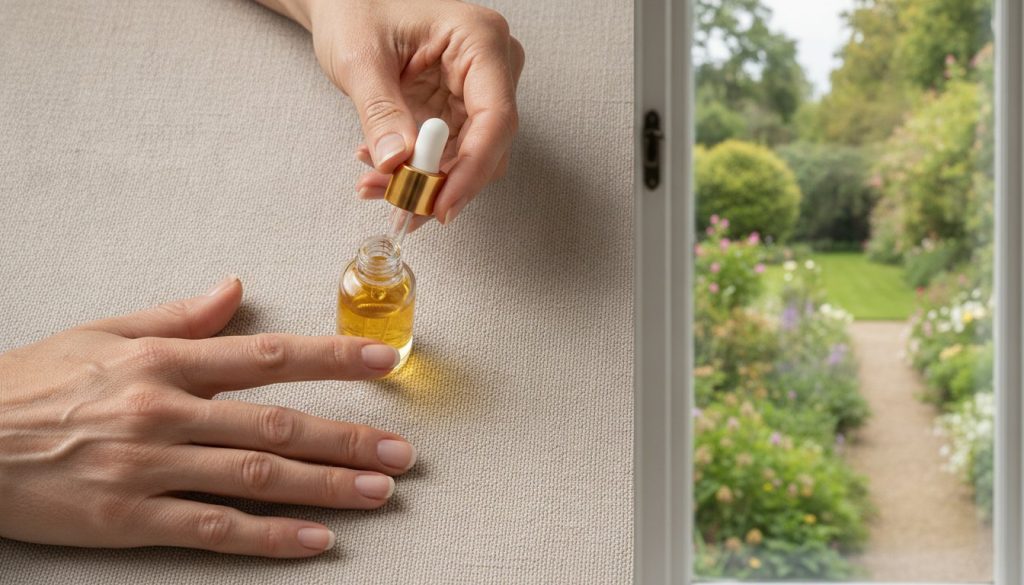
Rich balms are your best allies in this process. Look for ingredients like vitamin E or jojoba oil, which closely mimic the body’s natural oils. During menopause, your skin loses moisture much faster than before, so keeping a small tin of balm by every sink is a simple way to stay ahead of dryness. A nightly ritual of massaging a drop of oil into each cuticle doesn’t just feel indulgent. It actually stimulates blood flow to the nail matrix, encouraging healthier growth while you rest. It’s a quiet moment of connection that yields visible results over time.
Safe Grooming Habits
Many traditional beauty products are surprisingly harsh on menopausal nails. Acetone-based removers are particularly drying, as they dissolve the very lipids that hold your nail layers together. It’s better to opt for oil-rich or soy-based alternatives that clean without stripping. Keeping your nails at a shorter, more manageable length during this transition also helps. Shorter nails are less likely to snag on clothing or suffer from the leverage that causes deep tears. Finally, don’t underestimate the benefit of a “nail break.” Giving your nails a week or two without any polish or gel allows the plate to recover and regain its natural balance.
Nourishing from Within: Nutrients for Stronger Nails
While your external rituals provide a protective shield, the real transformation happens from the inside out. Understanding how to strengthen brittle nails during menopause involves looking at your diet as a source of raw materials. Just as a builder needs quality stone to create a lasting structure, your body needs specific vitamins and minerals to weave the keratin layers of your nails together. When these nutrients are missing, your nails can’t help but show the signs of that internal lack. It’s about feeding the root so the surface can eventually glow with health.
Iron is a vital piece of this puzzle that often goes overlooked. It’s responsible for carrying oxygen to the nail matrix, the very place where growth begins. Without enough iron, your nails can become pale or even develop a concave shape known as “spooning.” Silica, a trace mineral often found in leafy greens and oats, acts as a strengthening agent for all your connective tissues. It helps bind the protein molecules together, giving your nails the resilience they need to withstand daily life. These elements work together to ensure that the growth emerging from your fingertips is as sturdy as possible.
The Power of Biotin and Zinc
Biotin, also known as Vitamin B7, is perhaps the most researched ally for nail health. It works by improving the keratin infrastructure, helping to build thickness and reduce the likelihood of splitting. Zinc is its perfect partner. It plays a critical role in cell division and protein synthesis. If you’ve ever noticed small white spots on your nails or felt like they simply stopped growing, it could be a sign your zinc levels are low. You can start building this foundation by adding more eggs, nuts, and seeds to your daily meals, as these are naturally rich in these essential elements. This synergy ensures your nails aren’t just growing, but growing with integrity.
Selecting High-Quality Supplements
It’s easy to feel lost when looking at a shelf full of mass-produced vitamins. However, a curated approach to your health is always more effective than a generic one. When choosing a supplement, look for bioavailable forms of minerals. These are easier for your body to recognize and use, ensuring that the nutrients actually reach your fingertips. Taking the time to select a formula that aligns with your specific needs is a beautiful way to show yourself care. For more guidance on finding the right balance, you can explore our guide to the best supplements for women in 2026. If you’re ready to start your journey toward stronger nails, you can find targeted support with the art of radiance.
Curating Your Path to Radiance and Harmony
Restoring the strength of your nails is a gradual process that mirrors the broader shifts happening within your body. By now, you’ve seen that learning how to strengthen brittle nails during menopause isn’t just about finding a better top coat or a thicker cream. It’s about a holistic, inside-out strategy that honors your body’s changing needs. When you address the structural foundation through collagen and nourish the root with essential minerals, you’re doing more than just fixing a snag. You’re participating in a larger story of hormonal harmony, where every small ritual contributes to a sense of renewed vitality.
At Artemis, we believe in the power of intentionality. We move away from the noise of mass-produced solutions toward a philosophy of careful selection. This isn’t about adding more to your plate; it’s about choosing what is truly meaningful and effective for your specific journey. Your hands, which have crafted, cared, and created for decades, deserve a routine that feels like a quiet conversation with your own health. When you choose to support your body with purpose, you’re embracing the art of living well, where beauty is a natural byproduct of a balanced life.
Supporting Your Radiance
True radiance often begins with the simplest building blocks. By focusing on high-quality ingredients like marine collagen and essential vitamins, you can help restore the natural glow that often feels dimmed during menopause. These nutrients work beneath the surface to firm the nail bed and smooth the skin, creating a resilient foundation for your hair and nails alike. Choosing The art of radiance is a focused way to meet these specific needs, allowing you to invest in a formula that respects the delicate balance of your body’s chemistry.
Finding Inner Balance
While your nails are a visible marker of health, they are deeply connected to your overall internal environment. When your hormones are in harmony, your outward beauty follows naturally, reflecting a state of inner ease. For those seeking broader support during this transition, The art of harmony offers a way to address the wider spectrum of menopausal wellness. We invite you to explore the Artemis Curated Shop to discover your own selection of support, helping you move through this season with grace, strength, and a soulful appreciation for the journey.
Embracing Your Journey to Radiant Hands
Your hands carry your history and deserve to reflect your inner vitality. By now, you know that the changes you’re seeing aren’t just surface-level issues. They’re a call from your body for deeper, more intentional support. You’ve learned that moisture is a ritual, not a chore, and that the foundation of your nails relies on the structural strength of collagen and essential minerals like biotin and zinc.
When you focus on how to strengthen brittle nails during menopause, you’re choosing to treat yourself with a level of care that goes beyond a quick fix. It’s about finding that sweet spot where internal nutrition meets protective external habits. We’ve curated our collection to offer targeted support for your skin, hair, and nails because we believe in holistic hormonal harmony. This approach is designed by women who truly understand these shifts, ensuring you receive only what is effective and meaningful.
Take the next step in your wellness journey today. Discover the Art of Radiance and restore your natural glow. You have the tools to reclaim your strength, and we’re here to guide you every step of the way.
Frequently Asked Questions
Why are my nails suddenly brittle and peeling during menopause?
Your nails are likely peeling because of the significant drop in estrogen that occurs during this life stage. Estrogen is essential for regulating your body’s water levels; when it declines, your nails lose their ability to retain moisture. This leads to the layers of the nail plate separating, which causes that frustrating peeling and chipping you’re noticing lately.
Can oestrogen deficiency really affect my nail strength?
Yes, oestrogen deficiency directly impacts the resilience of your nails by slowing down the production of natural oils and keratin. These oils act as a flexible glue that holds the protein layers together. Without this hormonal support, the nail matrix produces cells that are thinner and more prone to breakage, making it harder to maintain a smooth, polished surface.
How long does it take for supplements to improve brittle nails?
You should expect to see a visible difference in about three to six months after starting a new routine. Because fingernails only grow about 3 millimeters per month, it takes time for the newly nourished nail to grow out from the cuticle to the tip. Consistency is the most important factor when you’re learning how to strengthen brittle nails during menopause.
What are the best vitamins to take for menopausal nail health?
Biotin, Zinc, and Iron are the most effective nutrients for restoring nail integrity during this transition. Biotin is widely researched for its ability to increase nail thickness, while Zinc supports the rapid cell division needed for healthy growth. Making sure you have enough Vitamin B12 is also helpful, as a deficiency can lead to excessive dryness and darkened nail pigment.
Are vertical ridges on nails a normal part of menopause?
Vertical ridges are a common and normal sign of hormonal change, often becoming more pronounced as you move through your fifties. They are essentially the equivalent of fine lines on the skin. They appear as the nail bed thins and loses its natural moisture over time. While they aren’t a health risk, they do signal that your nails need more hydration and structural support.
Does collagen help with brittle nails after 50?
Collagen is incredibly helpful after fifty because it provides the amino acids your body needs to build keratin, the primary protein in your nails. It also supports the health of the tiny blood vessels in the nail bed. This improved circulation ensures that all the other vitamins and minerals you take can actually reach the matrix where new nail growth begins.
Should I avoid wearing nail polish if my nails are weak?
You don’t have to give up polish entirely, but it’s wise to choose your products carefully and take regular breaks. The most important thing is to avoid removers containing acetone, which strip away the precious remaining oils from the nail plate. Going polish-free for one week every month allows the keratin to recover and prevents the nail from becoming overly dry and porous.
What is the best way to moisturise my nails and cuticles?
The most effective way to hydrate your nails is to apply a rich, oil-based balm while your hands are still slightly damp. Using oils like jojoba or vitamin E helps to seal in water and mimics the sebum your body is producing less of. Massaging the balm into your cuticles every night is a simple, relaxing habit that can truly transform the health of your hands.